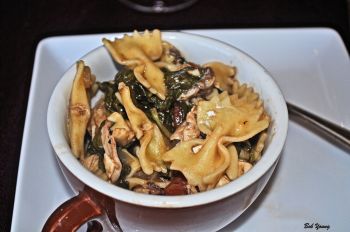
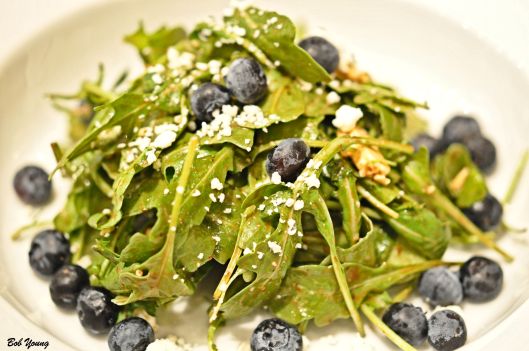
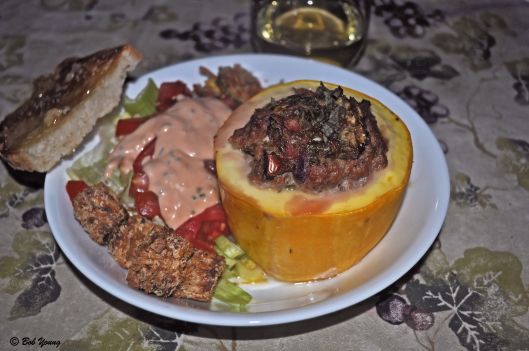
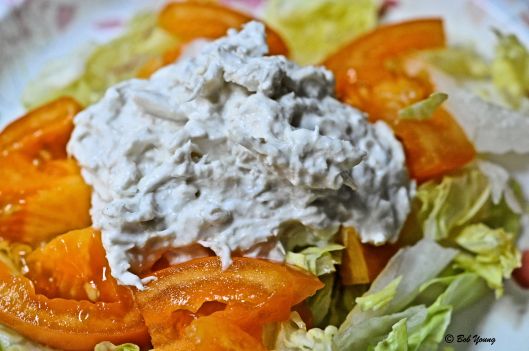
 The first WHIP Night at the Buzz was a good success. There were about 15 people there with all types of camera questions. I hope they all got answered to their satisfaction. The pasta salad pictured here was part of the dinner menu with appetizers. (None are left on this plate – they were that good!) The WHIP program will be held the last Thursday of each month from 5:00pm – 8:00pm. Each program will have someone in to talk about or explain about a specific topic.
 For August and the first in the series, Cristi explains the event as, “Buzz Coffee and Wine is hosting our WHIP night each month on the last Thursday of the month. This is a time where We Help Inspire People (WHIP). This is a come and go event where each month we will have a guest that is very knowledgeable about a certain subject here at the Buzz to answer questions. This month we are pleased to have Bob Young coming to help us with our photography questions. Bob authors several blogs and has published a book with photographs of birds. Bring your questions and join us anytime between 5 and 8 on Thursday August 29. We will have flights of wine featuring women winemakers and food specials, no reservations required. Tell your friends and stop by.”
The September schedule of events at the Buzz is as follows.
“Buzz Coffee and Wine
September Events
Contact Us
2999 N Lakeharbor Lane
Boise, Idaho 83703
Whip Night
Bring your friends and your photography questions down to the Buzz August 29 from 5-8 (drop in anytime); and meet Bob Young and ask him questions about photography. We will have wine flights featuring women wine makers and food specials throughout the evening. Come any time, no reservations required.
We Help Inspire People.
Wine Club
We are focusing on France this month. Wine club is September 10 or 11 at 6:30 PM. Reservations required. Cost is $15.00 per person, includes dinner and wine tasting. Featured wines are 10% off after dinner. Please let us know of food allergies or intolerance with your reservation; buzzwine@cableone.net or 344-4321.
Bounty of the Harvest
On September 29 at 6:30 we will have our quarterly wine dinner. This quarters theme is the bounty of the harvest. This is a five course dinner with two different wines chosen to go with each course. The cost is only $30.00 per person and includes dinner and wine. All wines will be on sale 10% off after dinner. Reservations are required. Please let us know of food allergies or intolerance with your reservation; buzzwine@cableone.net or 344-4321.
Music in September
Music on Fridays from 7-9. Wine tasting and dinner specials each night.
8/30 Wendy Matson
9/6 Blaze and Kelly
9/13 Pat Foulkner
9/20 Wayne White
9/27 John Cazaan
No reservations required just come and enjoy.
Thank you for your patronage and we hope to see you soon
Sincerely,
Cristi and Tommy Takeda
Buzz Coffee and Wine
(Coupon)
————————————————————————————————————————————
Save 20% Order a case of wine (12 bottles) can be a mixed case, and get 20% off our regular shelf price. Case orders can be picked up the next evening.
Offer Expires: September 30, 2013
————————————————————————————————————————————

![Quiche Lorraine 2009 Baron de Hoer Alsase Riesling 12.5% alc. went well with this appetizer, but light. [15] $14.00](https://boisefoodieguild.blog/wp-content/uploads/2013/09/10sept2013_1a_the-buzz-club_appetizer_quiche-loraine.jpg?w=524)

![Vegetable Trimbale (Needs a very light sprinkle of Sea Salt) 2011 Chat du Pape Cote de Rhone 14.5% alc. big wine but went well with the trimbale. [15]](https://boisefoodieguild.blog/wp-content/uploads/2013/09/10sept2013_1c_the-buzz-club_vegetable-trimbale.jpg?w=524)
![Beef Bourgogne (This was the best part of the dinner. Full of flavor and seasoned perfectly!) 2010 Gigondas 14.5% alc. a big red that went very well with the beef and onions. [17] $22.00](https://boisefoodieguild.blog/wp-content/uploads/2013/09/10sept2013_1d_the-buzz-club_beef-bourgogne.jpg?w=524)
![Cream Puff and Apple Crepe (Good job on the cream puffs, Cristi! Veuve du Vernay Sparkling Chardonnay 11.0% alc. a great choice to pair with this dessert. [18] $12.00](https://boisefoodieguild.blog/wp-content/uploads/2013/09/10sept2013_1e_the-buzz-club_cream-puff_apple-crepe.jpg?w=524)







 Boise Foodie Guild