~ – Enjoy a meal or a recipe with us! Be sure to check the Sidebar and Menu above. Interesting resources are listed there. Most are hot links. Air Fryer (AF), Instant Pot (IP) and Captain's Shack (CS) recipes now have their own page. Subscribe to the blog. It's still FREE!
Robin and I are so proud of our friendship with Joe Levich, former owner of Flying Pie Pizza in Boise, owner of Levco Remodeling and retired Ada County (Idaho) Paramedic. Robin (RN Ret) first met Joe in San Francisco at Alta Bates Hospital, as he was a paramedic there also. Then he moved to Boise where he was continued as a paramedic. Levco remodeled our kitchen and bathroom. A fantastic job!
Robin has been very sick young lady (she’ll always be young) since September of last year and Joes’ duties have kept him from visiting her. He made arrangements to come visit her and said he would bring dinner and asked “What should he bring, Grilled Cheese or pizza?” He being the Pizza King, the answer was easy – Pizza!
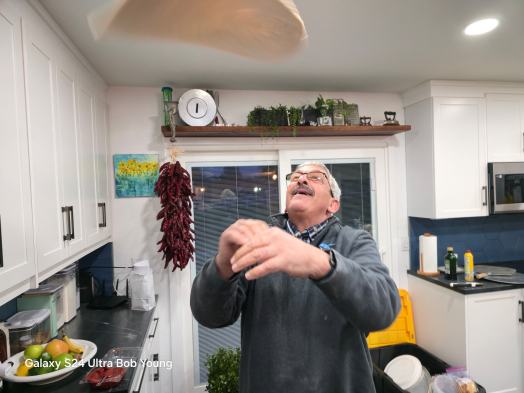
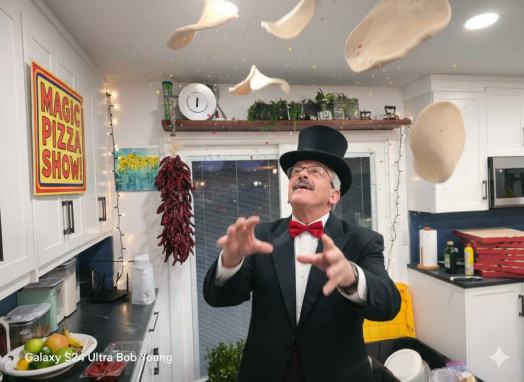
Joe the Pizza King, flipping the dough
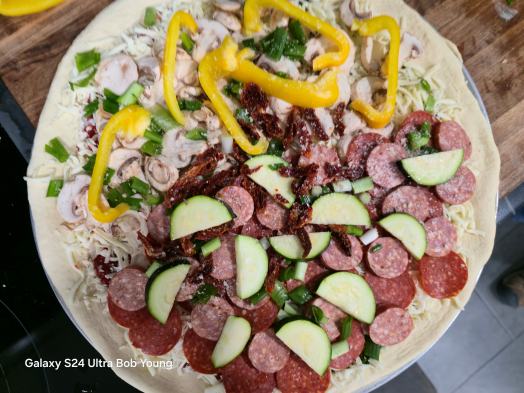
Pizza and ingredients ready to go in the oven
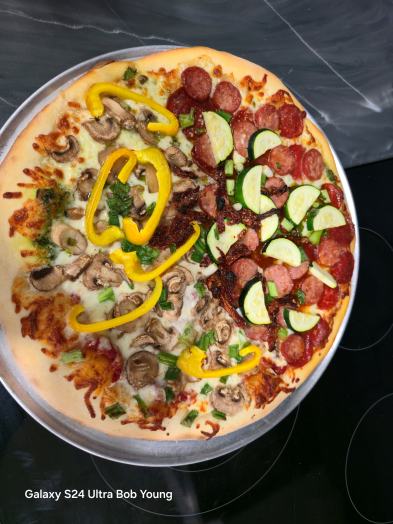
Cooked and ready to be devoured!
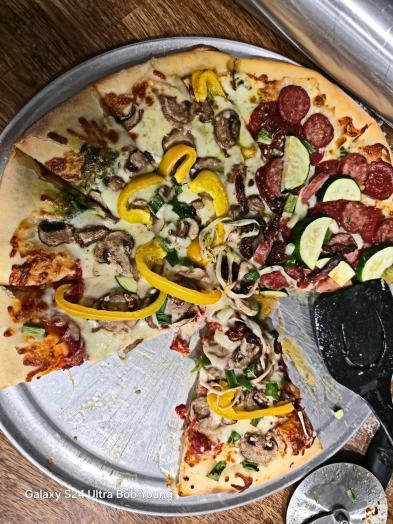
Pieces cut out of the pizza
Robin at RN Graduation several years ago – 45 years ago
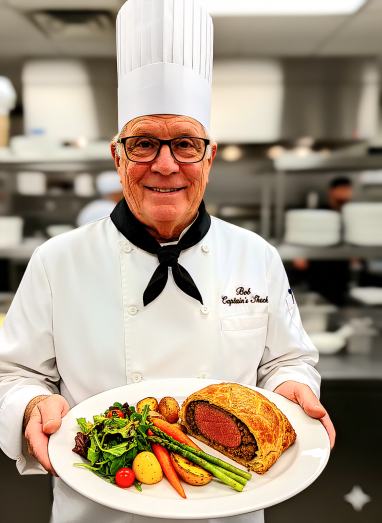
It was a great time and we thank Joe for bringing AA of the ingredients and prepping and cooking supplies. All of the photos are natural and some are AI altered. Hope you enjoy this Fun Post. The pizza was great and Joe Levitch your friendship IS great!
There are not many times when I will; write an article in two parts. But information on salmon is extremely Copus – there is much information available. I will use at least 3 sources – Allrecipes.com, FishingBooker.com and Aquamarinenative.com. Enjoy the information and happy eating!
North America is home to six distinct salmon species that grace our waters and dinner plates:
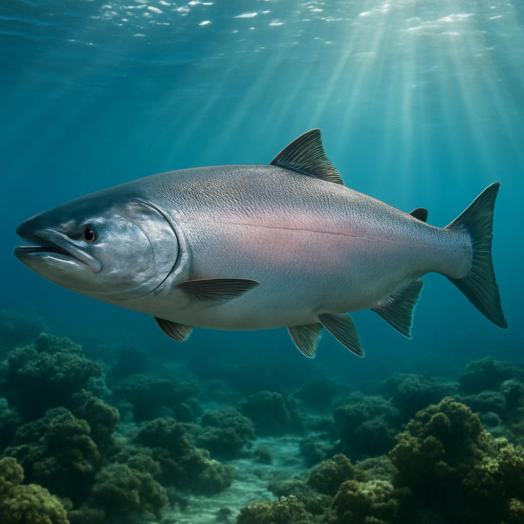
King/Chinook Salmon (Oncorhynchus tshawytscha) – The largest and fattiest Pacific species
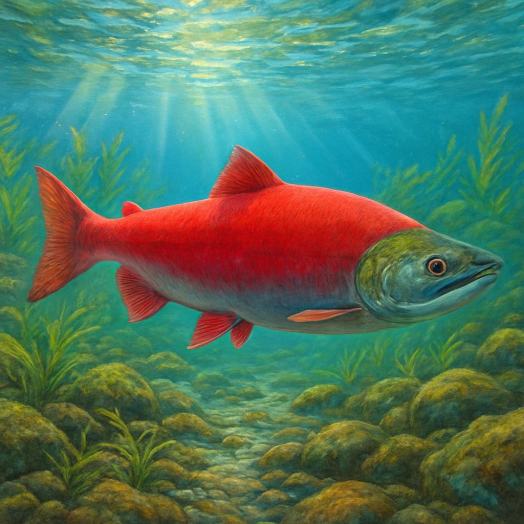
Sockeye/Red Salmon (Oncorhynchus nerka) – Deep red flesh with intense flavor
Coho/Silver Salmon (Oncorhynchus kisutch) – Medium-sized with mild taste
Pink/Humpback Salmon (Oncorhynchus gorbuscha) – Smallest and most abundant
Chum/Keta/Dog Salmon (Oncorhynchus keta) – Prized for roe production
Atlantic Salmon (Salmo salar) – The only Atlantic species, mostly farmed
These five types of salmon from the Pacific, plus one Atlantic species, represent the complete salmon family in North American waters. Each species has evolved unique characteristics that affect taste, texture, and culinary applications.
Pacific Salmon Species: The Famous Five
The Pacific Ocean nurtures five distinct salmon species, each adapted to different ecological niches. These salmon undertake epic migrations from ocean feeding grounds to freshwater spawning streams. Understanding their differences helps anglers, chefs, and seafood lovers make informed choices.
Pacific salmon die after spawning, unlike their Atlantic cousins. This life cycle creates dramatic physical transformations that make identification easier during spawning runs. Let’s explore each Pacific species in detail.
King Salmon (Chinook): The Premium Choice
King salmon reigns supreme as the largest Pacific species, earning its royal nickname through sheer size and quality. These magnificent fish can exceed 100 pounds and stretch five feet long, though most commercial catches weigh 10-50 pounds.
Identifying King salmon becomes easy once you know their signature feature: completely black mouths and gums. Small round spots cover both the upper and lower portions of their tails. Their blue-green ocean coloration transforms to olive-brown or maroon during spawning.
The rich, buttery texture of King salmon comes from its high fat content—the highest among all salmon species. This marbling creates an almost silky mouthfeel that melts on the tongue. Professional chefs prize Kings for their versatility in high-heat cooking methods.
Best Cooking Methods for King Salmon:
Grilling over cedar planks
Pan-searing with crispy skin
Roasting whole sides
Raw preparations (sushi/sashimi)
Nutritionally, King salmon delivers approximately 1,500mg of omega-3 fatty acids per 3.5-ounce serving. This species also provides abundant vitamin D, selenium, and B vitamins. The high fat content means more calories but also greater satiety.
King salmon inhabit waters from Southern California to Alaska’s Bering Sea. Alaska’s Copper River Kings command premium prices for their exceptional oil content. These salmon return to rivers from May through July, with specific run timings varying by region.
Sockeye Salmon (Red Salmon): The Chef’s Favorite
Sockeye salmon stands out with its vibrant red flesh and distinctively large, golden eyes. These salmon types earn their “red salmon” nickname from both their meat color and spawning transformation. Adults typically weigh 4-15 pounds and measure 1.5-2.5 feet long.
The unmistakable golden eyes of Sockeye salmon make identification simple. They lack spots entirely, with pure white mouths and gums. During spawning, their bodies turn brilliant red while heads become green, creating nature’s most dramatic fish transformation.
Sockeye’s firm texture and concentrated flavor result from their zooplankton-rich diet. The intense, almost gamey taste places them between mild Coho and rich King salmon. This robust flavor stands up well to smoking, grilling, and raw preparations.
Many consider Sockeye the perfect sushi and sashimi fish due to its firm texture and deep color. The flesh holds together beautifully when sliced thin. Landlocked populations called Kokanee salmon live entirely in freshwater, offering similar taste in smaller packages.
Peak Sockeye season runs from June through August in most regions. Bristol Bay, Alaska produces nearly half the world’s Sockeye harvest. These prized fish command high prices at seafood markets, especially during peak season.
Coho Salmon (Silver): The Versatile Fighter
Coho salmon earned their “silver” nickname from their brilliant chrome sides in ocean phase. These medium-sized salmon typically weigh 8-12 pounds and measure 24-30 inches. Anglers particularly prize Coho for their acrobatic fights and aggressive strikes.
Distinguishing Coho requires checking their mouths—black inside but with white gums, unlike King salmon’s all-black mouths. Spots appear only on the upper portion of their tails. Spawning males develop pronounced hooked noses called kypes and turn maroon with dark backs.
The mild flavor and medium fat content make Coho perfect for salmon newcomers. The texture strikes a balance between flaky and firm, neither too rich nor too lean. This versatility allows various cooking methods without overwhelming delicate palates.
Several Coho populations face conservation challenges, but sustainable wild-caught options remain available. Alaska and Pacific Northwest fisheries maintain healthy populations through careful management. Farm-raised Coho offers a consistent, year-round alternative.
Cedar plank grilling showcases Coho’s attributes perfectly, imparting subtle smoke while maintaining moisture. Whole roasted Coho makes an impressive presentation. The fish also excels in poaching, producing tender, flaky results ideal for salads.
Pink Salmon (Humpback): The Accessible Option
Pink salmon holds the title as both the smallest and most abundant Pacific species. These compact fish average 3-5 pounds and 18-24 inches, making them perfect single-serving portions. Their two-year life cycle creates distinct odd and even-year populations.
Identifying Pink Salmon Features:
Large oval spots on back and entire tail
Slight pink body tinge in ocean phase
White mouth with black gums
Males develop pronounced humps when spawning
Pink salmon’s lean flesh and mild flavor make it the most affordable option. While less prized than fattier species, Pink salmon provides excellent nutrition at budget-friendly prices. The light-colored meat works wonderfully in mixed dishes.
Most Pink salmon enters the market as canned products, providing convenient, shelf-stable protein. These canned options excel in salmon patties, salads, and casseroles. Fresh Pink salmon, when available, benefits from moisture-adding cooking methods.
The unique spawning cycle means Pink salmon appears in different regions alternating years. Washington and British Columbia see runs in odd-numbered years, while Alaska receives even-year runs. This pattern affects regional availability and pricing.
Chum Salmon (Keta): The Hidden Gem
Chum salmon suffers from unfortunate nicknames like “dog salmon,” yet offers surprising culinary value. These fish typically weigh 8-15 pounds and can reach 3.6 feet long. Their other name, “Keta,” comes from indigenous languages and sounds more appealing.
Identifying Chum salmon requires attention to subtle details. They share Sockeye’s white mouth and lack of spots but display faint vertical bands along their sides. The notably larger teeth become prominent during spawning, explaining the “dog” nickname.
While Chum meat tends toward the mild, dry side, their roe stands out as exceptional. Large, firm eggs make premium ikura for sushi. The meat itself excels when smoked, canned, or dried into traditional preserved products.
Spawning Chum undergo the most dramatic transformation among Pacific salmon. Their bodies turn green with vivid purple vertical stripes, resembling aquatic tigers. This otherworldly appearance makes them unmistakable during fall spawning runs.
Traditional cold water preservation methods work particularly well with Chum salmon. Indigenous peoples have perfected smoking and drying techniques over millennia. Modern applications include jerky, candy, and other shelf-stable products.
Atlantic Salmon: The Farmed Favorite
Atlantic salmon represents a unique case in North American waters. Wild populations faced near-extinction from overfishing and habitat loss. Today, virtually all Atlantic salmon in markets comes from aquaculture operations worldwide.
Unlike Pacific species, Atlantic salmon survive spawning and can return to sea multiple times. This biological difference enables efficient farming operations. Modern aquaculture produces consistent, year-round availability of this popular fish.
Farmed Atlantic salmon typically weighs 8-12 pounds at harvest. The controlled diet produces higher fat content than wild fish, creating a mild, buttery flavor. This consistency appeals to consumers seeking predictable taste and texture.
Identifying Atlantic salmon relies on their distinctive X or Y-shaped spots covering the body. Dark spots on gill covers provide another key marker. These patterns distinguish them from Pacific species and similar-looking trout.
The farming debate continues among seafood advocates, with sustainability practices improving significantly. Many operations now use land-based systems or improved ocean pens. Consumers should research sources to support responsible farming methods.
Salmon Types Chart by Taste: Complete Comparison Table
Understanding salmon types chart by taste helps match preferences with species. This comprehensive comparison reveals flavor intensities, textures, and ideal preparations for each variety.
King/Chinook
Rich, buttery
Silky, firm
Highest
Grilling, searing, raw
Sockeye/Red
Strong, robust
Very firm
High
Smoking, sushi, grilling
Coho/Silver
Mild, delicate
Medium-firm
Medium
Versatile, roasting, poaching
Pink
Very mild
Soft, flaky
Low
Canning, patties, salads
Chum/Keta
Mild, neutral
Firm, dry
Low
Smoking, drying, roe
Atlantic
Mild, buttery
Soft
High (farmed)
All-purpose cooking
This taste comparison guide helps select the perfect salmon for any dish or preference. Those seeking bold flavors should choose Sockeye or King, while mild preferences favor Pink or farmed Atlantic.
Salmon is the most popular seafood species in the U.S. with a commercial value of $688 million in 2017, according to the National Oceanic and Atmospheric Administration. The fish is prized for its health benefits, especially its omega-3 fatty acids. But not all salmon is created equal, in fact there are six different types of salmon that are sold commercially in the U.S.
If you’ve ever noticed names like Sockeye or King floating around the seafood section of your grocery store, we’re here to clarify the differences. But first, what’s most important to understand about salmon is how it’s raised.
Wild vs. Farmed Salmon
Wild salmon is salmon that is caught in natural environments like oceans, rivers, and lakes. But much of the salmon sold worldwide today is farmed salmon. Fish farms use a process called aquaculture to breed fish, which are often given a processed feed that’s high in fat and protein to produce larger fish.
Because they have different diets, the nutrient composition of wild and farmed salmon is very different. Wild salmon contains more minerals, while farmed salmon is higher in vitamin C, saturated fat, and calories.
Some studies have also shown that farmed salmon may have higher concentrations of contaminants than wild salmon. Both are still excellent sources of omega-3s, but wild salmon is overall better for your health if you can afford to spend a little extra on it.
If you’re looking to stick to wild salmon, you’re going to want to go with Pacific salmon, of which there are five types: King, Sockeye, Coho, Pink, and Chum. It’s not that Atlantic salmon is bad, it’s just that there are very few Atlantic salmon found in the wild today, due to overfishing and habitat destruction. So most Atlantic salmon is farm-raised.
Salmon are among the most iconic and valuable fish species in the world, admired for their incredible migrations, ecological importance, and delicious, nutrient-rich meat. Found across the Northern Hemisphere, they range from massive Chinooks to brilliantly colored sockeyes.
Kinds of Salmon
Masa – NW coast, Amago – Japan, Danube – Danube River, Europe, Cherry – East Asia, Kamchatka – Russia, Black Sea – Black Sea peninsula, Sebago – Sebago Valley, Maine.
Enjoy the article and hope the information helps you
I have had several questions about what is the difference in salmon, one very good one from a lady reader from Tucson, AZ. The answer can be very confusing and complicated. I will attempt to make the answer as straight forward and easy as possible. Salmon come in 3 or more different forms, although 1 form is area specific and is actually the same. Chinook salmon and King Salmon are the same fish, the name is location specific.
King Salmon
Chinook Salmon
In Idaho, the main types of salmon include:
Steelhead: This species is also anadromous, meaning it migrates from the ocean to spawn in freshwater lakes and streams. It is known for its impressive migrations and ability to return to its natal stream. These species thrive in Idaho’s diverse waters and play a crucial role in the state’s ecosystem.
Chinook Salmon. Known for it’s size and flavor, it is the largest richest – tasting of the Pacific species. It is often found in the Snake River and Salmon River.
Sockeye Salmon. The species is also known for it’s size and is often stocked in Idaho due to it’s historical abundance in the region.
Coho Salmon. A popular choice for home Chefs. Coho salmon is milder than Chinook, but still rich enough for various recipes. It is commonly found in the Snake River.
Kokanee Salmon. A resident fish in Idaho. Kokanee Salmon are about 10-12 inches long and are known for their blue and green backs. They spawn in the deep lakes around the state.
Kokanee salmon
Coho Salmon
There are six main types of salmon, each with unique characteristics, flavors, and culinary uses: Chinook, Coho, Sockeye, Pink, Chum, and Atlantic salmon.
I had some very good comments about posting about my trike excursions and the restaurants I found along the way. So here is another. I hope you enjoy it. Let me know. There will be 4 different -places, Westside Drive-In, Sushi Shack, Terraces of Boise and one from my own kitchen. (Not really a restaurant) So let’s get started.
This is from the Terraces of Boise, where my wife was hospitalized. It is a Pear Rutabaga Soup. Two items I would never think to combine. I asked them for the recipe, but they would not give it to me. I know the pears and rutabaga were roasted and then put in a blender and pureed and that gave it a “soupy” consistency. It is delicious and worthy of locating the recipe!
This photo is Eggs Benedict from my kitchen, Most people who have been inn the kitchen and have seen it just love. The Eggs Benedict procedure was taught to me by Bobby Flay and Jacque Pepin via the internet, TV (PBS) and cook books. The Hollandaise Sauce is not hard to make, it just takes some care and do not exceed 130 degrees F. Egg yokes, Dijon mustard, Aleppo Pepper, Worchester Sauce, Unsalted Good Butter, 3 oz good white wine and constant whipping. Delicious!
The last place that I will take you to for now, is the Sushi Shake in East Boise in the Barber Park area, The photo above is of the interior. Same with the photo below.
When you go to an Asian restaurant, one must have Saki and make it a good one.
How about a good Clam and Mushroom Miso Soup? And this is delicious.
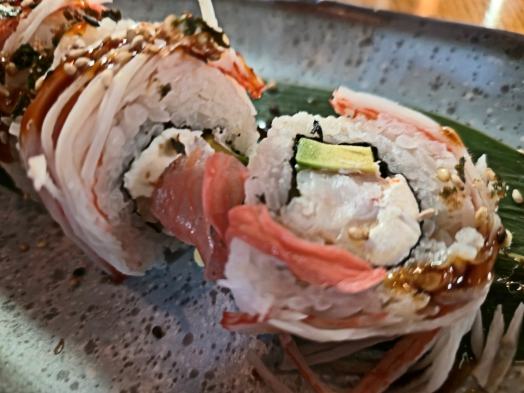
A good California Roll Sushi Roll will satisfy that need and goes wonderful with the Saki.
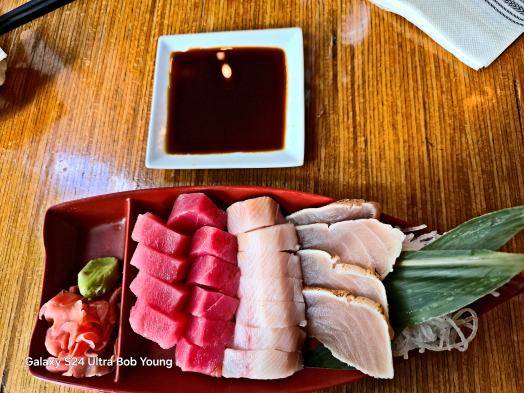
And of course a great Sashimi goes well too! A 4 fish Sashimi. Located at Eckert Road and Warm Springs Blvd.
The Menu
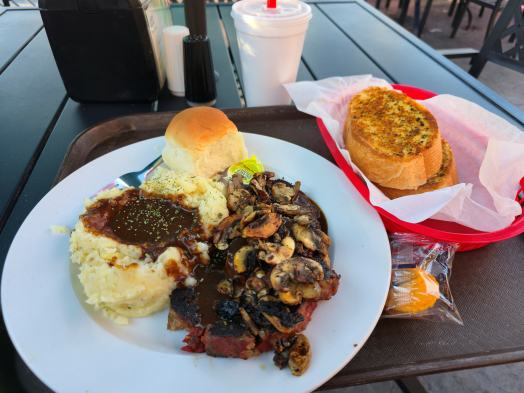
And finally a Beef Stroganoff from Westside Drive-In by Chef Lou Arron. It is awesome as is his entire menu. It is located at 21st and State Street in Boise
This is the GPS map that is on my trike/phone that keeps me on the straight and narrow. Start at5 point A. You bikers can down load this program for your phone. It is called Cyclers. This map is to Sushi Shake.
In order to “eat out”, I now take by ETrike, “Old Blue”, photo on the left.People I have talked to in person and on the internet all name their etrikes ,electric trikes. Great exercise and fun. I am old and I love the color blue! I decided to take a ride on the Boise Greenbelt and it was mid afternoon. There are a lot of eateries along the trail.
This is but one trail, about 5 miles. And I found the Cottonwood Grill, definitely a 5 Star restaurant, The colored line is my route by GPS.
It’s as pretty inside too. I didn’t get any photos inside.
And of course one must start with a good Gin and Tonic. Hendricks Gin! I was not dressed well enough to sit in the main eating area, so I chose to sit in the bar – my choice. Food is the same, menu same ambiance is the same.
A great French Onion Soup thjat is made inhouse.
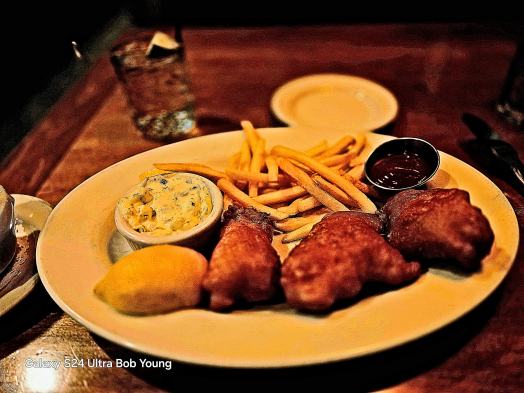
My main dish was Fish and Chips that is also made inhouse and delicious! If you are ever in Boise, I sincerely recommend The Cottonwood Grill.
So it was the end of another day on the trike. And what a sunset. Just had to get a photo.
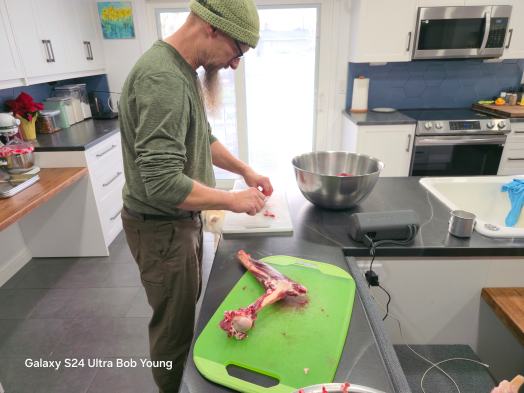
And another adventure about food. Antelope Sausage. My daughter’s boy friend makes an awesome sausage which he got hunting. This is the prep procedure.
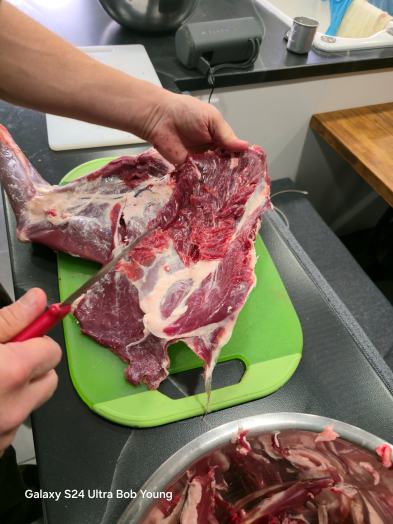
Eric is trimming the antelope.
Antelope being trimmed.
Eventually he will add pork to the mix and Italian spices that he made to the antelope and mix and blend it. The sausage will be good and I asked him to save me a piece if he cooks some. It’s been quite a while since I have eaten antelope.
I know, another chicken dinner. But this one is absolutely wonderful! I found it on FB, but altered it slightly.The recipe is easy and fairly quick to make. 30 minutes and you are eating. It did not have a name, so I named it Creamy Chicken, even though it has no cream in it.https://www.rockinrs.com/CS-Creamy-Chicken.pdf A good Niguri Creamy Sake would be great with this!
The finished product
The browning fry
Seasoning the chicken. After the garlic, vinegar, soy sauce and honey have been added
The finished product. Delicious!
The only changes I made were different types of salt, I used Celtic Sea Salt, fresh ground Tellicherry Black Pepper, unsalted butter and chopped green onion for the rice, I added braised Jasmin rice with the green onion.
I really think this is a fantastic way to make the chicken. Almost a fusion version of an Asian dish. You might want to add grated fresh ginger, too. The Jasmin rice gave the dish and extra boost of flavor, but searing it in butter is essential, in my point of view. If you make it let us know how you liked it.
There are not many reviews that I post, but this one deserves a review and I give it a 5-Star rating. They have a wonderful ambiance, good food prepared on site and the wait staff is excellent. The name is the Sushi Shack, at Harris Ranch (east Boise), 3724 S Eckert Road (right off of Warm Springs Rd) #110, 83716 and open Monday – Thursday:11:30 am – 9:00 pm, Friday – Saturday:11:30 am – 9:30 pm, Sunday:11:30 am – 8:30 pm. It is located in the Mill District. Call (208) 286-2945.
The ambiance is fun with both high and low seating. Your choice.
Menu
Menu
I had the Clam and Nameko Mushroom Miso Soup and it was awesome! I’d go for 2 but 1 will suffice.
Clam and Nameko Mushroom Miso
Sashimi Boat – choose 4 different types of fish
So there you have an overview of the Sushi Shack in Boise (Harris Ranch). If you go, let us know what you think. Personally, I’ll return!
Ok. Finally got my computer running correctly after 12 hours of working on it. I know, take it to a shop next time! And miss all the fun?
But now, the real purpose of this post – Oven BBQ Pork Ribs. You can use any ribs you prefer, but we like pork and St Lewis Style at that. Easy to do but takes time,4 hours or so.
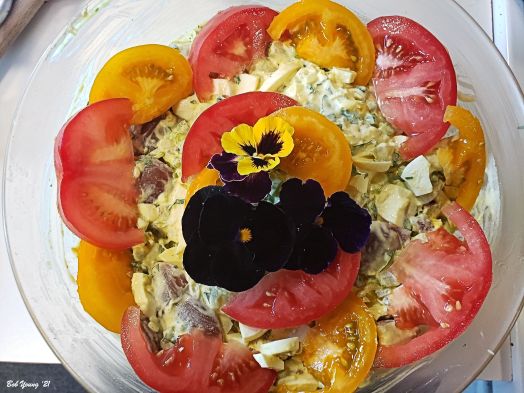
These are right out of the oven. Notice the crispness of the outer surface. The broiler did this. The recipe –https://www.rockinrs.com/CS-Pork-Ribs-2.pdf And then we served Potato Salad (https://www.rockinrs.com/CS-Lou-Potato-Salad.pdf) The recipe comes from Chef Lou Arron of Westside Drive-In on State Street, Boise, ID. The only problem is that he no longer offers this on the menu. He was kind enough to give it to me and it is very similar to my Mom’s. I use it with permission from the Chef. Thank you Chef Lou!! I have added fresh Lovage to the salad to increase the celery flavor just a small amount, abt 2T of fresh, diced. I grow my own and it is easy to grow, even here in Idaho. It is a Scandinavian herb of the celery family.
“… Lou moved to Atlanta, Georgia in 1981 and worked for Hilton Hotels until 1983. In 1983, he opened The Top of the Hoff restaurant in Boise, Idaho. From 1986-1988, Lou worked for Hilton Corporation in San Antonio, Texas, where he was featured in the national television series “Great Chef’s of the West” along with the companion cookbook, “Southwest Tastes”. Lou has won numerous awards for his food presentations and recipes. “He has been a contestant on “Guy’s Grocery Games”(although he didn’t fare very well!)” Westside Drive-In website
3 of the herbs I used with the ribs.
plated ribs with potato salad and fresh peach sections
This is a real old family treat and one my Mom made every summer. And we are still treating ourselves whenever the beets are ready in the garden and they are ready now. A smooth vinegar and full of spices, sugar,vinegar, cinnamon and clove. here is the recipe https://www.rockinrs.com/CS-Pickled-Eggs.pdf
The Pickled Eggs and Beets as a salad
And as a side note the red on the eggs comes from the beets. If you leave everything in the brine long enough – good luck – the yolk of the eggs will turn red. Happy eating!
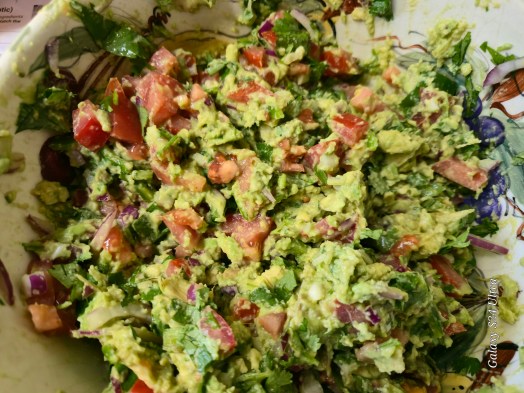
Here are two recipes that I made this past week. The Lamb, https://www.rockinrs.com/CS-Boneless-Lamb.pdf , is absolutely awesome, if you like lamb. But remember, lamb, is up to one year old and mutton is older than a year. The lamb we used came from the Boise Farmers Market (BFM) – Meadowlark Farms – and most of the veggies for the guacamole did also, at least most of them, came from the BFM. And the guacamole is also wonderful. Use it as a dip at a gathering. My sister adds a little rendered bacon to it. I would use a thick cut bacon, diced, https://www.rockinrs.com/CS-Guac.pdf .
At any rate, try these recipes and let us know how you liked them, or not. If you didn’t like them, please let us know why.
This is the lamb after being cook and the first slice
This This is the guacamole. We like it a little thick. so we don’t mash it so much. If you add bacon, I would use the thick cut, dice it and then let it cool and drain off some of the fat.

















 Boise Foodie Guild