~ – Enjoy a meal or a recipe with us! Be sure to check the Sidebar and Menu above. Interesting resources are listed there. Most are hot links. Air Fryer (AF), Instant Pot (IP) and Captain's Shack (CS) recipes now have their own page. Subscribe to the blog. It's still FREE!
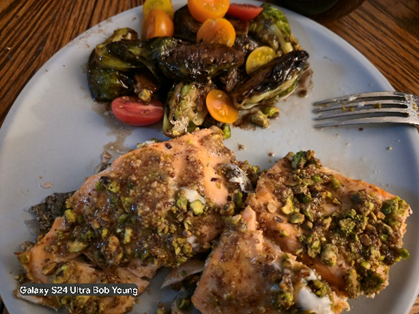
I think it is great when one gets challenged. I don’t think my sister Peggy actually challenged but she sent me a photo of a dinner she made of this very same of salmon. So I set out to make my own using several different sources. This is what I came up with. Really s good change for using salmon. You be the judge. Even the Brussels Sprouts with a balsamic vinegar glaze is different and works wonders for those who say, “I don’t like Brussels Sprouts” and have not even tried these.
Source: Captain’s Shack Boise, ID 1 June 2026 Bob Young
This pistachio crusted salmon might seem like a fancy salmon recipe but you will be surprised how Easy it is to make! The salmon crust is perfectly complimented by the sweet and savory maple Dijon glaze.
Prep: 10 min Cook: 25 min Total: 35min Servings: 1
Ingredients: Skin-On (2 – 8 oz filets) 3 T Roasted/Salted Pistachios Skinless filet add ⅛ cup extra to coat 1½ t Course Ground Dijon Mustard 1 t Maple Syrup Celtic Sea Salt and fresh ground Tellicherry Black Pepper to taste
Instructions; Preheat oven to 350º F Pulse pistachios in food processor. You don’t want whole chunks but you don’t want meal like powder – about in the middle. You want it to stick to the salmon but still have good crunch. Mix course ground Dijon and maple syrup. Add salt and pepper to taste. If you like it a little sweeter you can add more maple syrup.
Coat the salmon top, bottom and sides with your Dijon maple mixture. Place pistachios on plate or wide bottom bowl.Gently place salmon on top of pistachio mixture, top down. Push gently so that the pistachio mixture sticks to the salmon. Coat sides of salmon by hand or gently turn to press sides down.
Place salmon in a Pyrex baking dish or on a non-stick cookie sheet. I cover the baking sheet with aluminum foil. Bake for 20-25 minutes. Let rest five 5 minutes. Serve with Balsamic Glazed Brussels Sprouts.
There are not many times when I will; write an article in two parts. But information on salmon is extremely Copus – there is much information available. I will use at least 3 sources – Allrecipes.com, FishingBooker.com and Aquamarinenative.com. Enjoy the information and happy eating!
North America is home to six distinct salmon species that grace our waters and dinner plates:
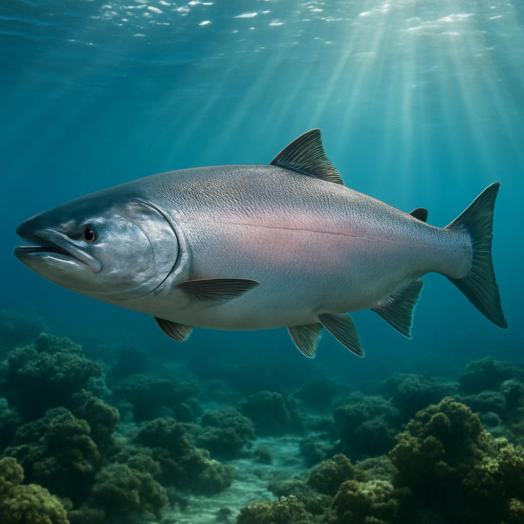
King/Chinook Salmon (Oncorhynchus tshawytscha) – The largest and fattiest Pacific species
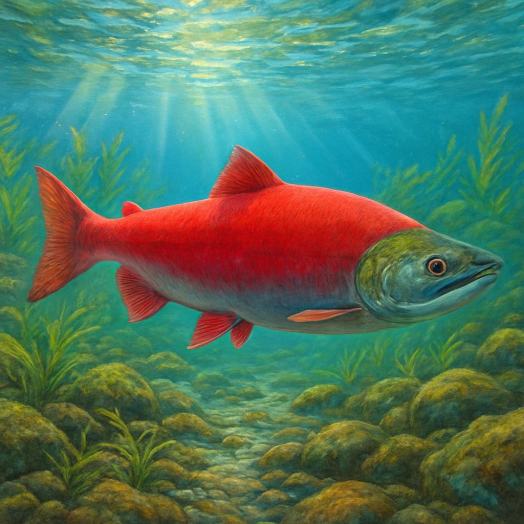
Sockeye/Red Salmon (Oncorhynchus nerka) – Deep red flesh with intense flavor
Coho/Silver Salmon (Oncorhynchus kisutch) – Medium-sized with mild taste
Pink/Humpback Salmon (Oncorhynchus gorbuscha) – Smallest and most abundant
Chum/Keta/Dog Salmon (Oncorhynchus keta) – Prized for roe production
Atlantic Salmon (Salmo salar) – The only Atlantic species, mostly farmed
These five types of salmon from the Pacific, plus one Atlantic species, represent the complete salmon family in North American waters. Each species has evolved unique characteristics that affect taste, texture, and culinary applications.
Pacific Salmon Species: The Famous Five
The Pacific Ocean nurtures five distinct salmon species, each adapted to different ecological niches. These salmon undertake epic migrations from ocean feeding grounds to freshwater spawning streams. Understanding their differences helps anglers, chefs, and seafood lovers make informed choices.
Pacific salmon die after spawning, unlike their Atlantic cousins. This life cycle creates dramatic physical transformations that make identification easier during spawning runs. Let’s explore each Pacific species in detail.
King Salmon (Chinook): The Premium Choice
King salmon reigns supreme as the largest Pacific species, earning its royal nickname through sheer size and quality. These magnificent fish can exceed 100 pounds and stretch five feet long, though most commercial catches weigh 10-50 pounds.
Identifying King salmon becomes easy once you know their signature feature: completely black mouths and gums. Small round spots cover both the upper and lower portions of their tails. Their blue-green ocean coloration transforms to olive-brown or maroon during spawning.
The rich, buttery texture of King salmon comes from its high fat content—the highest among all salmon species. This marbling creates an almost silky mouthfeel that melts on the tongue. Professional chefs prize Kings for their versatility in high-heat cooking methods.
Best Cooking Methods for King Salmon:
Grilling over cedar planks
Pan-searing with crispy skin
Roasting whole sides
Raw preparations (sushi/sashimi)
Nutritionally, King salmon delivers approximately 1,500mg of omega-3 fatty acids per 3.5-ounce serving. This species also provides abundant vitamin D, selenium, and B vitamins. The high fat content means more calories but also greater satiety.
King salmon inhabit waters from Southern California to Alaska’s Bering Sea. Alaska’s Copper River Kings command premium prices for their exceptional oil content. These salmon return to rivers from May through July, with specific run timings varying by region.
Sockeye Salmon (Red Salmon): The Chef’s Favorite
Sockeye salmon stands out with its vibrant red flesh and distinctively large, golden eyes. These salmon types earn their “red salmon” nickname from both their meat color and spawning transformation. Adults typically weigh 4-15 pounds and measure 1.5-2.5 feet long.
The unmistakable golden eyes of Sockeye salmon make identification simple. They lack spots entirely, with pure white mouths and gums. During spawning, their bodies turn brilliant red while heads become green, creating nature’s most dramatic fish transformation.
Sockeye’s firm texture and concentrated flavor result from their zooplankton-rich diet. The intense, almost gamey taste places them between mild Coho and rich King salmon. This robust flavor stands up well to smoking, grilling, and raw preparations.
Many consider Sockeye the perfect sushi and sashimi fish due to its firm texture and deep color. The flesh holds together beautifully when sliced thin. Landlocked populations called Kokanee salmon live entirely in freshwater, offering similar taste in smaller packages.
Peak Sockeye season runs from June through August in most regions. Bristol Bay, Alaska produces nearly half the world’s Sockeye harvest. These prized fish command high prices at seafood markets, especially during peak season.
Coho Salmon (Silver): The Versatile Fighter
Coho salmon earned their “silver” nickname from their brilliant chrome sides in ocean phase. These medium-sized salmon typically weigh 8-12 pounds and measure 24-30 inches. Anglers particularly prize Coho for their acrobatic fights and aggressive strikes.
Distinguishing Coho requires checking their mouths—black inside but with white gums, unlike King salmon’s all-black mouths. Spots appear only on the upper portion of their tails. Spawning males develop pronounced hooked noses called kypes and turn maroon with dark backs.
The mild flavor and medium fat content make Coho perfect for salmon newcomers. The texture strikes a balance between flaky and firm, neither too rich nor too lean. This versatility allows various cooking methods without overwhelming delicate palates.
Several Coho populations face conservation challenges, but sustainable wild-caught options remain available. Alaska and Pacific Northwest fisheries maintain healthy populations through careful management. Farm-raised Coho offers a consistent, year-round alternative.
Cedar plank grilling showcases Coho’s attributes perfectly, imparting subtle smoke while maintaining moisture. Whole roasted Coho makes an impressive presentation. The fish also excels in poaching, producing tender, flaky results ideal for salads.
Pink Salmon (Humpback): The Accessible Option
Pink salmon holds the title as both the smallest and most abundant Pacific species. These compact fish average 3-5 pounds and 18-24 inches, making them perfect single-serving portions. Their two-year life cycle creates distinct odd and even-year populations.
Identifying Pink Salmon Features:
Large oval spots on back and entire tail
Slight pink body tinge in ocean phase
White mouth with black gums
Males develop pronounced humps when spawning
Pink salmon’s lean flesh and mild flavor make it the most affordable option. While less prized than fattier species, Pink salmon provides excellent nutrition at budget-friendly prices. The light-colored meat works wonderfully in mixed dishes.
Most Pink salmon enters the market as canned products, providing convenient, shelf-stable protein. These canned options excel in salmon patties, salads, and casseroles. Fresh Pink salmon, when available, benefits from moisture-adding cooking methods.
The unique spawning cycle means Pink salmon appears in different regions alternating years. Washington and British Columbia see runs in odd-numbered years, while Alaska receives even-year runs. This pattern affects regional availability and pricing.
Chum Salmon (Keta): The Hidden Gem
Chum salmon suffers from unfortunate nicknames like “dog salmon,” yet offers surprising culinary value. These fish typically weigh 8-15 pounds and can reach 3.6 feet long. Their other name, “Keta,” comes from indigenous languages and sounds more appealing.
Identifying Chum salmon requires attention to subtle details. They share Sockeye’s white mouth and lack of spots but display faint vertical bands along their sides. The notably larger teeth become prominent during spawning, explaining the “dog” nickname.
While Chum meat tends toward the mild, dry side, their roe stands out as exceptional. Large, firm eggs make premium ikura for sushi. The meat itself excels when smoked, canned, or dried into traditional preserved products.
Spawning Chum undergo the most dramatic transformation among Pacific salmon. Their bodies turn green with vivid purple vertical stripes, resembling aquatic tigers. This otherworldly appearance makes them unmistakable during fall spawning runs.
Traditional cold water preservation methods work particularly well with Chum salmon. Indigenous peoples have perfected smoking and drying techniques over millennia. Modern applications include jerky, candy, and other shelf-stable products.
Atlantic Salmon: The Farmed Favorite
Atlantic salmon represents a unique case in North American waters. Wild populations faced near-extinction from overfishing and habitat loss. Today, virtually all Atlantic salmon in markets comes from aquaculture operations worldwide.
Unlike Pacific species, Atlantic salmon survive spawning and can return to sea multiple times. This biological difference enables efficient farming operations. Modern aquaculture produces consistent, year-round availability of this popular fish.
Farmed Atlantic salmon typically weighs 8-12 pounds at harvest. The controlled diet produces higher fat content than wild fish, creating a mild, buttery flavor. This consistency appeals to consumers seeking predictable taste and texture.
Identifying Atlantic salmon relies on their distinctive X or Y-shaped spots covering the body. Dark spots on gill covers provide another key marker. These patterns distinguish them from Pacific species and similar-looking trout.
The farming debate continues among seafood advocates, with sustainability practices improving significantly. Many operations now use land-based systems or improved ocean pens. Consumers should research sources to support responsible farming methods.
Salmon Types Chart by Taste: Complete Comparison Table
Understanding salmon types chart by taste helps match preferences with species. This comprehensive comparison reveals flavor intensities, textures, and ideal preparations for each variety.
King/Chinook
Rich, buttery
Silky, firm
Highest
Grilling, searing, raw
Sockeye/Red
Strong, robust
Very firm
High
Smoking, sushi, grilling
Coho/Silver
Mild, delicate
Medium-firm
Medium
Versatile, roasting, poaching
Pink
Very mild
Soft, flaky
Low
Canning, patties, salads
Chum/Keta
Mild, neutral
Firm, dry
Low
Smoking, drying, roe
Atlantic
Mild, buttery
Soft
High (farmed)
All-purpose cooking
This taste comparison guide helps select the perfect salmon for any dish or preference. Those seeking bold flavors should choose Sockeye or King, while mild preferences favor Pink or farmed Atlantic.
Salmon is the most popular seafood species in the U.S. with a commercial value of $688 million in 2017, according to the National Oceanic and Atmospheric Administration. The fish is prized for its health benefits, especially its omega-3 fatty acids. But not all salmon is created equal, in fact there are six different types of salmon that are sold commercially in the U.S.
If you’ve ever noticed names like Sockeye or King floating around the seafood section of your grocery store, we’re here to clarify the differences. But first, what’s most important to understand about salmon is how it’s raised.
Wild vs. Farmed Salmon
Wild salmon is salmon that is caught in natural environments like oceans, rivers, and lakes. But much of the salmon sold worldwide today is farmed salmon. Fish farms use a process called aquaculture to breed fish, which are often given a processed feed that’s high in fat and protein to produce larger fish.
Because they have different diets, the nutrient composition of wild and farmed salmon is very different. Wild salmon contains more minerals, while farmed salmon is higher in vitamin C, saturated fat, and calories.
Some studies have also shown that farmed salmon may have higher concentrations of contaminants than wild salmon. Both are still excellent sources of omega-3s, but wild salmon is overall better for your health if you can afford to spend a little extra on it.
If you’re looking to stick to wild salmon, you’re going to want to go with Pacific salmon, of which there are five types: King, Sockeye, Coho, Pink, and Chum. It’s not that Atlantic salmon is bad, it’s just that there are very few Atlantic salmon found in the wild today, due to overfishing and habitat destruction. So most Atlantic salmon is farm-raised.
Salmon are among the most iconic and valuable fish species in the world, admired for their incredible migrations, ecological importance, and delicious, nutrient-rich meat. Found across the Northern Hemisphere, they range from massive Chinooks to brilliantly colored sockeyes.
Kinds of Salmon
Masa – NW coast, Amago – Japan, Danube – Danube River, Europe, Cherry – East Asia, Kamchatka – Russia, Black Sea – Black Sea peninsula, Sebago – Sebago Valley, Maine.
Enjoy the article and hope the information helps you
I have had several questions about what is the difference in salmon, one very good one from a lady reader from Tucson, AZ. The answer can be very confusing and complicated. I will attempt to make the answer as straight forward and easy as possible. Salmon come in 3 or more different forms, although 1 form is area specific and is actually the same. Chinook salmon and King Salmon are the same fish, the name is location specific.
King Salmon
Chinook Salmon
In Idaho, the main types of salmon include:
Steelhead: This species is also anadromous, meaning it migrates from the ocean to spawn in freshwater lakes and streams. It is known for its impressive migrations and ability to return to its natal stream. These species thrive in Idaho’s diverse waters and play a crucial role in the state’s ecosystem.
Chinook Salmon. Known for it’s size and flavor, it is the largest richest – tasting of the Pacific species. It is often found in the Snake River and Salmon River.
Sockeye Salmon. The species is also known for it’s size and is often stocked in Idaho due to it’s historical abundance in the region.
Coho Salmon. A popular choice for home Chefs. Coho salmon is milder than Chinook, but still rich enough for various recipes. It is commonly found in the Snake River.
Kokanee Salmon. A resident fish in Idaho. Kokanee Salmon are about 10-12 inches long and are known for their blue and green backs. They spawn in the deep lakes around the state.
Kokanee salmon
Coho Salmon
There are six main types of salmon, each with unique characteristics, flavors, and culinary uses: Chinook, Coho, Sockeye, Pink, Chum, and Atlantic salmon.
We do like a good bagel, cream cheese and lox, We have been known to make our own lox – cured salmon. We also like an old dish, Egg in Hole. This is a twist on that theme – Grilled Bagel (any kind), Egg in Hole and Lox. A n easy recipe, quick – 10 minutes and delicious. Here.s how to do it.
Ingredients – (Serves 2) 2 Bagels, any kind 4 lg Eggs Lox unsalted Butter Micro Greens, any kind, I like Alfalfa/Broccoli
Directions – 1. Cut each bagel in half, leaving half of the hole with the bagel hole. Enlarge the hole if necessary. 2. Thoroughly butter both sides of the cut bagel, Add butter and a little vegetable oil to a large skillet. Start to grill the bagel halves, cut side up. Grill until the bagel is browned, Turn bagel over and grill the cut side until barely browned. Add an egg to the hole and cook until the white is set. 3. Add a little water to the pan and cover with a glass lid. Cook until the yolk is set to your liking. Remove from pan and top with lox and then some sprouts on the lox. Serve immediately.
Here are two dishes we made this past week. Both are delicious and fairly easy to do, especially the salmon. Take a look.
The first is a baked salmon dish that does not have a specific recipe. This time we used a local Golden Plum Jam, but normally I use a MacKays Orange Marmalade. Just make sure the salmon is dry before you spread the jam, or marmalade, on the fish. Lightly salt and pepper the fish before adding the jam and then bake for about 7 minutes in a 375 degree F oven. Enjoy.
Golden Plum Jam or Orange Marmalade Coated Salmon served on a bed of Steamed Red Chard and Spinach.
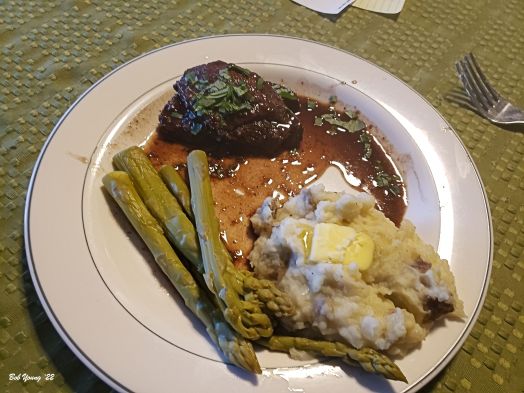
Next we have a delicious venison backstrap pan roast with a special Blackberry Jam Sauce. A mixture of reduced blackberry jam, made from fresh blackberries from our daughter’s bushes last fall, and a good balsamic vinegar and apple cider. (See the recipe) OK. So your question is, “What is backstrap?”
Venison backstraps are a cut of meat that is found along the back of a deer; alongside the spine. They are often confused with a tenderloin cut of meat. While they aren’t the same as a tenderloin, they are considered one of the most tender cuts of meat of a deer. Also, known as striploin. There are 2 ways of dealing with a venison saddle, the most common is to prepare a venison backstrap or striploin. The difference between backstrap and tenderloin is, backstrap refers to a length of loin on the back of a deer, elk, moose, etc. It’s the ribeye in beef and loin in pork. Tenderloins are the two strips of very tender meat under the loin, behind the ribs.
Venison Backstrap plated with Asparagus and Mashed Garlic Potatoes
This dish would be awesome with a pork tenderloin, if you don’t have venison. Use the same recipe that is linked under the photo of the venison. If you use pork tenderloin, serve it with beets, either whole small beets or sliced, or sauteed cabbage.
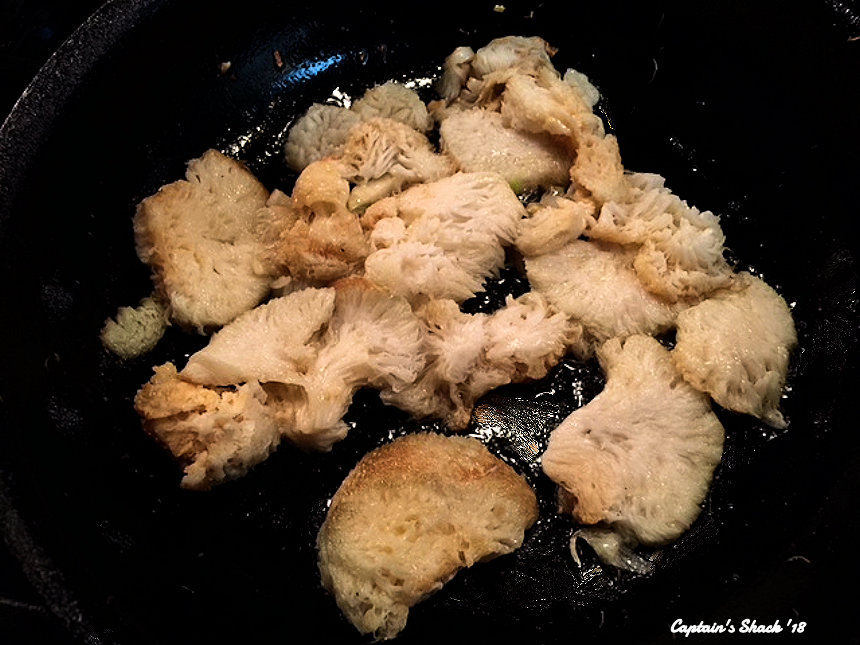
Just a little cloudy and cool, but still fun to see all of the “new”, fresh produce. Great to see some new vendors, too. And with new vendors, comes new “kitchen” ideas and menus. And here are just a few. And with that, comes some new products. The first is Lions Mane Mushrooms. CAUTION:Know your wild mushrooms and the distributors before eating. Some are toxic!
Hericium erinaceus (also called lion’s mane mushroom, monkey head, bearded tooth mushroom, satyr’s beard, bearded hedgehog mushroom, pom pom mushroom, or bearded tooth fungus) is an edible and medicinal mushroom belonging to the tooth fungus group. Native to North America, Europe and Asia it can be identified by its long spines (greater than 1 cm length), its appearance on hardwoods and its tendency to grow a single clump of dangling spines. Hericium erinaceus can be mistaken for other species of Hericium, all popular edibles, which grow across the same range. In the wild, these mushrooms are common during late summer and fall on hardwoods, particularly American beech. [Wikipedia]
Common name: Lion’s Mane, Bearded Tooth, Hedgehog Mushroom, Satyr’s Beard, Old Man’s Beard, Unbranched Hericium.
Description: The bearded tooth fungus is white when fresh and yellowish with age. It has long spines. The fungus is 4-10” (10-25 cm) across. It is an oval to rounded solid mass of spines which hang in a beardlike fashion. The spines cover the sides and are formed in lines. This fungus is attached to the tree by a tough, thick, root like structure. The spines are .4 – 1.5 “ (1-4cm) long.
Ecology/associated hosts: The bearded tooth can be parasitic, found on living trees; especially oak, maple, and beech, and saprotrophic, found on decaying hardwoods. The season is from August – November.
Harvest: Harvest of bearded tooth mushrooms can be difficult as often the fungus is growing high in a tree. The best method is to cut the fruit body at the base, close to the tree and thus remove it in one piece.
Many wild picked Hericium mushrooms may house various tiny beetles and/or sawdust, appearing like bits of decayed wood. Thorough cleaning by shaking and hand removal of such nuisances is often needed. If the mushroom has begun to discolor to a yellowish tone, it is too old and likely will have a sour or unpleasant flavor after cooking. [Midwest Mycology Org]
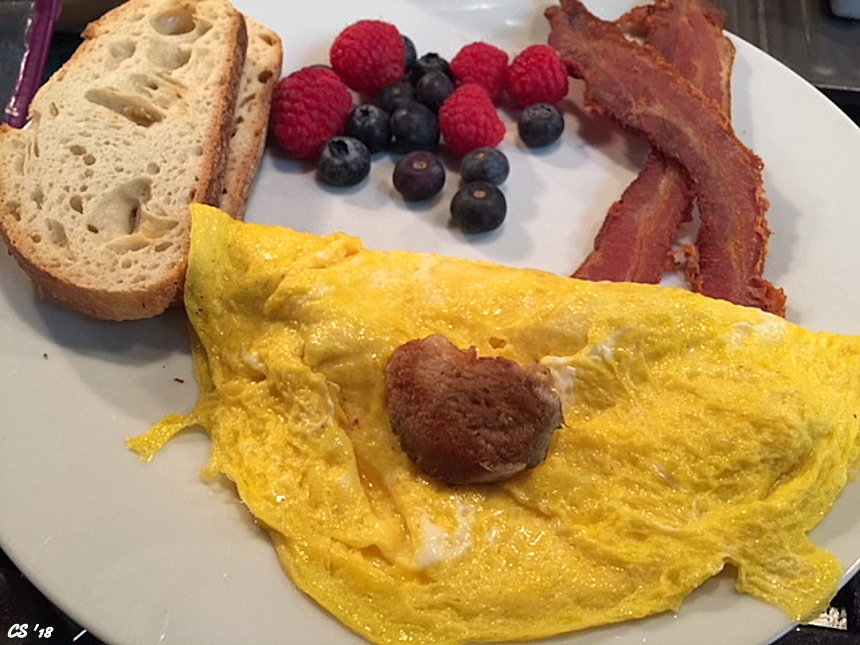
With all of this information in mind, here is one use – A Lion’s Mane Mushroom Omelet!
Lion’s Mane Mushroom and Garlic
Sautéed Lion’s Mane Mushrooms with Garlic
Lion’s Mane Mushroom Omelet
Raspberries and Blueberries
Bacon
Garlic Toast
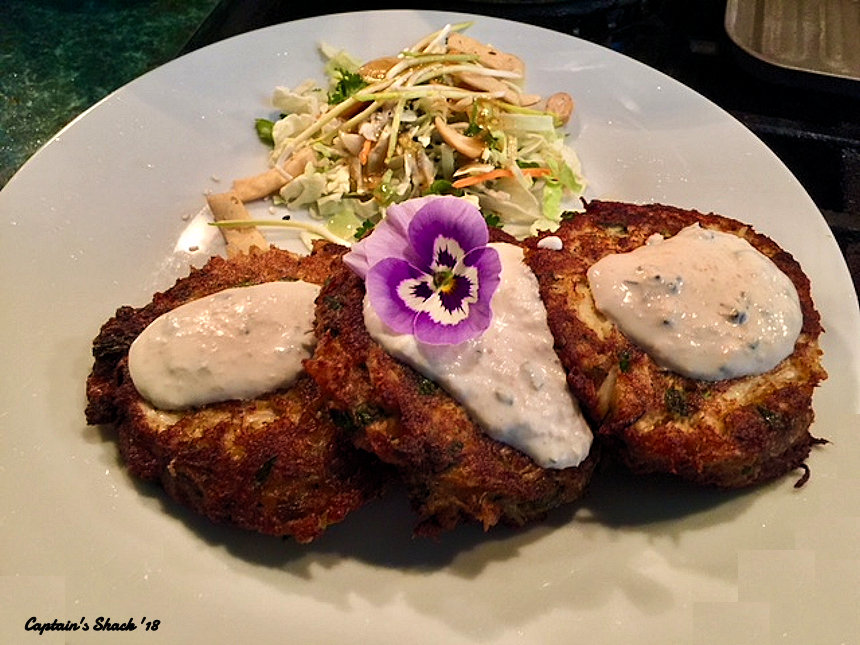
And then there is seafood. I grew up on seafood – which I did not particularly like at the time. But it was either seafood or liver. I really don’t care how you cook liver or what you do to it – It’s still liver! If you like crab cakes, and Robin and I do, here is a recipe we came up with. Give it a try. CS Crab Cakes. These are mostly East Coast Style, less the saltine crackers. But still made with Blue Crab (Phillips). It’s an Atlantic thing.
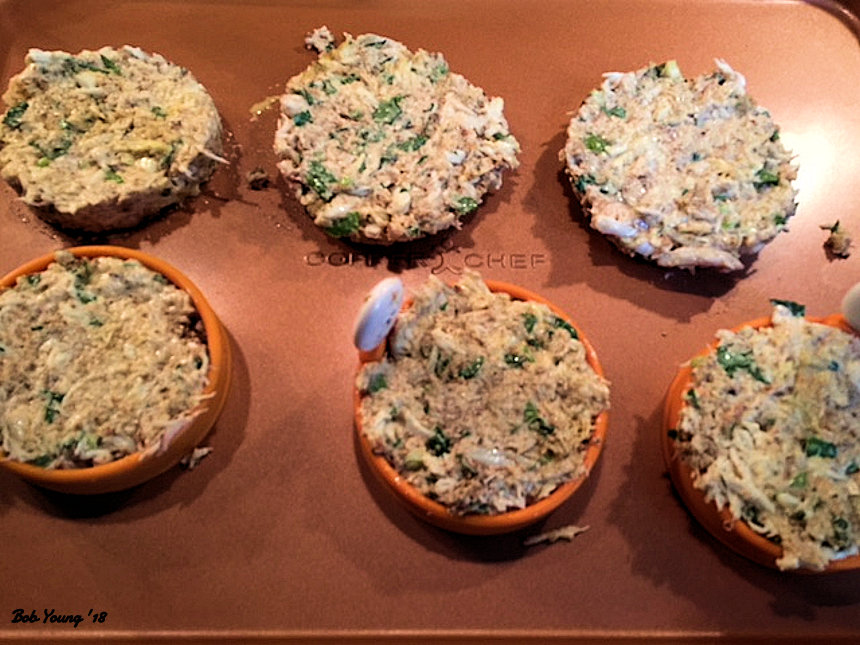
Crab cakes in egg rings and getting ready to cool down. The cooling is important!
CS Crab Cakes
Asian Salad
But you can not have dinner without breakfast. Here are two to try. Differently good!
Lemon Pancakes Over Easy Eggs
Avocado Eggs Toasted Acme Bakeshop Sourdough Logs Fruit Polenta Cakes
(Remove the seed from 1/2 an avocado and place a poached or soft cooked egg in the hole. Top with micro greens.)
Whisky Cured Salmon (Lox)
Shepherd’s Pie
And the good thing about all of these meals? 95% of the ingredients came from the Boise Farmers Market or their vendors. (Eggs, lamb, polenta, micro greens, bread, bread crumbs (from Acme Bakeshop sourdough bread), mushroom, etc. We eat well and know where our products come from. Thank-You BFM and vendors!
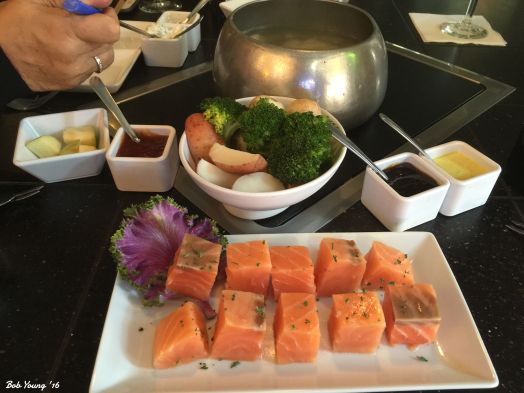
Visit The Melting Pot in Boise for a fun dinner or Happy Hour. Good food with a fun presentation. And yes, the kids are welcome! 4-Star restaurant in Boise. And here is a link to their extensive Fondue Menu. Check it out! More importantly, I think, is “just what is a fondue?”
According to the Cambridge dictionary, “a hot dish prepared by keeping a container of either hot oil or melted cheese over a flame at the table and putting pieces of meat in the oil to be cooked or pieces of bread into the cheese.”
And from Justhungry.com, “In Switzerland, ‘la fondue’ means a cheese fondue and nothing else. Other types of dip-bits-of-food-in-a-communal-pot dishes are specifically called fondue-something, e.g. fondue bourgignonne (bits of beef filet fried in a pot of oil), fondue chinoise (thin slices of beef or other things cooked in a pot of broth), and so on.”
The cheese fondue at The Melting Pot consists of, “CLASSIC ALPINE – rich, sweet-yet-earthy
Featured Cheeses: Gruyère, Raclette, Fontina. Melted with: White wine, garlic, fresh nutmeg. Gluten Free $8.95” Delcicous. Here is what we had to complete this 4-Star evening. Enjoy!
Window sign at 6th and Main Streets in Boise.
Main bar. A large varity of beer and wine.
I you wish in season, a nice patio.
A 2013 Ravenswood Zen of Zin for us!
APPLE BACON SPINACH Fresh spinach, crimini mushrooms, sliced egg, spicy pecans, Granny Smith apples and apple bacon vinaigrette
Gluten Free 5.75
And yes, a salad at the Melting Pot. They have 3 selections, although since the Caesar Salad has minimal, and barely noticeable anchovies, I don’t really call it a Caesar Salad. (Those were the Waiters words.) The above salad was delicious!
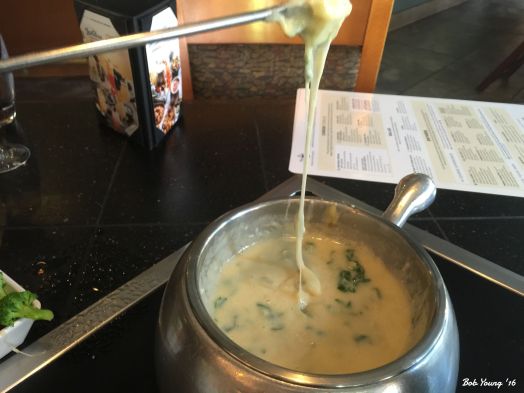
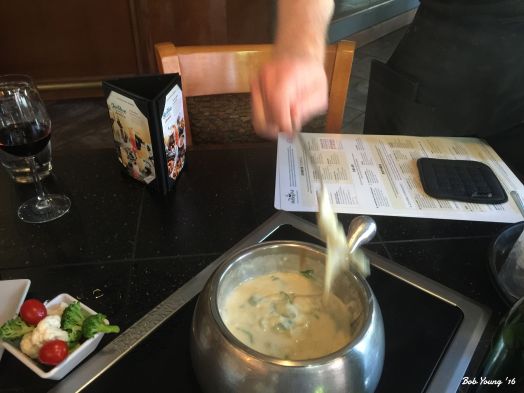
CLASSIC ALPINE FONDUE rich, sweet-yet-earthy Featured Cheeses: Gruyère, Raclette, Fontina
Melted with: White wine, garlic, fresh nutmeg
Gluten Free $8.95
Stirring the Classic Alpine Fondue
Classic Alpine Fondue
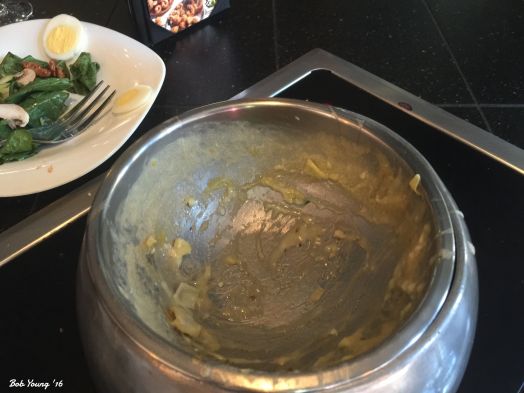
Hmmm. It was good!
ATLANTIC SALMON FILET potato, mushroom and brioccoli
In fact, these are made from some fresh salmon. Breading is totally different from the store bought “things”. The recipe follows the photo. Enjoy! We did. This is an awesome way to make salmon.
Housemade Salmon Fish Sticks
Special Dipping Sauce
Fanned Baked Sweet Potato
with garlic butter
Fresh Green Garden Salad
with carrot threads and “peachy” peach vinaigrette
Full Sail LTD Lager
And the recipe for both the salmon and the dipping sauce.
Parmesan Fish Sticks and Special Dipping Sauce
Recipe courtesy of Giada De Laurentiis
Total Time: 21 min Prep: 4 min Cook: 17 min Yield: 4 to 6 servings
Level: Easy
Ingredients:
1 (18-ounce) center-cut Salmon Fillet, about 9 by 4 inches, skinned
1/2 c All-Purpose Flour
1/2 t fine Sea Salt
1/4 t freshly ground Black Pepper
3 Egg Whites
1 c grated Parmesan
1 c seasoned Bread Crumbs
Olive oil, for drizzling
1/3 c Mayonnaise
1/3 c Plain Yogurt
1 T Dijon Mustard
1 T chopped fresh Parsley or Chives
Directions: For the Fish Sticks:
Preheat the oven to 450 degrees F.
Rinse the salmon fillet and pat dry with paper towels. Cut the fish in half to make 2 fillets each about 4 by 4 1/2-inches in size. Starting on the longest edge, slice the fillets into 1/2-inch pieces. Lay the widest pieces, from the center, cut side down, and slice in half lengthways so all the pieces are equally about 1/2 by 1/2 by 4 1/2-inches in size.
Place the flour in a medium bowl and season with the salt and pepper. Place the egg whites in another bowl and beat until frothy, about 30 seconds. Combine the Parmesan and bread crumbs in a third bowl.
Coat the salmon pieces in the seasoned flour and pat to remove any excess flour. Dip the floured salmon in the egg whites and then into the Parmesan mixture, gently pressing the mixture into the fish. Place the breaded salmon pieces on a liberally oiled baking sheet. Drizzle lightly with the olive oil. Bake for 15 to 20 minutes until golden brown.
Directions: Dipping Sauce:
Mix the mayonnaise, yogurt, Dijon mustard, and parsley (or chives, if using) in a small dipping bowl.
Arrange the fish sticks on a serving platter and serve with the dipping sauce.
Yes indeed! A great Saturday for three reasons: (1) Be sure to congratulate Robin on being 5 weeks smoke free! It’s not easy. (2) Wish Robin a Happy Mother’s Day tomorrow and (3) A good time at the Boise Farmers Market, even though the weather was not the best – It snowed on the mountain! I met some great new vendors today. The Big Lost River Meats in Mackay, ID ((208) 588-3085), their Garlic and Rosemary Sausage is wonderful and C&G’s Wild Alaska Salmon. I got some good salmon information from them. Enjoy the information! Cheers.
Big Lost River Meats
410 Pine Street
Mackay,Idaho 83251
(208) 588- 3085 This was a great sausage.
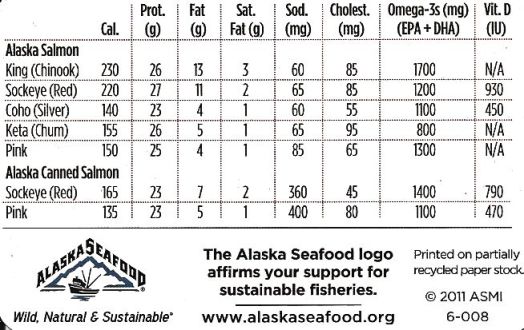
Here is some good information on salmon. We always have Coho (Silver) or Copper River Sockeye (Red) salmon in our freezer. No problem having baked or poached salmon several times a week.
C&G W@ild Alaska Salmon C&G Wild Alaska Salmon
Great information about them and contact information on their web site