~ – Enjoy a meal or a recipe with us! Be sure to check the Sidebar and Menu above. Interesting resources are listed there. Most are hot links. Air Fryer (AF), Instant Pot (IP) and Captain's Shack (CS) recipes now have their own page. Subscribe to the blog. It's still FREE!
First of all. I made it to 80 the first of April and I thank all who helped me make it an awesome day! Parma Ridge Bistro and Winery for a super great dinner as always and the German Chocolate Cake! And Marnie and Eric for opening their house and the Open House. Thank you one and all!
The kitchen has been slow and moderately successful. If I must throw away “leftovers” then that tells me that it was not especially liked. But that’s just my opinion. So lets start with the German Chocolate Cake and homemade Cupcakes. Thank you Stephanie and Michelle. And a very special thank you to the Love of My Life, Robin – you always make these time so special!
Special Occasion Sweets by Michelle Smith, our Granddaughter-In-law Anna Shanner’s sister.
Now for the dinners. One of the better ones was a Salmon Papillote. Eric caught the Kokanee 2 days prior ton the meal and it was delicious! Moist and succulent.
Salmon Papillote right from the oven.
Salmon Papillote plated with a Green Salad and Carrots and Broccoli cooked in the papillote
And finally, we had some boneless, skinless chicken thighs leftover from the Butter Chicken, so I made some Chicken Rice Soup and I really liked it.
Homemade Chicken Rice Soup
So there you have some of the menus we had in the past week or so. The “not so popular” ones are not included. But enjoy these. I did. There is no recipe for the papillote. From Wikipedia, “En papillote (French pronunciation: [ɑ̃ papijɔt]; French for “enveloped in paper”), or al cartoccio in Italian, is a method of cooking in which the food is put into a folded pouch or parcel and then baked. This method is most often used to cook fish or vegetables, but lamb and poultry can also be cooked en papillote. It is a combination cooking method of baking and steaming.
The parcel is typically made from folded parchment paper but other material, such as a paper bag or aluminum foil, may be used. The parcel holds in moisture to steam the food. The pocket is created by overlapping circles of paper or foil and folding them tightly around the food to create a seal.
The moisture may be from the food itself or from an added moisture source, such as water, wine or stock. The choice of herbs, seasonings and spices depend on the particular e being prepared.
The parcel can be opened at the table to allow people to smell the aroma when it opens.”
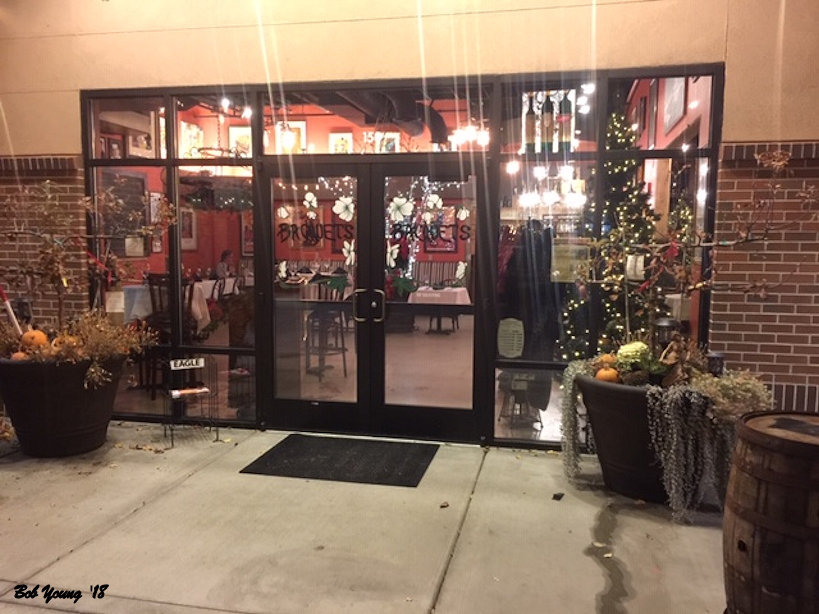
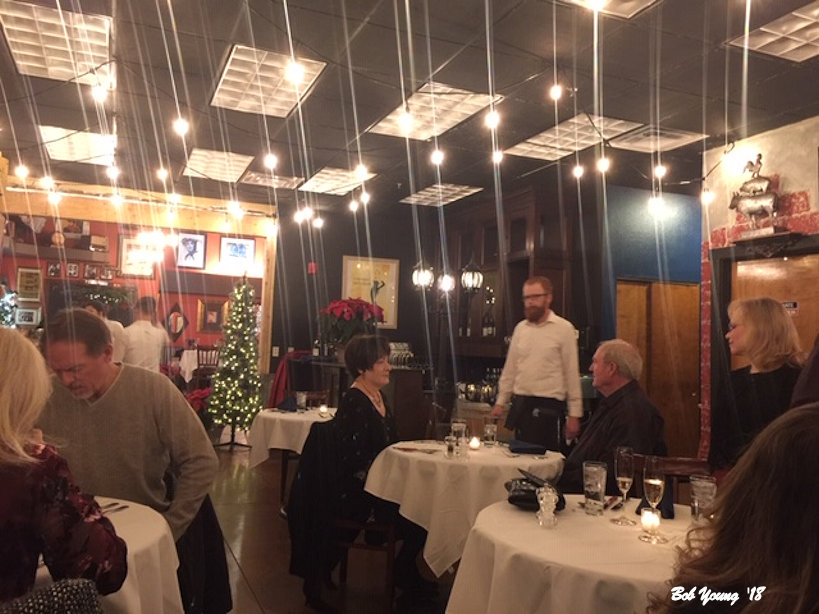
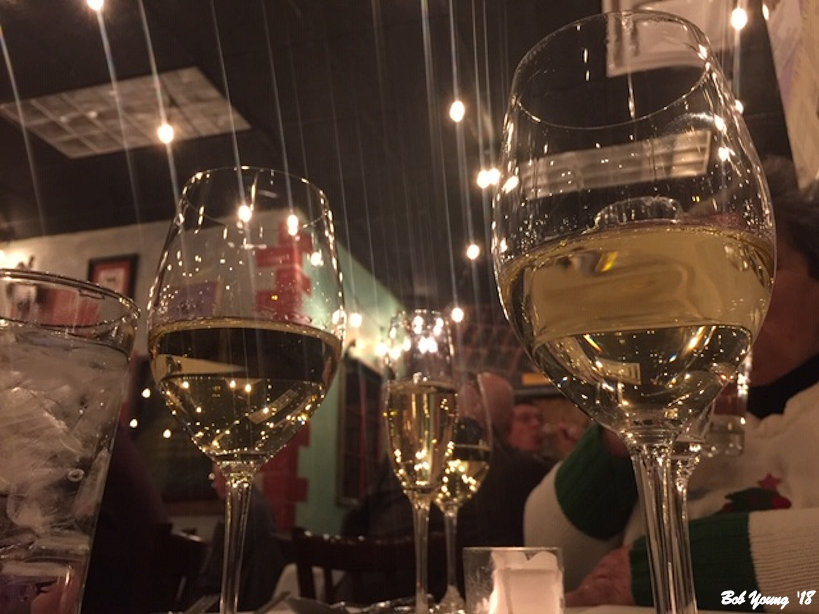
Wow! What a delightful and exciting wine dinner in Eagle, ID at Bacquet’s Restaurant. Yummy French cuisine! And the wines that paired so well with dinner from 3 Horse Ranch Vineyards. Just look at this menu, the wines and the photos of the food. Great to have a truly French restaurant in the area! (Left-Click any of these photos to see them enlarged. Enjoy!
Entrance to Bacquet’s Restaurant in Eagle, ID
Main dining room
Wine dinner area
Daughter Marnie and Robin
2017 Select Eagle Foothills AVA Viognier/Roussanne
2014 Eagle Foothills AVA Merlot
Truffle Asparagus Cream Soup
2017 Select Eagle Hills AVA Viognier/Roussanne
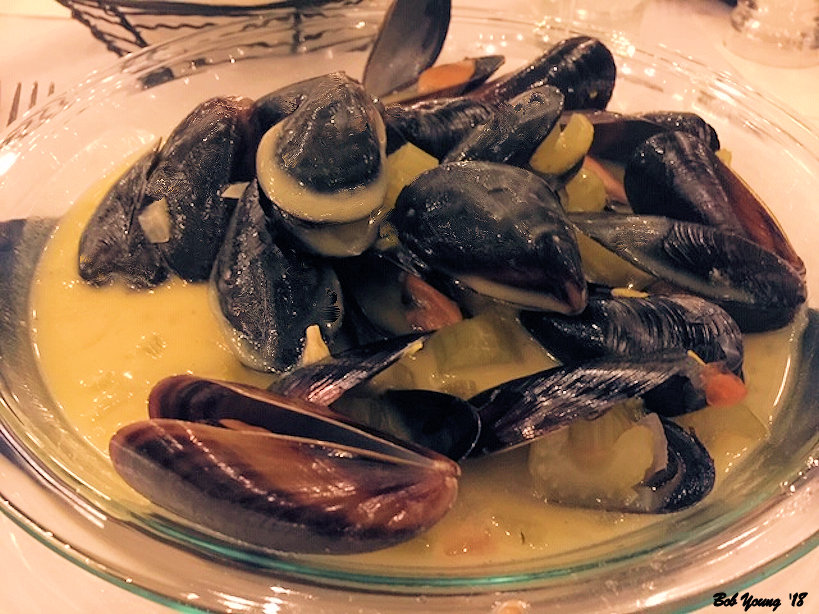
Fresh Mussels fresh mussels cooked in a Chardonnay cream sauce with a touch of lavender and honey 2017 Select Eagle Foothills Chardonnay
Lamb Rack with Sauce Diable roasted young vegetables and Chef’s famous potatoes au gratin 2013 Heritage Syrah/Mourvedre
[Sauce Diable is one of many sauces that can be made from a basic and versatile recipe for Quick Brown Sauce. James Beard famously served it with his Deviled Beef Bones, but it is equally delicious with broiled flank steak or broiled chicken. For an even tangier preparation, add small capers and finely chopped sour pickles…A basic brown sauce with the addition of wine, vinegar, shallots and red or black pepper. It’s usually served with broiled meat or poultry.]
Quail Parisienne aux Poivre Rose (Pink Peppercorns) pink peppercorns give pepper flavor without the bite. Served with mushroom risotto and a vegetable galette 2014 Eagle Foothills AVA Merlot
[A savory galette is the easier and more streamlined cousin of a classic Quiche.]
Tarte Fromage from the north of France, Chef Franck’s home, this tarte is filled with Gruyere and five cheeses 2014 Eagle Foothills AVA Cabernet Sauvignon
I saw this recipe this morning and really thought it looked interesting. Tournedos with Creamed Spinach. The recipe comes from Rachael Ray, but we have adapted it somewhat. I have also placed some fairly deep information on the recipe. Here is some of that info.
Note: Tournedos are: A beef tenderloin, known as an eye fillet in Australasia, fillet in France, the United Kingdom, South Africa and Germany, is cut from the loin of beef.
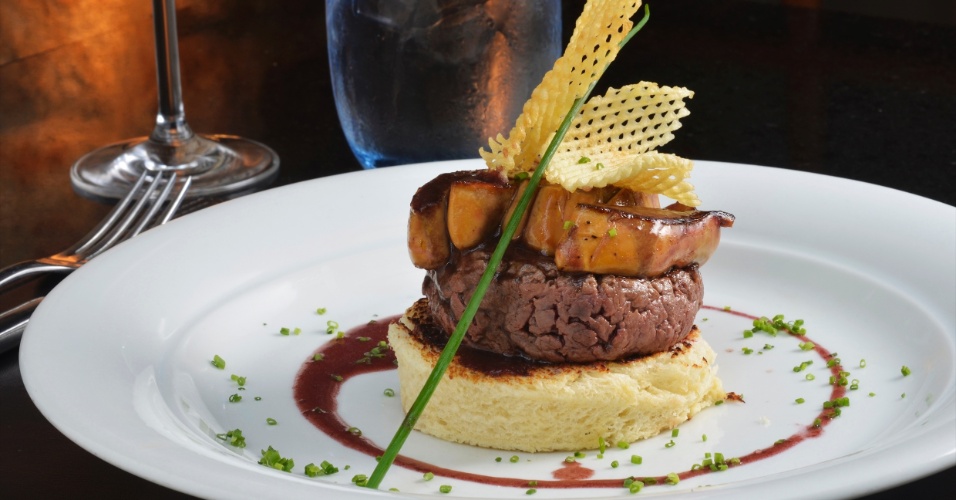
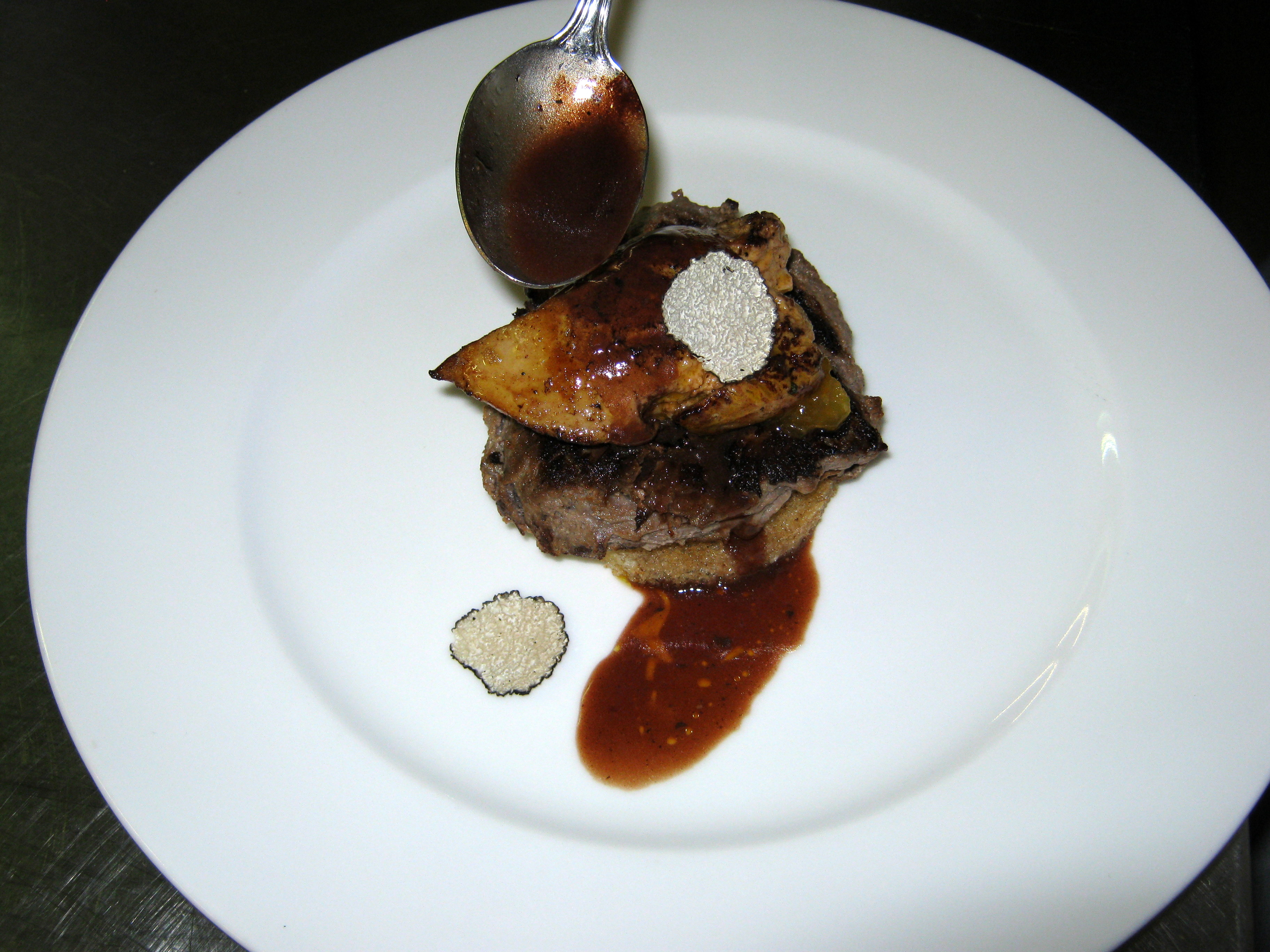
Tournedos Rossini (pictured here) is a French steak dish, perhaps created for the composer Gioachino Rossini by French master chefs Marie-Antoine Carême or Adolphe Dugléré, or by Savoy Hotel chef Auguste Escoffier. The dish comprises a beef tournedos (filet mignon), pan-fried in butter, served on a crouton, and topped with a hot slice of fresh whole foie gras briefly pan-fried at the last minute. The dish is garnished with slices of black truffle and finished with a Madeira demi-glace sauce.
Demi-glace (English: “half glaze”) is a rich brown sauce in French cuisine used by itself or as a base for other sauces. The term comes from the French word glace, which, used in reference to a sauce, means icing or glaze. It is traditionally made by combining equal parts of veal stock and espagnole sauce, the latter being one of the five mother sauces of classical French cuisine, and the mixture is then simmered and reduced by half.
Common variants of demi-glace use a 1:1 mixture of beef or chicken stock to sauce espagnole; these are referred to as “beef demi-glace” (demi-glace au boeuf) or “chicken demi-glace” (demi-glace au poulet). The term “demi-glace” by itself implies that it is made with the traditional veal stock.
Espagnole sauce: The basic method of making espagnole is to prepare a very dark brown roux, to which veal stock or water is added, along with browned bones, pieces of beef, vegetables, and various seasonings. This blend is allowed to slowly reduce while being frequently skimmed. The classic recipe calls for additional veal stock to be added as the liquid gradually reduces, but today water is generally used instead. Tomato paste or pureed tomatoes are added towards the end of the process, and the sauce is further reduced.
Auguste Escoffier King of Chefs 1846-1935.
Auguste Escoffier, “The Chef of Kings and The King of Chefs,” was born in the Riviera town of Villeneuve-Loubet, France, on October 28, 1846. His career in cookery began at the age of 12 when he entered into apprenticeship in his uncle’s restaurant, in Nice…a French chef, restaurateur and culinary writer who popularized and updated traditional French cooking methods. Much of Escoffier’s technique was based on that of Marie-Antoine Carême, one of the codifiers of French haute cuisine, but Escoffier’s achievement was to simplify and modernize Carême’s elaborate and ornate style. In particular, he codified the recipes for the five mother sauces. Referred to by the French press as roi des cuisiniers et cuisinier des rois (“king of chefs and chef of kings”—though this had also been previously said of Carême), Escoffier was France’s preeminent chef in the early part of the 20th century.
Alongside the recipes he recorded and invented, another of Escoffier’s contributions to cooking was to elevate it to the status of a respected profession by introducing organized discipline to his kitchens.
Escoffier published Le Guide Culinaire, which is still used as a major reference work, both in the form of a cookbook and a textbook on cooking. Escoffier’s recipes, techniques and approaches to kitchen management remain highly influential today, and have been adopted by chefs and restaurants not only in France, but also throughout the world.
And finally, a really great source book for every kitchen is the The Sauce Bible: Guide to the Saucier’s Craft by David Paul Larousse
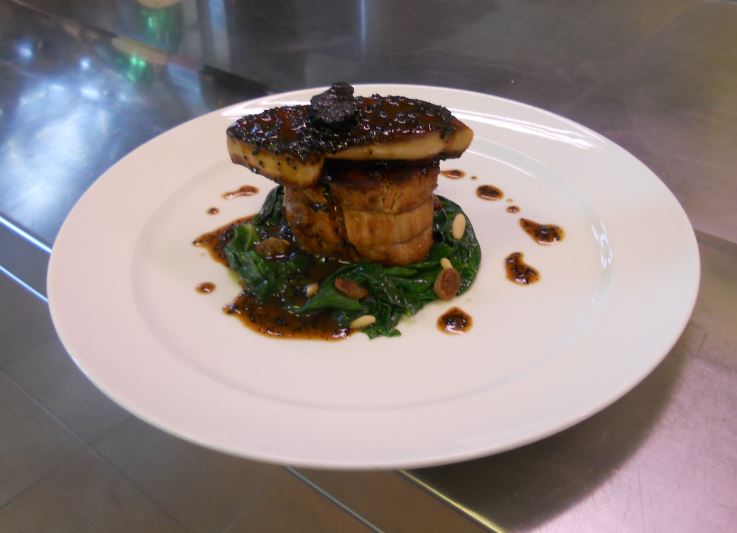
Here are some other variations on Tournedos Rossini. Look at the variations and then add your own. Have fun. Enjoy!
Notice the black truffels in this one – same as pictured above.
Anyone with any ideas of getting veal bones to make veal stock in the Boise area, please let me know. Just remember, I have meds to get next month. Cheers!
There was some very interesting information delivered today from some of my food groups. One such piece of info was on how to clean a cast iron skillet. Watch this short video on Cleaning Cast Iron. Other articles on cast iron include such things as identifying old cast iron pans, reconditioning cast iron and seasoning cast iron. Good information to keep in your library. I have been using the same three cast iron skillets for over 30 years. And I have a camp cast iron pot that I have had for every bit of that long. All are in good condition – like new! (And yes, that is Robin and I in 1984!)
The other great piece of information, and great reading, comes from the Huffington Post and can be found at 17 Food Reasons The French Are Better At Life. And from that article,
Between their rich buttery sauces and the artistry they’ve brought to pastry, it’s easy to understand why French food has long been the envy of the world. But it’s not just the food they make that’s so special, it’s the way they think about their cuisine. In our food-forward minds, this means that the French are winning at life. Here are the 17 reasons why — though we’re sure we could have come up with 100.
And another little interesting tid-bit of information from the same article, particularly if you like butter,
Butter is more important than water.
That’s the secret to fine French cuisine. Their sauces are based on butter. Their pastries are layered with butter. But, it’s all with good reason, because some of the finest butter in the world is made in France. Particularly, the butter made in the Normandy region, which is bright yellow thanks to their fine dairy cows. And, guys, the butter is almost always salted, the way butter is supposed to be.
So there you have it. Two really interesting pieces of information and ones that you may want to keep. Enjoy! And remember, l’heure du gouter, any hour is the “hour to taste” as this translation says. Cheers!
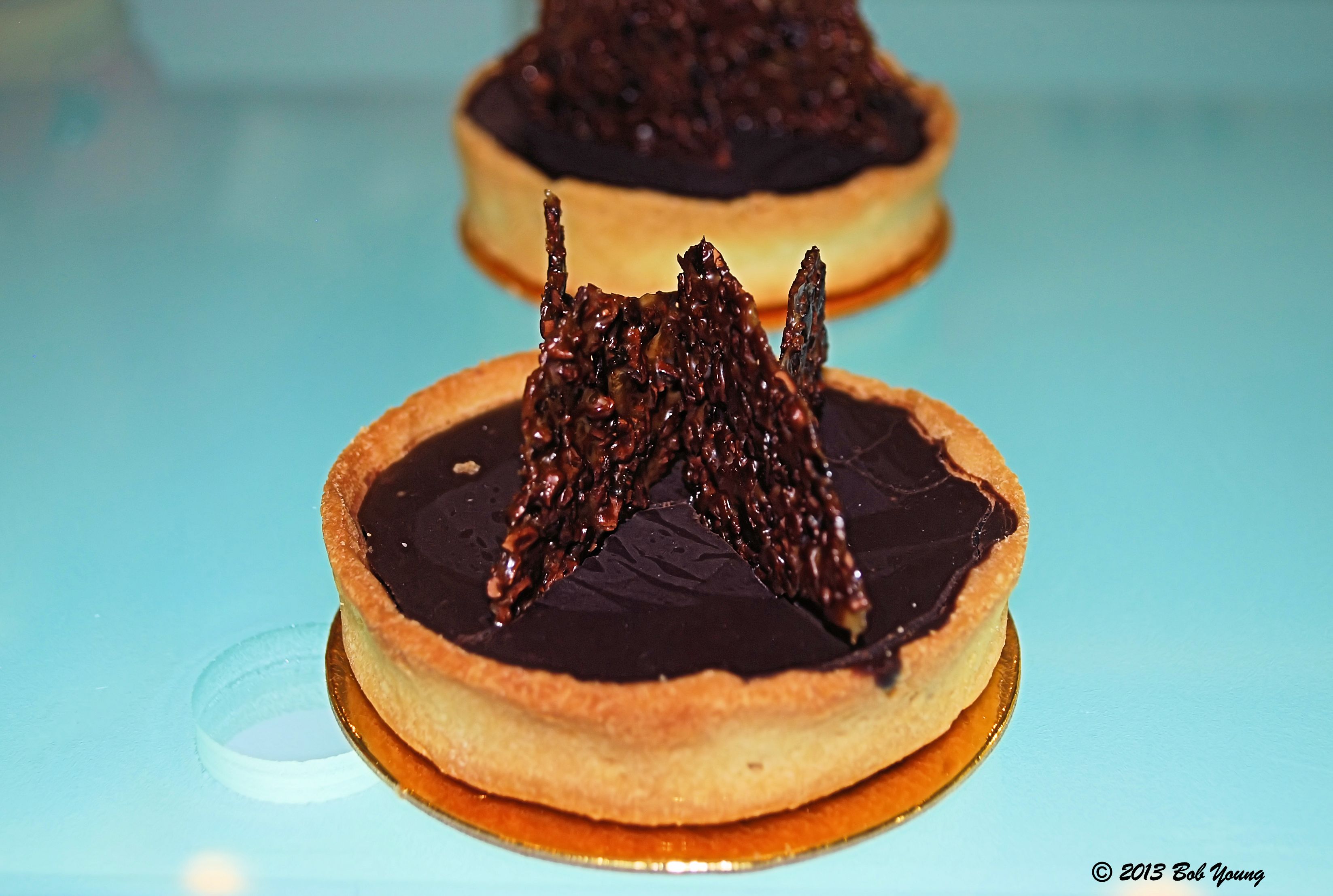
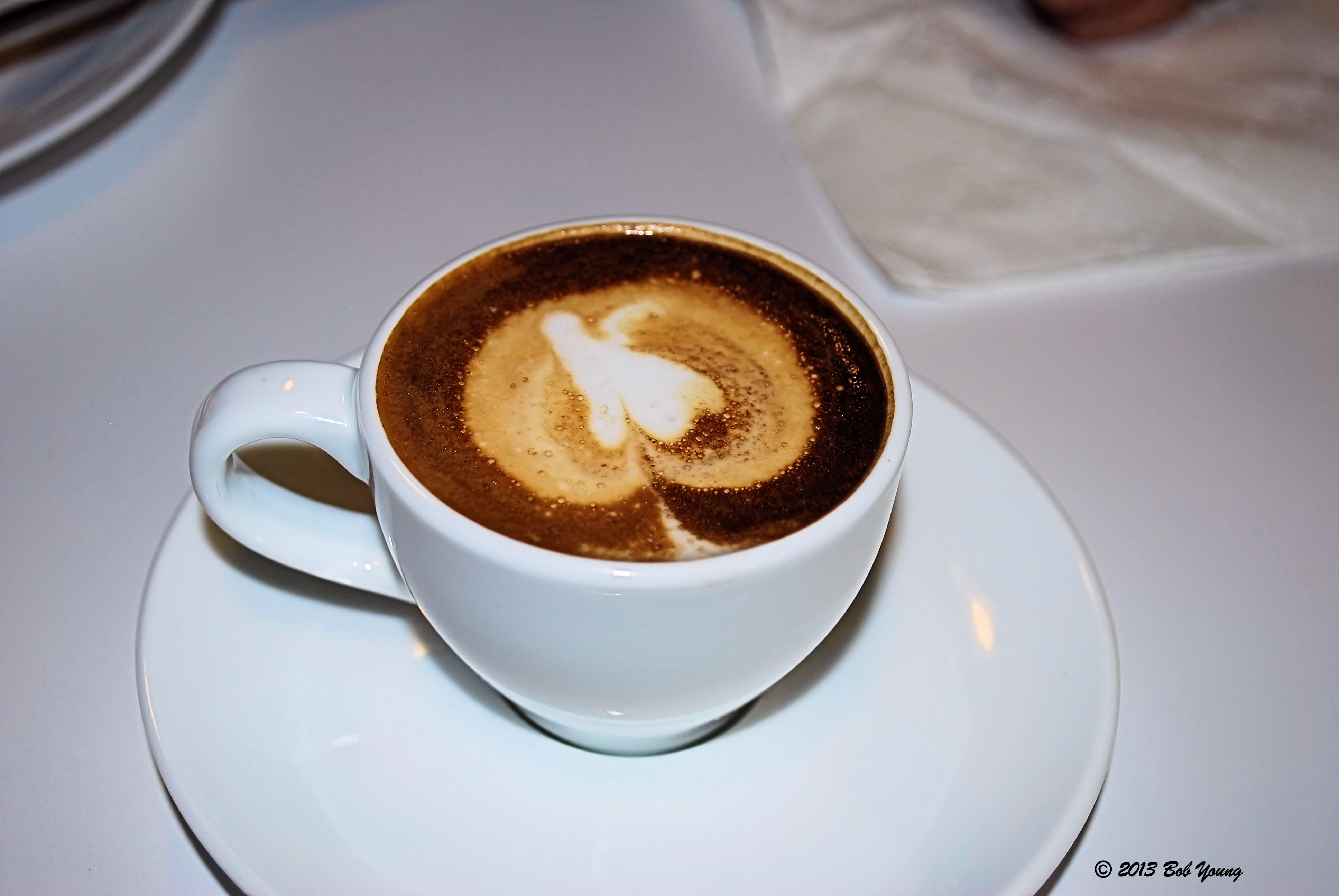
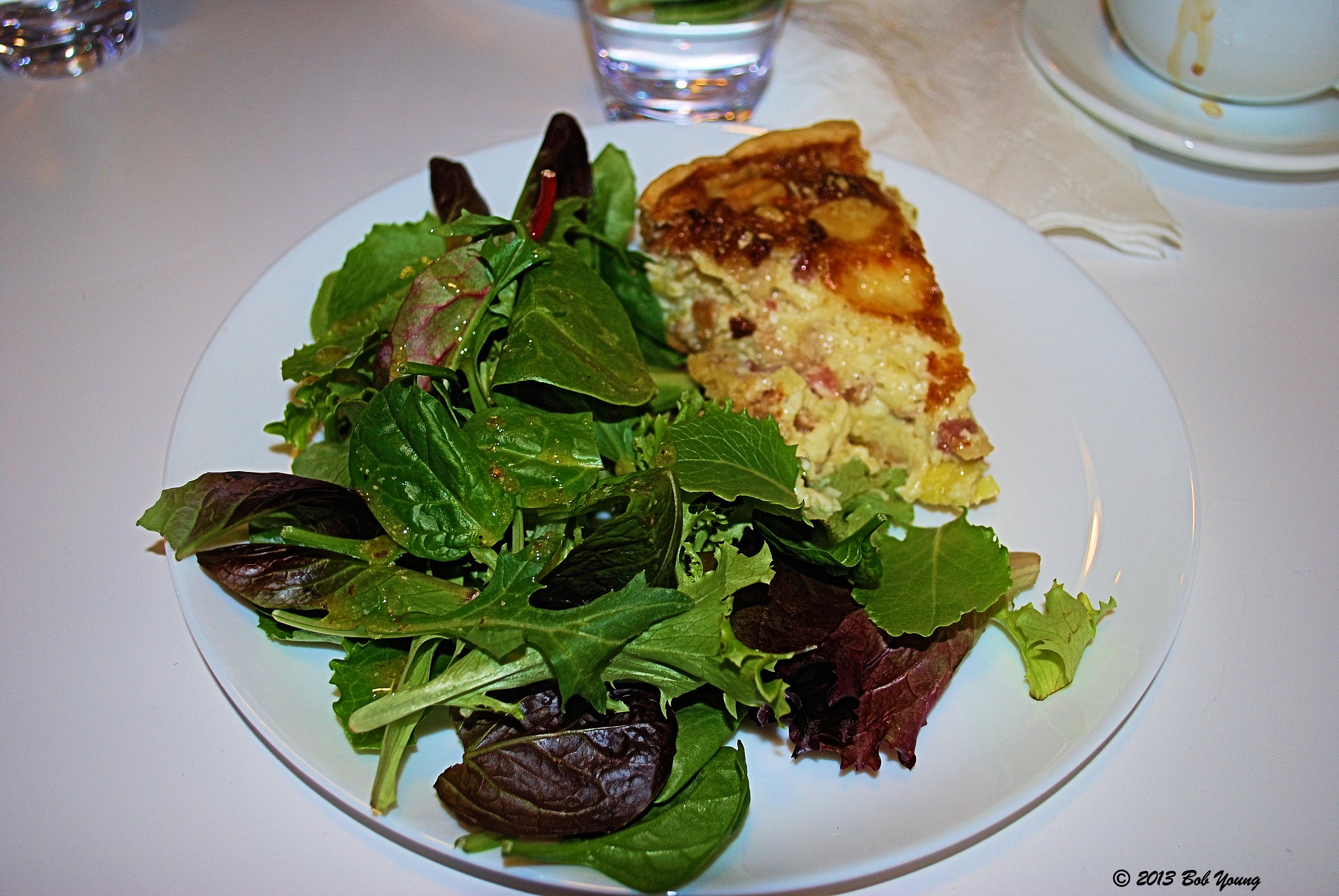
What can I say? Except that the biggest problem with Janjou Pâtisserie is that they are just 1 1/2 blocks away from our front door! That’s jogging distance. A slow jog! If you have been following these posts, and many of you have, then you can see the absolutely delicious, landlocked cruise food that they offer! Here is some more that we photographed this morning. Oh, and that is the other reason we need to go back – I need more photos. Enjoy these. We will see you at Janjou Pâtisserie the next time. The Chocolate Tartlet is super awesome. And so is the Quiche Lorraine. Cheers!
Chocolate Tartlet
Espresso
Mocha
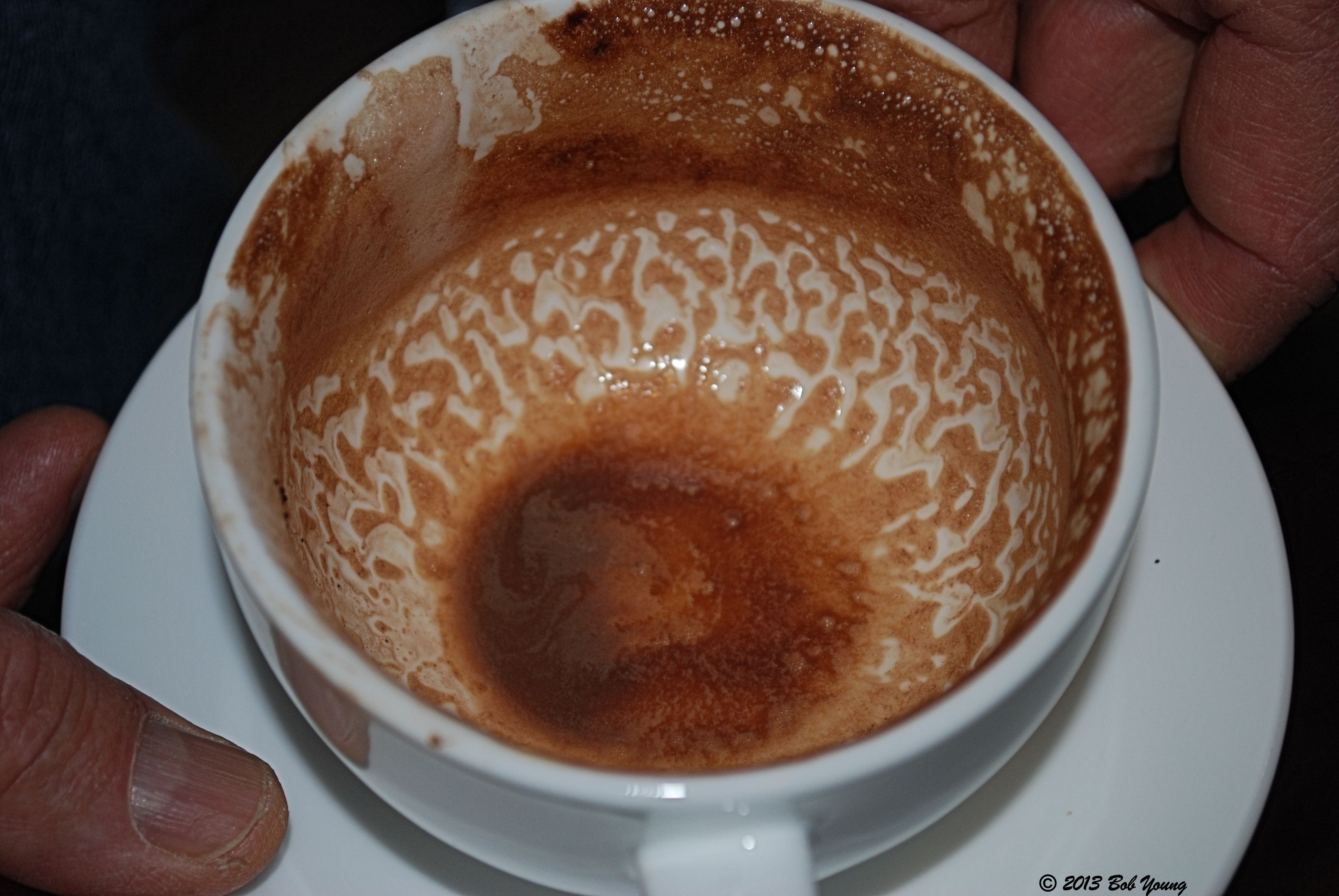
Mocha gone!
Quiche Lorraine and Green Salad
Look at the photos enlarged – Left-Click the photo – and grab a fork. Yum-O! This is way too much fun.













 Boise Foodie Guild