~ – Enjoy a meal or a recipe with us! Be sure to check the Sidebar and Menu above. Interesting resources are listed there. Most are hot links. Air Fryer (AF), Instant Pot (IP) and Captain's Shack (CS) recipes now have their own page. Subscribe to the blog. It's still FREE!
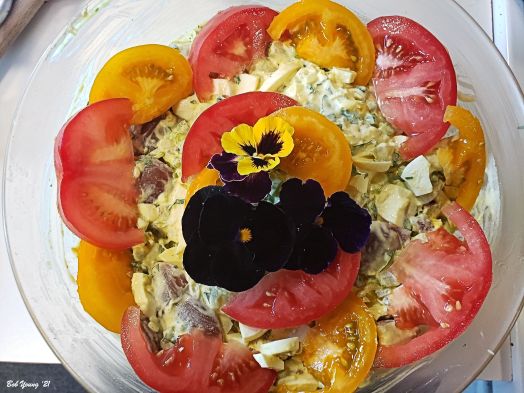
This potato salad,the recipe is located here Chef Lou’s Potato Salad, is full of vegetables. (Pictured above) You can use veggies, or not, or choose your own. The salad has an awesome dressing of mayo, apple cider vinegar and Dejon mustard. I also added some fresh lovage to add to the “celery” flavor. Try it. Easy to make. I chilled the cooked potatoes before adding them to the sauce/vegetable mix. I also cut the potatoes in “bite sized” pieces before cooking them. Try using new potatoes and quarter them.
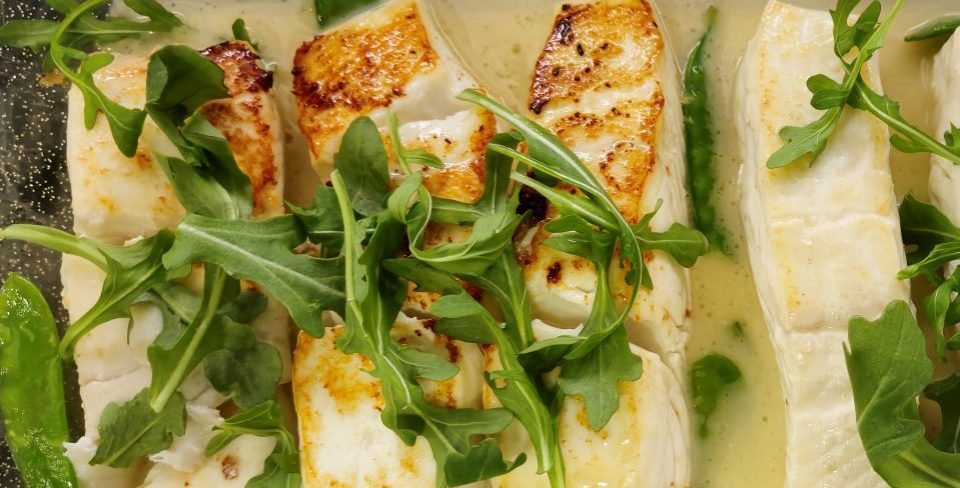
The second wonderful dish we made was a Shrimp Salad. (Pictured above) This was a great, summer salad and it can be made ahead of time and refrigerated. Full of vegetables and shrimp and with a creamy sauce. I added frozen peas and corn to this salad which gave a a nice texture and flavor. I also used some fresh lovage in this, too. You could probably use lobster instead of shrimp, if you are so inclined. We served it with baked Orange Kokanee – salmon – (7 min at 375 degrees F) for 7 minutes. Toasted Sourdough Wedges with butter and garlic.
Well there are two meals you can play with. Have fun and enjoy! Just don’t forget: If it is on a plate, it is edible! Don’t ever put something on a plate that is not edible.
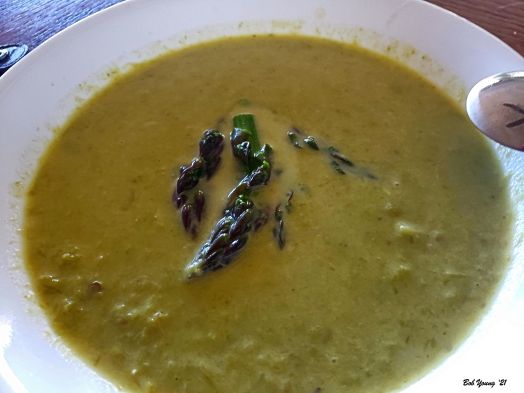
We came across this awesome asparagus and since we have a contact to pick some – 75 pounds worth – and after some were canned, we made this awesome soup. Changed it slightly, I added some bacon for another layer of flavor and it was super. Not hard to do. Great with the fresh asparagus you are picking. Here is the recipe. Try it and see what you think, http://www.rockinrs.com/CS-Asparagus-Soup.pdf
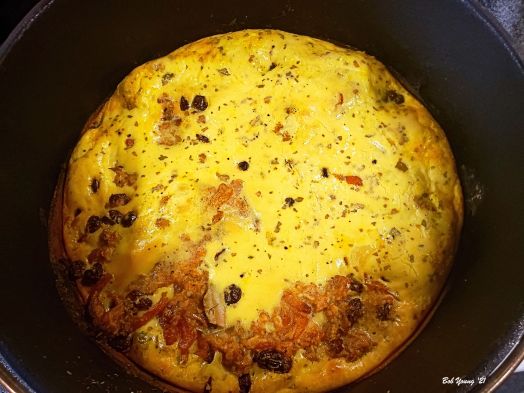
Bobotie – A South African dish
Then we tried this South African dish, Bobotie. We like it with lamb, even though the recipe calls for beef. And we change the chutney to apricot jam and julienned dried apricots. We also made our yellow rice with turmeric. The rice: For this Basmati rice, which we browned in butter before we added water, and then brought it to a boil, reduced the heat to a slow simmer and covered it. Took about 15 minutes to cook it. Here is the recipe. Enjoy! http://www.rockinrs.com/CS-Bobotie.pdf
From Wikipedia, “Today, bobotie is much more likely to be made with beef of lamb, although pork can be used. Early recipes incorporated ginger, marjoram and lemon rind (zest); the introduction of curry powder has simplified the recipe but the basic concept remains the same. Some recipes also call for chopped onions and almonds to be added to the mixture. Traditionally, bobotie incorporates dried fruit like raisins or sultanas (yellow raisins). It is often garnished with bay leaves, walnuts, chutney and bananas. Although not particularly spicy, the dish incorporates a variety of flavours that can add complexity. For example, the dried fruit (usually apricots and raisins/sultanas) contrasts the curry flavouring. The texture of the dish is also complex, the baked egg mixture topping complementing the milk-soaked bread which adds moisture to the dish. Bobotie is usually served with “yellow rice”, which is rice cooked with turmeric.“
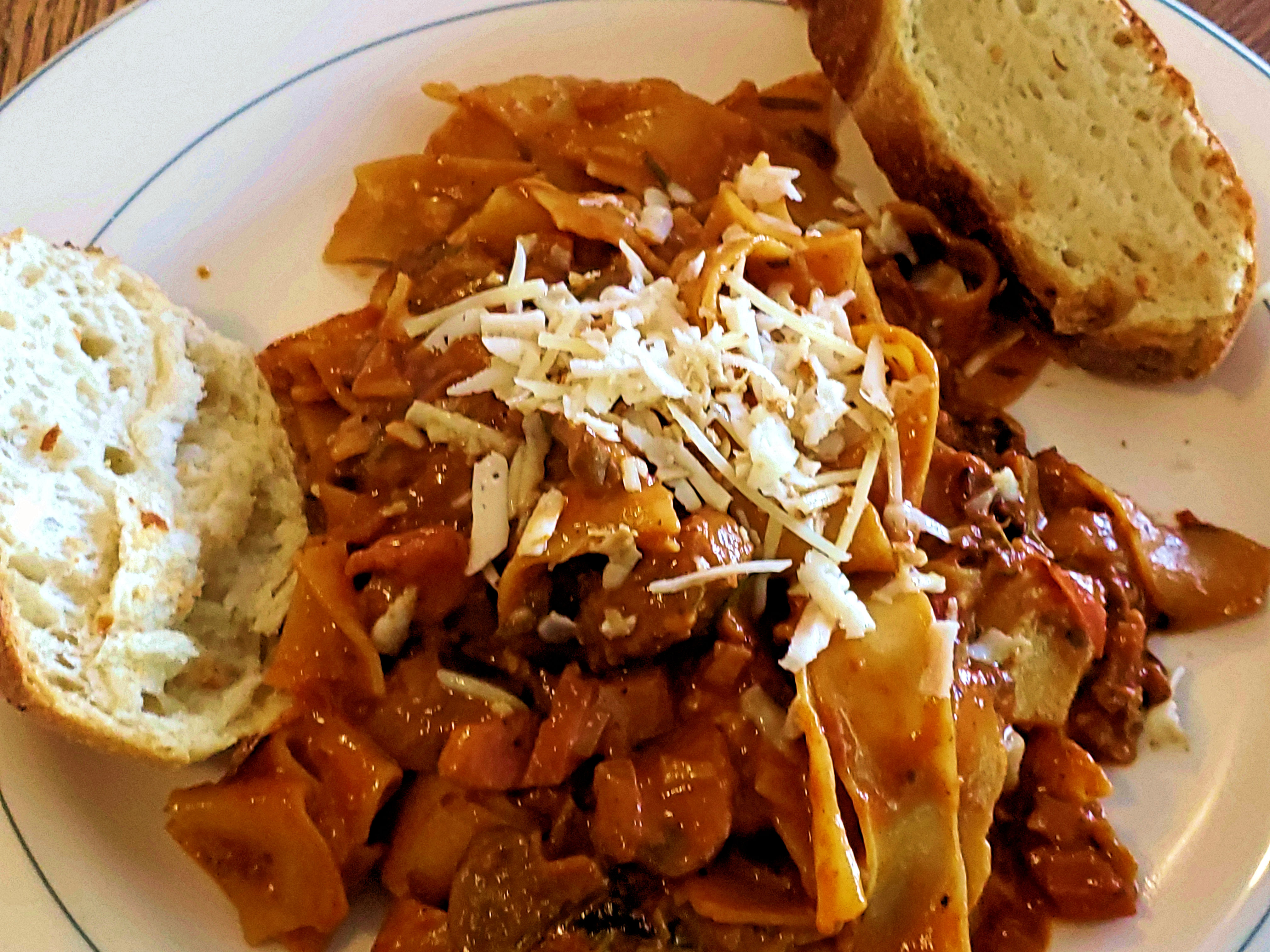
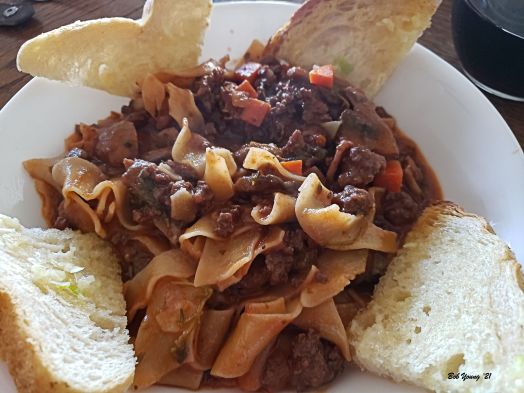
Pappadelle with Red Wine Ragu and Toasted Sourdough with Garlic
We came across this recipe from two different sources, one was Chef Jacques Pepin, and then we adjusted both recipes to make this one. It was delicious! We added a little chervil (French parsley) and Herbs de Provence, which we blend ourselves. We also added a little ground pork. Next time, too, I may add some diced garlic cloves. It is missing in this recipe, excerpt for the Garlic Toast (Acme Bakeshop Sourdough).
The other item that you may want to contemplate is the type of Passata – tomato sauce – you use. I like Cento Traditional, but I also like Rao’s Traditional and Mutti. Any of these are good, but if you prefer to use your own that you have made from all those seasonal Roma or San Marzano, then do so. Please though, when you puree the sauce, leave the skins on.
It’s been awhile. But we are still here. So I think it will be a good idea to look at some of the recipes we have been working on. Some of these recipes call for Herb de Provence and we prefer to make our own. Keeps it to our liking. You can see the recipe here http://www.rockinrs.com/CS-Herbs.pdf. Just remember the 3-1 ratio of using fresh versus dried herbs. For instance, if your recipe calls for 1 Tablespoon of an herb and all your have is dried, use only 1 teaspoon of the dried. (3 teaspoons=1 Tablespoon).
Since summer is right around the corner and BBQ is probably in the back of your mind, here is a recipe for some awesome baked beans. We use a mix of canned Cannellini Beans, Kidney Beans and Black Beans. A wonderful blend of tomato sauce, molasses, brown sugar and dry mustard. Jack Daniels Black Label Bourbon also goes well in this mix. Here is the recipe for these great baked beans. Enjoy! http://www.rockinrs.com/CS-Stovetop-Baked-Beans.pdf.
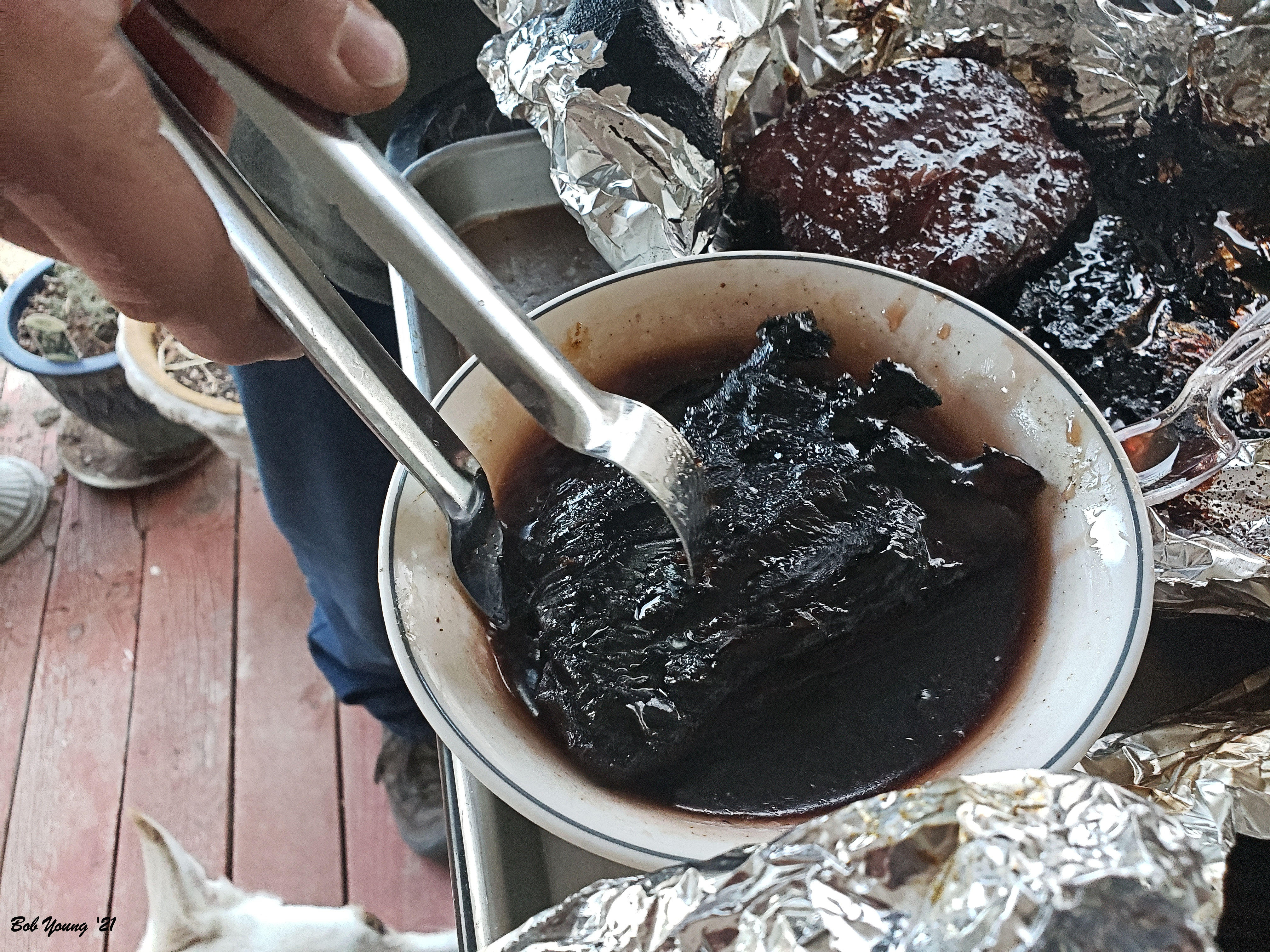
And if you are doing a BBQ or Grilling – we love St Louis Style Pork Ribs grilled – then try Eric’s Rib Sauce to slather on the ribs and to use as a dipping sauce. It is awesome! http://www.rockinrs.com/Erics-Rib-Sauce.pdf. Please note. The recipe calls for a special cider, Basil/Lemon. It is a local (Boise) brand, Stack Rock Cidery. These ciders are available, whether this brand or not, at most grocery stores. They may have different blends. Find one you like or you can use your favorite apple cider vinegar. Just add your favorite herbs.
And if you are in mind for a beef stew, try http://www.rockinrs.com/CS-Beef-Stew.pdf, CS Beef Stew. It has the Icelandic herb lovage in it. A celery tasting green herb. If you use fresh – dried is available – be careful of the amount. The 1 cup chopped that the recipe calls for, is plenty and even at that, you might want to cut back to 3/4 cup. It is great in stews and soups.
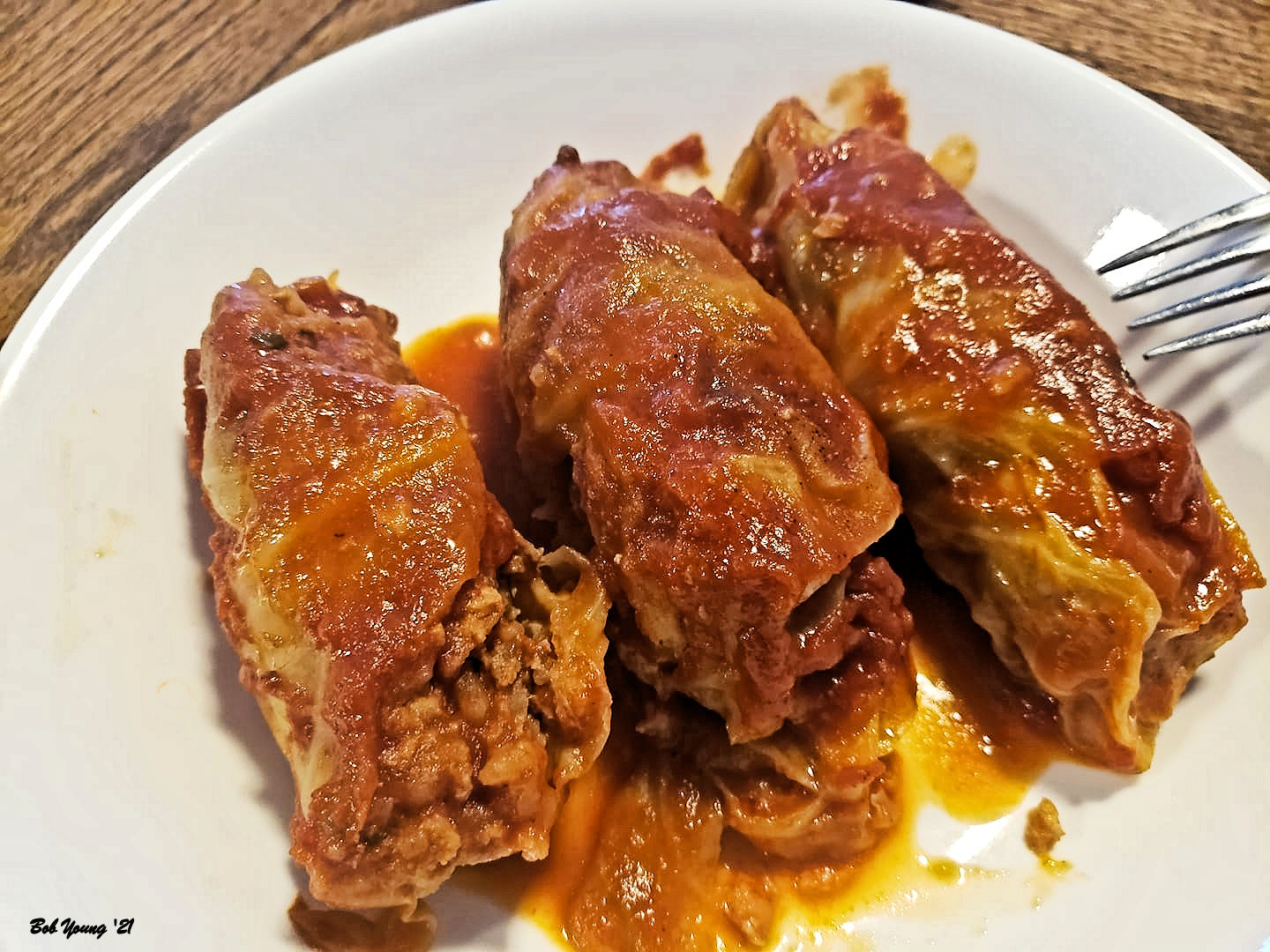
And then there is Halupki. A Ukrainian stuffed cabbage leaves that means “little pigeons”. http://www.rockinrs.com/CS-Halupki.pdf This dish comes from our neighbor and we have slightly altered it. It is simply delicious. It takes right around 3 hours to prepare, but is well worth it. “The name “golubtsy” came to Russia and the region around it in the 18th century when the aristocracy traveled back and forth to eastern Europe. In France, pigeon was wrapped and cooked in cabbage leaves and stuffed cabbage rolls where then called “golubtsy” because the dish resembled the French dish.” [Wikipedia] Note: there is no “G” letter or sound in the Ukrainian language. Therefore this dish is called “Halupki” in the Ukraine.
Easter Boneless Leg of Lamb
You say you like lamb? No? Then you probably have been eating mutton. The difference is in age. Lamb is generally less than 1 year old, whereas mutton is everything else. This one is simply delicious for those who like lamb. Maybe those who say they don’t like it, may learn to eat it using this recipe. Enjoy this lamb. http://www.rockinrs.com/Lamb-Rosemary-Garlic.pdf
And now some dessert! How about Pecan Shortbread Cookies? Yum. To give the pecans some extra flavor, roast them on s sheet pan in the oven at 350 degrees F for 8 minutes. Watch them – Don’t let them burn. Here is the recipe. Enjoy. http://www.rockinrs.com/Pecan-Shortbread-Cookies.pdf
And that does it for now. Brought you at least somewhat up-to-date, and I “learned” this new format, somewhat. Cheers.
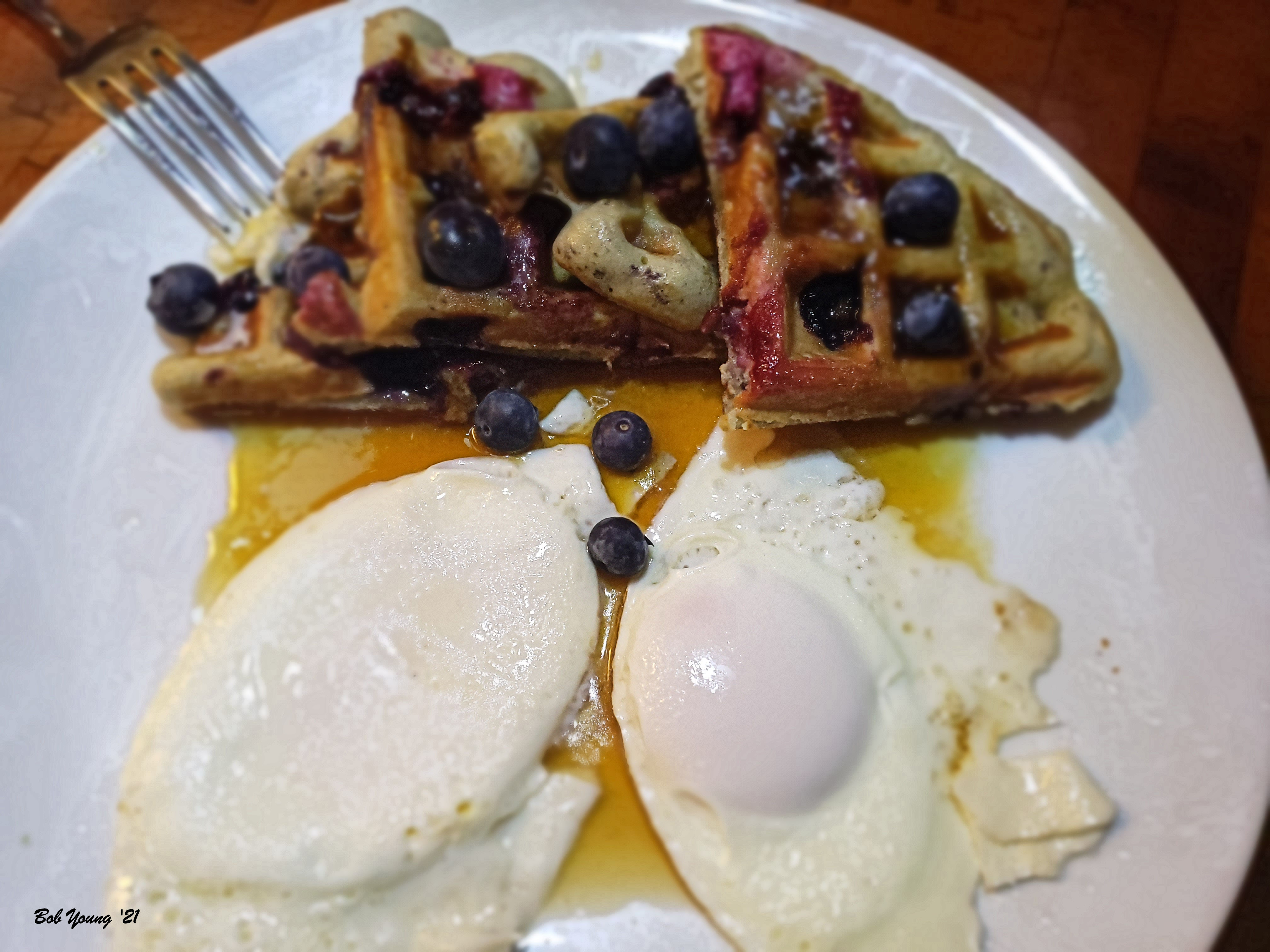
I have been asked how do I make Blueberry Bacon Waffles and the answer is rather straight forward. For the bacon I use Falls Brand Thick Sliced and for the waffles I use Krusteaz but with a twist. I add 1 egg and I use 1/2 cup whole milk and 1/2 cup water in the batter. This is not really necessary but I think it makes the waffles better. Light and delicious. Here is how it is done. Enjoy!
Cut 1 strip if bacon per waffle into quarters.
Fry the bacon on the waffle iron to your doneness level.
While the bacon is cooking, place the egg and jam – it can be any and I use either Huckleberry or Blueberry for these waffles.
Add the flour, milk and water to the egg/blueberry mixture and mix well, but don’t over mix. There can be some lumps.
Pour the batter over the bacon in the waffle iron. Add blueberries, close the lid and cook.
Serve with blueberries on the waffle, syrup and basted eggs. A hearty breakfast.
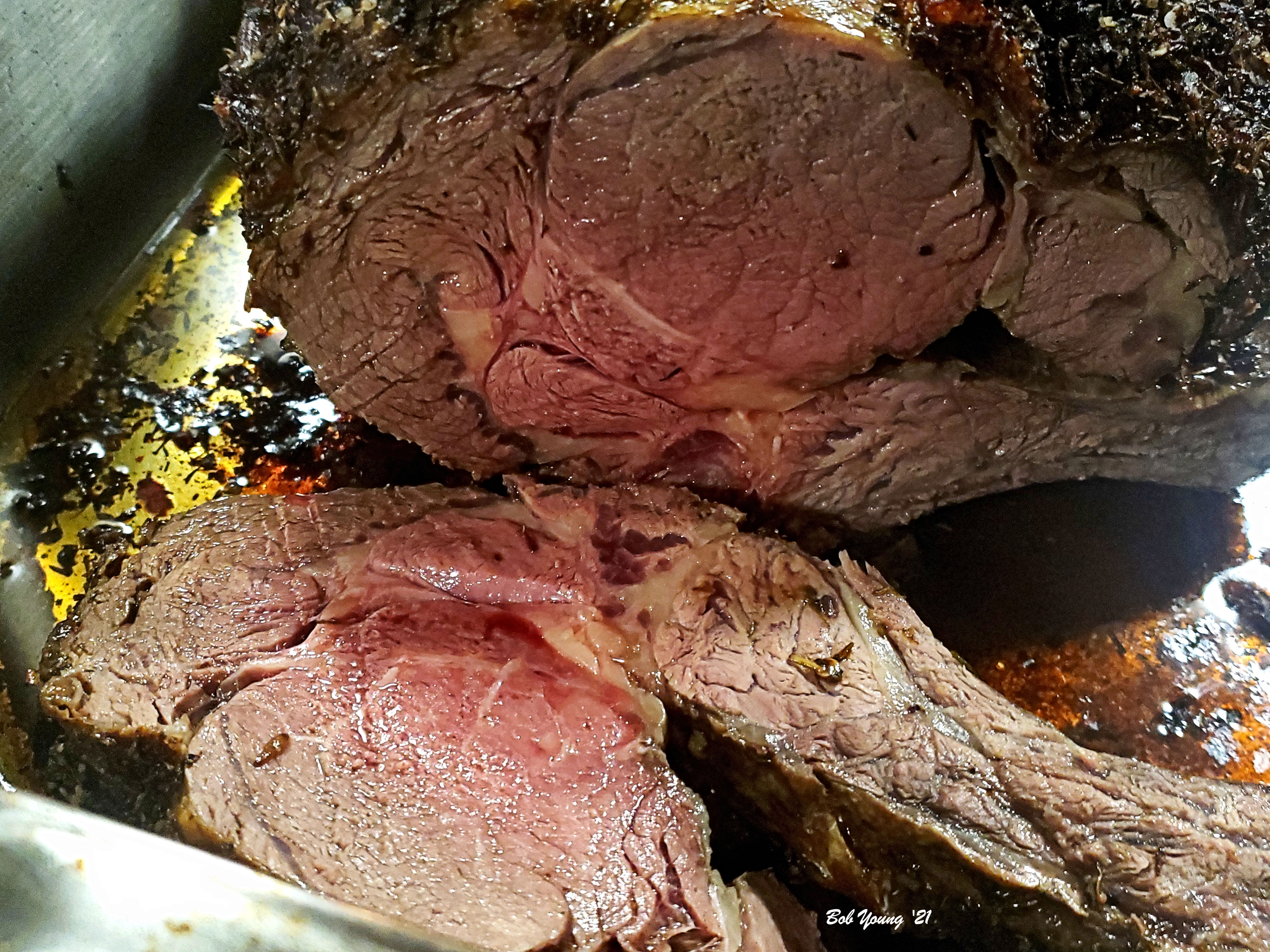
I came across this awesome way to cook a roast of beef. In this case, it was a 12 pound, 7 rib Standing Rib Roast. It was delicious! Start out at 500 degrees F and then turn the heat off for 2 hours and do not open the oven! That’s right. Leave the oven closed! Do not peek! Here is the recipe – CS Prime Rib. You will need Herb de Provence for this recipe and here is our recipe. You can adjust it to please yourself. Herb de Provence. Enjoy!
We came across this recipe after watching Rachael Ray. We altered it slightly and came up with this delicious version. Just remember to prep the pancetta, sausage, shallots, rosemary and garlic first. It will make the job much easier. Here is the recipe – http://www.rockinrs.com/Woodsman-Pasta.pdf. Enjoy this creation. It will serve 6.
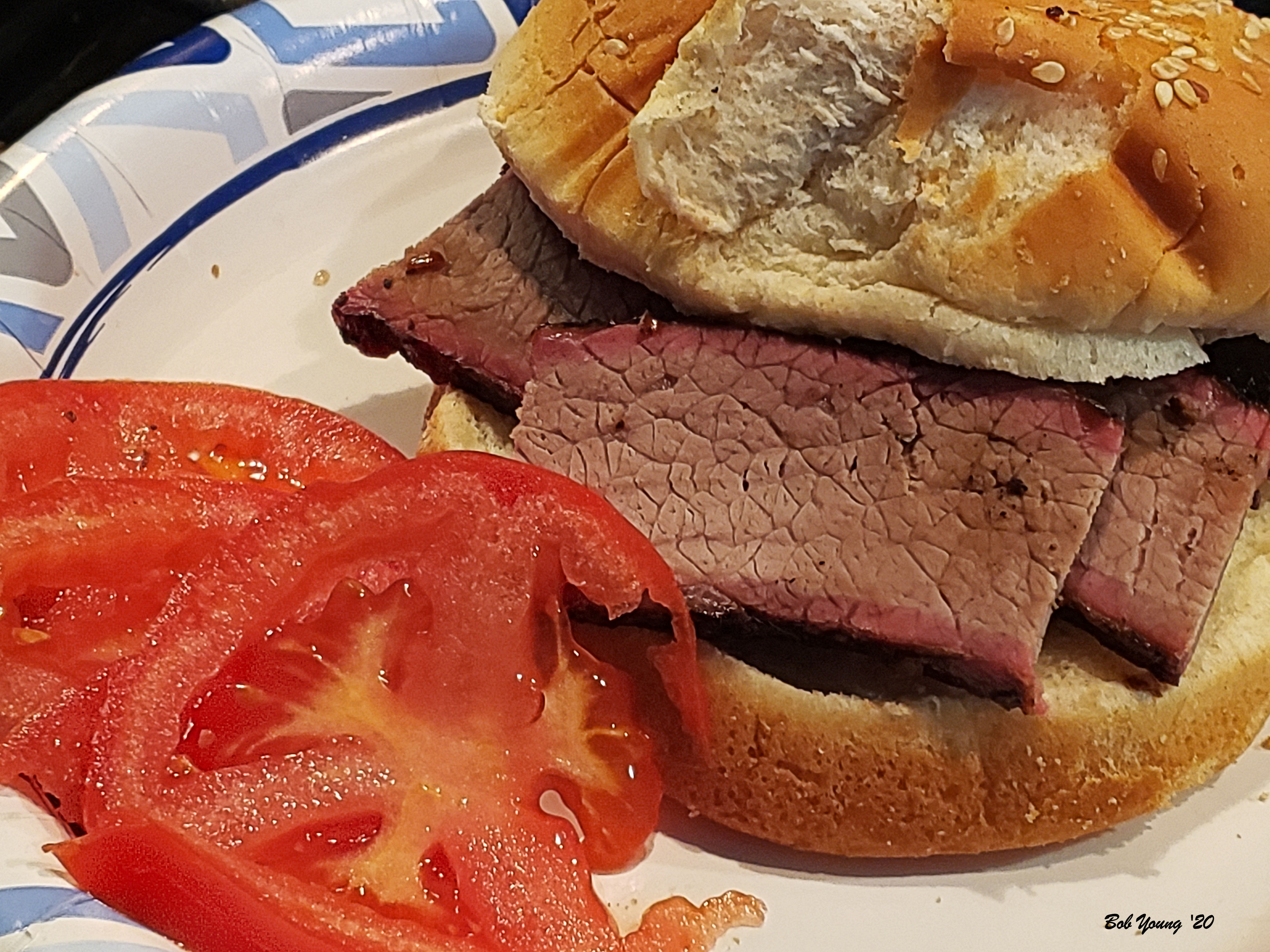
This is by far one of the best CS Brisket that I have made in a long time. Perfect smoke ring and awesome flavors using the rub that is included in the recipe. I love it in sandwiches – pictured here – or just to “nibble” on. It takes some time, but is well worth itt. Just remember to use a very sharp knife to slice it thin, almost shaved. Give it a try.
Here is a great tip for storing potatoes from myrecipes.com. This is some really good information. Enjoy!
How Do You Know When a Potato Is Past Its Prime?
Good potatoes are firm, smooth, and sprout-free.
You can tell a potato is spoiled when it is:
Soft
Discolored
Decayed
Growing mold
Sprouts, or “eyes,” are an indication that your potato is reaching the end of its life. However, they’re not harmful and can be simply removed before cooking. As long as the potato looks, smells, and feels right, sprouts are no biggie.
How to Store Potatoes
1. Keep them in a cool place…
Raw potatoes will thrive in a cool, dark place. The ideal temperature range is 43-50°, which is slightly above refrigerator temp. During cooler months, storing potatoes in an unheated basement or an insulated shed is a great idea. It’s a bit tougher to store potatoes in the summertime, but use your common sense—instead of putting them next to a window, keep them in the area of your house that stays the coolest.
2. …but not the fridge.
Raw potatoes like to be cool, but not cold. Very low temperatures can actually change the flavor of your spuds and make them dangerous. This “cold-induced sweetening” happens when the starch is converted to reducing sugars, which can form cancer-causing substances when cooked.
3. Avoid areas with lots of light.
Exposure to light can cause your potatoes to produce chlorophyll and turn prematurely green.
While this color change is usually harmless, excessive sunlight can also cause potatoes to produce a toxic chemical called solanine. Ingesting solanine in high amounts can cause unpleasant side effects like nausea, diarrhea, and vomiting.
4. Don’t wash them before you put them away.
Step away from the sink! It’s best to keep potatoes as dry as possible if you’re trying to make them last. Moisture promotes the growth of fungus and bacteria—so wait to wash them until right before you use them.
5. Let them breathe.
Prevent moisture accumulation by allowing your potatoes plenty of airflow. If you store them in a tightly sealed container (like a ziploc bag), the moisture released by the potatoes will have nowhere to go. Your best bet is an open bowl or paper bag.
Bonus tip: Don’t store your potatoes with your onions! The chemical reaction will actually cause both to spoil faster. Crazy right?
Not long ago, we made a Mahogany Beef Stroganoff and it was surprisingly good. Even with some totally different ingredients. Hoisin Sauce for one. But there were two questions: (1) What makes it mahogany? and (2) Is it Russian or Italian or French? Well, the answer to the first question is sort of easy. The mahogany color comes from the addition of the Hoisin Sauce, a Chinese BBQ sauce. Question #2. The short answer is “Yes”. Wikipedia says,
The dish is named after one of the members of the influential Stroganov family. Elena Molokhovets’s classic Russian cookbook “A Gift to Young Housewives” gives the first known recipe for Govjadina po-strogonovski, s gorchitseju, “Beef à la Stroganov, with mustard” [typically French], in its 1871 edition. The recipe involves lightly floured beef cubes (not strips) sautéed, sauced with prepared mustard and broth, and finished with a small amount of sour cream: no onions, no mushrooms and no alcohol. A competition purported to have taken place in 1890 is sometimes mentioned in the dish’s history, but both the recipe and the name existed before then. Another recipe, this one from 1909, adds onions and tomato sauce, and serves it with crisp potato straws, which are considered the traditional side dish for beef Stroganoff in Russia. The version given in the 1938 “Larousse Gastronomique” includes beef strips, and onions, with either mustard or tomato paste optional.
Mahogany Beef Stroganoff
Sautéing of beef Stroganoff
After the fall of Tsarist Russia, the recipe was popularly served in the hotels and restaurants of China before the start of World War II. Russian and Chinese immigrants, as well as US servicemen stationed in pre-Communist China, brought several variants of the dish to the United States, which may account for its popularity during the 1950s. It came to Hong Kong in the late fifties, with Russian restaurants and hotels serving the dish with rice but not sour cream.
And from Cooksinfo, we learn,
There are at least two popular theories about how Beef Stroganoff originated.
One is that it was created in 1891 in St. Petersburg, Russia, by Charles Brière, a cook who worked for Count Pavel Alexandrovich Stroganov. Brière reputedly submitted the recipe in that year to “l’Art Culinaire” (presumably the magazine whose full name was “La Revue de l’Art Culinaire”.) This is the version proposed in the 2001 version of the English language “Larousse Gastronomique”. If this is so, it would seem to be just about Brière’s only claim to fame. His recipe called for shallots (now onions are used.)
The second is that it was created by an unknown cook for Count Grigory Stroganov (1770-1857), because the Count had lost his teeth and couldn’t chew meat. Beef Stroganoff, though, is probably just a more refined version of similar, pre-existing recipes…The last prominent scion of the dynasty, Count Pavel Stroganoff, was a celebrity in turn-of-the-century St. Petersburg, a dignitary at the court of Alexander III, a member of the Imperial Academy of Arts, and a gourmet. It is doubtful that Beef Stroganoff was his or his chef’s invention since the recipe was included in the 1871 edition of the Molokhovets cookbook…which predates his fame as a gourmet. Not a new recipe, by the way, but a refined version of an even older Russian recipe, it had probably been in the family for some years and became well known through Pavel Stroganoff’s love of entertaining.
There are also variations made with chicken or pork, which to me, looses the original likeness. I have made it with chicken, but always go back to beef. You be the judge. And just to note: we served this with a 2002 Ridge Vineyards Dynamite Hills Petite Syrah and I marinated the beef cubes in a little Hoisin Sauce, garlic powder and Worcestershire Sauce for several hours before browning it off. The marinating really made it rich. We also had it over medium wide egg noodles and topped the dish with sour cream and chopped parsley. Delicious!

 It’s been awhile. But we are still here. So I think it will be a good idea to look at some of the recipes we have been working on. Some of these recipes call for Herb de Provence and we prefer to make our own. Keeps it to our liking. You can see the recipe here
  And if you are doing a BBQ or Grilling – we love St Louis Style Pork Ribs grilled – then try Eric’s Rib Sauce to slather on the ribs and to use as a dipping sauce. It is awesome!
  And then there is Halupki. A Ukrainian stuffed cabbage leaves that means “little pigeons”.
 And now some dessert! How about Pecan Shortbread Cookies? Yum. To give the pecans some extra flavor, roast them on s sheet pan in the oven at 350 degrees F for 8 minutes. Watch them – Don’t let them burn. Here is the recipe. Enjoy.