Hanukkah Latke Recipes – It’s That Time of Year!


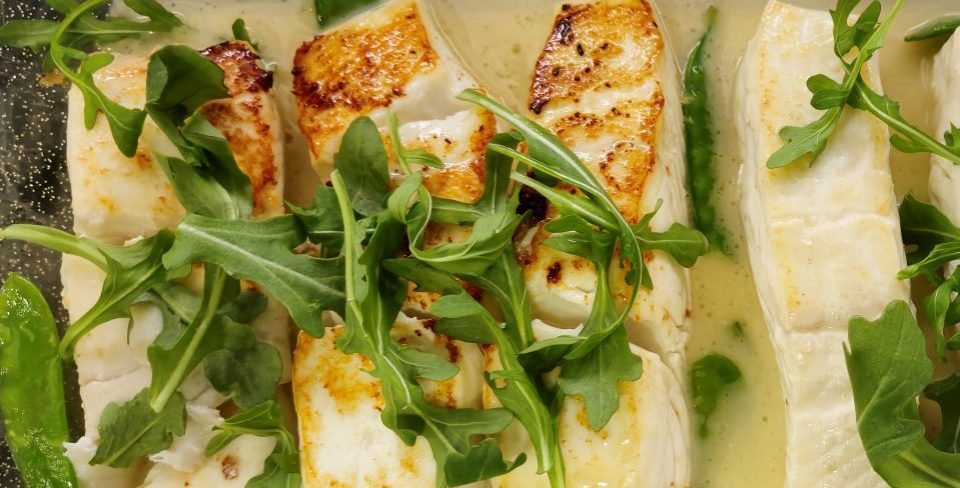
For those of you who like latkes, here are several recipes from Bon Appetit. The recipes are listed Here – Hanukkah Latke Pecipes.The recipes include these types of Latkes: (1) Celery Root and Mushroom Latkes with Onion Applesauce, (2) Latkes with Ancho-Chile Salt and Watercress Guacamole, (3) Potato Latkes with Smoked Salmon, Caviar, and Tarragon Crème Fraîche, and (4) Potato Latkes with Watercress, Smoked Salmon, and Avocado Salad. There are more listed. Use your imagination in making the Latkes. The recipes can all be found on the link listed. Here is some information on the history of Latkes.

From: Wise Geek – What are Latkes?
Latkes, or potato pancakes, are a traditional Jewish dish, often served during Hanukkah. Latkes have gained popularity as a Hanukkah dish because they are fried in oil, commemorating the oil that miraculously provided light for eight days. Luckily, Jewish restaurants and delis frequently serve latkes year round, so the dish can be enjoyed at any season. Latkes are also celebrated as the means by which Judith of Holofernes was able to put the Assyrian leader into a deep sleep, and thus was able to behead him. The Assyrians ended their siege because of the death of their leader.

Naturally, latkes could not have been composed of potatoes in ancient times, as potatoes are a New World food. Instead, it is thought that latkes were made of grated cheese bound with a bit of egg, and then fried. A salty cake such as this, along with an ample supply of wine, would certainly have caused any man, Assyrian or otherwise, to feel sleepy.

Some traditionalists argue that at Hanukkah, cheese and not potato latkes should be served. However, the introduction of the potato to Europe forever changed the latke. Most often, ancient latke recipes containing cheese are now forsaken in preference to those established in the 18th century. 

The word latke is of Yiddish origin, and may have come from either Germany or Russia. As Jews immigrated to the US, so did the tradition of preparing latkes. Many families now prepare these pancakes from recipes over 100 years old. Therefore, even though they are not prepared as in ancient times, potato latkes have a rich history as well.

Typically, latkes are prepared by grating raw potatoes, usually russets as they have a high starch value. Eggs, salt, and sometimes a bit of green onion are added to the potatoes and lightly mixed. The batter may sit in the refrigerator for a while to allow the starch and eggs to hold the ingredients together. Next, the latkes are patted into patties, usually approximately 2 inches (5.08 cm) in diameter. There are those who prepare larger latkes, but these can sometimes fall apart during the cooking and turning process, so smaller cakes may be a good choice for beginners.

Once formed, the latkes are fried in heated oil until they are golden brown on each side. The latkes may then be patted dry to remove excess oil. Latkes are usually served hot, and may be accompanied with both applesauce and sour cream. Hot latkes are preferable to cooled pancakes, as cooler pancakes will taste oilier.

Though bound in tradition, there are newer recipes that suggest a number of additions to the latkes. Chefs have prepared latkes by adding grated carrots, ginger, or a mixture of sweet and savory spices. Sweet latkes with vanilla and cinnamon make an appealing dessert. However prepared, these crunchy pancakes are a delicious connection to the past.

And from Wiki Answers,

Latkes are potato pancakes prepared for Hanukkah, a Jewish holiday that in addition to other things, celebrates the ‘miracle of light’. This refers to the fact that after the Maccabee Jews defeated the Greek Syrians and came back to light the Menora of the Temple in Jerusalem, there was no more pure olive oil to be found, except for a small amount that ended up lasting for eight days (until more could be found/processed).


Because oil is part of the miracle, oily foods tend to be eaten as a symbol. Latkes are thus potato pancakes made with oil. Latkes are potato pancakes, often served as part of the Jewish Hannukah celebration. Some people like them with sour cream, but I prefer mine with a little butter and applesauce.

Latke is a Yiddish word that means pancake. During Channukah, most people eat potato latkes but personally, my favourite are wild rice and mushroom latkes.

One way to eat latkes is with sour cream and applesauce. Applesauce with butter and cinnamon. It’s another way! Apple butter!
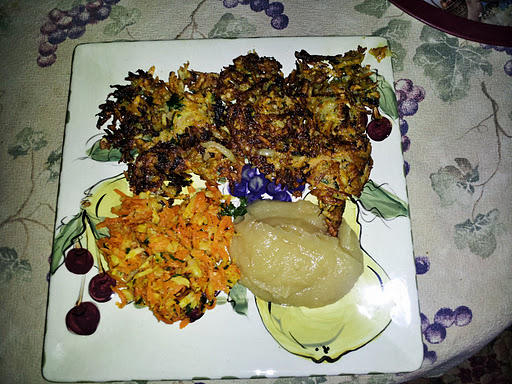
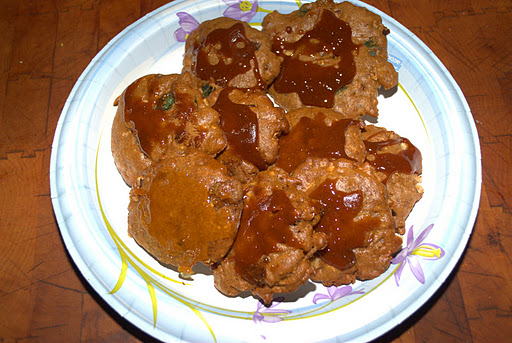
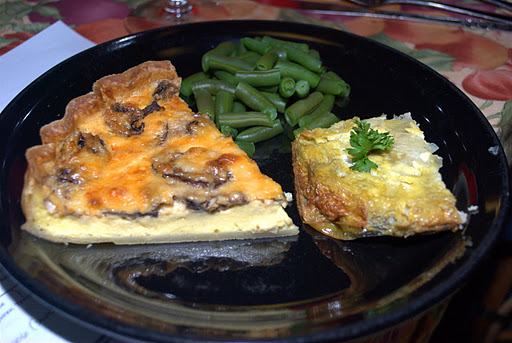
Robin and I try to make our Latkes the way that Joe and Rachael Levitch showed us. Our attempt is pictured here. We’re gainning on it, but not quite there …. Yet! We made these at the beginning of the week with homemade applesauce – yes, fresh – and sauteed root vegetables. Really tasted good. Now it’s your turn! Cheers!

Liebkuchen


Here are two recipes for cookies – German Ginger Cookies called Liebkuchen. Robin made some of each of these and they are awesome. Spicy and sweet. See the note below. Enjoy!

Liebkuchen Blonde Bars

Yield: 2 dozen
Ingredients:
1 1/3 cups Honey heated in microwave with 1/3 cup packed brown sugar for 1 minute in lg glass mixing bowl
2 c All-Purpose flour
1 t Baking powder
½ t Baking soda
1 c Candied mixed fruit
1 T Light Sesame Oil
¼ t ground Ginger
½ t ground Cardamom
2 t ground Cinnamon
¼ t ground Cloves
¼ t ground Allspice (optional)
¼ t ground Nutmeg (optional)
1½ c All-purpose flour
Candied fruit and whole skinned almonds

Directions:
Spray bottom and sides of a 10 x15 inch glass or ceramic lasagna pan with a non-stick spray. Preheat oven to 325 degrees F (170 degrees C).

In a [I use a quart glass measuring bowl that has a handle] 2 cup glass measuring cup, heat the honey and 1/3 cup sugar in a microwave for 1 minute.

In a large mixing bowl sift together the flour, baking powder, and baking soda. Then I add the spices first and stir and then the fruits to the flour.

For the oil [I used 1 tsp roasted sesame oil cause I did not have light sesame oil + 2 tsp canola oil] add to the honey mixture. Stir well.

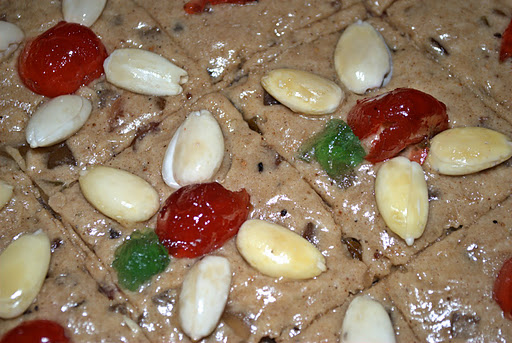
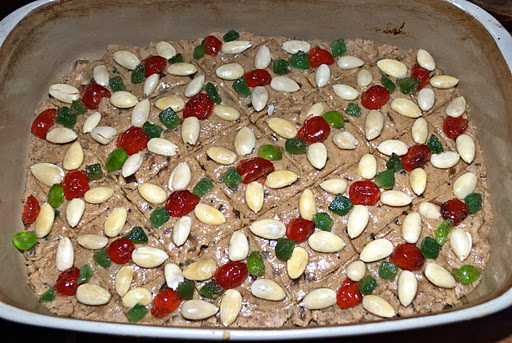
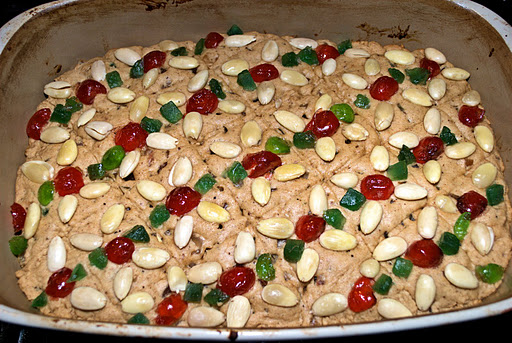
Add 1½ to 2 cups more flour. Knead dough to mix (dough will be stiff). Spread into pan. [I score the top with a knife in diamond shapes and decorate with candied cherries, green cherries or pineapple to look like a rose with leaves] and then an almond at each corner. [I skin my own whole almonds – just pour boiling water over a cupful of whole raw almonds, let sit at least 10 minutes, then drain in a sieve and pop off the skins]

Bake for 20 minutes until inserted toothpick comes out clean. Cut into diamonds or squares along the scored lines. May be frosted with lemon or orange juice/powdered sugar glaze or left plain. Best if stored for 2 weeks.

——————————–

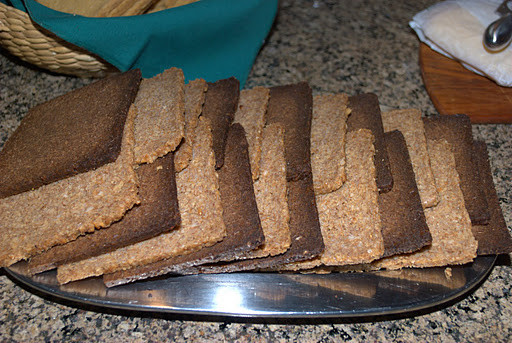
Note: Liebkuchen or Lebkuchen, also called Pfefferkuchen, is German gingerbread. These cookies are either rectangular or round, they have a sweet, lightly nutty taste, and their aroma is spicy, a bit like nutmeg and allspice. They are usually soft with a slight crunch from chopped nuts. The Lebkuchen is a traditional Christmas cookie, which is often enjoyed with a cup of tea or coffee. There are many regional variations to the Lebkuchen, but the most well-known is the Nürnberger Lebkuchen … Nürnberger Lebkuchen or gingerbread has been around since the 14th century, when Nürnberg was a rich city with good trade associations … “Nürnberger Lebkuchen” are just one of many types of German gingerbread. They have been baked in the city of Nürnberg since 1395 by the local monks. The spices had to be imported for all Lebkuchen, so cities with strong trading partners had an advantage over small, agricultural villages when creating new types of Lebkuchen. Nürnberg also had good honey production and this gave them an edge up in commercial production of their Lebkuchen, which began in the 14th century. In 1643, the city even created the “League of Lebkuchen Bakers”.

“Oblaten Lebkuchen” are baked on a thin wafer to keep the soft cookie from sticking to the cookie sheet. “Nürnberger Elisen Lebkuchen”, considered the finest kind of Oblaten Lebkuchen, must have a minimum 25% nuts and less than 10% flour by weight. Sometimes, the recipe includes marzipan. These are soft, moist drop cookies.

Other types of Lebkuchen are made with a stiff dough which starts with a honey or sugar syrup and are rolled and baked. White Lebkuchen are decorated with almonds and candied orange or lemon peel. Lebkuchen is often referred to as “Pfefferkuchen”.

——————————–

Liebkuchen Dark Cookies
Yield: 72 Cookies
Ingredients:
½ c Honey
½ c Molasses
¾ c packed Brown Sugar
1 Egg
1 T Lemon Juice
1 t Lemon Zest
2¾ c All-Purpose flour
½ t Baking Soda
1 t ground Cinnamon
1 t ground Cloves
1 t ground Allspice
1 t ground Nutmeg
1/3 c diced candied Citron Peel
1/3 c chopped Hazelnuts

Directions:
In a medium saucepan, stir together the honey and molasses. Bring the mixture to a boil, remove from heat and stir in the brown sugar, lemon juice, lemon zest, and lastly the egg.
In a large bowl, stir together the flour, baking soda, cinnamon, cloves, allspice and nutmeg. Add the molasses mixture to the dry ingredients and mix well. Stir in the citron and hazelnuts.

Cover dough and chill overnight. Dough will be very sticky – some roll the dough out on a floured surface and cut 2 inch circles. I find it works with the scoop and press method below.

Preheat oven to 350 degrees F. Grease cookie sheets. Using a large T scoop of dough at a time, place 2 inches apart onto the prepared cookie sheet. Press the ball of dough down to ¼ inch thickness – cut with a circular ring, removing excess dough with a spoon if you want a perfectly round cookie. Bake for 10 to 15 minutes in the preheated oven, until no imprint remains when touched lightly.

Icing 1 cup white sugar ½ cup water ¼ cup confectioners’ sugar Combine the sugar and water in a small saucepan.

Have a candy-making helper – necessary for this part. Heat to between 234 and 240 degrees F (soft ball stage). Remove from heat and stir in the confectioners’ sugar.

Quickly brush the icing over the cookies while they are still hot (Important!) and remove them to wire cooling racks.

If icing becomes sugary while brushing cookies, re-heat slightly- adding a little water until crystals dissolve.

Store in an airtight container with a ¼ cut orange or apple core for a few days to mellow.

Heredad Ugarte Wines at the Buzz


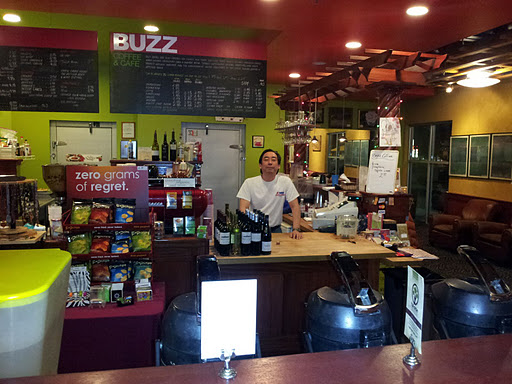
Another fantastic Buzz Wine Club Dinner was held on December 20. Seven wines were offered from the Heredad Ugarte Winery in the NE area of Spain – close to the Basque country – two of which were Cristi’s Choice, and a great 4-course dinner. The photo on the left shows Tommy Takeda at the counter keeping everyone happy.
The wines were rated on a [20] point system, [20] being a superb wine.

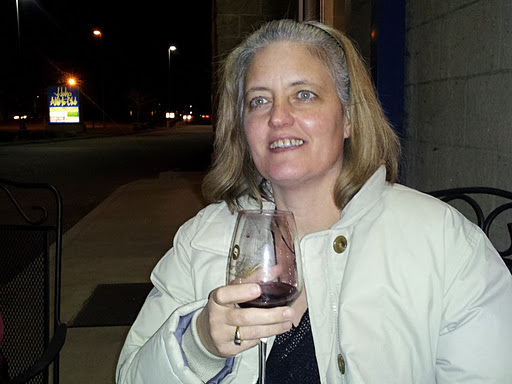
Here Cristi enjoys a break from the hustle of the evening and giving her voice a rest after a great informational session. For instance, did you know that French oak barrels cost about $2700.00 per barrel and American Oak barrels cost about $2000.00 per barrel. The barrels last about 5 years and then most of them are used for Whiskey, Scotch (Whisky) or Chardonnay. Some are re-finished and used again. Enjoy the photos of the dinner. Cheers!
Tapas
Dates and Bacon
Flat Bread with Romesco and Shrimp
Cabrales Phyllo Rolls

2010 Heredad Ugarte Winery White
12% alc, pretty much washes out and a light body and balance. [12} $10.00

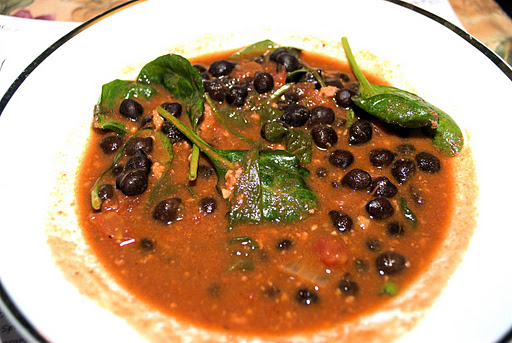
Chickpea Stew Spinach and Chorizo
(These were Idaho chickpeas)

2007 Heredad Domino Reserva
13.5% alc, bright bouquet and good finish. [14] $19.00

2006 Heredad Domino Reserva
13.5% alc, Better balance than the 2007 and the appeal was better. [17] $12.00
(These were both the same wines, just different vintages)

It is really nice and somewhat exceptional that Tommy and Cristie will offer a Vegetarian Dinner to those who prefer a vegetarian selection. Here, Lisa Clark, she and her husband Gregg sat with us, is served a vegetarian dish.

The rest of us received:
Catalan Picada and Chicken
Green Beans
Tortilla Epanola

2008 Heredad Crianza
13.5% alc, great color and clarity. good balance and appeal. [18] $15.00

Tocinillo de Cielo and Magdalenas

2009 Mercedes Tempranillo Shiraz
14.0% alc, a really superb wine that was rich in fruit, full bodied and lasted well. [19] $12.00
This wine was the winner for the evening and it was not the most expensive!

A German Christmas Party and Dinner


Robin and I attended a fantastic German Christmas Party on December 11. Here are some photos and discussion of the dinner. Thank-You Sigi for opening your home to us and Thank-You to all the wonderful cooks! Enjoy!

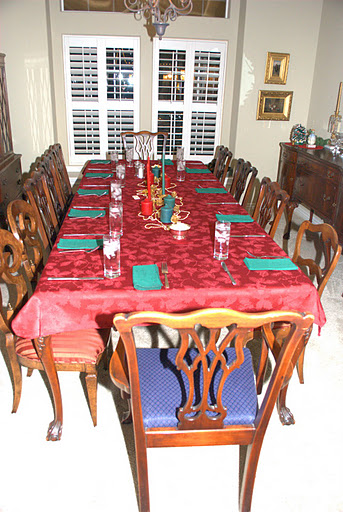
Here is the table beautifully set. And below, is the food! Das Essen waschen lecker und köstlich! (Thank-You Google translator) In other words, and as Rachael would say, “YUM-O!”


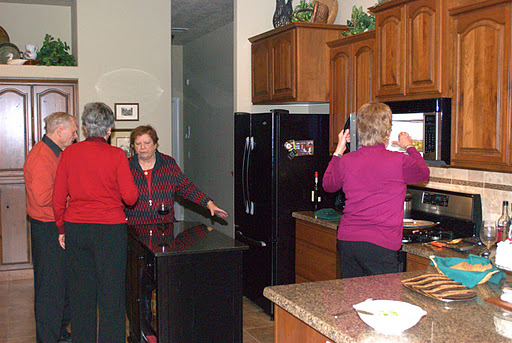
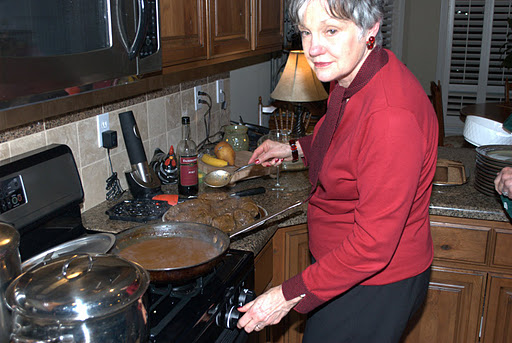
The kitchen was busy.


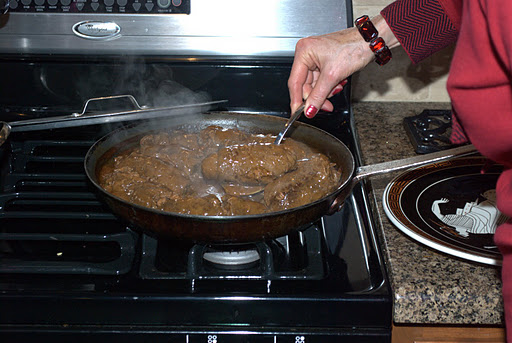
Rouladen in the pan.


Rouladen gravy.


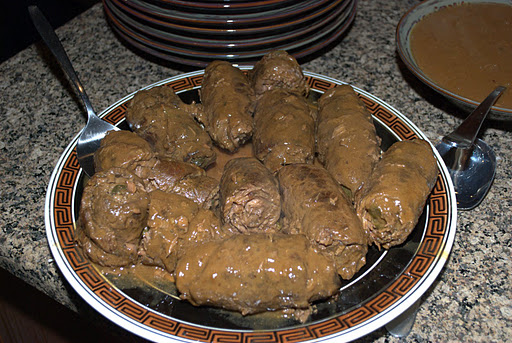
Rouladen plated.


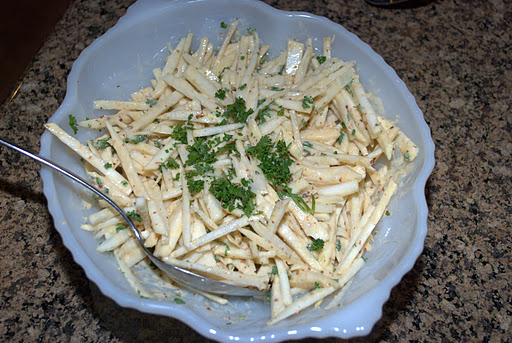
Celery Root Salad


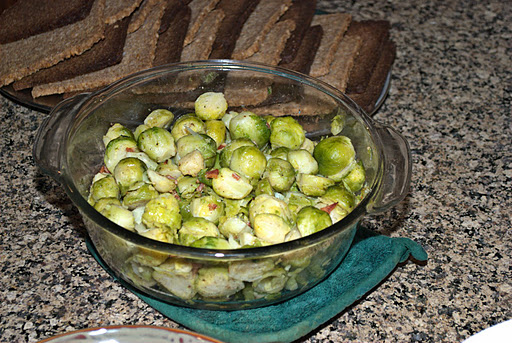
Brussels Sprouts


Spätzle, Celery Root Salad and Red Cabbage


Can’t have a meal without Bread.


Cakes


The Plate

Celery Root Salad
Red Cabbage
Brussels Sprouts
Rouladen
Spätzle with Gravy

Now I know someone is going to ask, “What is Rouladen?” Here is at least one definition from Wikipedia.

Rouladen (or Rinderroulade, singular: roulade) are a German meat roulade usually consisting of bacon, onions, mustard and pickles wrapped in thinly sliced beef which is then cooked. In some countries, the roulade is also known as “beef olive”. 

Beef or veal is used as meat though some food scholars tend to believe that the original version was probably venison or pork, and pork is still popular in some areas. The beef rouladen as we know them today have become popular over the last century. The cut is usually Topside Beef or Silverside since this is the cheaper cut. The more expensive version would be the round steak, also known as rump steak. The meat is cut into large, thin slices. 

The filling is a mixture of smoked and cooked pork belly (Danish bacon), chopped onions and chopped pickles (gherkins) which is at times varied by adding minced meat, sausage meat and pine nuts. The mixture varies from region to region. Rouladen are traditionally served for dinner. Red wine is often served with this dish.

How it is made
In preparation, in the simplest of terms, hot mustard is spread onto the thin slices of meat and the prepared filling mixture is added on top. The meat and filling is then rolled up to a traditional elongated shape similar to a cigar. A thread (traditional), toothpick (modern), or a specialized clamp (also modern) is used to hold the roll together. The rouladen are first seared in a roasting dish together with carrots, celery, onions and bacon until they are nicely browned and the vegetables are somewhat caramelized. Red wine or beer and chicken or vegetable stock is then added, then slowly braised until the meat is tender. The braising takes between one and two hours depending on the meat and preferences. 

Traditionally the pan was covered and placed on a raised iron mount in front of an open fireplace for the braising period. The height of the iron mount and the distance from the fire determined the temperature of the braise.

Today you either put the dish into an oven with the lid on at 175 °C (350 °F) or leave the dish on the stove at low temperatures and gently simmer until the meat is tender.

The Rouladen are then removed and some more beer, red wine or vegetable stock is added to the liquid. When the liquid is added, it lifts the flavor from the bottom of the dish to make a sauce for the meat. This liquid is reduced and then thickened to a gravy. The rouladen are then returned to the gravy and gently reheated.

How it is eaten
Rouladen are usually served with either Spätzle, potato dumplings or boiled potatoes and red cabbage. Roasted winter vegetables are another common side dish. The gravy is an absolute requirement to round off the dish and is usually poured over the meat. The Spätzle are a good complement to the dish since they soak up the gravy well. 

This dish was considered a dish for common people; however, it is nowadays enjoyed by many as a festive dish.

Saturday Post Script Question for all readers…


We have been asked “where is the best Chicken Fried Steak in the Treasure Valley?” The Orchard House has it on both their breakfast and dinner menu. They assured us it is not the frozen commercial product, but one that they bread themselves. The Castle Ranch Steak House on Vista also lists Chicken Fried Steak on their breakfast and dinner menus. Now there are two great possibilities to try. Any other suggestions? Please let us know.

Christmas Eats


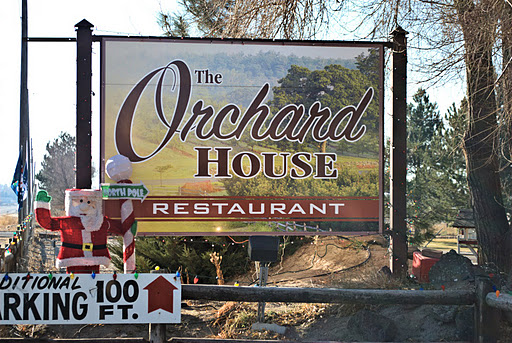
After a great little neighborhood party, we had to go eat. So we returned to The Orchard House in Sunnyslope. Here Robin talks to Santa. Does he believe her? 
She has been good ! Robin made Lebkuchen, a very German Christmas treat. Yummy and spicy! Here are some photos.

Robin put this design on the Lebkuchen she is making. Pretty!

Ready for the oven.

Ready to be eaten[after it ages for two weeks].

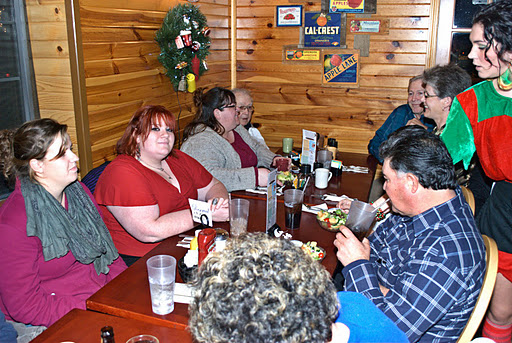
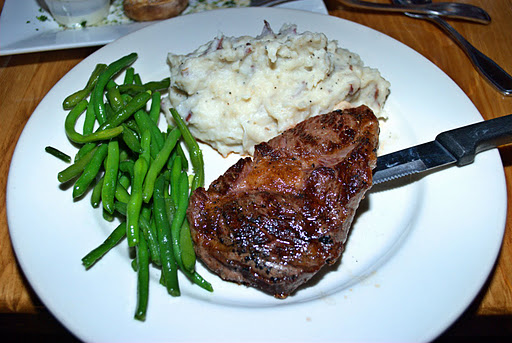
And then, off to the Orchard House for another delightful dinner. This one was beef.

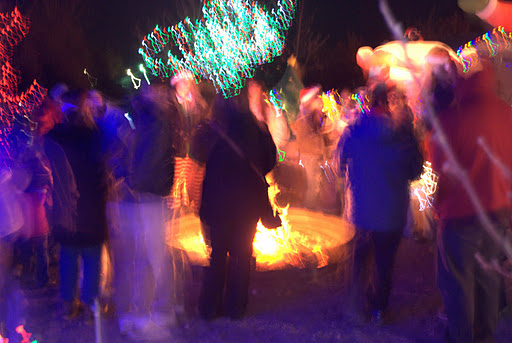
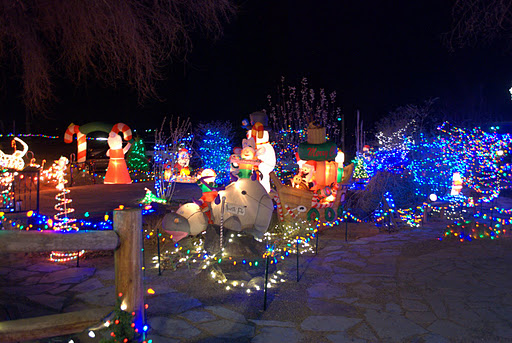
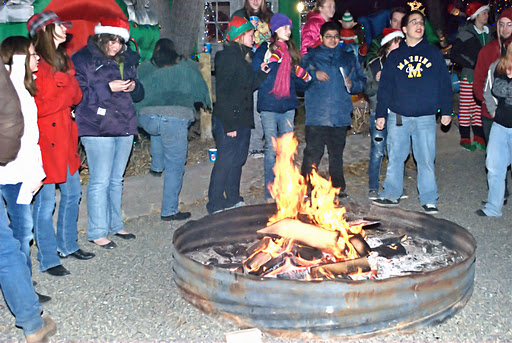
It was a cold night, but a great fire in the fire ring kept everyone happy and warm. Here are some photos of the dinner we had and the Christmas lights. Enjoy!

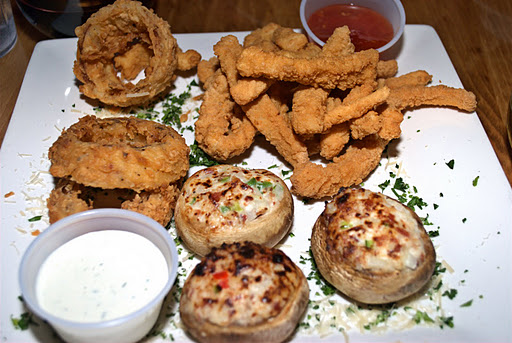
Appetizer Trio Plate – You pick three!
Calimari
Stuffed Mushrooms
Fried Onions

Rib-Eye For Two
(Real) Mashed Potatoes
Green Beans

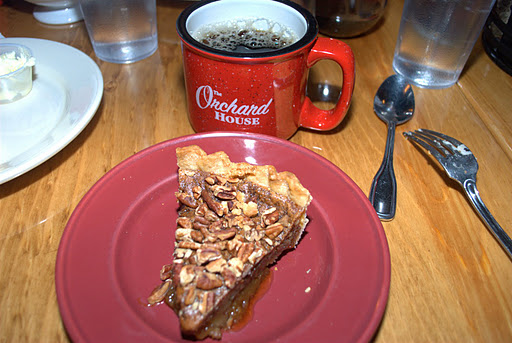
Pecan Pie
House Coffee

Robison Fruit Ranch Christmas Party.

Theresa’s daughter Lena Nicole, Theresa Moye and Mr. Robison

And then there were all of these lights in the area around The Orchard House. Great for the Holiday Spirit. It’s worth the trip just to see all of the lights. Get a pair of the special glasses to “see” the snowmen in the lights. Awesome!

There is a moving inflatable Hippo in the foreground, with the little boy singing “All I want for Christmas is a Hippopotamus”.

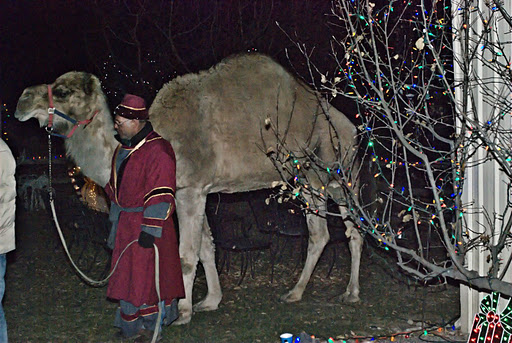
Clyde, the Idaho Camel [and his trainer] was there, too!

Folks gathered around the fire ring to sing carols and keep warm.

Technology has caught up with Santa. The Reindeer are out in the pasture and Santa flew into the Orchard House parking lot arriving via helicopter!
We had a most enjoyable and festive time.

Brown Shuga Soul Food, Boise


Ever get a craving for some good and wholesome Soul Food? Look no more! Check out Brown Shuga Soul Food on the web. You can visit their food truck at 9275 W. Chinden Blvd. in Garden City near Maple Grove. Or you can pre-order by emailing them at Brown Shuga Soul Food. You can also follow them on Facebook or Twitter. We have known Owner Yvonne Anderson-Thomas for some time now and she is a delightful person. And she makes some awesome food. Here are some of the menu items you can order. Be sure to follow the link above for more details.

1-2 Menu Items/day
Pulled Pork
Chicken Leg
Chicken Quarters
Wings
Brisket
Fried Fish
Fried Chicken
Sausages


Sides
Jambalaya
Collard Greens
Black Eyed Peas
Red Beans
Gumbo
Creamy Cole Slaw
Baked Beans


Desserts
Sweet Potato Pie
Pecan Pie
Peach Cobbler
Red Velvet Cupcakes

Here is some information on Brown Shuga Soul Food originally posted in the Boise Weekly.  Enjoy!

Because of their lack of parking or infrastructure requirements, food carts are perfect for urban areas. It’s strange, then, that some of Boise’s best are located not in its urban core but roadside in dilapidated fly-over neighborhoods.

But for Brown Shuga Soul Food, a longtime favorite at festivals, the truck’s permanent home between a car wash and a Wonderbread/Hostess store on Chinden Boulevard is homage as much as it is home. It’s the same spot where Boise’s late king of soul food, Chef Roland, started out.

Owner Yvonne Anderson-Thomas opted to start a cart to cut down on the start-up costs of opening another sit-down restaurant like A Piece of Cake, the restaurant she ran in Mountain Home before moving to Boise.

“I didn’t want to spend $300,000-$400,000 investing in a restaurant,” said Anderson-Thomas. “I’d already been doing catering. It was an easy transition.”

Underwhelming as the gravel lot may seem from the outside, Brown Shuga’s rotating menu makes up for it.

On a recent visit, the pulled pork expertly walked the fence between tender and soggy. It was piled high on a bun and slathered in a housemade sweet-tangy barbecue sauce flecked with crushed red pepper. Unlike most pulled pork sandwiches, it was served sans slaw, but the volume of the pork made up for it.

The sandwich’s one shortcoming was that the simple white–likely Wonder–bread bun disintegrated from the sauce and the juice. This is a sandwich you’ll want to eat with a fork.

On the side, I ordered a small cup of mac and cheese. Though there are sad souls out there who refer to Kraft macaroni and cheese as “the good stuff,” the real good stuff–the mouth-watering, comfort-giving variety–is baked as a casserole and made with real cheese. It’s barely recognizable as the same dish. Thankfully, Brown Shuga’s mac and cheese is thick and hearty, like a tomato-less lasagna.

Anderson-Thomas decided on a soul-food menu not only because the market on collard greens was wide open, but because it’s what she grew up with.

“This kind of comfort food was what we always had for Sunday dinner,” she said.

Though Anderson-Thomas started out just serving lunch, demand has been great enough that she’s extended her hours into the evening and plans to stay open through the winter.

“This is my full-time thing,” said Anderson-Thomas. “I’m in it 100 percent now. I’m going to be here every day.”

Tell them you saw this article here on the blog. Tell them Bob and Robin say, “Hi!”

Castle Ranch Steakhouse, Boise


Wow! I thought I was back in Tampa, Florida at Bern’s Steakhouse! (Don’t even think about missing this one! But make reservations!!!!) The only thing missing was the smell of the salt air and the sounds of the waves crashing on the shore. Bern’s is our benchmark for steaks and the Castle Ranch Steakhouse in Boise comes very, very close. Delicious and tender steaks! Here is their Online Dining Information and here is their Online Breakfast Menu and Prices. And here is their online Dinner Menu and Prices. (Note: Both of these menus are in PDF format.) I am sorry that my photos of our steaks did not come out to my satisfaction. I guess we will just have to go back and re-take the photos!
According to Tyann Meier, Manager of the restaurant and of the Sports Bar, they try very hard to use local products on their menu. We did find a good selection of Idaho wines. And be on the lookout for their wine dinners coming up early in 2012. Ms Meier said that these special dinners will be in the $50.00 per person range for a full meal that does include the selected wines for the evening. That is a good price for the quality of food that they serve. We are on their list for these events. Might even reserve a room for the night and have a great time “out-of-sight”. Who knows.
They have a full breakfast and dinner menu. They are, however, not open for lunch. Look for their contact card in the sidebar and contact them for more information. Here are some photos of our evening.

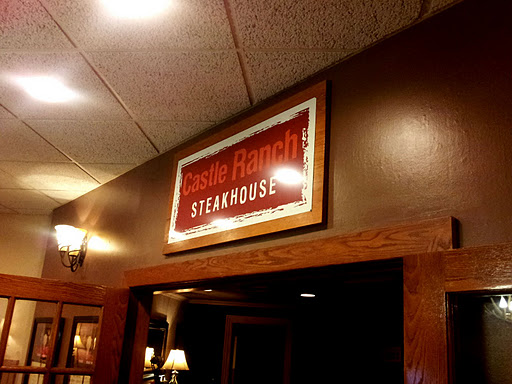
Entrance to the restaurant from the hotel lobby.

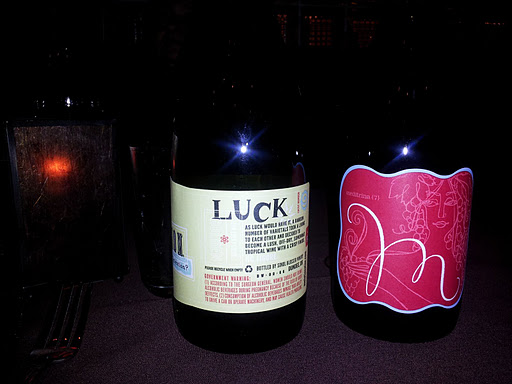
Sokol Blosser Evolution wine (left) and Meditrina Red Blend (50% Syrah, 22% Zinfandel, 28% Pinot Noir).

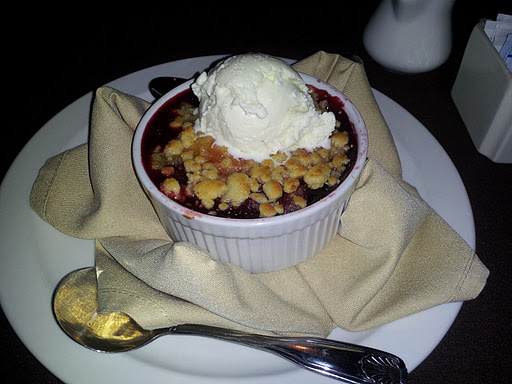
An awesome Berry Cobbler with Vanilla Ice Cream. Don’t miss this one!

So what is our rating? Out of 5 Stars, a solid 4+ Stars!! You really do have to try this one. It is awesome. Cheers!
The Orchard House, Caldwell, ID


Yesterday, I said to Robin that sometime I would like to The Orchard House at Sunny Slope in the Snake River AVA wine district. She suggested breakfast and then proceeded to look at the menu on line. (Use the link provided above.) And while you are on the page, sign up for their newsletter for specials and coming events. Oh my! What a treat. We will definitely return for a Saturday night dinner. I promise! Out of 5 stars, right now it is a 4-Star restaurant. The food that we had, see below, was awesome. Check out their menu at the link above. The Hot Criterion Apple Juice is super! They use local products as much as possible in season. They carry only Idaho wines!
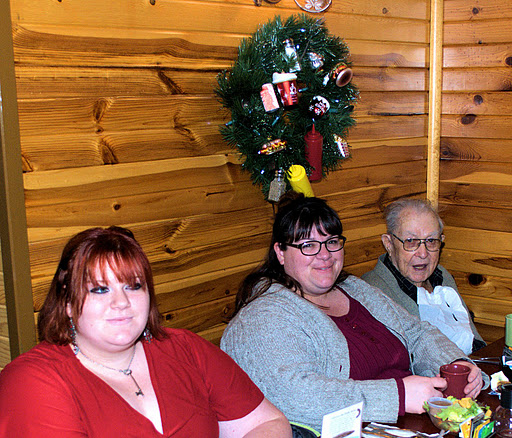
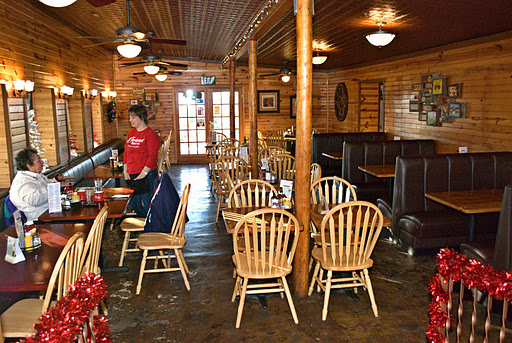
We did like the “rustic”, and very Western, knotty pine walls and grand open space in the dinning area. The hammered tin ceiling is wonderful. I can really see the dining area filling up quickly and a full house. You might want to call ahead if you are planning a Friday night or Saturday visit. And definitely call ahead if you have a large party. The number to call is (208) 459-8200. You can also contact them via E-Mail. I will keep their business card in the sidebar.
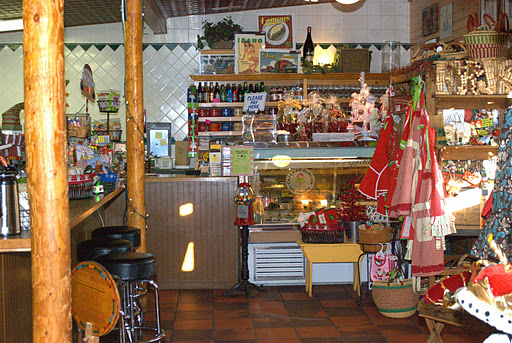
We certainly did enjoy ourselves, the food and the hospitality. In the meantime, enjoy these photos.

Restaurant waiting area.

Main dining area. Here Robin and Owner Kris Thompson are in deep conversation. I always like it when the owner of a restaurant carries on a conversation with their clients. It makes one feel welcome.

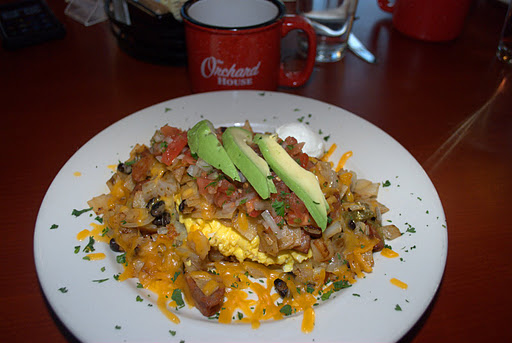
Our breakfast and it is a HUGE one!

Migas
Tex-Mex tangle of eggs, bits of corn tortilla, chorizo, black beans, cheese, onions, green chilies and cilantro served over hash browns with avocado, Pico de Gallo and sour cream. $9,95

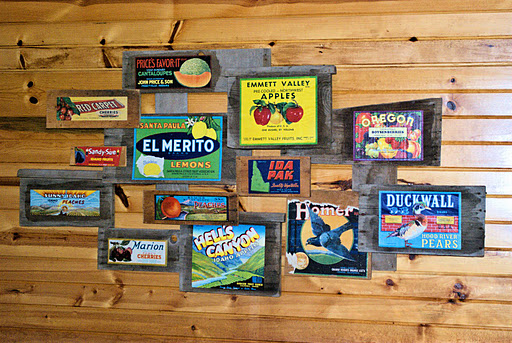
Local wall decor. Snake River fruit boxes and others.

The Buzz Releases Their Cookbooks!


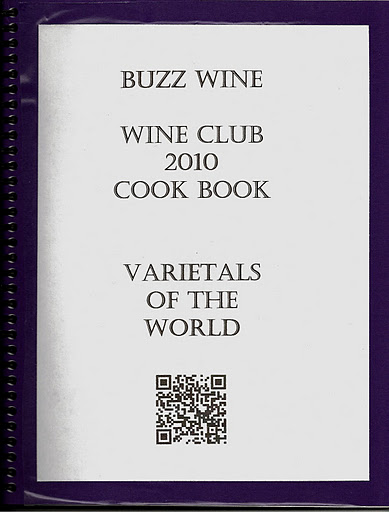
The Buzz, The Buzz Website, has released two volumes of their Wine Club cookbooks. Version 2009 and Version 2010, pictured here. Each volume is $15.00. Contact the Buzz directly via: (1) E-Mail #1, (2) E-Mail #2, (3) Phone (208) 344-4321 0r (4) visit them at 2999 N. Lakeharbor Lane, Ste 110, Boise, Idaho 83703. Look for the Buzz sign.

And just to let you know, we do not get any kick-back for posting these articles – we pay our own way and that’s the way we want it. What we get is a pleasant smile, great food and great friends and company. Check out their website and buy a cookbook. I will keep a permanent link to the cookbooks in the sidebar. Cheers!