Man vs Food : Flying Pie


I just received this in an email for those of you who are interested. I was there at the filming of the Flying Pie episode.

Hi Robin and Bob,
Since you live in Boise, I thought you might be interested in tomorrow’s episode of Travel Channel’s Man v. Food. Adam Richman (the host) hits up Big Jud’s for the Double Big Jud burger; tries the triple habanero pizza at Flying Pie; and visits Rockies Diner to take on the Johnny B. Goode burger. I would love your help spreading the word about this episode either on your blog or Twitter. If you’re interested, I can send you a Man v. Food t-shirt for posting about this episode! Here’s more information.

What is Travel Channel’s Man v. Food?
Host Adam Richman sets out to travel the country in search of the best places to do some serious indulging. Adam’s quest brings him to some of the greatest traditional food the nation can serve up, and he takes on some epic food challenges along the way. Watch the series to find out who wins when Man takes on Food.

Boise Episode Details
Adam’s first stop is Big Jud’s, home of the massive Double Big Jud, a burger featuring two Frisbee-sized patties. Next, he visits Flying Pie, a staple in Boise since 1978 known for their unique pizza concoctions. But one of their most original, and definitely the spiciest, is the triple habanero pie. Each pizza is topped with eighteen insanely hot peppers, to assure that every bite is a mouth melting adventure. Just downing one triple habanero pie is a challenge, but an even bigger challenge awaits Adam at Rockies Diner. He’s taking on their Johnny B. Goode: three burger patties topped with pastrami, a hot dog, cheese, and chili, plus a huge order of chili cheese fries and a sixteen-ounce milkshake. If Adam can finish in thirty minutes, he wins a brand new guitar. Will Adam rock out with a victory, or will the Johnny B. Goode leave him singing the blues?

Tune-in Wednesday at 10 E/P to find out. I’ve attached some behind-the-scenes photos from this episode for you.

Community
To get updates on Travel Channel’s Man v. Food and look at pictures of Adam on the road, become a fan of Travel Channel’s Man v. Food Facebook Page or follow us on Twitter. Also, we are putting together a weekly updates list to keep fans “in the know”. Please let me know if you are interested in being on this list. On a more personal note, I hope you do not find this email offensive. I try to reach out to people who would be interested to know that Man V. Food is coming!

Happy eating,
Wendy Hofstetter
Room 214, Inc. on behalf of the Travel Channel
www.room214.com
www.travelchannel.com
http://www.travelchannel.com/TV_Shows/Man_v_Food

Chocolate Stout Layer Cake


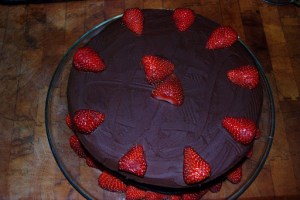
OK. So here is the recipe for the Chocolate Stout Layer Cake that Marnie and Mac made yesterday for her birthday dinner. They got the original recipe from Bon Appetit. Enjoy this one … We did!

Chocolate Stout Layer Cake with Chocolate Frosting

Cake:
3 ounces unsweetened chocolate, chopped
2 1/4 cups all purpose flour
2 teaspoons baking powder
1/2 teaspoon baking soda
1/2 teaspoon salt
14 tablespoons (1 3/4 sticks) salted butter, room temperature
1 1/4 cups plus 3 tablespoons sugar
3 large eggs, separated
3/4 cup chocolate stout, regular stout, or porter
2/3 cup freshly brewed strong coffee

Frosting:
1 pound bittersweet chocolate (54% to 60% cacao), chopped
2 cups heavy whipping cream
1 teaspoon instant espresso powder

For cake:
Position rack in center of oven and preheat to 350°F. Butter and flour two 9-inch-diameter cake pans with 1 1/2-inch-high sides. Line bottom of each cake pan with parchment paper round; butter and flour parchment. Place chopped chocolate in medium metal bowl. Set bowl over saucepan of barely simmering water and stir until chocolate is melted and smooth. Remove bowl from over water and set aside.

Whisk flour, baking powder, baking soda, and salt in medium bowl to blend. Using electric mixer, beat butter and 11/4 cups sugar in large bowl until fluffy and pale yellow, about 2 minutes. Add egg yolks 1 at a time, beating until well blended after each addition. Beat in lukewarm melted chocolate, then stout and coffee. Beat flour mixture into chocolate mixture in 2 additions just until incorporated.

Using clean dry beaters, beat egg whites and remaining 3 tablespoons sugar in another medium bowl until stiff but not dry. Fold 1/3 of egg whites into cake batter to lighten, then fold in remaining egg whites in 2 additions. Divide batter between prepared cake pans (about 3 cups for each); smooth tops.

Bake cakes until tester inserted into centers comes out clean, about 30 minutes. Transfer cakes to racks and cool in pans 20 minutes. Invert cakes onto racks; remove parchment paper and cool completely. DO AHEAD: Can be made 1 day ahead. Cover and store at room temperature.

For frosting:
Place chopped chocolate in medium heatproof bowl. Combine whipping cream and espresso powder in medium saucepan. Bring cream mixture to simmer over medium-high heat, whisking occasionally. Pour cream mixture over chopped chocolate; let stand 1 minute, then whisk until chocolate is melted and mixture is smooth. Chill chocolate frosting until slightly thickened and spreadable, stirring occasionally, about 2 hours (or for quick chilling, place frosting in freezer until thickened and spreadable, stirring occasionally, about 30 minutes).

Using serrated knife, trim rounded tops from both cake layers so that tops are flat. Place 1 cake layer, trimmed side up, on 9-inch-diameter tart pan bottom or cardboard round, then place on rack set over baking sheet. Drop 1 1/4 cups frosting by large spoonfuls over top of cake layer; spread frosting evenly to edges with offset spatula or butter knife. Top with second cake layer, trimmed side down. Spread remaining frosting evenly over top and sides of cake.
DO AHEAD: Can be made up to 1 day ahead. Cover with cake dome and refrigerate. Let cake stand at room temperature at least 1 hour and up to 3 hours before serving.

Ingredient tip:
If you can find it, use a chocolate stout (Brooklyn Brewery and Oregon’s Rogue Brewery make it) in the cake batter. The chocolaty flavors in the beer come from dark-roasting the malts. Some brewers even add a little chocolate to the beer as well. If you can’t find chocolate stout, use another stout, such as Guinness. Sierra Nevada Porter and Samuel Adams Honey Porter would also work well in this recipe.

Chocohaulics Week!


Yes, October 12-17, 2009 is National Chocolate Week! So, in honor of National Chocolate Week and Marnie’s birthday, I offer just the photo of the cake she and Mac made, a Chocolate Decadence Cake. YUM-O!!!
“Chocolate Week is a time of pure indulgence involving the country’s best chocolatiers and chocolate shops holding events all over the UK.

One of the major highlights of Chocolate Week 09, is the first ever consumer show dedicated exclusively to this delicious subject. This two day event, Chocolate Unwrapped, will be held on 10th and 11th October, at the exclusive May Fair Hotel in the heart of London.

Nectar Of The Gods: The Cultural History Of Chocolate

Written by J. Raimund Pfarrkirchner

Once reserved only for Aztec royalty, the origin of chocolate weaves a mysterious (and delicious) web throughout history. “Black gold,” as chocolate has been called, has a control over a majority of Westerners.

It’s always in the back of one’s mind, or in the front of one’s mind when obtaining some becomes more acute. Everyone has a specific craving, whether it be pure, refined, mixed, primed, or blended, but we all have experiences of one kind or another with the stuff.

I, for one, enjoy my chocolate mixed with nuts or berries, and I’m more partial to dark than milk, but I can’t recall ever refusing chocolate. Given my enjoyment, I was surprised to learn that chocolate’s current form is far removed from its origins as a drink of the gods, a nectar in the literal sense, of the Aztecs called xoxocatl.

Award-winning professor Michael D. Coe of Yale University writes in his book, The True History of Chocolate that the first tangible evidence of chocolate consumption originates in mid-fifth century CE. Yet emerging linguistic evidence suggests that the Olmec, a Central American civilization that predates the Aztec and the Maya before them, were not unaccustomed to the plant and its possibility for creating a beverage.

Food of the Gods

The origin of chocolate, according to Aztec legend, states that Quetzalcoatl brought the plant to Earth from heaven, not unlike Promentheus bringing fire to man, after man and woman, in a sacred garden not unlike Eden, attempted to steal the knowledge and power of the gods. Because Quetzalcoatl considered their banishment from the garden too harsh a punishment, he gifted them chocolate.

Carl Linnaeus, founder of the modern classification system of all living things (taxonomy), clearly had this legend in mind when he named the plant Theobroma cacao, meaning ‘food of the gods’. As is so often the case with something reported to have come from the gods, royalty was interested in its consumption. Aztec king Montezuma was reported to have drank the beverage from golden goblets that were only holy enough for chocolate to be used once. The fact is opulent enough, but it was reported that for him to drink more than twenty-five glasses per diem was not uncommon.

Aztecs often used cocoa beans as a currency. During a 1514 voyage to the New World Hernando de Oviedo y Valdez, a member of Pedro Arias Dávila massive 1500-men expedition, wrote in his journal claiming that four beans could buy a rabbit dinner, ten was standard price for a night with a prostitute, and he himself bought a slave for the price of one hundred cocoa beans.

Arrival In The West

From the Age of Exploration, chocolate entered into Western culture. While exact etymology is moot, it is clear that Europeans first came into contact with chocolate, or rather the cacao bean, via the Spanish, via the Mexico, via the Aztec, at the dawn of the sixteenth century.

Chocolate was again the drink the of elite, the delight of the plebeians, the bitterest of potables, the most saccharine of sweets, the iconic symbol of Mesoamerica. Chocolate was again the drink the of elite, the delight of the plebeians, the bitterest of potables, the most saccharine of sweets, the iconic symbol of Mesoamerica. In A Tale of Two Cities Dicken’s shows the transitional period of chocolate, between Mesoamerican luxury to the European commoners’ pleasure, when he explains with great detail Monseigneur’s elaborate consumption of chocolate in his Paris hotel room. In Europe—during the time of the novel, and even before—the price of chocolate was a luxury because it had to be brought across the Atlantic ocean before it could be consumed.

The ceremonial aspect of the drink was, in some convoluted way, preserved when it entered into the Catholic Church. Whilst electing a new Pope, the College of Cardinals meeting in Concalve used to sip the beverage. And European royalty enjoyed the beverage as Aztec royalty had before them.

A New Renaissance

It was not until 1828 when chocolate changed from a sacred drink to a solid bar we know today, through the addition of cocoa butter. Not only did chemist Coenraad Johannes van Houten of the Netherlands create the process of manufacturing cocoa butter, but he also discovered how to treat chocolate with alkalis to remove the bitter taste that had until that point been characteristic of chocolate. While the addition of chilli had long since been dropped from the recipes by Europeans, vanilla was often retained, along with milk and sugar, the latter being unavailable to the Aztecs.

Thus, chocolate as we know and love came into existence after several thousand years of being consumed in liquid form with a pungent, bitter taste. It’s interesting to note that producers of chocolate are experimenting even further, by adding not just sugar and milk but chilli, lavender, mint, and other flavours. Some producers are even selling it with bitterness intact, giving all who love chocolate something to look forward to: new forms, new uses, new tastes, all continually inspired by its divine origins.”

So there you have, The rest of the story about chocolate. Enjoy and cheers! Find a good port, as in 1968 Taylor Fladgate Reserve Porto, Late Bottled Vintage!
Miss Marnie’s Birtday Is Today!


Today is Marnie’s second anniversary of her 39th Birthday!! It is also the 27th anniversary of my brother’s 39th Birthday! Such a day! Looks like we’d best have a party. And now we will reveal, in no particular order, the wines to be serverd at tonight’s dinner! Oh, and all of these wines come from our cellar!

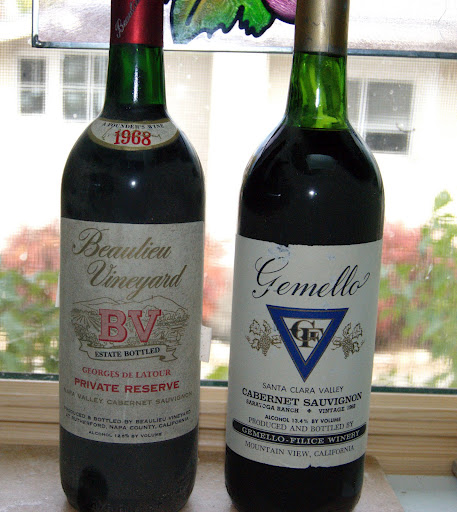
L-R: A 1968 Beaulieu Vineyard Private Reserve Cabernet Sauvignon ($110) and a 1968 Gemello Filice Winery Cabernet Sauvignon ($46)

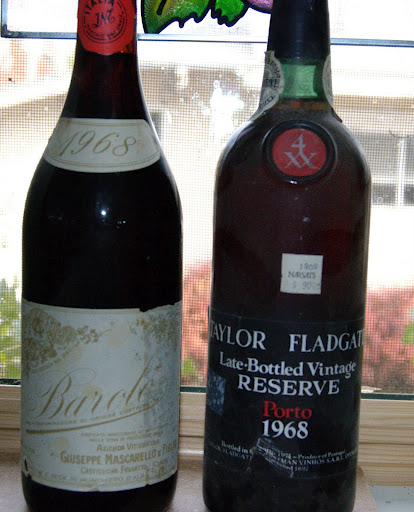
L-R: A 1968 Giuseppe Mascarello e Figlio Barolo ($37) and a 1968 Taylor Fladgate Reserve Porto, Late Bottled Vintage ($198)

So now you ask, “Why a 1968 vintage?” Well, it’s not my brother’s birth year, but rather Marnies. Salute!! But wait! What’s cookin”? Try a Fall Root Soup, Lamb Roast with Mustard and Rosemary, Cauliflower with Brown Butter, Fresh Homemade Bread, Green salad and Chocolate Decadence Cake! What more could we ask for.
Cheers!

Oktoberfest Dinner


Well, it really was a good dinner. Our friends, Debra and Geno, joined us and it was delightful. If you missed the previous post, here is the menu –

Fall Root Soup

Sauerbratten with Cabbage and Special Sauce

Hot German Potato Salad
Fresh Baked New York Rye Bread

Lemon Bars

2008 St Regulus Reserve Riesling (Weiser, ID)

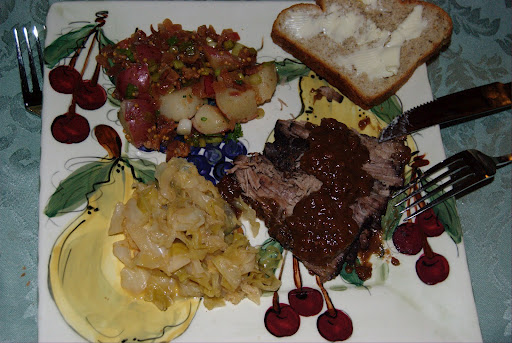
And here is the dinner plated. From left to right – Cabbage in Apple Cider and Clove, Hot Potato Salad, Fresh Baked New York Rye Bread and the Sauerbratten with Special Sauce. Loads of fun to prepare and especially to share with friends. Cheers!

Saturday Dinner


Here’s a good one.

Fall Root Soup

Sauerbratten with Cabbage and Special Sauce
Hot German Potato Salad
Lemon Bars

2008 St Regulus Reserve Riesling (Weiser, ID)

\

So that’s it. It’ll be fun. The sauerbratten has been getting happy since Wednesday. Cheers!

A Good Dinner


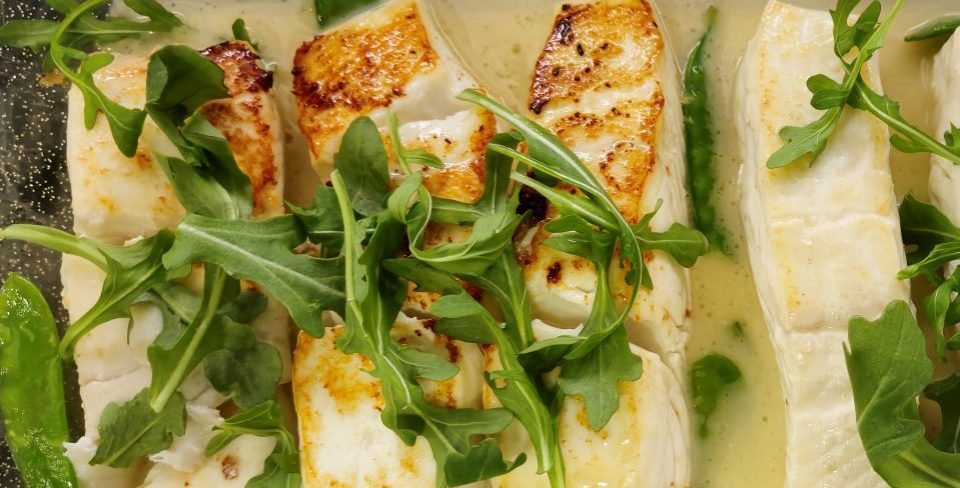
Looks like it might be a seafood type week – except for Saturday which will be Sauerbraten with Cabbage and Potatoes, the beef is getting happy right now. But for tonight, what shall I make. How about a Lemon Spaghetti with Lime Butter Halibut? This was very good! The pasta was not made with fresh cream – I used sour cream, onions, garlic, lemon oil, spinach (peas would be better), chives and fresh parsley. And the halibut was flash grilled with lime oil, butter and French tarragon. YUM-O! Robin had a Spaten Oktoberfest Ur-Marzen and I had a glass of a 2006 Davis Creek Cellars Cabernet Sauvignon. Buh Bye McDonalds, we’re eating dinner here!

This Week In Food Trivia


Well, I received this just today, but te information is interesting even if not on time. Enjoy ithe info!

This Week in the History of Food & Drink

October 5: National Apple Betty Day

October 6, 1893: Cream of Wheat was developed by Nabisco Foods

October 7: National Frappe Day. (Happy Birthday to my twin).

October 8: National Flutter Nutter Day

October 9, 1996: World’s largest grilled cheese sandwich was made, 3,000 pounds.

October 10, 1966: Simon and Garfunkel release their album, ‘Parsley, Sage, Rosemary and Thyme’

October 11, 1844: Henry John Heinz was born. Founder of the H.J. Heinz company and creator of its slogan ’57 varieties.’.

So there you are with the Food Trivia for now. Cheers!

Kokanee Florentine


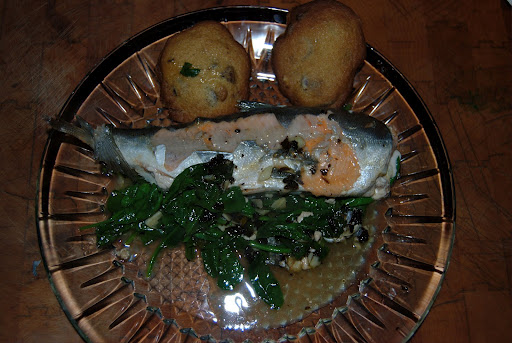
So I asked Robin tonight hat she wanted for dinner. I told her I was going to have a Johnsonville Cheese Brot and some soup from the other night. She did not want that, but instead she wanted some of the Kokanee I caught last summer. She wanted Kokanee Florentine with Mint Garlic Sauce (she made it earlier) and an Idaho CC Cookie, or two.


Yo! Her wish is my command! There is a photo of what she had. Fun to make these things “on the fly”. Actually, it looked good! She ate it all and didn’t ask if I wanted a taste. (Sould have tried it right from the pan!!) Oh, well!

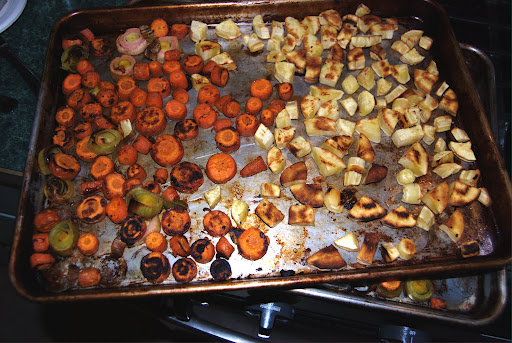
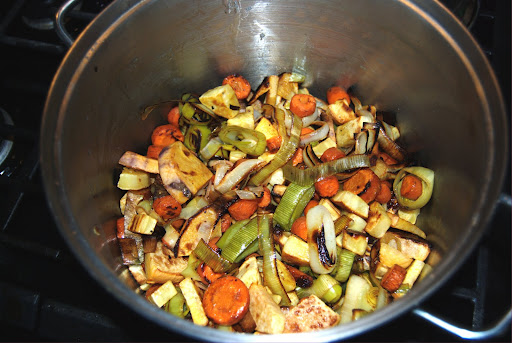
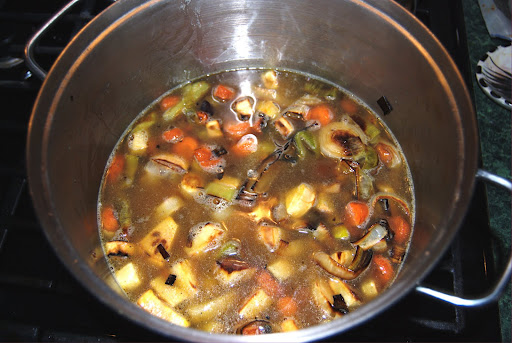
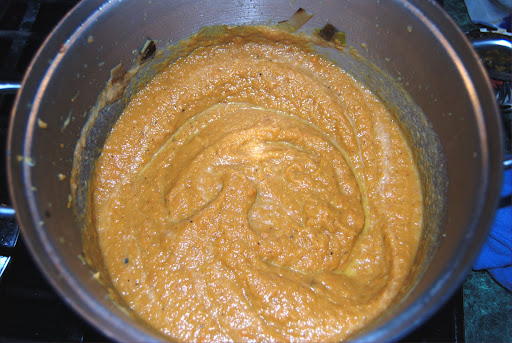
Winter Root Soup Photos


Here are some photos of the process for making the Fall Root Soup. If you want a full and printable recipe, Look Here.

The root vegetables after oven roasting.

The veggies being warmed and “buttered”.

The chicken stock added and the veggies getting “happy”.

After simmering for 30 minutes, an immersion blender is used to purée the veggies.

The finished product. This is a very good soup and good for a cold Fall or Winter day.

Try this soup. I really think you will like it if you like root vegetables. Cheers!