• About and Contact
  • Air Fryer Cooking Charts and Conversions
  • Air Fryer Recipes – Update: August 2020 – Chicken Olivia
  • Barcode Country List
  • Boise Foodie Blog Recipes – Updates: Nov 2024 Basic Hollandaise Sauce and Cream of Mushroom Soup
  • Boise Restaurant Guide – 52 Restaurant Choices! Updated: July 2018
  • Companion Garden Planting
  • Instant Pot Recipes – Update August 2020 – IP Chicken with Ketchup, Honey and Soy
  • Recipes from the Captain’s Shack: Dec 2020 – CS Prime Rib

Boise Foodie Guild

~ – Enjoy a meal or a recipe with us! Be sure to check the Sidebar and Menu above. Interesting resources are listed there. Most are hot links. Air Fryer (AF), Instant Pot (IP) and Captain's Shack (CS) recipes now have their own page. Subscribe to the blog. It's still FREE!

Boise Foodie Guild

Category Archives: Condiments

Lamb Rub, Garlic Aioli and Juicy Burgers

20 Friday Jun 2025

Posted by Bob and Robin in 5-Stars, Bacon Jam, Beef, Brunch, Cheese, Cloud 9 nano Brewery, Condiments, Food, Garlic Aioli, What's For Dinner?

≈ Leave a comment

Tags

avocado oil, burgers, Celtic sea salt, Housemade Aioli Mayo, Manuka Honey, recipes, Tupelo Honey


I know it’s been a long time since I posted anything, but hospitals and DR visits have kept me busy elsewhere. But yesterday, I was released! Yeah!!! I am OK now! But in my hiatus, I came across these recipes that I needed to adjust.The Juicy Burgers are really interesting.They have a Bacon Jam instead of ketchup or whatever on them. The Lamb Rub gives lamb, especially Rack of Lamb, an interesting crisp outside and a great flavor. Give them a try. And if you like garlic, try the Garlic Aioli.

Lamb Rub
Prep: 20 min             Bob and Robin Young, Boise, ID   The Captain’s Shack      15 June 2025  
Note: A very easy marinade/rub for lamb, any cut but especially good on Rack of Lamb and Lamb Chops. Use a good honey! (Tupelo or C) Serve with Potatoes au Gratin, and throw in spring veggies such as Sauteed Asparagus or Candied Carrots. A rub of garlic, fresh rosemary, Dijon mustard, and a little bit of honey promotes caramelization and creates a delicious crust on the surface of the lamb. The USDA recommends cooking lamb to an internal temperature of 145º F, then letting it rest for at least 3 minutes. This will give you lamb that is cooked to medium, the ideal temperature for lamb.
Ingredients:
3 T Avocado Oil
2 T chopped Fresh Rosemary
2 T Dijon Mustard
2 t good Honey
Directions:
In a small bowl, stir to combine the garlic, rosemary, mustard, honey, and 3 tablespoons of Avocado Oil. Spread all over the lamb racks. Set aside for 1 hour. That’s it!

Garlic Aioli

Prep: 8 min               Yield: 1 cup              Serves: 12
Ingredients:
5 cloves Garlic, finely grated, minced, or pressed
1-2 T freshly squeezed lemon juice (from 1 small lemon)
1 t Dijon mustard
¾ c Mayonnaise
Celtic Sea Salt
Directions:
Stir 5 finely grated garlic cloves, 1 tablespoon of the lemon juice, and ½ teaspoon Dijon mustard together in a small bowl until combined. Let sit for 15 minutes for the flavors to meld.
Whisk in ¾ cup mayonnaise until smooth. Taste and season with Celtic Sea Salt or up to 1 tablespoon more lemon juice as needed.

Juicy Burgers
Note: These burgers are awesome with Bacon Jam and Garlic Aioli on the buns.
Ingredients:
4 slices American Cheese
1½ lbs Ground Beef (15 to 20 percent fat content)
1¼ t Celtic Sea Salt
½ teaspoon garlic powder
½ teaspoon Worcestershire sauce
¼ t freshly ground Tellicherry Black Pepper
1 T Avocado Oil
4 (4-inch) Hamburger Buns
Sliced Kosher Pickles, for serving
Directions:
Arrange a rack in the middle of the oven and heat the oven to 400ºF. Stack 4 slices American cheese. Cut in half, then cut each piece in half again to form 4 stacks of squares.
Place 1½ pounds ground beef, 1¼ teaspoons Celtic Sea Salt, spoon the garlic powder into the mixture, ½ teaspoon Worcestershire sauce, and ¼ teaspoon Tellicherry Black Pepper in a large bowl. Gently mix with your hands until just evenly combined. Divide the beef into 8 portions (3 ounces each) and form each into a ball. Form 1 Juicy Lucy at a time: Using your fingertips, press 2 portions into 1/4-inch-thick patties that are about 1 inch wider in diameter than the hamburger buns. Top 1 patty with 4 pieces of cheese, overlapping the slices to cover the patty but leaving a ½-inch border. Place the second patty over the cheese-topped patty. Pick up the Juicy Lucy and pinch the edges to form a tight seal. Cup the stuffed patty with your hands to round out the edges, and press on the top to flatten slightly into a single thick patty. Transfer to a plate. Repeat with the remaining patties and cheese to form 4 stuffed patties in total.
Heat 1 tablespoon vegetable oil in a large cast iron skillet or frying pan over medium heat until shimmering, 3 to 4 minutes. If using a 10-inch pan, place 2 patties in the pan; if using a 12-inch or larger, add all 4 patties. Cook undisturbed (do not press down on the patties) until dark golden-brown on the bottom, about 4 minutes. Using a spatula, flip the patties and cook until the second side is dark golden-brown and the patties are cooked through, about 4 minutes.
Transfer to a clean plate. Let rest in a warm place or tent loosely with aluminum foil while you toast the buns. Split 4 hamburger buns, place cut-side up on a baking sheet, and toast until starting to brown around the edges, 4 to 5 minutes.
Place a patty on each bun bottom, top with a few pickle slices, and close with the bun top.

Well, that’s it, again. Try them and see what you think. Let me know.

Reblog:

  • Click to email a link to a friend (Opens in new window) Email
  • Click to share on Pinterest (Opens in new window) Pinterest
  • Click to share on Facebook (Opens in new window) Facebook
  • Click to print (Opens in new window) Print
  • More
  • Click to share on X (Opens in new window) X
  • Click to share on Instagram (Opens in new window) Instagram
Like Loading...

North African Berbere Spice

19 Wednesday Sep 2018

Posted by Bob and Robin in Captain's Shack, Chicken, Classic Spice Blends, Comfort Food, Condiments, Ethnic Foods, Food - Ethiopian, Herbs, Herbs and Spices, Recipes, What's For Dinner?

≈ Leave a comment

Tags

Berbere spice, Doro Wat


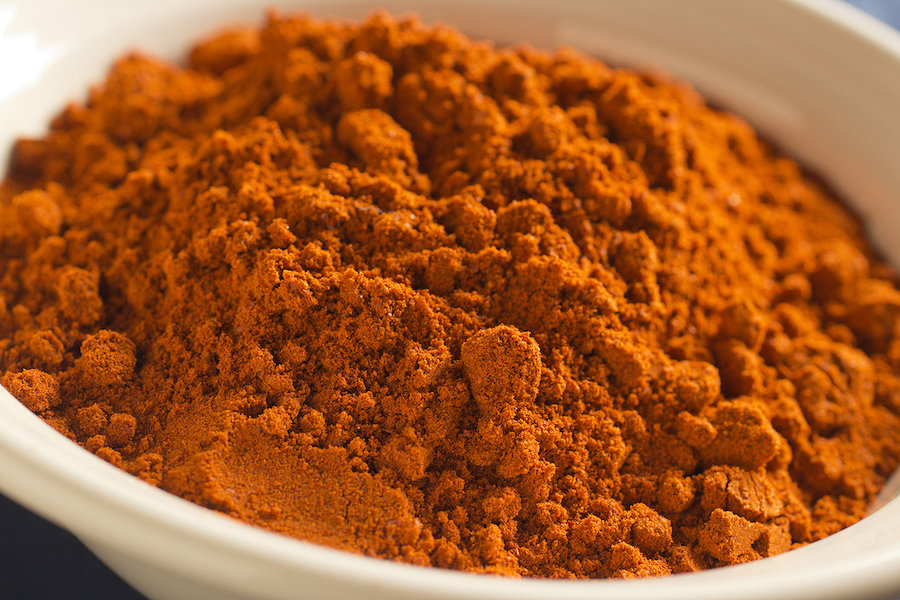
Now is the time to add some spice to your life. At least the spices of North Africa – Ethiopia to be exact.

From Demand Africa, “In Amharic, the state language of Ethiopia, ‘barbare’ means pepper or hot. Not surprisingly, berbere spice, the flavor backbone of Ethiopian cooking, gives traditional Ethiopian dishes that fiery kick. Berbere’s constituent spice is paprika (itself a ground spice made from Capsicum peppers), but the final blend could be made from up to 20 spices.
Ethiopian cooks of old were not short of kitchen experiments, and over time have added garlic, ginger, fenugreek seeds, African basil, black and white cumin, nutmeg, cinnamon, clove, cardamom, coriander seed, thyme, rosemary, turmeric and ajwain (carom seeds commonly used in Indian cooking) to the mix. This allows berbere to impart a richer, aromatic and more layered flavor to any dish it’s added to, whether Ethiopian or not…Amharic language scholars speculate that the name ‘barbare’ came from ‘papare,’ the Ge’ez word for pepper (Ge’ez was the language of ancient Ethiopia). While that is likely lost in the mists of time, the more probable theory is that berbere came at a point in Ethiopia’s history when the independent Axumite kingdom controlled the Red Sea route to the Silk Road. The Axumites knew the secrets of the monsoon winds, and harnessed it to send their ships toward India in summer, and back again to Africa in winter…Berbere is the cornerstone spice blend of Ethiopia; without it, ‘doro wot’ or chicken stew (Ethiopia’s national dish) would not have that distinctive brick-red appearance and rustic, savory intensity.
Doro wot is cooked during traditional festivities and is typically served with injera, fermented sourdough flatbread with a slightly spongy texture that serves as the plate and scooping utensil for the stew. Doro wot is ladled generously on top of it and served alongside vegetables and other dips. (To eat injera, Ethiopians pinch off a piece of it and use the same to scoop out a small portion of the stew.)”

You can buy the spice blend in your grocery store – our Albertsons carries it – but it is more fun to make your own. All of these spices should be locally available.
Berbere Spice Mix
Prep Time: 5 min Total Time: 5 min
Ingredients:
1/2 c Chili Powder
1/4 c Paprika
1/2 t ground Ginger
1/2 t ground Cardamon
1/2 t ground Turmeric
1/2 t ground Coriander
1/2 t ground Fenugreek
1/4 t ground Cinnamon
1/4 t grated fresh Nutmeg
1/4 t ground Allspice
11/8 t ground Cloves
1/8 t fresh ground Black Pepper
Directions:
In a mixing bowl, combine all ingredients. Store in an airtight jar.

Ethiopian cuisine (Amharic: የኢትዮጵያ ምግብ) characteristically consists of vegetable and often very spicy meat dishes. This is usually in the form of wot, a thick stew, served atop injera, a large sourdough flatbread, which is about 20 inches in diameter and made out of fermented teff flour.

A recipe from African Bites for
Doro Wat
Ethiopian Chicken Stew -slowly simmered in a blend of robust spices. Easy thick, comforting, delicious, and so easy to make!
Prep Time: 20 mins Cook Time: 1 hr Total Time: 1 hr 20 mins Servings: 6
Calories: 470 Author: Immaculate Bites
Ingredients:
3 Tablespoons Spiced butter Sub with Cooking oil or more
2-3 medium onions sliced
1/4 cup canola oil
2 Tablespoons Berbere Spice (See above)
1 Tablespoon minced garlic
½ Tablespoon minced ginger
3- 3½- pound whole chicken cut in pieces or chicken thighs
1 Tablespoon tomato paste
½ Tablespoon paprika
1 Tablespoon dried basil optional
4-6 Large soft-boiled egg shelled removed
1-2 Lemons Freshly Squeezed (adjust to taste)
Salt and pepper to taste
Directions:
Season chicken with, salt, pepper and set aside
In a large pot, over medium heat, heat until hot, and then add spiced butter and onions, sauté onions, stirring frequently, until they are deep brown about 7 -10 minutes. After the onions are caramelized or reached a deep brown color, add some more oil, followed by berbere spice, garlic, and ginger.
Stir for about 2-3 minutes, for the flavors to blossom and the mixture has a deep rich brown color. Be careful not to let it burn.
Then add about 2-3 cups water .Add chicken, tomato paste, paprika, basil, salt and cook for about 30 minutes.
Throw in the eggs and lemon juice; thoroughly mix to ensure that the eggs are immersed in the sauce.
Continue cooking until chicken is tender about 10 minutes or more Adjust sauce thickness and seasoning with water or broth, lemon,salt according to preference.
Serve warm

Reblog:

  • Click to email a link to a friend (Opens in new window) Email
  • Click to share on Pinterest (Opens in new window) Pinterest
  • Click to share on Facebook (Opens in new window) Facebook
  • Click to print (Opens in new window) Print
  • More
  • Click to share on X (Opens in new window) X
  • Click to share on Instagram (Opens in new window) Instagram
Like Loading...

Question – What is sriracha?

20 Tuesday Sep 2016

Posted by Bob and Robin in Chef Michael Symon, Chicken, Condiments, Special Information, Spice Blends, Spices, Spices of Thailand, Spicy Food, Sriracha Chili Sauce, What's For Dinner?

≈ 1 Comment

Tags

Michael Symon, sriracha, sriracha chicken


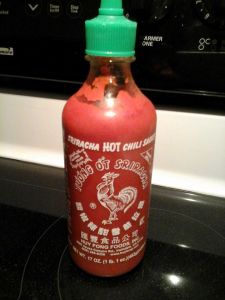
sriracha-bottleActually, a very good question and I thank Wendy Haight Scribner, on FaceBook, for asking, “What is “sriracha” and how do you use it when you cook??I just saw a video for pork chops and I’m wondering what this is made of?”
Well, Wendy and others, generally speaking sriracha is a red, spicy sauce a lot like hot sauce, but not as hot as jalapeno or tobasco sauce, at least in my opinion. It really is a good one and we keep a jar in the refrigerator all the time. I’ll get you a better definition. Inquiring minds need to know, so from Wikipedia we learn,

Sriracha (Thai: ศรีราชา, Thai pronunciation: [sǐː rāː.t͡ɕʰāː]; English /sᵻˈrɑːtʃə/) is a type of hot sauce or chili sauce made from a paste of chili peppers, distilled vinegar, garlic, sugar, and salt. It is named after the coastal city of Si Racha, in Chonburi Province of eastern Thailand, where it may have been first produced for dishes served at local seafood restaurants.
Sriraja Paniche
Sriracha “Rooster Sauce”
Sriraja Panich chili sauce by Thai Theparos Food Products and Tương Ớt Sriracha (“Rooster Sauce”) by Huy Fong Foods.
In Thailand, sriracha is frequently used as a dipping sauce, particularly for seafood. In Vietnamese cuisine, sriracha appears as a condiment for phở, fried noodles, a topping for spring rolls (chả giò), and in sauces.
Sriracha is also eaten in soup, on eggs and burgers. Jams, lollipops, and cocktails have all been made using the sauce. and sriracha-flavored potato chips have been marketed.

Matt Bush, on FaceBook, tells us,

Amazing story of a Vietnamese refugee who fled South Vietnam when the communist took over. Became one of the boat people. Was rescued and picked up buy a Chinese ship named Huy Fong…He named his company after the ship that saved him. He and his family eventually made their way towards LA and started making his sauce for the local Asian market. He established a factory near Bakersfield. A truly great success story. I love the sauce, although spicy, it is really flavorful.

And from thrillist.com, more lessons on sriracha to contemplate,

1. You’re pronouncing it wrong
See-rotch-ah. Sriracha
2. Sriracha is the type of sauce; Huy Fong is the brand name
Accept no substitutes, even if they’re emblazoned with dragons.
3. It’s actually significantly less hot than a jalapeño
According to the benchmark of all things spicy, the Scoville scale, Sriracha scores 2,200 points. The red jalapeño peppers used in the sauce lose nearly half of their spiciness in processing, which puts the sauce on par with Fresno and Anaheim peppers — both of which are about as hot as their namesake cities.
4. They’re not just cocky
The rooster is the Chinese zodiac sign of the sauce’s founder.
5. Some dumbass drank 3lbs of the stuff
Spoiler alert: this video ends in a bathroom.
5a. Spice stack: Sriracha Pringles do not disappoint
6. The brand name comes from the ship that carried Huy Fong’s founder to the US
The founder, who was of Chinese descent, made the original version of Sriracha in Gerber baby food jars before immigrating to the US aboard the Huy Fong and restarting the business. (Yes, there is a Sriracha Cookbook!)
7. You can cook really good food with it. Bon Appetit came up with 25 delicious recipes, including Sriracha fried chicken. And there’s also a cookbook dedicated entirely to the condiment.
8. They produce over a ton of it every hour
The assembly line cranks out 3,000 bottles an hour, 24 hours a day, six days a week. That’s roughly 200 tons per week. They sell about 20 million bottles a year.
9. It totally got Lay’d
The rooster took an honorable mention in a Lay’s flavor design contest. Pringles and Kettle chips have also rolled out their own Sriracha flavors, and you can grab a Sriracha Quesarito from Taco Bell.
9a. Taste-Test: Sriracha Kettle chips
10. There is a documentary. No thanks to you. But luckily, 1,315 other people shelled out the money for a film via Kickstarter.
11. A hot sauce by any other name would smell as sweet
The name comes from the small coastal Thailand town Si Racha, population 19,221.
12. It is ranked the #1 hot sauce in the entire universe!

So after reading all of this, would you like to try Chef Michael Symon’s (The Chew) recipe for Twice Fried Chicken with Sriracha Honey? Aw be brave. The link is highlighted.

Reblog:

  • Click to email a link to a friend (Opens in new window) Email
  • Click to share on Pinterest (Opens in new window) Pinterest
  • Click to share on Facebook (Opens in new window) Facebook
  • Click to print (Opens in new window) Print
  • More
  • Click to share on X (Opens in new window) X
  • Click to share on Instagram (Opens in new window) Instagram
Like Loading...

End Of Season Tomatoes

05 Saturday Oct 2013

Posted by Bob and Robin in Breakfast, Captain's Shack, Comfort Food, Condiments, Eggs, Mexican Food, Photos By: Bob Young, What's For Dinner?

≈ Leave a comment

Tags

Fresh Housemade, Fresh Sliced Tomatoes, green tomato relish, Heirloom Tomato Salsa


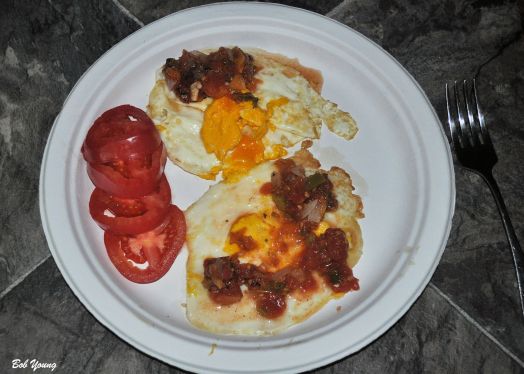
Fried Eggs with Fresh Housemade Salsa Fresh Sliced Tomatoes

Fried Eggs
with
Fresh Housemade Salsa
Fresh Sliced Tomatoes


Question is: What do I do with all the tomatoes that were hit by frost the last two nights? I have stewed tomatoes and plenty of Green Tomato Relish. So, how about a good salsa. An Heirloom Tomato Salsa to be exact. I got 9 pints out of our tomatoes and it is good. Especially on fried eggs as pictured above. (I like the background of this photo!) This was a yummy breakfast! Now to get The Beast winterized. Monday!

43.624890
-116.214093

Reblog:

  • Click to email a link to a friend (Opens in new window) Email
  • Click to share on Pinterest (Opens in new window) Pinterest
  • Click to share on Facebook (Opens in new window) Facebook
  • Click to print (Opens in new window) Print
  • More
  • Click to share on X (Opens in new window) X
  • Click to share on Instagram (Opens in new window) Instagram
Like Loading...

Sun Valley Mustard

15 Friday Mar 2013

Posted by Bob and Robin in Buy Idaho, Comfort Food, Condiments, Interesting Information, Local Markets, Mustard, Special Information, Spice Blends, Things To Do, Thought For The Day, Traditional Food, What's For Dinner?

≈ 1 Comment

Tags

food, food industry experts, sun valley idaho, Sun Valley Mustard


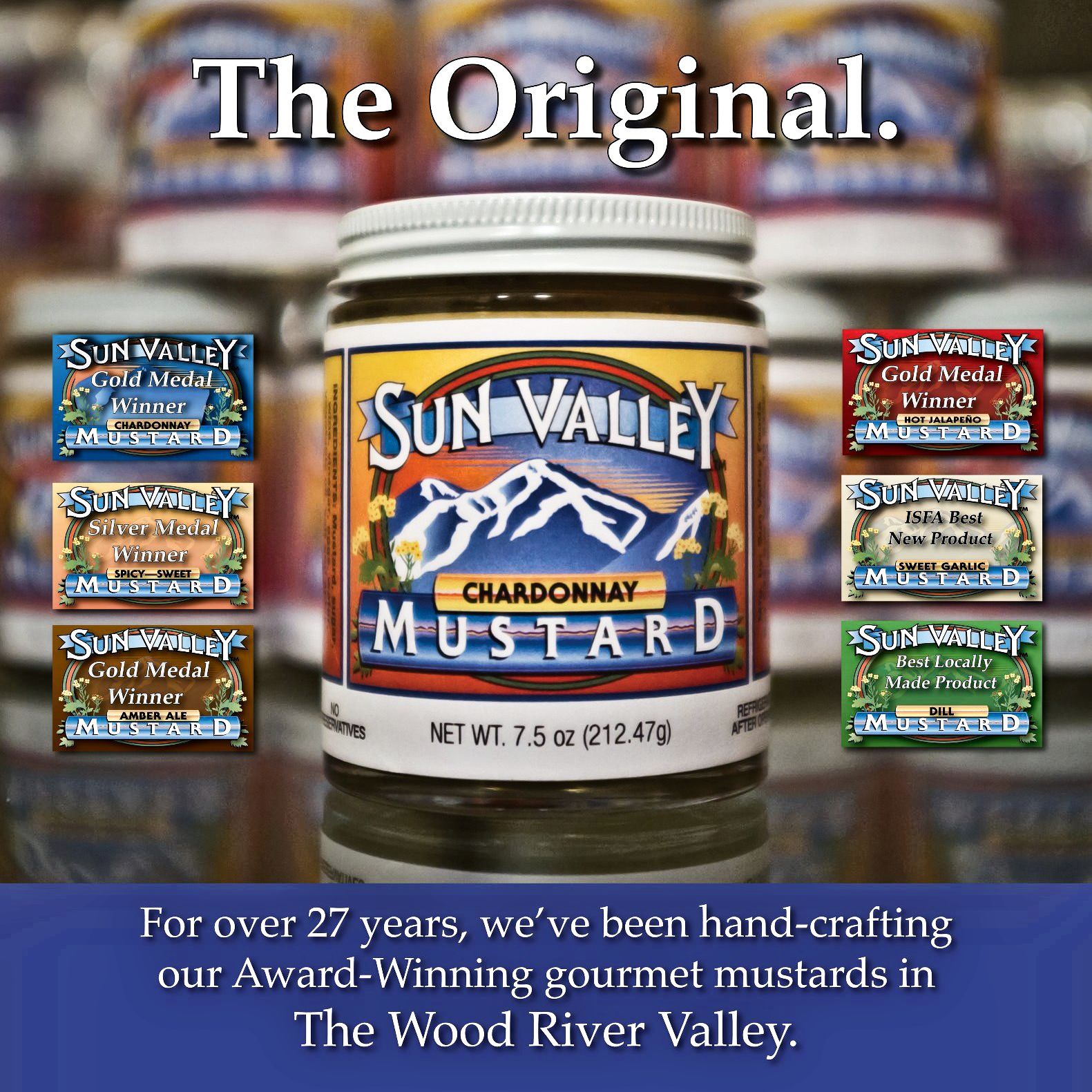
Sun-Valley-Mustard-Logo-LargeWe don’t normally write about a specific product on this blog, but here is one exception. Sun Valley Mustard is an awesome product and well worth the money spent. It is produced right here in Idaho. Sun Valley, Idaho to be exact. This mustard has several different variations. Some sweet. Some spicy. Some so very smooth. Some varieties are: Spicy Sweet, Chardonnay, Amber Ale, Sweet Garlic, Dill Mustard and Hot Jalapeno. These are good with fish, beef, lamb, pork, white meat, sausage meats, dips, sauces, dressings and corned beef to name but a few. There is a more specific listing in the article, linked below. Here is an excerpt of that article.

FOR IMMEDIATE RELEASE
Gourmet favorite Sun Valley Mustard wins Silver and Gold Medals at the 2012 World-Wide Mustard
Competition!

Sun Valley Mustard has won multiple national awards, in blind taste tests judged by specialty food industry experts, chefs and others. They include 1st place, Chili Mustard division for Hot Jalapeno; 1st place, Spirit-based division for Chardonnay; and 1st place, beer division for Amber Ale, from Food Distributor Magazine. Several flavors have also won prizes at the Napa Valley Mustard Festival worldwide competition. Most recently, Sun Valley won a Silver Medal for its signature flavor, Spicy-Sweet and a Gold Medal for its Labels and Packaging at the 2012 World-Wide Mustard Competition. Over 300 mustard brands entered. Sun Valley Mustard is owned by Josh Wells of Ketchum, Idaho and a group of investors. “We couldn’t be more thrilled,” Wells said. “Spicy-Sweet is the original Sun Valley Mustard and in our 28 year history, its never won an award.” (Sun Valley’s other flavors are multiple award winners). “And we’re really proud of our new label. We re-designed it to include an iconic image of Bald Mountain, Sun Valley’s main ski hill, and differentiated our flavors with bright, contrasting backgrounds. The judges loved it!

[Blog Edited]

Here is the rest of the article on Sun Valley Mustard. There are recipes in this article, too. Along with the complete list of the mustard winners and you can read the labels to see the ingredients. A really good and complete article. An interesting read! Cheers and enjoy!

43.624890
-116.214093

Reblog:

  • Click to email a link to a friend (Opens in new window) Email
  • Click to share on Pinterest (Opens in new window) Pinterest
  • Click to share on Facebook (Opens in new window) Facebook
  • Click to print (Opens in new window) Print
  • More
  • Click to share on X (Opens in new window) X
  • Click to share on Instagram (Opens in new window) Instagram
Like Loading...

Taste #5 Umami Re-Visited

20 Saturday Nov 2010

Posted by Bob and Robin in Condiments, Hard To Find Foods, Herbs, Interesting Information, Thought For The Day

≈ Leave a comment


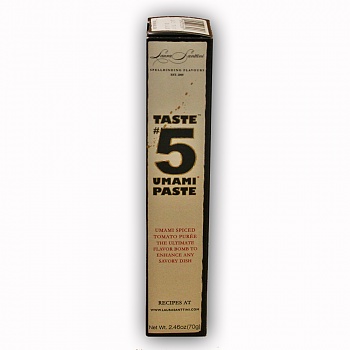
I have come across some more interesting information about the condiment called Taste #5 Umami and it has to do with the ingredients and where to purchase. For those of you the Cambridge, MA area, the choice is easy as it can be found at Cardullos, 6 Brattle Street, Cambridge, MA 02138. It is available from them online.

Also, here are the ingredients, which Do Not include MSG.

“Umami Paste, Taste # 5

Umami Spiced Tomato Puree, The Ultimate Flavor Bomb to Enhance any Savory Dish. Can Be Used Raw or Cooked.

Ingredients: Tomato Paste, Anchovy Paste, Black Olives, Balsamic Vinegar, Porcini Mushroom, Parmesan Cheese, Citric Acid, Olive Oil, Wine Vinegar, Sugar, Salt.( Contains Milk). Produced in Italy” (Aimee Bianca, YC Media, 212-609-5009, Aimee Bianca)

So there you are with some more information. I still have not located any in the Boise area and I may have to get some via online sales. Thank-You Ms Bianca for this information and link. Cheers!

Reblog:

  • Click to email a link to a friend (Opens in new window) Email
  • Click to share on Pinterest (Opens in new window) Pinterest
  • Click to share on Facebook (Opens in new window) Facebook
  • Click to print (Opens in new window) Print
  • More
  • Click to share on X (Opens in new window) X
  • Click to share on Instagram (Opens in new window) Instagram
Like Loading...

Umami – What Is It?

31 Sunday Oct 2010

Posted by Bob and Robin in Condiments, Special Information

≈ Leave a comment


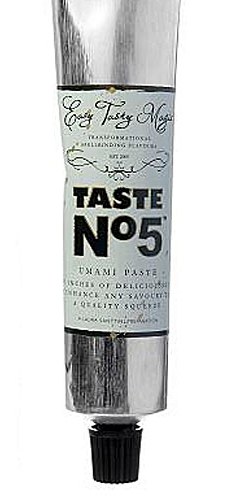
Umami Taste No 5We have been reading about umami, Japanese for delicious and there is a lot of discussion as to whether this product is nothing more than enhanced MSG. So I have found the following articles, among many, that try to describe the product. I have stayed away from articles written by suppliers for obvious reasons. Enjoy!

Umami, savory ‘fifth taste,’ now available in a tube in grocery stores
By Issie Lapowski
DAILY NEWS Staff Writer
Tuesday, February 9th 2010, 11:16 AM

One of the tastes known to man, including sweet, sour, salty and bitter, it is the “fifth taste,” umami, that has been most difficult to pinpoint – until now.

According to Britain’s Telegraph, the United Kingdom’s supermarket chain Waitrose will begin selling umami – associated with savory flavors found in mushrooms and some cheeses – in paste form beginning next week. The paste will be called “Taste No. 5” and will be distributed in 197 Waitrose stores, as well as another food chain, Booths.
For the last 102 years, since its discovery by Japanese scientists, umami has remained an elusive taste, more familiar to scientists than to chefs. For this reason “Taste No. 5” creator Laura Santtini decided to take umami out of the laboratory and into the kitchen.

“I wanted to get away from the notion that umami is something of interest to scientists that no one else can really understand,” she tells the Telegraph. “The truth is that umami should be of interest to anyone who has a tongue.”

To achieve this taste, Santtini used ingredients like anchovies and porcini mushrooms. “Umami is part of our everyday eating lives, it is just that many of us don’t know what to call it. It is what gives depth of flavour to food,” she says. “Every food culture has its umami-rich ingredients, whether it is seaweed in Japan or Parmesan in Italy.”

According to a 2000 study out of the University of Miami, the human tongue possesses receptors that only react to glutamate, a chemical commonly found in savory foods. This means that the tongue is pre-programmed to crave umami.

Representatives from Waitrose say they’re anxious to observe customer reactions: “It’s only recently that a tangible product related to the fifth taste has become available. We believe our customers will relish the chance to explore it.”

Tasting Table National
Fri. 22 Oct ’10
Spread It Around
A new wonder paste will save your dish

We’ve all had the unhappy experience of trying cooking shortcuts that make great claims about enhancing flavors only to find that they’re not always trustworthy (ahem, MSG). We’ve also been known to use less controversial quick fixes in an attempt to speed the cooking process, then pay the price for such weakness–as though some karmic cooking law were punishing us for our sloth.

We gave Taste #5 Umami Paste a chance, however, partly because it’s the brainchild of Laura Santtini, a British cook and food writer, and partly because it captures the elusive flavor of umami–the so-called fifth taste elucidated by Japanese scientists.
The tube holds an earthy amalgam of umami-loaded savories–olive, anchovy, porcini mushroom and Parmesan cheese, among others–in a robustly flavored, concentrated paste.

Sampled on its own, the stuff overwhelmed every last taste bud we had. But it rounded out the edges of many dishes we introduced it to: Rubbed on steak, stirred into a risotto or used as the base of a pasta sauce or salad dressing, it added a nuanced richness that smacked of extra time spent in the kitchen.

We even tried using it as a Band-Aid for a roast chicken gaffe with impressive results–mixed with pan juices, it helped create a gravy that masked dry white meat. And best of all, since the paste is made from actual foods rather than multisyllabic chemicals, there’s no reason to fear judgment from the cooking gods.

Buzzword
11 Feb 2010
by Kerry Maxwell, author of Brave New Words

If you’re fed up with the same old meat and two veg or pasta and tomato sauce, and the weekly run of familiar meals holds no excitement for you, then fear not, help may be at hand. Enter umami – a new flavour sensation which has the potential to rescue your tastebuds from the effects of culinary drudgery.

Umami is often described as the ‘fifth taste’ because it complements the conventional taste categories that the human tongue is said to detect: sweet, sour, salty and bitter.

Umami is a pleasant savoury taste produced by glutamate and ribonucleotides, chemicals which occur naturally in many foods including meat, fish and dairy products. Umami is subtle and not generally identified by people when they encounter it, but blends well with other tastes to intensify and enhance flavours. It therefore plays an important role in making food taste delicious. If it helps to visualize, a familiar example of the umami taste in action is parmesan cheese, maybe not as appetising as some cheeses when eaten on its own, but creating a delicious taste sensation when sprinkled on a dish of steaming spaghetti bolognese.

Umami is often described as the ‘fifth taste’ because it complements the conventional taste categories that the human tongue is said to detect: sweet, sour, salty and bitter. It ties in with the increasingly popular belief that taste is more complicated than originally perceived, relating to a combination of sensations such as the feel and sound of food when chewing, its smell, and even the emotional circumstances when eating.

Though umami can be experienced by simply combining ingredients that work well together – such as combinations of meat, tomatoes, garlic and cheese – hey, it’s the 21st century, and so we can buy the ‘convenience’ version! In February 2010, Waitrose became the first British supermarket to sell tubes of the aptly and transparently named ‘Taste No 5’. The creation of chef and food writer Laura Santtini, Taste No 5 is a paste made from umami-rich foods such as tomatoes, parmesan cheese, anchovies, garlic and porcini mushrooms. It claims to act as a ‘flavour bomb’ when added to any savoury dish.

Background to the identification of the umami taste from umami foods
The term umami was coined by Japanese chemist Kikunae Ikeda when he first identified the concept in 1908. Ikeda analysed the active ingredients in kelp (seaweed) stock, an indispensable part of Japanese cuisine, discovering that the delicious taste was linked to glutamate. He found that this taste was also present in other savoury foods, including those used in Western cuisine, like tomatoes, cheese and meat. In 1912, addressing an international congress in applied chemistry in Washington, Ikeda stated that:
‘Those who pay careful attention to their tastebuds will discover in the complex flavour of asparagus, tomatoes, cheese and meat, a common and yet absolutely singular taste which cannot be called sweet, or sour, or salty, or bitter …’

However it wasn’t until the 1980s that, following a series of scientific studies, the umami taste was officially recognized as a legitimate fifth taste. Opinions vary as to the precise translation of the word umami, but the best approximation I’ve been able to find is something like ‘savoury deliciousness’.

Reblog:

  • Click to email a link to a friend (Opens in new window) Email
  • Click to share on Pinterest (Opens in new window) Pinterest
  • Click to share on Facebook (Opens in new window) Facebook
  • Click to print (Opens in new window) Print
  • More
  • Click to share on X (Opens in new window) X
  • Click to share on Instagram (Opens in new window) Instagram
Like Loading...

Promises! Promises!

14 Saturday Nov 2009

Posted by Bob and Robin in Appetizers, Condiments, Food, Main Dish, Photos By: Bob Young, Restaurants, Things To Do

≈ Leave a comment


I said that the next time we went to Sweetwater’s Tropic Zone, that I would get the Curry Goat. As the Walrus said, “The time has come”. We returned tonight and the meal was superb!!! Here is what we had. You might want to read below, but the slides are labeled. Remember to go to full screen to view the photos.

Click to play this Smilebox slideshow: SweetwatersTropic II
Create your own slideshow - Powered by Smilebox
Make a Smilebox slideshow

Our dinner consisted of: Pineapple Curry Muscles that were superb. The sauce is awesome. House Salad, Trinidadian Curry Goat (there’s the goat), Cuban-Style Bistec de Palomilla (Cuban steak that is pan seared) and a Chocolate Torte. The main thing is, would I have the Goat again? The answer is simple: Absolutely! It was that good! Actually, everything we had was that good. When we go back, and we will, it will be hard not to choose the same things again. We will probably go through the entire menu eventually. You really need to visit the Sweetwater’s Tropic Zone. It’s that good and giving the old Andrae’s a race for taste and quality! Cheers!

Reblog:

  • Click to email a link to a friend (Opens in new window) Email
  • Click to share on Pinterest (Opens in new window) Pinterest
  • Click to share on Facebook (Opens in new window) Facebook
  • Click to print (Opens in new window) Print
  • More
  • Click to share on X (Opens in new window) X
  • Click to share on Instagram (Opens in new window) Instagram
Like Loading...

Worcestershire Sauce

01 Sunday Nov 2009

Posted by Bob and Robin in Condiments, Food, Food Trivia, Herbs, Interesting Information, Things To Do

≈ 1 Comment


Looks like it might have been a slow day in Boise. Not really! They were having a big debate on the Food Network today on the origin and uses of Worcestershire Sauce. Here, from Wikipedia, is some information. Some of this is not cited and may need citation.

Worcestershire Sauce

From Wikipedia,
Worcestershire sauce (pronounced WOOS-tər-sheer saws), is a fermented liquid condiment used for flavouring many cooked and uncooked dishes, especially with grilled or barbecued meats. It is also used as an ingredient in the preparation of cocktails and drinks.

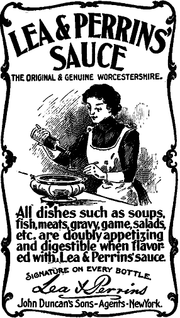
First made at 68 Broad Street, Worcester, England, by two dispensing chemists, John Wheeley Lea and William Henry Perrins, the Lea & Perrins brand was commercialised in 1837 and has been produced in the current Midlands Road factory in Worcester since 16 October 1897. In 1930 the business was sold to HP Foods and was subsequently acquired by the Groupe Danone. It was purchased by H.J. Heinz Company in 2005 who continue to manufacture and market “The Original Lea & Perrins Worcestershire Sauce”, under the name Lea & Perrins, Inc. Other companies manufacture similar products, often also called Worcester Sauce, and marketed under different brands.

Origins
A fermented fish sauce called garum was a staple of Greco-Roman cuisine and of the Mediterranean economy of the Roman Empire, and the use of some similar fermented anchovy sauces in Europe can be traced back to the 17th century. The Worcestershire variety became popular in the 1840s and is one of the many legacies of the British rule of the Indian sub continent. Several disputed theories exist concerning its exact discovery or invention by John Lea and William Perrins.

History
A widely reported legend has it that “Lord Marcus Sandys, ex-Governor of Bengal” (a figure unknown to history outside this tale) encountered it while in India under the Honourable East India Company in the 1830s, missed it on his return and commissioned the local apothecaries to recreate it. However, author Brian Keogh concluded in his privately published history of the Lea & Perrins firm on the 100th anniversary of the Midland Road plant, that “No Lord Sandys was ever governor of Bengal, or as far as any records show, ever in India.”

The Lord in question, whose identity was being discreetly veiled by Messrs Lea and Perrins (who used to aver on the bottle’s paper wrapping that the sauce came “from the recipe of a nobleman in the county”) was Arthur Moyses William Sandys, 2nd Baron Sandys (1792–1860) of Ombersley Court, Worcestershire, Lieutenant-General and politician, a member of the House of Commons at the time of the legend, whose given name is being confused in the tale with that of his brother and heir, Arthur Marcus Cecil Sandys, 3rd Baron Sandys (1798–1863), who did not succeed to the title, however, until 1860, when the sauce was already established on the British market. The barony in the Sandys family (pronounced “sands”) had been revived in 1802 for the second baron’s mother, Mary Sandys Hill, so at the date of the legend, in the 1830s, “Lord” Sandys was actually a Lady. No identifiable reference to her could possibly appear on a commercially bottled sauce without a serious breach of decorum. It is likely her heir agreed to sell the recipe.

A more accurate version that was published by Thomas Smith: We quote the following history of the well-known Worcester Sauce, as given in the World. The label shows it is prepared “from the recipe of a nobleman in the county.” The nobleman may be Lord Sandys. Many years ago, Mrs. Grey, author of The Gambler’s Wife and other novels, was on a visit at Ombersley Court, when Lady Sandys chanced to remark that she wished she could get some very good curry powder, which elicited from Mrs. Grey that she had in her desk an excellent recipe, which her uncle, Sir Charles, Chief Justice of India, had brought thence, and given her. Lady Sandys said that there were some clever chemists in Worcester, who perhaps might be able to make up the powder. Messrs. Lea and Perrins looked at the recipe, doubted if they could procure all the ingredients, but said they would do their best, and in due time forwarded a packet of the powder. Subsequently the happy thought struck someone in the business that the powder might, in solution, make a good sauce. The profits now amount to thousands of pounds a year.

Upon completing the necessary steps, however, the resulting product was found to be so strong that it was considered inedible, and a barrel of the sauce was exiled to the basement of Lea & Perrins’ premises. Looking to make space in the storage area a few years later, the chemists decided to try it once again, only to discover that the sauce had fermented and mellowed and was now quite palatable. In 1838 the first bottles of “Lea & Perrins Worcestershire Sauce” were released to the general public.

An alternative story was published by historian and Herald for Wales, Major Francis Jones, 1908-1993, who attributed the introduction of the recipe to Captain Henry Lewis Edwardes 1788-1866. Edwardes, originally of Rhyd-y-gors, Carmarthenshire, was a veteran of the Napoleonic wars and held the position of Deputy-Lieutenant of Carmarthenshire. He is believed to have brought the recipe home after travels in India. The article does not say how the recipe found its way to Messrs Lea and Perrins. Messrs Lea and Perrins, being John Wheeley Lea (research and product development) and William Perrins (finance), from their building in Broad Street, Worcester, ran by far the most important and successful chemist and druggist business in the county. They made their fortunes from manufacturing and selling the sauce. They built a new factory with railway access in Midland Road, Worcester and made various charitable donations to the city such as Perrins Hall in a Worcester School.

Lea & Perrins Original Recipe
The ingredients of a traditional bottle of Worcestershire sauce sold in the United Kingdom under the name “The Original & Genuine Lea & Perrins Worcestershire Sauce” are listed as malt vinegar (from barley), spirit vinegar, molasses, sugar, salt, anchovies, tamarind extract, onions, garlic, spice, and flavouring. Apart from distribution for its home market, Lea & Perrins also supplies this recipe in concentrate form to be bottled abroad.

Japanese Worcestershire sauce, often simply known as sōsu (“sauce”), or Usutā sōsu (“Worcester sauce”) is made from purees of fruits and vegetables such as apples and tomatoes, matured with sugar, salt, spices, starch and caramel. Despite this appellation, it bears only moderate resemblance to Western Worcestershire sauce. Sōsu comes in a variety of thickness, with the thicker sauces looking and tasting like a cross between the original Worcestershire sauce and HP sauce. There are many variations according to flavour and thickness, and are often named after the foods they are designed to go with, such as okonomiyaki sauce and tonkatsu sauce. These sauces, however, and others that are Worcestershire relatives are much closer in taste to American barbecue sauce. These variants have become a staple table sauce in Japan, particularly in homes and canteens, since the 1950s. It is used for dishes such as tonkatsu (breaded pork cutlets), okonomiyaki (savoury pancakes), takoyaki, yakisoba, yaki udon, sōsu katsudon and korokke.

Holbrooks worcestershire sauce from 1902
In Sheffield, England, Henderson’s Relish, very similar to Worcester sauce, is made and sold locally. This sauce is sold in the same size and shape of bottle as Lea and Perrins Worcester sauce and also has an orange label, which calls it ‘The Spicy Yorkshire Sauce’; it does not contain anchovies.

Lionel Brand (Australia) worcestershire sauce
In Australia the best-selling brand of Worcestershire sauce is Holbrooks , holding over half the market share in black sauce. Historically there were several different manufacturers of Worcestershire sauce in Australia, e.g. Lionel Brand from Taringa in Brisbane.

Lea & Perrins Worcestershire Sauce in the USA differs slightly from the original British recipe. Its ingredients are listed as: vinegar, molasses, high fructose corn syrup, anchovies, water, onions, salt, garlic, tamarind concentrate, cloves, natural flavorings and chili pepper extract. The original British recipe uses malt vinegar while the American version uses distilled white vinegar, giving the British version a slightly deeper flavour. Also, the American version uses high fructose corn syrup while the original British recipe still uses sugar, giving the American version a somewhat sweeter and less spicy taste.

Vegetarian and gluten free alternatives are available and some Worcestershire sauce powders are marketed as suitable for vegetarians. The vegetarian variety omits the anchovies (notably Henderson’s Relish, which is similar, although not considered a variety of Worcestershire Sauce). ‘Life’ Worcester sauce, produced by MH Foods (Morehands Ltd), is also vegetarian. Both this and Lea & Perrins’ sauce are suitable for coeliacs. The actual ingredients may vary between countries, for example the Canadian version of Lea & Perrins’ sauce contains gluten in the form of malt vinegar from barley. Angostura also offers a fish-free sauce, but does not advertise it as “vegetarian”. The deluxe Worcestershire Sauce Powder produced by Nikken Foods contains no anchovies. Orthodox Jews refrain from eating fish and meat in the same dish, causing Worcestershire to be problematic, as many people are unaware that it contains anchovies. Certain brands that are certified to contain less than 1/60th of the fish product can be used with meat.

Dishes using Worcestershire sauce
Worcestershire sauce is often an ingredient of Caesar Salad and can be used as steak sauce.
Welsh rarebit is a combination of Caerphilly cheese, English mustard, Worcestershire sauce, and other ingredients, frequently eaten with bread, toast or crackers. A simpler version uses Worcestershire sauce with cheese on toast, with the sauce added to the plain version during the grilling process. Worcestershire sauce also plays a key role in the flavour of original recipe Chex Mix. In the U.K., advertising by Lea & Perrins has made Worcestershire Sauce popular for use on spaghetti bolognese, beans on toast, cheese on toast, chips (French fries), gravy and sausages. It is also frequently used in chili con carne, Bloody Mary cocktails, and in a cocktail known mostly to Canadians called a Caesar.

Worcestershire sauce, known as salsa inglesa (English sauce) in Spanish, is an essential ingredient of the popular Mexican beer cocktail, the Michelada. It is also used to flavour cheeseburgers and in Mexico, it is often used on pizza. The sauce it is nearly universally available as a condiment in steakhouses throughout North America, and is also sometimes used as a condiment for bacon and eggs, hamburgers, pork chops, chicken, and certain other meats and fish. Certain brands of crisps (potato chips), such as Walker’s (U.K.) sell Worcestershire sauce flavoured crisps.

Worcestershire sauce plays a significant part in the cuisine of Asian regions which have seen significant exposure to Western cuisine. In Cantonese cuisine, Worcestershire sauce was introduced in the 19th century via Hong Kong and is today used in dim sum items such as steamed beef meatballs and spring rolls. The Cantonese name for this sauce is “gip-jap” (Chinese; pinyin: jiézhī; Cantonese Yale: gip jāp). It is also used in a variety of Hong Kong-style Chinese and “Western” dishes.

In Shanghainese cuisine, the use of Worcestershire sauce spread from European-style restaurants in the 19th and 20th century to its use as an ingredient in ubiquitous, Eastern European-inspired dishes such as Shanghai-style borscht, and as a dipping sauce in Western fusion foods such as Shanghai-style breaded pork cutlets. It is also commonly used for Chinese foods such as the shengjian mantou, which are small, pan-fried pork buns. In Shanghai, Worcestershire sauce is called “la jiangyou” (Chinese: pinyin: làjiàngyóu; literally “spicy soy sauce”). After imported Worcestershire sauce became scarce in Shanghai after 1949, a variety of local brands appeared. These are now in turn exported around the world for use in Shanghai-style dishes. Lea & Perrins has in recent years established a plant in Guangdong, China, thus increasing availability of the original variety in China. However, it does not have a dominant market share compared to the native-grown varieties. In Thailand, the Lea & Perrins Original Worcestershire sauce on sale is, according to its label, imported directly from England.

Well there is some information that you were really waiting for! Cheers!
Reblog:

  • Click to email a link to a friend (Opens in new window) Email
  • Click to share on Pinterest (Opens in new window) Pinterest
  • Click to share on Facebook (Opens in new window) Facebook
  • Click to print (Opens in new window) Print
  • More
  • Click to share on X (Opens in new window) X
  • Click to share on Instagram (Opens in new window) Instagram
Like Loading...

Annatto – What Is It?

01 Sunday Nov 2009

Posted by Bob and Robin in Condiments, Food Prep, Food Trivia, Herbs, Interesting Information

≈ Leave a comment


Good question. Basically, it’s a spice used mainly in South America, but also in Mexico, the Caribbean and in cheese. Hmmmmm!

Annatto

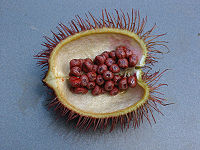
Annatto, sometimes called Roucou, is a derivative of the achiote trees of tropical regions of the Americas, used to produce a red food coloring and also as a flavoring. Its scent is described as “slightly peppery with a hint of nutmeg” and flavor as “slightly sweet and peppery”.


Annatto is produced from the reddish pulp which surrounds the seed of the achiote (Bixa orellana L.). It is used in many cheeses (e.g., Cheddar, Red Leicester, and Brie), margarine, butter, rice, smoked fish, and custard powder.

Annatto is commonly found in Latin America and Caribbean cuisines as both a coloring agent and for flavoring. Central and South American natives use the seeds to make a body paint, and lipstick. For this reason, the achiote is sometimes called the lipstick-tree. Achiote originated in South America and has spread in popularity to many parts of Asia. The heart shaped fruits are brown or reddish brown at maturity, and are covered with short, stiff hairs. When fully mature, the fruits split open exposing the numerous dark red seeds. While the fruit itself is not edible, the orange-red pulp that covers the seed is used as a commercial food coloring and dye (similar to turmeric). The achiote dye is prepared by stirring the seeds in water.

History

Annatto has long been used by indigenous Caribbean and South American cultures. It is believed to originate in Brazil. It was probably not initially used as a food additive but for other reasons, such as body painting, to ward off evil, and as an insect repellent. The ancient Aztecs called it achiotl, and it was used for Mexican manuscript painting in the sixteenth century.

Uses

In Jamaica, annatto has had many uses over the centuries, including as a food dye, body paint, treatment for heartburn and stomach distress, sunscreen and insect repellent. In Venezuela, annatto (called locally onoto) is used in the preparation of hallacas, perico, and other traditional dishes. In Brazil, both annatto (the product) and the tree (Bixa orellana L.) are called urucum and the product itself may also be called colorau. In the Caribbean islands, both fruit and tree are popularly called achiote or bija (pronounced “bee-ha”) instead of Bixa. In the Philippines, it is called atsuete and is used as food coloring in traditional dishes. It is a major ingredient in the popular spice blend “Sazón” made by Goya Foods.

Cheddar cheese is often colored and even as early as 1860 the real reason for this was unclear: English cheesemaker Joseph Harding stated “to the cheese consumers of London who prefer an adulterated food to that which is pure I have to announce an improvement in the annatto with which they compel the cheesemakers to colour the cheese”.
One theory is that cheeses that were excessively fatty or rich turned a somewhat yellow color, and annatto was added to make cheaper cheeses appear to have more fat content, which would bring a higher price.

Reblog:

  • Click to email a link to a friend (Opens in new window) Email
  • Click to share on Pinterest (Opens in new window) Pinterest
  • Click to share on Facebook (Opens in new window) Facebook
  • Click to print (Opens in new window) Print
  • More
  • Click to share on X (Opens in new window) X
  • Click to share on Instagram (Opens in new window) Instagram
Like Loading...
← Older posts

  • Bob and Robin's avatar Bob and Robin
  • rockinrobin43's avatar rockinrobin43

Meta

  • Create account
  • Log in
  • Entries feed
  • Comments feed
  • WordPress.com

Copyright Notice

Creative Commons License
This blog and all work herein is licensed under a Creative Commons Attribution-Noncommercial-No Derivative Works 3.0 United States License.

The Current Weather at the Captain’s Shack

Click the image to see the very latest and current weather at the Captain's Shack in Boise, Idaho

Enter your email address to follow this blog and receive notifications of new posts by email.

Join 183 other subscribers

Thanks to all of these readers and subscribersz of this blog!

  • 320,174 and 598,479 Folks Reached

Monthly Archives of this Blog

Translate This Page

Assoc of Food Bloggers

Association of Food Bloggers

BFM Drive-Thru

Boise Farmers Market Drive-Thru

Air Fryer Cooking Time and Temperature Conversion Calculator

To convert to the AirFryer

AirFryer Recipes

https://www.airfryerrecipes.com/

Air Fryer Conversions

Rule of 25%. Reduce oven/frying temperature by 25% and time by 25%.

Fork To Spoon – Air Fryer and Instant Pot Recipes

Great resource for AF and IP information and recipes.

AirBnB Buhl, Idaho

Welcome to Mary Anne’s place, a historic cottage in the heart of Kelley’s Canyon Orchard. Just 20 minutes from Twin Falls, unwind in this quiet retreat by enjoying the pleasant sound of a nearby creek and views that look out into the orchard. 4 guests · 2 bedrooms · 3 beds · 1 bath, Wifi · Free parking · Kitchen, Entire House! 1903 River Rd, Filer, Idaho 83328

Bloglovin’

RSS Links

RSS Feed RSS - Posts

RSS Feed RSS - Comments

-----------------------
I Know. Not Idaho Products, But still Worth A Try!
----------------------

Rockin’ Rs

----------------------
Items of Blog Interest.
-----------------------

Member of The Internet Defense League

The History Kitchen

Interesting historical information about food - prep, origins and uses. Written by a kitchen anthropologist!

-----------------------
Of Concern To This Blog
----------------------

Recent Posts

  • Trike Restaurant Finds Worthy of Posting
  • Food Via ETrike
  • An Awesome Chicken Dish
  • Sushi Shack
  • Awesome Oven BBQ Pork Ribs

-----------------------
Think Local!! Buy Local!!

Let them know you saw their logo on this blog. Thanks!
----------------------

Buy Local!

If you are not from Idaho, think about Buying Local in Your area! As for us, we have lived in Idaho since 1982. We Buy Idaho wherever possible.

Chef Jake Sandberg, Crispeats

Food References and Recipes

Buy Local

And it does ... Just Make Sense! Regardless of where you are from.

------------------------
Think Local!! Idaho Products.

Let them know you saw their logo on this blog. Thanks!
-----------------------

The New Boise Farmers Market

Summer and Winter - 1500 Shoreline Dr, Boise (Americana and Shoreline)

Idaho Farmers Markets

A listing of statewide Farmer's Markets with contacts.

Find Your Local Farmers Market

Click on the graphic to find your local farmers market either by city or zip code.

Acme Baked Shop, Boise

Available at the Boise COOP. Some of the best bread in Boise and all local!! They make the bread for the 10 Barrel Brew Pub, Angell's Bar and Grill, Salt Tears, all here in Boise. Awesome rye bread that actually tastes like rye bread. And the baguettes .... Wonderful. (208) 284-5588 or runsvold2000@gmail.com

Brown’s Buffalo Ranch

Give them a call or EMail for awesome buffalo meat.

Desert Mountain Grass Fed Beef (formerly Homestead Natural Beef)

Desert Mountain Grass Fed Beef, with Bob and Jessica Howard of Howard Ranch in Hammett. The company will only sell whole animals to the Boise Co-op and Whole Foods stores in Boise and Utah. They will also be at the Boise Farmers Market.

Falls Brand Pork roducts

Click the image for pork recipes.

Kelley’s Canyon Orchard

1903 River Rd, Filer, ID 83328 Hours: 10am - 6pm, Phone: (208) 543-5330

Malheur River Meats

Matthews Idaho Honey

Matthews All-Natural Meats

Meadowlark Farms

All natural Eggs, Lamb and Chicken

Purple Sage Farms

True Roots Farm

Available at the Boise Farmers Market and online at https://www.trueroots.farm

True Roots is a local produce farm committed to sustainable and chemical-free farming practices. We raise pesticide-free and non-GMO produce fresh from the farm, offering a diverse variety of farm-fresh services to our local community. Since our founding in 2014, our mission has been to provide farm-direct access to clean, reliable, and affordable produce.

Reel Foods Fish Market

1118 Vista Avenue, Boise, ID 83705 (208) 713-8850 Monday-Friday: 10am-6pm, Saturday: 9am-5pm. Sunday: Gone Fishin’

Standard Restaurant Supply

Plenty of items for the home, too. Check them out. 6910 Fairview, Boise 83704 (208) 333-9577

-----------------------
Some Awesome Recipe and Spice Sources. Culturally diverse.

Let them know you saw their logo on this blog. Thanks!
------------------------

Crockpot Recipes

Many good recipes here.

A Taste of France

A collection of French recipes

Basque Recipes

Best Ever Recipes of Mexico

Malaysian Recipes

Awesome Malaysian recipes.

Memorie di Angelina Italian Recipes

My Best German Recipes Web Site

Regional and Oktober Fest Recipes

There are a lot of recipes here.

Sauer Kraut Recipes

Recipes By Robin and Bob

Recipes that we have collected and created throughout the years.

Recipes of Elizabeth W. Young, Bob’s Mother

These are the recipes that my Mother collected over 85 or so years. The photo of my Mother was one of the last I have of her. It was taken in July, 1987.

Recipes From The Mediterranean Area

Soup and Chowder Recipes

Recipes from "My Recipes"

Deep South Dish Recipes

The Recipes of Greece

Tasty Mexican Recipes

The Shiksa In The Kitchen

Great Jewish recipes!

-----------------------
Some Great Boise Restaurants.

Let them know you saw their logo on this blog. Thanks!
-----------------------

Asiago’s – Italian

Bella Aquila, Eagle, ID

775 S Rivershore Ln., Eagle, ID 83616 (208) 938-1900

Bar Gernika – Basque Pub and Eatery

202 S Capitol Blvd, Boise (208) 344-2175 (Checked)

Cottonwood Grille

913 W River St., Boise (208) 333.9800 cg@cottonwoodgrille.com

Enrique’s Mexican Restaurant

482 Main St., Kuna (208) 922-5169 New name. Was El Gallo Giro. Same owners and kitchen. The Best Mexican restaurant in the Boise/Kuna area, bar none!

Flying Pie Pizzaria

Goldy’s Breakfast Bistro

108 S Capitol Blvd., Boise (208) 345-4100

Goldy’s Corner Cafe

625 W Main St., Boise (208) 433-3934

Guanabanas – Island Restaurant and Bar

960 N Highway A1A, Jupiter, FL

Janjou Pâtisserie

Janjou Pâtisserie, 1754 W State St., Boise, Idaho 83702 (208) 297.5853

Mai Thai Asian Cuisine

750 West Idaho Street Boise, ID 83702 (208) 344-8424

Mazzah Grill – Mediterranean and Greek Cuisine

1772 W State St., Boise (208) 333-2566

Richards Inn by Chef Richard Langston

Formerly - Vincino's. New location at 500 S Capitol Blvd., Boise (208) 472-1463. Reservations are highly suggested.

The Orchard House

14949 Sunnyslope Rd., Caldwell (208) 459-8200

The Ravenous Pig

1234 N. Orange Ave. Winter Park, FL

-----------------------
Think Local!! Boise Breweries, Brew Pubs and Wine Bars.
Let them know you saw their logo on this blog. Thanks!
-----------------------

10 Barrel Brewery Boise

830 W Bannock St., Boise (208) 344-5870

Cloud 9 Brewery and Pub

Opening Fall 2013 in the Albertson's Shopping Center, 18th and State in the old Maxi Java

Edge Brewing Company

525 N Steelhead Way, Boise, ID 83704 (208) 323-1116

-----------------------
Miscellaneous Items
-----------------------

Blog Syndication

NetworkedBlogs
Blog:
Boise Foodie Guild
Topics:
Food, Recipes, Cooking
 
Follow my blog

Blog Badge

Local & Regional Food Blogs - BlogCatalog Blog Directory

  • Subscribe Subscribed
    • Boise Foodie Guild
    • Join 72 other subscribers
    • Already have a WordPress.com account? Log in now.
    • Boise Foodie Guild
    • Subscribe Subscribed
    • Sign up
    • Log in
    • Report this content
    • View site in Reader
    • Manage subscriptions
    • Collapse this bar
 

Loading Comments...
 

    %d