~ – Enjoy a meal or a recipe with us! Be sure to check the Sidebar and Menu above. Interesting resources are listed there. Most are hot links. Air Fryer (AF), Instant Pot (IP) and Captain's Shack (CS) recipes now have their own page. Subscribe to the blog. It's still FREE!
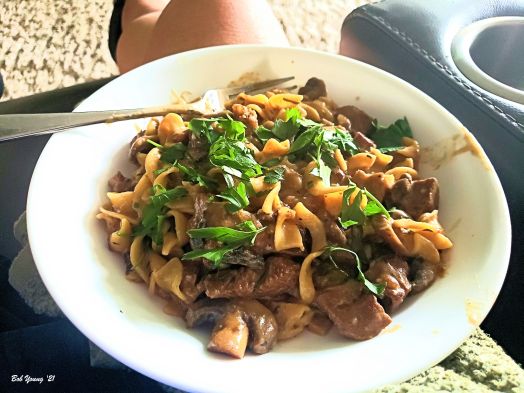
We recently made/created a version of the classic Beef Stroganoff as pictured above. (The recipe can be found here – http://www.rockinrs.com/CS-Stroganoff.pdf). The original recipe did not call for vodka. But this is a Russian dish, so vodka is a must. We did not, however, use the traditional potato based vodka, but rather a corn based. An entirely different flavor level and profile. Seems to me to be more inline with White Lightning. The button mushrooms cut into about 1/4″ slices. Also, we added some chopped fresh rosemary, which was awesome.But look at the recipe and see what you think. We are always open to suggestions.
And then one morning, Robin asked for an Avocado and Tomato Omelet. Never thought of this combination, but it was really good. No, did not cook the avocado or the tomato, Serve with a good fresh fruit mix. In this case, blueberries and cantaloupe. CROW bread toasted from Acme Bakeshop in Boise. Great combination.
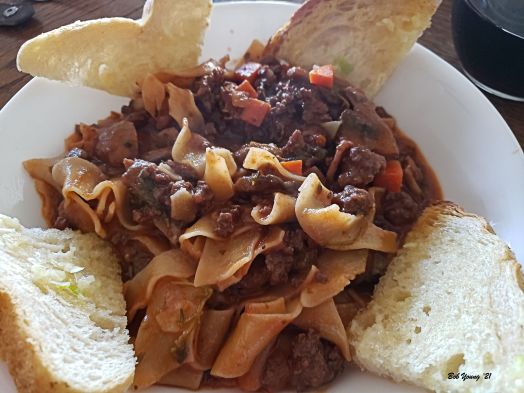
Pappadelle with Red Wine Ragu and Toasted Sourdough with Garlic
We came across this recipe from two different sources, one was Chef Jacques Pepin, and then we adjusted both recipes to make this one. It was delicious! We added a little chervil (French parsley) and Herbs de Provence, which we blend ourselves. We also added a little ground pork. Next time, too, I may add some diced garlic cloves. It is missing in this recipe, excerpt for the Garlic Toast (Acme Bakeshop Sourdough).
The other item that you may want to contemplate is the type of Passata – tomato sauce – you use. I like Cento Traditional, but I also like Rao’s Traditional and Mutti. Any of these are good, but if you prefer to use your own that you have made from all those seasonal Roma or San Marzano, then do so. Please though, when you puree the sauce, leave the skins on.
It’s been awhile. But we are still here. So I think it will be a good idea to look at some of the recipes we have been working on. Some of these recipes call for Herb de Provence and we prefer to make our own. Keeps it to our liking. You can see the recipe here http://www.rockinrs.com/CS-Herbs.pdf. Just remember the 3-1 ratio of using fresh versus dried herbs. For instance, if your recipe calls for 1 Tablespoon of an herb and all your have is dried, use only 1 teaspoon of the dried. (3 teaspoons=1 Tablespoon).
Since summer is right around the corner and BBQ is probably in the back of your mind, here is a recipe for some awesome baked beans. We use a mix of canned Cannellini Beans, Kidney Beans and Black Beans. A wonderful blend of tomato sauce, molasses, brown sugar and dry mustard. Jack Daniels Black Label Bourbon also goes well in this mix. Here is the recipe for these great baked beans. Enjoy! http://www.rockinrs.com/CS-Stovetop-Baked-Beans.pdf.
And if you are doing a BBQ or Grilling – we love St Louis Style Pork Ribs grilled – then try Eric’s Rib Sauce to slather on the ribs and to use as a dipping sauce. It is awesome! http://www.rockinrs.com/Erics-Rib-Sauce.pdf. Please note. The recipe calls for a special cider, Basil/Lemon. It is a local (Boise) brand, Stack Rock Cidery. These ciders are available, whether this brand or not, at most grocery stores. They may have different blends. Find one you like or you can use your favorite apple cider vinegar. Just add your favorite herbs.
And if you are in mind for a beef stew, try http://www.rockinrs.com/CS-Beef-Stew.pdf, CS Beef Stew. It has the Icelandic herb lovage in it. A celery tasting green herb. If you use fresh – dried is available – be careful of the amount. The 1 cup chopped that the recipe calls for, is plenty and even at that, you might want to cut back to 3/4 cup. It is great in stews and soups.
And then there is Halupki. A Ukrainian stuffed cabbage leaves that means “little pigeons”. http://www.rockinrs.com/CS-Halupki.pdf This dish comes from our neighbor and we have slightly altered it. It is simply delicious. It takes right around 3 hours to prepare, but is well worth it. “The name “golubtsy” came to Russia and the region around it in the 18th century when the aristocracy traveled back and forth to eastern Europe. In France, pigeon was wrapped and cooked in cabbage leaves and stuffed cabbage rolls where then called “golubtsy” because the dish resembled the French dish.” [Wikipedia] Note: there is no “G” letter or sound in the Ukrainian language. Therefore this dish is called “Halupki” in the Ukraine.
Easter Boneless Leg of Lamb
You say you like lamb? No? Then you probably have been eating mutton. The difference is in age. Lamb is generally less than 1 year old, whereas mutton is everything else. This one is simply delicious for those who like lamb. Maybe those who say they don’t like it, may learn to eat it using this recipe. Enjoy this lamb. http://www.rockinrs.com/Lamb-Rosemary-Garlic.pdf
And now some dessert! How about Pecan Shortbread Cookies? Yum. To give the pecans some extra flavor, roast them on s sheet pan in the oven at 350 degrees F for 8 minutes. Watch them – Don’t let them burn. Here is the recipe. Enjoy. http://www.rockinrs.com/Pecan-Shortbread-Cookies.pdf
And that does it for now. Brought you at least somewhat up-to-date, and I “learned” this new format, somewhat. Cheers.
I have been asked how do I make Blueberry Bacon Waffles and the answer is rather straight forward. For the bacon I use Falls Brand Thick Sliced and for the waffles I use Krusteaz but with a twist. I add 1 egg and I use 1/2 cup whole milk and 1/2 cup water in the batter. This is not really necessary but I think it makes the waffles better. Light and delicious. Here is how it is done. Enjoy!
Cut 1 strip if bacon per waffle into quarters.
Fry the bacon on the waffle iron to your doneness level.
While the bacon is cooking, place the egg and jam – it can be any and I use either Huckleberry or Blueberry for these waffles.
Add the flour, milk and water to the egg/blueberry mixture and mix well, but don’t over mix. There can be some lumps.
Pour the batter over the bacon in the waffle iron. Add blueberries, close the lid and cook.
Serve with blueberries on the waffle, syrup and basted eggs. A hearty breakfast.
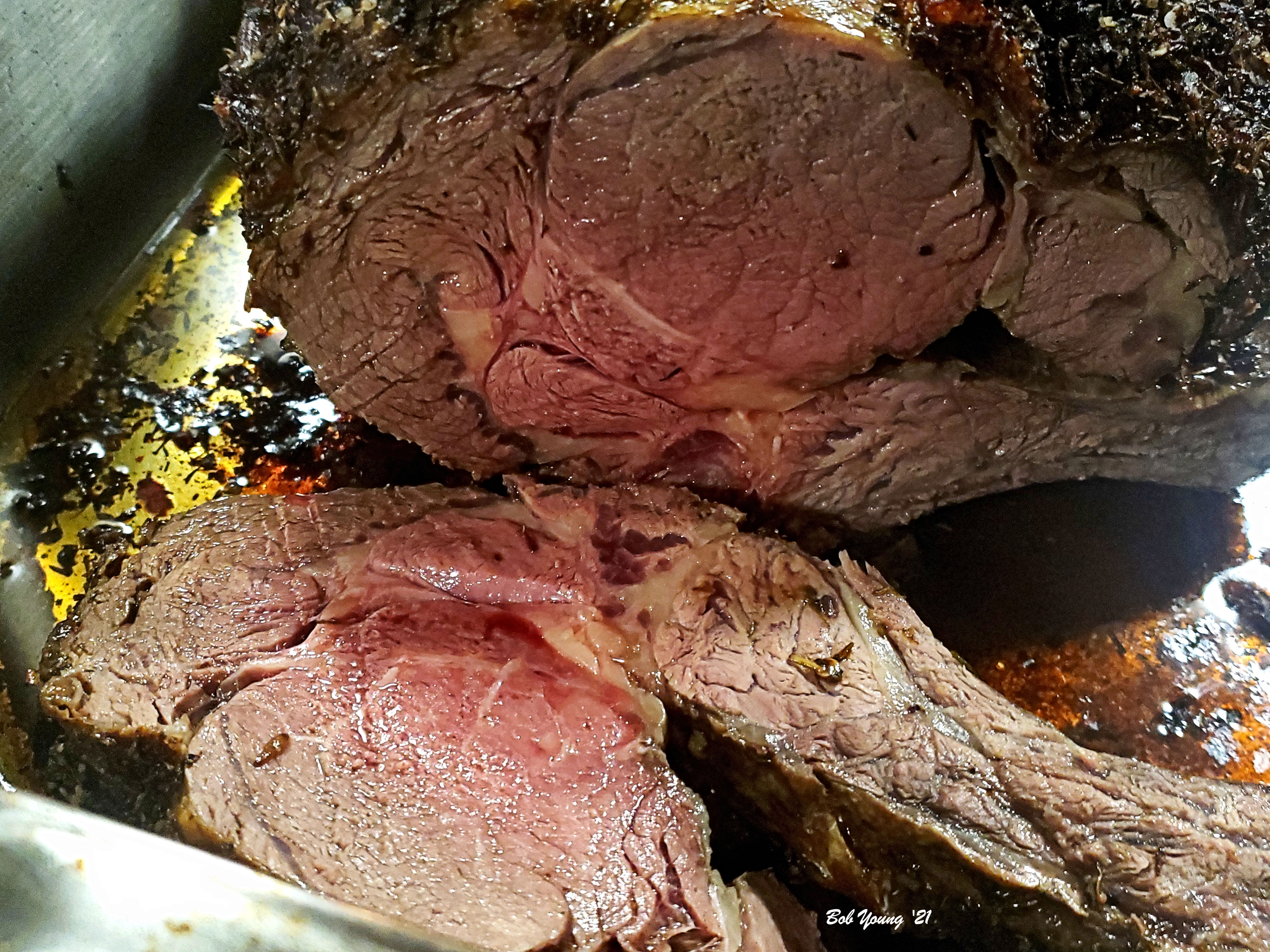
I came across this awesome way to cook a roast of beef. In this case, it was a 12 pound, 7 rib Standing Rib Roast. It was delicious! Start out at 500 degrees F and then turn the heat off for 2 hours and do not open the oven! That’s right. Leave the oven closed! Do not peek! Here is the recipe – CS Prime Rib. You will need Herb de Provence for this recipe and here is our recipe. You can adjust it to please yourself. Herb de Provence. Enjoy!
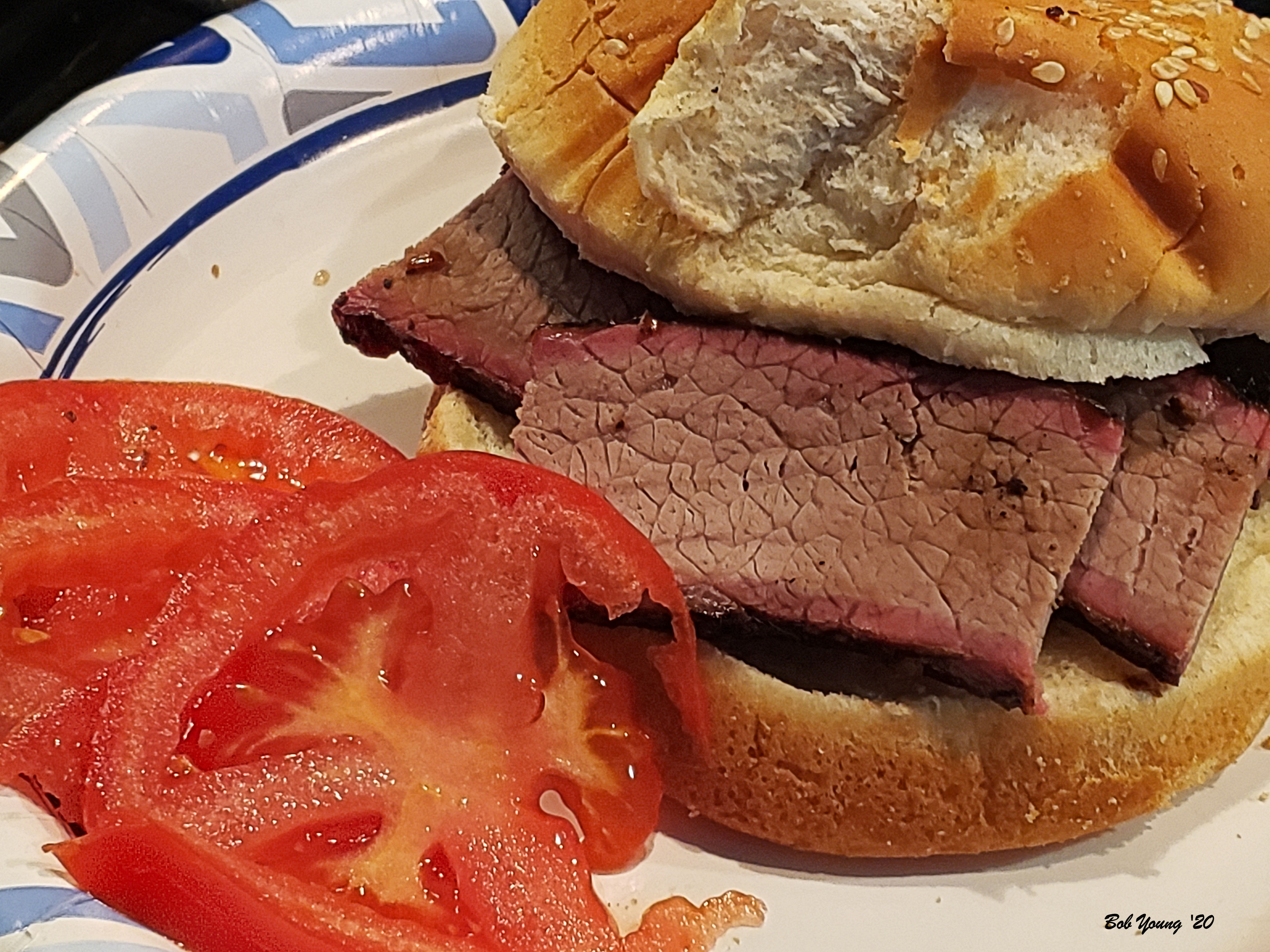
This is by far one of the best CS Brisket that I have made in a long time. Perfect smoke ring and awesome flavors using the rub that is included in the recipe. I love it in sandwiches – pictured here – or just to “nibble” on. It takes some time, but is well worth itt. Just remember to use a very sharp knife to slice it thin, almost shaved. Give it a try.
I want to let everyone know how much I appreciate your patience while my computer was down. I had to replace it with a brand new, super fast and graphically updated machine. My old machine was a 1995 version of a computer. This is a 2020 version! Thank you to Haynes Skower, One Network Computers at 4121 W State St, Boise, ID 83703. Hours: Opens 10AM Tue. Phone: (208) 906-1810. Once again, they did a superb job in building me a superb system and overcoming several unexpected obstacles. Thank-You one and all.
This was really an easy week for grocery pick up at the BFM Drive-Thru on Shoreline Drive in Boise. The line moved pretty quickly. They have changed their modus operandi. It works out very well. I had a 9:15 pickup time and I was through the line in about 10 minutes or less. Here is a link to The Market Information.
And too. It’s great to hear a friendly and cheerful voice under the mask that they all wear -m I wear mine, too! Here are some photos from the process this morning. But I do miss the interaction with the vendors, but that will come. Enjoy!
The line was long, but it moved quickly.
The Drive-Up line
Picking up the order is an easy process. They direct you to a table. You show them your name and the time you are scheduled for. They go and get your already filled order, bring it back to you and put it in your vehicle, if you want them to. You’re done!
Order pick up.
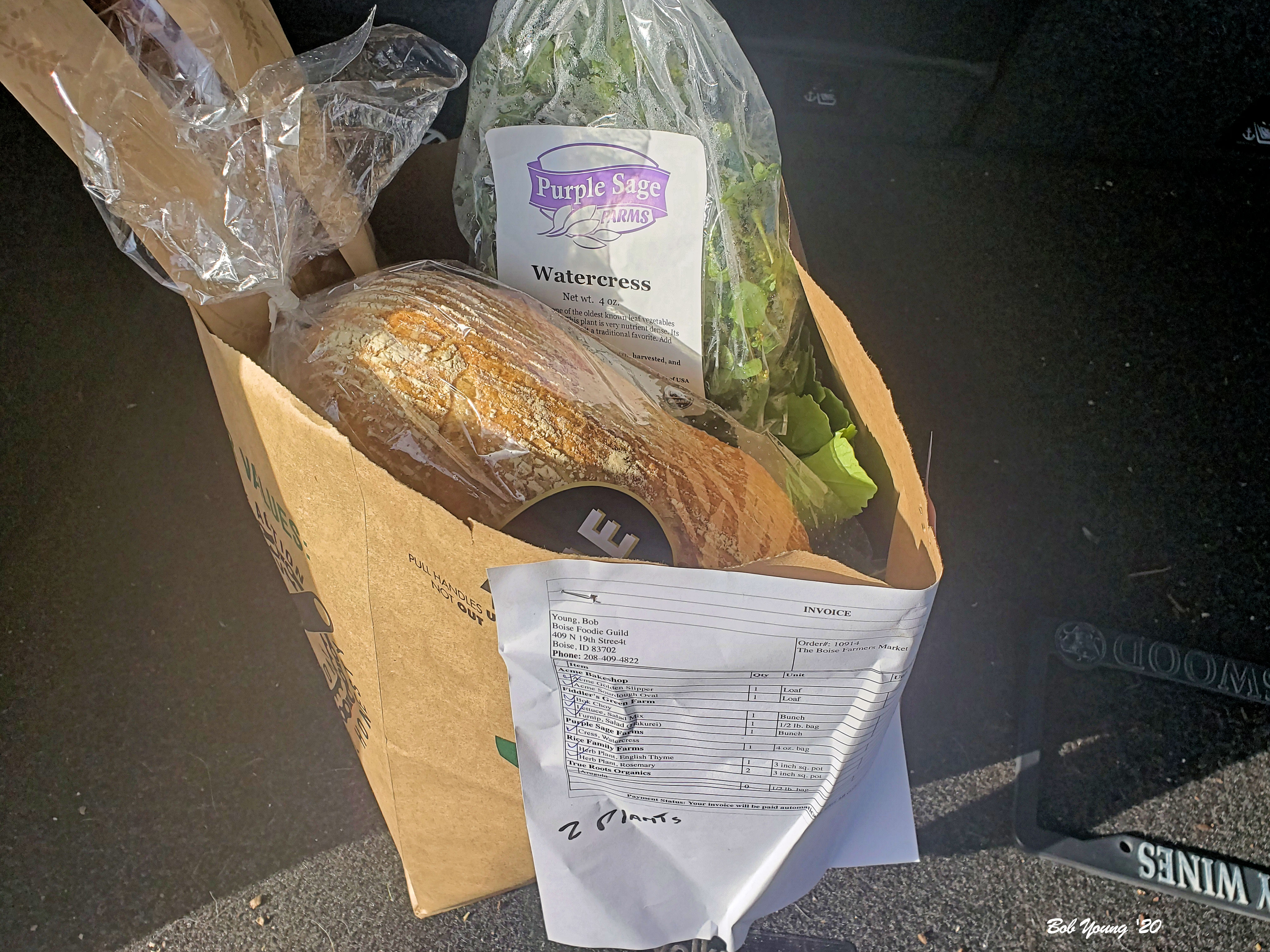
My order in the back of my car. Notice the paperwork – your name, time and products ordered. Your credit card is not charged until you pick the order up. No Cash is transfered!
Our order displayed. From Acme Bakeshop Sourdough Loaf and a Turmeric Baguette, Baby Turnips, Salad Greens, Watercress and Bok Choy.
From Acme Bakeshop a wonderfully delicious Turmeric Bread made fresh. It will go very well with our lamb chops (Meadowlark Farms) tomorrow.
Here is a great tip for storing potatoes from myrecipes.com. This is some really good information. Enjoy!
How Do You Know When a Potato Is Past Its Prime?
Good potatoes are firm, smooth, and sprout-free.
You can tell a potato is spoiled when it is:
Soft
Discolored
Decayed
Growing mold
Sprouts, or “eyes,” are an indication that your potato is reaching the end of its life. However, they’re not harmful and can be simply removed before cooking. As long as the potato looks, smells, and feels right, sprouts are no biggie.
How to Store Potatoes
1. Keep them in a cool place…
Raw potatoes will thrive in a cool, dark place. The ideal temperature range is 43-50°, which is slightly above refrigerator temp. During cooler months, storing potatoes in an unheated basement or an insulated shed is a great idea. It’s a bit tougher to store potatoes in the summertime, but use your common sense—instead of putting them next to a window, keep them in the area of your house that stays the coolest.
2. …but not the fridge.
Raw potatoes like to be cool, but not cold. Very low temperatures can actually change the flavor of your spuds and make them dangerous. This “cold-induced sweetening” happens when the starch is converted to reducing sugars, which can form cancer-causing substances when cooked.
3. Avoid areas with lots of light.
Exposure to light can cause your potatoes to produce chlorophyll and turn prematurely green.
While this color change is usually harmless, excessive sunlight can also cause potatoes to produce a toxic chemical called solanine. Ingesting solanine in high amounts can cause unpleasant side effects like nausea, diarrhea, and vomiting.
4. Don’t wash them before you put them away.
Step away from the sink! It’s best to keep potatoes as dry as possible if you’re trying to make them last. Moisture promotes the growth of fungus and bacteria—so wait to wash them until right before you use them.
5. Let them breathe.
Prevent moisture accumulation by allowing your potatoes plenty of airflow. If you store them in a tightly sealed container (like a ziploc bag), the moisture released by the potatoes will have nowhere to go. Your best bet is an open bowl or paper bag.
Bonus tip: Don’t store your potatoes with your onions! The chemical reaction will actually cause both to spoil faster. Crazy right?
As many of you know, I have a lot of resources that I use in this blog – recipes, suggestions, food items, kitchen products, etc. Here is a list of ten items that I always have in my kitchen. This list comes from My Recipes
Onion
White, yellow, or Vidalia, I’ll always have one kicking around. I caramelize them for tarts, build massive pots of black and white beans around them, and throw them into guacamole.
Garlic
Like ebony and ivory, these two (of course!) go together. I love to roast the whole head and use the sweet, smashed cloves on bread or spun into pasta. And in the event that I made too much pasta, I’ll sauté a small smashed clove in butter or olive oil the next day, discarding the clove and tossing leftover noodles quickly in the infused oil, then dolloping the whole shebang with crème fraîche.
Lemon
Ideally one has both limes and lemons, but as bartender Joaquín Simó of New York bar Pouring Ribbons expressed it to me, “Lemons are sour, and limes are tart.” Lemon juice adds a real punch of acidity to a dish, whereas lime sort of nudges it down a tart path. I use lemons to stuff chickens and deglaze their pans for easy gravy. I squeeze them into homemade bourbon sours and over pasta. If a dish is lacking something, I ask myself if it’s lemon.
Tuna
Everyone has their emergency canned protein, and props to those of you who bust out high-quality anchovies and salmon as your go-to snacks, but I always have good tuna on hand, splurging on Genova or Cento packed in olive oil when I can. It makes for instant snacks or—if I have bread—tuna melts when I walk in the door ravenous, and I’ve been playing around with layering it into pasta with olive oil, capers, and roasted garlic. (Yum!)
Butter
I’m a New Englander, and even at my most broke in this life—my pants had holes; I couldn’t afford health insurance—I’d buy good, unsalted, European butter. These days some domestic butters are just as lovely, and the price has gone, blessedly, way down.
Olive oil – Greek and Italian
Yes, this list is heavy on proteins and fats, which testifies to the foods that power me; I’d fight you for cheese, but never for a box of pasta. My belly rumbles when I’ve had biscuits or French toast for breakfast, but not when I’ve wolfed a few tablespoons of cannellini beans sautéed in olive oil with onions and garlic and seasoned with lemon.
Salt
An acquaintance, observing my twitchy salt trigger hand at the table, once joked that I should have a salt lick installed in my home. I’m a big fan. I love that you can season lightly at the beginning of cooking in order to cut down on how much you need later. (Pasta water, for example, should be seasoned with at least a tablespoon.) I always have Kosher and sea salt on hand, and sprinkle the latter liberally on eggs and avocados.
Cheese
It was only when I attended the Vermont cheesemakers’ festival many years ago that I felt truly at home in this world. Here were bearded men holding babies and arguing about the difference between 18-month and 30 month Comté; there were women tipping back beer while debating the merits of Brillat-Savarin and Camembert. I’ll always have a knob of cheddar, some twisty, stringy Oaxacan cheese, or a fresh cheese in my fridge.
Coffee
Because life is short, and it’s best to stay alert to catch it all. I have learned the hard way not to leave the house without coffee, as I am not a good person without it in my system. These days I stock up on locally roasted, chocolatey Ethiopian Forty Weight beans.
Beans
Cheap, cheerful, and plentiful in my Mexican-American neighborhood, beans are a major staple in my home. Ideally I have a bag of cannellini and another of black, which are less expensive and lighter than the heavy pre-soaked, pre-cooked beans, but I like to have those, too, for those hangry, rushed weeknights that sideswipe all of us.
And many readers of this blog have trouble making a good gravy. Even I do, at times. Here, from the same source is how to make gravy.
Step One: Choose Your Gravy Style
As much as we absolutely sympathize with the urge to guzzle gravy by itself, it is admittedly a finishing sauce, not a complete meal on its own. Therefore, it’s important to consider what style of gravy you’d like to go for; that means, ultimately, considering what kind of foods the gravy will be topping. It also means considering whether you have the ingredients on hand to make the base flavor behind most gravies. For white gravy, you’ll want butter, milk, ample salt and pepper, and possibly pork fat. For brown gravies, you’ll want some sort of stock, and ideally, fat drippings and browned bits from recently cooked meat. If you or your dinner guests are vegetarian, you can use vegetables that impart a good bit of umami flavor, like mushrooms or onions. Those ingredients can also be used to amplify your meaty gravies.
You’ll also want to think about whether you want a smooth finish to your gravy, or if you’re fine with meaty bits in the sauce. If you’d rather a gravy that mimics store bought, you’ll need to use a sieve to strain out any pieces of meat, onion, or mushroom that might be roughing up the gravy’s finish.
Step Two: Make Your Roux
Making roux is the most critical step to making a good gravy. To many home cooks, it’s also the most nerve-wracking; though it’s not nearly as intimidating a process as it might seem at first. Once you master it, you’ll open yourself up to a lot of other culinary possibilities, like bechamel and hearty stews. To make a roux, you’ll need two things: fat and some sort of thickening agent. Usually, that agent is flour, but cornmeal or cornstarch can also be used, as demonstrated in Uncle Ellis’ recipe listed above. You can also use seeds and nuts (like pine nuts) to thicken your roux, as long as you grind them into a paste first. This method may still require some flour, however.
To make a roux, warm a couple of tablespoons of butter, bacon drippings, or some other form of fat into a pan over medium-high heat. Once the fat is warm, add in your thickening agent, one tablespoon at a time. Stir the mixture until it begins to brown. If you’re making a country or white gravy, you’ll want it to just barely change colors; it’ll smell slightly nutty and have the texture of wet sand. If you’re making a brown gravy, let the roux cook for a little longer. Just don’t let it get too brown; the more a roux cooks, the less thickening power it has. Dark brown roux is best used in dishes with thinner sauces, like gumbo.
After you’ve cooked your roux, slowly add in your liquid. For white gravies, this would be milk; for brown, this would usually be a stock of some sort. Make sure to add your liquid slowly—less than a quarter of a cup at a time is fine. Stir constantly while you’re adding it, too; if possible, you might even want someone else to slowly pour while you stir. The goal is to emulsify the liquid with the hot roux for a smooth gravy that has minimal lumps. If the liquid is added too quickly, the gravy won’t thicken properly.
If something is going wrong with your roux or you’re feeling a little nervous about making one, check out this troubleshooting guide. It’ll take you through the most common mistakes. Adding hot liquid to a hot roux (or cold liquid to a cold roux), for example, will result in a lumpy mess, which is why you want to use cold liquids when using the stovetop roux-making method. And if roux-making ends up becoming one of your most-hated kitchen activities, it’s worth mentioning that roux can absolutely be made up ahead of time. Just keep it in a container in the fridge, and make sure only to add it to hot liquids so that you’re spared the lumpy gravy that results from the temperature mistake mentioned above.
How to Make Brown Gravy
Brown gravy is one of the most universally applicable forms of gravy. For this recipe, you’ll want to gather fat drippings; these can be collected (and stored for later use) the next time you make a roast, cook a turkey, or simply fry up some bacon in the morning. If you don’t have enough (or any) animal fat, you can also, of course, just use butter. It won’t be quite as flavorful as drippings, but it will absolutely still do the job.
Once you’ve made your roux, you’ll want to add your liquid to finish your brown gravy. Oftentimes, this will be the stock or any thinner drippings you may have still from your roast, but you can also use canned or boxed stock to finish off your gravy. Add the liquid to your pan slowly, and stir constantly until the sauce coats the back of your spoon. After about three to five minutes, your gravy should be ready to serve.
How to Make Mushroom Gravy
Mushroom gravy follows almost exactly the same process as brown gravy. After adding a chicken (or vegetable) stock and thickening the gravy, however, you will want to add sauteed mushrooms and shallots to the sauce. If you’re looking for even more flavor (and you’re using meat products), consider sauteeing the mushrooms and shallots in your pan drippings before you make your roux. Remove them from the pan, and then proceed to the next step. You’ll come out with an even more full-bodied gravy that’s perfect for your next steak or stroganoff.
How to Make Onion Gravy
As with mushroom gravy, onion gravy is yet another variation on the classic brown finishing sauce. With this variation, however, it’s worth considering whether you’d like a creamier consistency; as noted in the Caramelized Onion Gravy recipe above, milk makes for a great addition to this gravy variant. If you’re looking for an even easier way to incorporate onions into your gravy, sprinkle them with flour after softening them in the pan, and then proceed to make your roux. The flour-covered onions will help you get your gravy to the dinner table even faster.
How to Make Fruit-Infused Gravy
We know—the idea of fruit-flavored gravy might sound bizarre. But when paired with the right entree, it can be the perfect accompaniment. For this variation, you’ll want to cook a fruit base that compliments your final dish; apple cider can be reduced into a great gravy, but tangerines, cherries, and cranberries would also be a delicious accents to a holiday feast. Once you’ve made a fruit juice that suits your taste, combine with stock, if desired, and add to your roux.
How to Use Beer, Wine, or Spirits to Make Gravy
Whiskey, sherry, wine, and beer can all make for fantastic gravy flavors. And if you’re ambitious, they can also do the duel job of serving as a marinade for your meat. To incorporate alcohol into your gravy, decide whether you would like to add it cold to an already finished gravy, or whether you would like to use it as a cooking liquid first. If the former, make roux as described above and slowly whisk in a quarter cup to a 1 ½ cups of your desired brew. If you’d like to use your gravy as a marinade first, however, cook your meat (either in a slow cooker or on the stove) until tender in a mixture of your chosen alcohol and stock. Remove the meat and strain out any bits that may still remain in the sauce; add the alcohol and stock mixture to a pot, heat it up, and stir in flour a tablespoon at a time. Soon, you’ll have a custom gravy that highlights the flavors you initially imparted into your entree.
How to Make Tomato Gravy
If you love tomatoes, then you’ll adore a gravy that incorporates the sweet, acidic fruit. For this gravy, add tomatoes to your drippings and cook them thoroughly. If they’re whole tomatoes, make sure the skin blisters before breaking them open. Then, once your tomatoes are cooked down and seasoned, add in flour to thicken your sauce. Serve over burgers, pork chops, biscuits, or anything else that you’d prefer topped with tomato-y goodness.
How to Make Redeye Gravy
Redeye gravy is a Southern delight that doesn’t get its due. The caffeine-infused sauce is great when served over country ham and biscuits, and it’s also a great alternative topper for country-fried steak. To make redeye gravy, cook chopped up bacon and ham in butter, along with some onion and garlic, if desired. Add flour and cook your roux, then slowly mix in milk, broth, and cooled, already brewed coffee. Pepper to taste, and feel free to add in some chopped chives or cayenne if you like.
How to Make Egg Gravy
Another Southern staple, giblet gravy is great when dripped over mashed potatoes or bits of turkey. The addition of hard-boiled egg also adds intrigue and flavor to this gravy variation. For this recipe, make gravy using chopped up turkey giblets and turkey neck. Leave these bits in, if desired, once the gravy has thickened. Slice and stir in a hard-boiled egg before serving.
How to Make Country Gravy
Sausage gravy is a comforting treat that every home cook should learn how to make. For great, at-home sawmill gravy, brown some sausage (or use a plant-based meat or textured vegetable protein). If needed or desired, add some butter for extra fat. Then, add some flour to the pan, cooking your roux while adding salt and pepper. Next, slowly stir in milk to finish the gravy off. Cook until thick, and serve over biscuits, mashed potatoes, country-fried steaks, or whatever else you think could use a savry, decadent topping. If you like a little extra spice with your gravy, consider stirring in a can of Ro-Tell tomatoes for an even tastier treat.
How to Make Gravy with Chocolate
Appalachian readers may already be familiar with chocolate gravy—a sweet, thickened sauce that’s sometimes served over biscuits. But if you haven’t had a chance to try it yourself, there’s no time like the present. For this recipe, melt butter in a pan and then whisk in flour, sugar, salt and cocoa powder. Then, slowly add in milk once the roux has cooked. You’ll end up with a thick, chocolatey sauce that’s obviously different from the gravies you may be accustomed to, but no less delicious.
If you’re a fan of Mexican food, then you may prefer a mole inspired version of gravy. For this recipe, you’ll want to make a turkey giblet stock that incorporates toasted chiles (preferably ancho chiles, but use whatever you like best). Once you make a stock using turkey fat, or some other available fat, pour in some of your chile-infused broth, thicken the gravy, and stir in about two ounces of dark chocolate after removing your pan from the heat, along with about a tablespoon of balsamic vinegar. Serve and enjoy.
How to Make Gravy Even Easier
Gravy isn’t exactly time-consuming to make, but if you need to whip up a delicious gravy at the last minute, we have a few hacks for you. For one thing, you can dissolve a bouillon cube in water and use that for stock, if you’re out of the real thing. You can also use poultry seasoning to punch up a gravy made without drippings. And if you’ve got some extra biscuits around, but no time to make a true sawmill gravy, then add some crumbled up biscuits, hot sauce, and seasonings to a blender. Heat up about a cup of milk for each biscuit you use, then add that hot liquid to a blender, cover the top with a towel, throw in some butter, and hit puree. You’ll have an instant gravy that you can immediately serve over your entree.


 It’s been awhile. But we are still here. So I think it will be a good idea to look at some of the recipes we have been working on. Some of these recipes call for Herb de Provence and we prefer to make our own. Keeps it to our liking. You can see the recipe here
 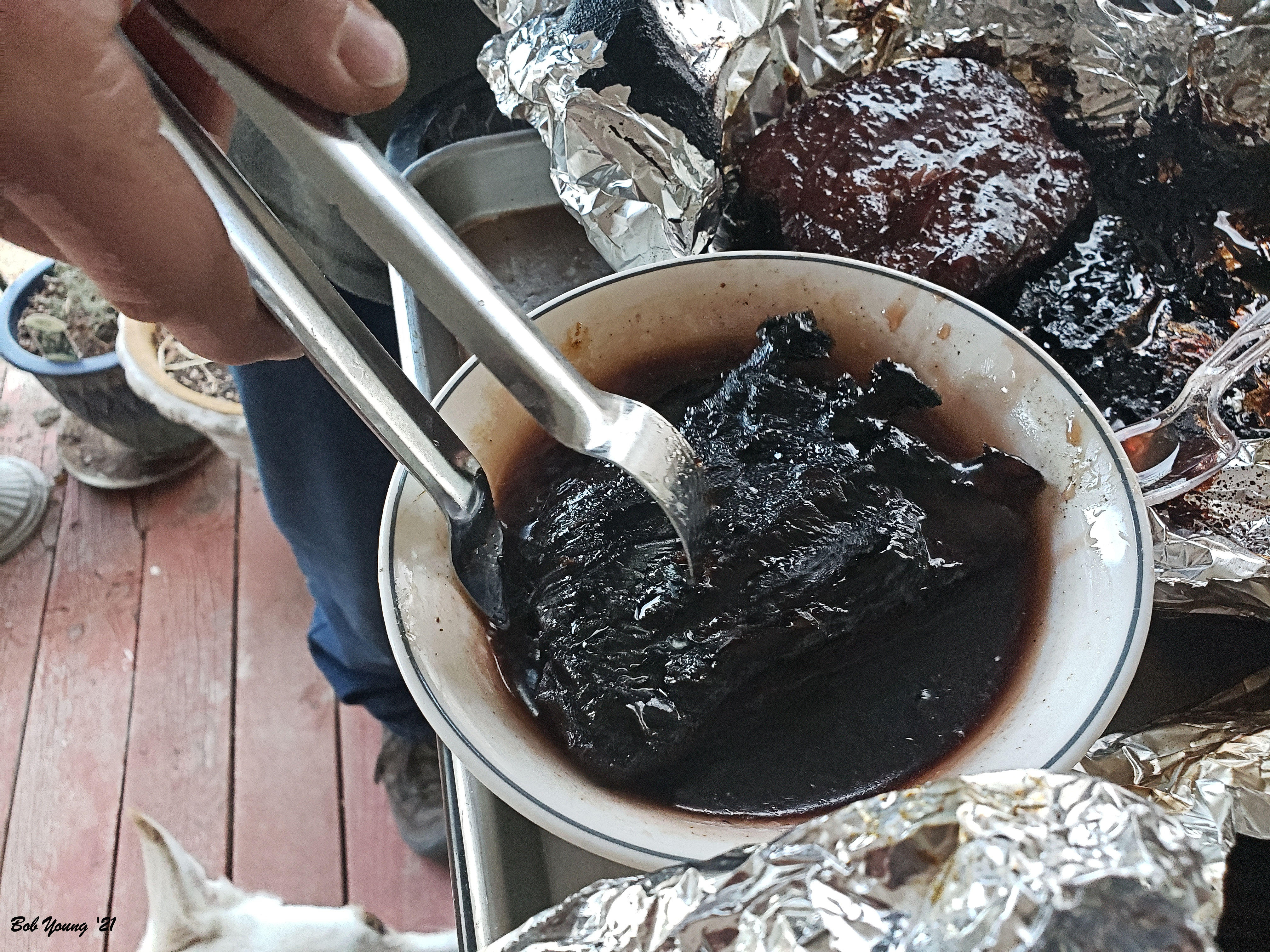 And if you are doing a BBQ or Grilling – we love St Louis Style Pork Ribs grilled – then try Eric’s Rib Sauce to slather on the ribs and to use as a dipping sauce. It is awesome!
  And then there is Halupki. A Ukrainian stuffed cabbage leaves that means “little pigeons”.
 And now some dessert! How about Pecan Shortbread Cookies? Yum. To give the pecans some extra flavor, roast them on s sheet pan in the oven at 350 degrees F for 8 minutes. Watch them – Don’t let them burn. Here is the recipe. Enjoy.













 Boise Foodie Guild