A Wonderful Tarragon Spatchcocked Chicken

Tags

, ,


About a week ago while watching the Today Show, they made a spatchcocked chicken dish with tarragon. Spatchcocking is defined as a  chicken or other type of bird that has been cut open down the backbone from tail to neck, pressed flat, and cooked, either in the oven, stove top or grilled. An interesting process that takes some skill, either by kitchen shears or a chef’s knife. So I took their process and recipe and altered it to our liking. I added some sliced button mushrooms and a little more wine. I also used Celtic sea salt and fresh ground Tellicherry black pepper. Here is our recipe: https://www.rockinrs.com/CS-Tarragon-Roasted-Chicken.pdf.

The chicken has been spatchcocked and it is in a large (12″), deep (2″) cast-iron skillet. It has been salted and peppered. The garlic is placed under the chicken.

After cooking in the oven for 30 minutes at 450 degrees F and the skin is browned – I should have added about another 10 minutes – add the sliced mushrooms and a liberal amount of white wine.

Then pour the heavy cream, chopped fresh tarragon leaves and Dijon mustard mixture all over the bird. Reduce the heat to 325 degrees Ft and cook for another 30-40 minutes.

After all that work, just follow the recipe, plate it up with some corn on the cob, pour a glass of good chardonnay and sit down, relax and have a delicious meal. As a note, 1 bulb of garlic sounds like a lot, but it will cook down, become sweet and delicious.

The other product that I have working on for the past several months, is BBQ Sauce. And I think we are there with this one. https://www.rockinrs.com/CS-BBQ-Sauce.pdf It is a mix of St Louis Style and Texas Style. Can be spicy if you want, just add more Aleppo Pepper. And there is a sweetness to it that is not over powering. The longer you keep it refrigerated, up to 6 months, the better it gets. And probably the strangest thing in it is Pomegranate Molasses. Not much because it can be powerful, but enough so you sayu, “What is that?”

Hope you have enjoyed these recipes and give them a try. Let us know what you think. Chau!

Difference Between Sauteing and Braising

Tags

, , , , ,


I keep getting questions about what are the differences between sauteing braising. It’s not that they are difficult to do, just different techniques and different foods for different cooking styles. Here3 is some information that I found that maybe, I hope, answer your questions.

Difference between Sautéing and Braising

Sautéing and braising are two different cooking methods. Sautéing involves cooking food quickly in a small amount of oil or fat over high heat. On the other hand, braising involves cooking food slowly in a covered pot with some liquid. Sautéing is used for cooking small pieces of food, while braising is ideal for tougher cuts of meat or root vegetables.

Sautéing and braising are two distinct cooking techniques with different purposes and methods. Here’s a brief explanation of each:

Sautéing:

Purpose: Sautéing is a quick cooking method used to cook small, bite-sized pieces of food over high heat.

Method: Food is typically cooked in a shallow pan with a small amount of oil or fat. The high heat quickly browns the exterior of the food while maintaining its internal moisture.

Examples: Sautéing is commonly used for vegetables, meat, or seafood. It’s ideal for cooking foods that don’t require a long cooking time.

Braising:

Purpose: Braising is a slow cooking method used for tougher cuts of meat to tenderize them and develop rich flavors.

Method: Food is first browned in a pan, similar to sauteing, and then it’s transferred to a pot with liquid (such as broth or wine). The pot is covered, and the food is cooked at a lower temperature for an extended period, allowing it to become tender.

Examples: Braising is often used for meats like beef brisket, lamb shanks, or pork shoulder. It’s suitable for cuts that require longer cooking times to break down collagen and connective tissues.

In summary, sautéing is a quick, high-heat cooking method suitable for smaller pieces of food, while braising is a slower method that involves browning and then simmering food in liquid, commonly used for tougher cuts of meat.

Penne Pasta in Vodka Sauce

Tags

,


I have been wanting to try this pasta for quite a while now and finally got up the nerve to try and make some. I think it came out very well. Originally, the sauce does not include any vegetables or protein. I changed that and used some large dice zucchini, shrimp, scallops and quartered crimini mushrooms. I like those additional items as it gives the pasta a good texture and mouth feel. Vodka Sauce is a popular Italian-American pasta sauce known for its rich and creamy texture. The exact origins of vodka sauce are unclear. One popular belief is that vodka sauce originated in Italian-American restaurants in the United States during the mid-20th century, more than likely in the 1970’s. Vodka was added to tomato sauce as a way to enhance the flavors of the ingredients. Vodka is thought to interact with the fat in the cream and the acid in the tomatoes, creating a smooth and balanced sauce. Here is a link to the recipe. Enjoy. https://www.rockinrs.com/CS-Penne-Pasta.pdf

What Is A Mirepoix?

Tags


I have had several questions on what is a mirepoix. I found this explanation and several variations of mirepoix. I hope this discussion helps. Just don’t forget the ratio of the 3 or so ingredients. 2:1:1. Basically, it is from French cuisine with variations for different cultures, adjusted to their particular needs, availibilty of product and wants. Here is how you prep and cook the mireepoiox.

Gather and Prepare Ingredients: Dice the carrots, leave the peel on. Peel and dice the onions. The size of the dice depends on your preference and the intended use of the mirepoix. dice the carrots. Again, consider the size of the dice based on your preference. Wash and dice the celery. Ensure that you include both the stalks and the leaves for added flavor.

Heat the Pan: Place the saute pan or pot over medium heat. Add a small amount of oil (such as olive oil or vegetable oil) to coat the bottom of the pan.

Add Onions: Once the oil is hot, add the diced onions to the pan. Stir and cook until the onions become translucent and slightly caramelized. This process can take about 5-7 minutes.

Add Carrots and Celery: Add the diced carrots and celery to the pan with the onions. Stir the vegetables to combine and cook for an additional 5-7 minutes or until the carrots begin to soften.

Seasoning: Season the mirepoix with a pinch of salt and pepper. You can also add herbs like thyme or bay leaves for extra flavor.

Use as a Base: Your mirepoix is now ready to be used as a base for soups, stews, sauces, and other dishes. It adds depth and aromatic complexity to your recipes.

Here are 12 common variations of mirepoix:
 
Classic Mirepoix: 2 parts onions, 1 part carrots, 1 part celery,
White Mirepoix: 2 parts onions, 1 part leeks, 1 part celery
Red Mirepoix: 2 parts red onions, 1 part carrots, 1 part celery
Cajun Trinity: Equal parts onions, celery, and green bell peppers
Spanish Sofrito: 2 parts onions, 1 part tomatoes, 1 part green peppers
Italian Soffritto: 2 parts onions, 1 part carrots, 1 part celery
German Suppengrün: 2 parts leeks, 1 part carrots, 1 part celeriac (celery root)
Asian Mirepoix: 2 parts onions or scallions, 1 part carrots, 1 part celery or Chinese celery
Creole Holy Trinity: Equal parts onions, celery and green bell peppers
Mushroom Mirepoix: 2 parts onions, 1 part carrots, 1 part celery, Add mushrooms for an earthy flavor
Mexican: 2 parts poblano or jalapeno, 1 part onion, 1 part tomato
Persian: 2 parts onion, 1 part tomato, 1 part tumeric
 
These variations allow for flexibility in flavor profiles, depending on the cuisine and the specific dish being prepared. Experimenting with different combinations can add depth and uniqueness to your cooking.


Tarragon, A Special Herb

Tags


One of my favorite herbs is tarragon. Thyme and basil come in as a close second. I love it for it’s anise, licorice flavor that goes extremely well with fish, especially salmon, in soups and stews and in sauces. Here is some information on tarragon. I hope you find it useful and interesting.

Tarragon, scientifically known as Artemisia dracunculus, is a perennial herb that has been used for culinary and medicinal purposes for centuries. Its history is rich and diverse, with various mentions in different cultures around the world. Here’s a history of tarragon:

  1. Ancient Roots: Tarragon’s history can be traced back to ancient times. It is believed to have originated in Siberia or the Caspian Sea region. The ancient Greeks and Romans were familiar with tarragon and used it both for its culinary and medicinal properties.
  2. Middle Ages: Tarragon gained popularity in medieval Europe, particularly in France. Charlemagne, the Holy Roman Emperor, ordered the cultivation of tarragon in his herb gardens in the 9th century. It was during this time that tarragon started to be used as a flavoring herb in various dishes.
  3. Medicinal Uses: Tarragon has a history of use in traditional medicine. It was believed to have medicinal properties, including the ability to alleviate digestive issues and reduce toothaches. In medieval times, it was also used to treat snake bites.
  4. Renaissance and Culinary Uses: Tarragon continued to be cultivated and used in European kitchens during the Renaissance. Its distinctive flavor made it a favorite among chefs, and it became a staple in French cuisine. Tarragon vinegar, a popular condiment, was developed during this period.
  5. Russian Tarragon vs. French Tarragon: There are two main varieties of tarragon: Russian (Artemisia dracunculoides) and French (Artemisia dracunculus var. sativa). French tarragon is the preferred culinary variety due to its superior flavor, while Russian tarragon lacks the same intensity.
  6. Spread to North America: Tarragon was brought to North America by early European settlers. It found its way into colonial gardens and was incorporated into American cuisine.
  7. Modern Usage: Tarragon continues to be a popular herb in modern kitchens, particularly in French and Mediterranean cuisines. It is commonly used to flavor sauces, dressings, and various meat and vegetable dishes. Tarragon is also a key ingredient in the French herb blend fines herbes.
  8. Cultivation and Varieties: Tarragon is primarily grown through cuttings or division, as growing from seeds is often unreliable. French tarragon is a sterile hybrid, meaning it doesn’t produce viable seeds, while Russian tarragon can be grown from seeds.
  9. Health Benefits: While tarragon is mostly used for its culinary appeal, it is also believed to have health benefits. It contains compounds with potential antioxidant and anti-inflammatory properties.

In summary, tarragon’s history is a fascinating journey through different cultures and time periods, showcasing its evolution from a medicinal herb to a beloved culinary ingredient. Its unique flavor continues to be appreciated worldwide, making it a staple in many kitchens.

A Little About Cream of Tarter

Tags

,


It isn’t often that I use information directly from a Facebook post, but this one deserves such a post. Thank you Kevin Newton (New Zealand) for this information.

DID YOU KNOW?🤷‍♀️

Cream of tartar is one of those mystery ingredients you might have seen in your grandma’s pantry without knowing what it’s used for. After all, its name doesn’t give you a clue—not like baking powder or baking soda. Yet just a touch of it makes a big difference in your baking and cooking. Here’s what it is and how to use it in recipes, and even around the house.

What is cream of tartar? First of all, it’s not creamy. It’s a dry, powdery, acidic byproduct of fermenting grapes into wine. Its sciency name is potassium bitartrate, aka potassium hydrogen tartrate or tartaric acid (hence the commercial name). But you can find it in the spice aisle labeled as plain ol’ cream of tartar. It is a byproduct of the wine making process.

What is cream of tartar used for? Adding a small amount of cream of tartar when you’re beating egg whites—usually 1/8 teaspoon per egg white—speeds up the creation of foam and helps stabilize the structure of those minuscule air bubbles you’re whipping up. In baking, this means mile-high meringue pies, melt-in-your-mouth meringue cookies, and angel food cakes that practically float off the plate.

Why is cream of tartar in snickerdoodle cookies? It’s what separates a tangy, chewy snickerdoodle from an ordinary cinnamon-coated sugar cookie. The acid in cream of tartar gives snickerdoodles their distinctive tangy flavor, and the chew happens because cream of tartar prevents sugar in the cookie dough from crystalizing into crunchiness. Science!

How else is cream of tartar used in recipes? When combined with baking soda, it becomes a leavening agent (the stuff that makes baked goods puff up in the oven) by producing carbon dioxide gas. If you ever run out of baking powder, you can substitute 1/4 teaspoon baking soda plus 1/2 teaspoon cream of tartar for 1 teaspoon baking powder. Add a pinch of cream of tartar to boiling vegetables to help them retain their bright, fresh color. A pinch of cream of tartar also helps stabilize whipped cream to prevent it from deflating. Make colorful, edible play dough!

What can I substitute for cream of tartar? Use 2 teaspoons lemon juice or vinegar to create the acidic effect of 1 teaspoon of cream of tartar in a recipe.

What is cream of tartar’s shelf-life? Cream of tartar keeps its freshness indefinitely, as long as you store it in a cool, dry spot. When in doubt, you can test it by looking at it and smelling it. It should look white and powdery, and it should smell mildly acidic.

How else is it used around the house? Cream of tartar makes an effective non-toxic household cleaner all by itself or combined with other earth-friendly kitchen ingredients such as lemon juice or vinegar. Try these ideas:

Metal polish: Add water to make a paste to polish stainless steel and aluminum. This also removes scratches on white bowls and plates caused by knives and forks. Copper polish: Add lemon juice in a 1:1 mixture. Rub on, rinse off. Porcelain sink, tub, toilet scrub: Add distilled white vinegar in a 1:1 solution. All-purpose scrub: Add distilled white vinegar in a 4:1 solution (i.e., 1 cup vinegar to 1/4 cup cream of tartar). This also cleans stainless steel sinks like nobody’s business.

– Original Origin Unknown

Anyone For Making Lox?

Tags

, ,


captains-shack-pipe-signed-Walkway-LMP

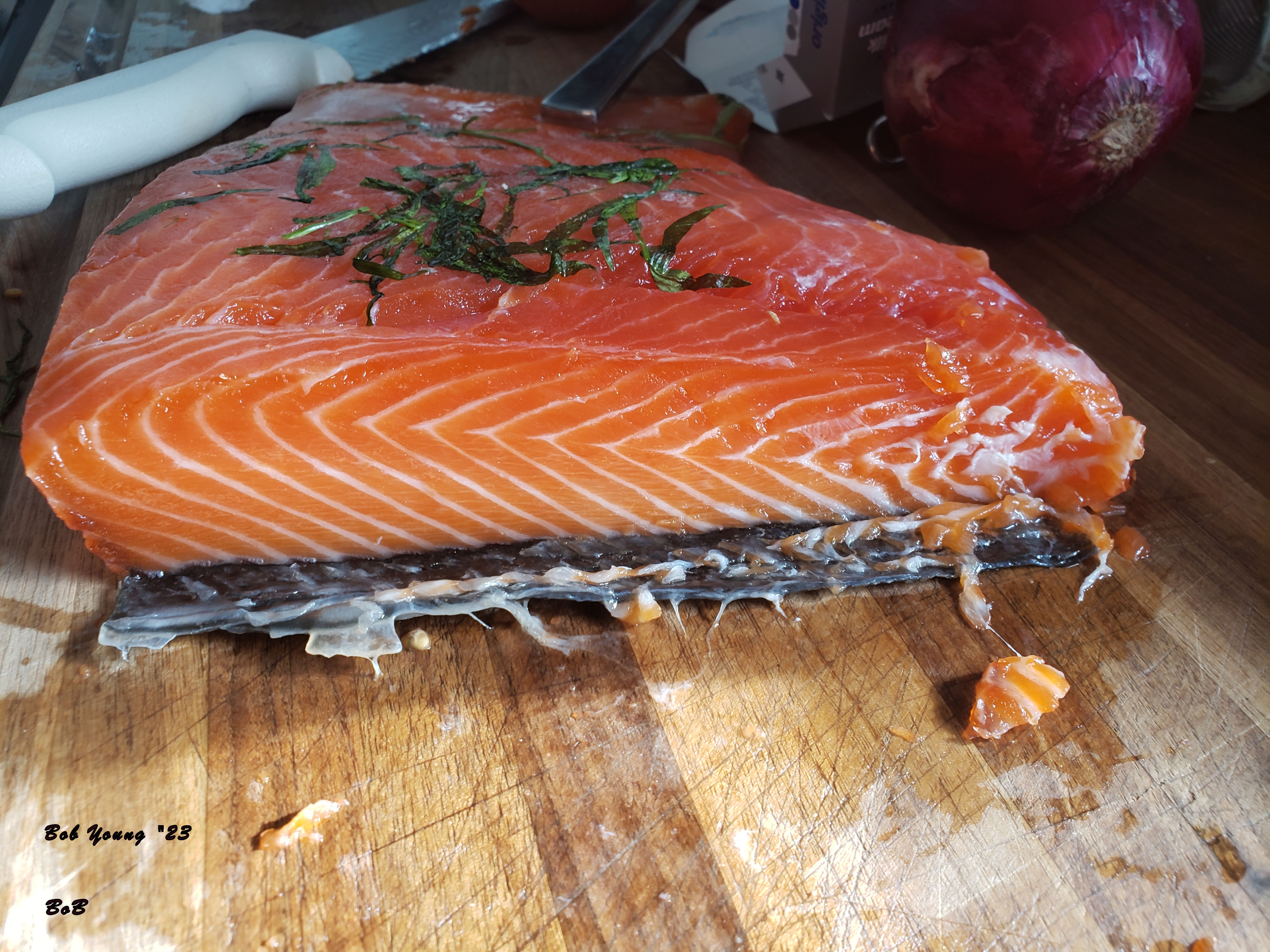
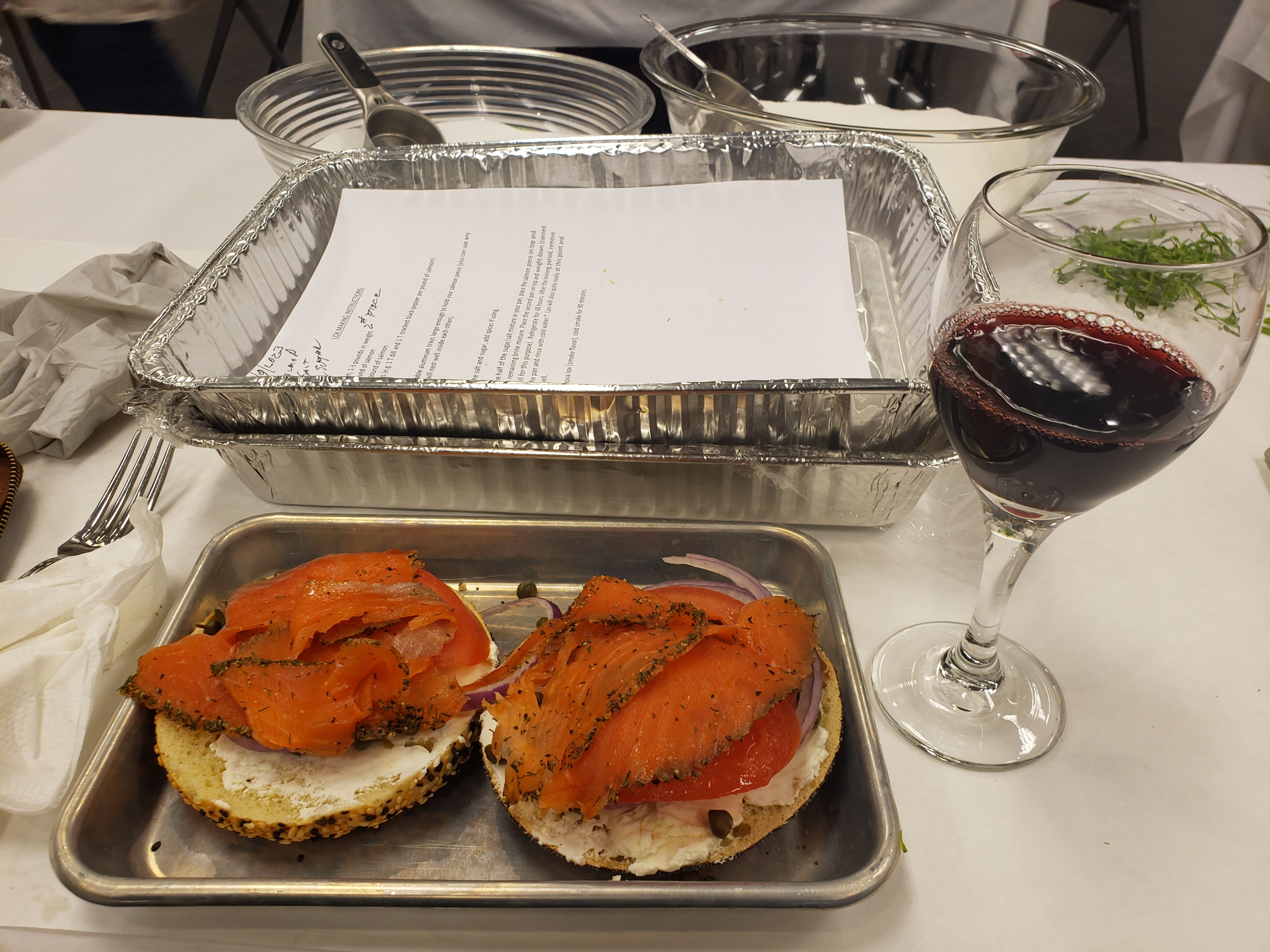
I had the great pleasure to attend a Lox Class this past week. I’ve made lox before, but this was a great class to attend to learn maybe a better technique led by Brad Wolf. It is not difficult. 1-3 pounds of fresh salmon, 1/4 cup kosher salt per pound, 1/4 cup sugar per pound, 2 aluminium pans and saran wrap. You can also use some fresh herbs for this, too. We like fresh tarragon but others like black pepper and dill. Use what you like. Combine salt and sugar and add about 1/2 of it in one pan, add the salmon, skin side down, add the herbs if you are using them and coat the salmon with the remaining salt and sugar mix. Cover tightly with saran wrap and place the second aluminium on top. Weight down with something. I use a 5 quart cast-iron Dutch oven, but you can use anything. Place in the refrigerator for 48 hours. After 48 hours, rinse the salt,  sugar and herbs off. Pat dry. Slice on the diagonal thinly using a very sharp Chef’s knife and enjoy! Here is the way mine turned out. Enjoy! (Click on an image to see enlarged)

Correction – The salt and sugar ingredients should be 1/4 cup per pound of salmon. Sorry for the error.

Sliced a piece off. Delicious!
Class Bagel and Lox with a good red wine. This one was a Porteugese wine.

Bagel and Lox for lunch.
Cranberry Sourdough and Lox. Different., but good.

So there you are. Easy to do, fun and a great party treat, for those who like Lox Enjoy.

3 Fun Dinners

Tags

, , , ,


There are times when one feels really challenged in the kitchen, whether it is perfecting a dish, Creamed Spinach for example, where something just does not come out as you had planned or pictured. And at other times you want to create something kind of different with pan drippings. Or you want to create a dish that can be daunting or challenging. Well here are 3 that did just that. Let’s take a look. (Click on the images to see them enlarged)

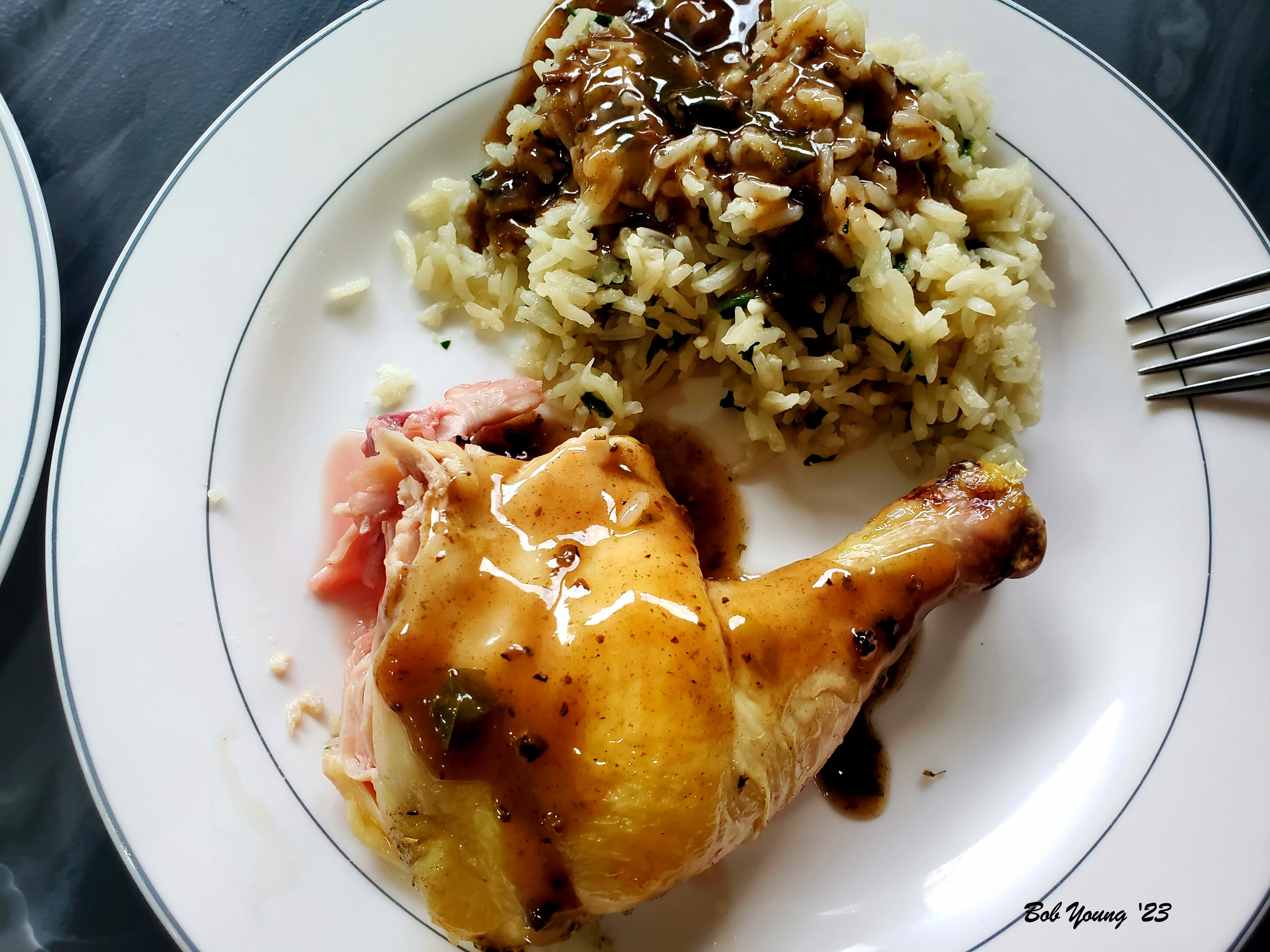
This one was, I thought, just a basic baked chicken and rice dish. But then I thought, plain Jasmin rice with a good baked chicken can be sort of mundane, so why not add some green onion – a very Oriental twist – and fresh spinach? That spinach was a surprise to some who ate it. And the pan drippings of the rosemary and sage can create a differently good gravy. It did! Even added a little to the rice, which gave it a whole new twist. I think, and use it quite often, that it is sinful to “dump the pan drippings” in the trash, so I used it. Not many in the household would do such a thing. Use those drippings!

Potatoes. They are good, but if it were up to some other cooks that need potatoes at every meal – you know who you are – at least change them up from peeled, water logged piles of something that resembles pablum, to maybe some good, crispy hash browns that don’t need to be only served at breakfast. And to, add something green, like the creamed spinach pictured here. Add some mushrooms to the pan dripping gravy from the seared pork chop. Don’t be afraid to be creative and adventuresome in preparing a meal. If nothing else, it’s fun!

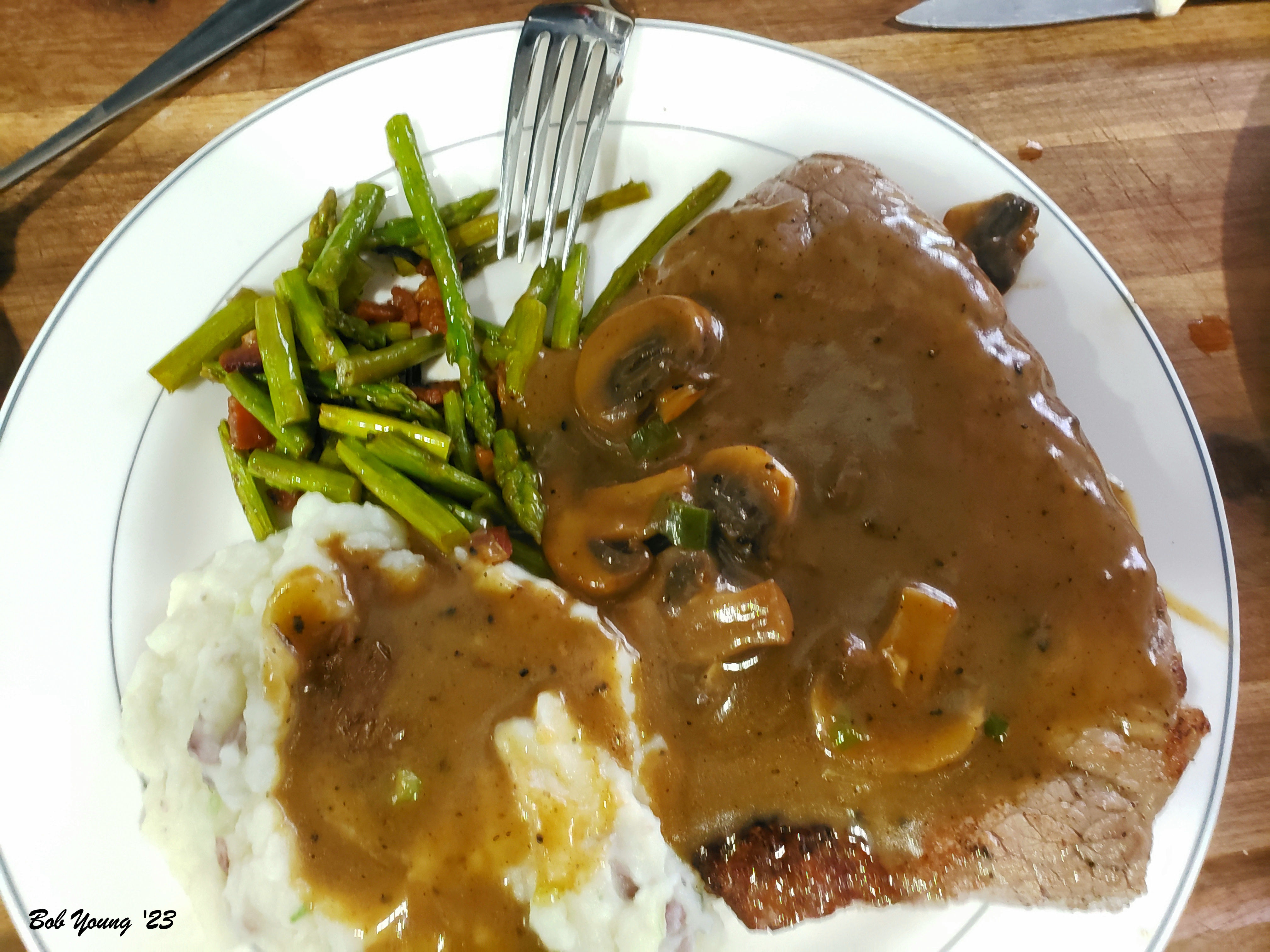
Here is another adventure. Steak with Mushroom and Onion Pan Gravy, Asparagus with Lardons and Green Onion and Smashed Potatoes and Gravy. (I used an hand masher and left the potatoes a little lumpy and as always, left the peels on.)

I guess I like to “mix things up” in the kitchen and try different variations of a given dish. Have fun when preparing and use your imagination. And, I might add, most of the products here came from the Boise Farmers Market.

Ansots Basque Restaurant, Boise

Tags

,


It was strongly suggested by my friend Joe Levich that I try this Basque restaurant. Robin and I have been to 5 other Basque restaurants in Boise and two in Oregon, The Basque Hotel in Jordan Valley and The Basque Hotel and the Basque Restaurant in Winnemucca, OR. Ansots is definitely 5-Stars. Delicious! 560 W Main St in Boise, (208) 336-9166. http://www.ansots.com on the web. If you are in Boise, definitely try to enjoy their food. It won’t be difficult. Here are some photos of what I had – I was told to try a variety, and I did – and the inside. The Waite Staff is awesome.

Ansots is owned and operated by Dan, Tamara, and Ellie Ansotegui. Here we make a variety of chorizos, marinated solomo, and Basque bacon for you to enjoy at home.  Our Ansots crew is also available to come to your house to cook and cater your event. We welcome you into our restaurant for small plates, Basque & Spanish wines, Basque natural cider, and espresso like you remember from your trips, either real or imagined, to the Basque Country.

The Ansotegui Inchausti family has been a part of the Idaho Basque scene for over a century. In 1908, Dan’s grandfather, Santiago Ansotegui, jumped ship in New York and made his way out west to find work. He ended up on a ranch in southern Oregon herding sheep. In 1911, his betrothed, Gregoria left Ibarrangelua, Bizkaia, in Spain to be with him. They were married and started their family. The couple had four children, Antonio, Domingo (Dan’s dad), Francisca, and Julia. They moved to Nampa in 1920 and lived across from the Spanish Hotel, a Basque Boarding House run by the Jausoro Family.

David Inchausti, Dan’s maternal grandfather, immigrated to the U.S. in 1922, working on the Drake Ranch between Challis and Mackay, Idaho. He returned to Spain in 1925, met and married Epifania Lamiquiz, and came back to earn the money to bring her back to the States. She came to the U.S. in 1928 with their 2 year old daughter, Rosie, who had been born after David had returned to the U.S. Although she was a seamstress by trade, Epi became the ranch’s head cook, and the Inchausti family took root. The family later moved to Hailey. David opened the Gem Bar and Epi started taking in Basque boarders to make ends meet. Epi became well known for her wonderful food as she served a few lucky diners each night if there was room. Ernest Hemingway, Bing Crosby, and Tennesse Ernie Ford, were among the famous who ate at Epi’s.

Dan Ansotegui has been involved in the Boise food scene for 40 plus years, starting both Bar Gernika in 1991 and The Basque Market in 1999. He was recently involved in Txikiteo known for its fine charcuterie and tapas. Dan drug in his wife, Tamara Ansotegui, and daughter, Ellie Ansotegui, into their project here at Ansots. They couldn’t be happier to work with a kinder, more talented man, but someday would like to try…

Ansots Web Page

The front door displays the times they are open. Generally a lunch schedule.

The inside prep area.

The smaller dining room. There is a much larger one, too

I had the Tortilla de Chorizo and Idiazabal Cheese Bocadillo, A 3 egg bocadillo with traditional chorizo and six-month aged idiazabal smoked sheep’s milk cheese with piquillo peppers and served in a baguette from Acme Bakeshop here in Boise.

Close-up of the sandwich.

Croquetas. (L) Jamon and (R) Bacalao

Ansots Basque Rice Pudding. This was awesome!

Working on Paella

Tags

, ,


Just so you don’t think I have been goofing off, I have been working on paella. What is paella? Basically, it is a traditional Spanish or Basque – northern Spain – dish. Rice based with a variety of vegetables – sweet peppers, carrots, broccoli, onions and lots of seafood of various kinds – clams, shrimp, mussels and fish.

Paella is a traditional Spanish dish that originated in the Valencia region. It is typically made with saffron, olive oil, garlic, onion, and tomatoes, and typically includes some combination of meats, seafood, and vegetables. The dish is traditionally cooked in a large, shallow pan called a paellera, and is often served as the main course of a meal. Paella is considered to be a symbol of Spanish culture and is enjoyed by people all over the world.

(ChatGP)

paella, in Spanish cuisine, a dish of saffron-flavoured rice cooked with meatsseafood, and vegetables. Originating in the rice-growing areas on Spain’s Mediterranean coast, the dish is especially associated with the region of Valencia. Paella takes its name from the paellera, the utensil in which it is cooked, a flat round pan with two handles; paella is traditionally eaten from the pan.

To prepare paella, pieces of meats such as chickenpork, or rabbit and seafood such as clamsshrimpsmusselscrayfish, and squid are sauteed in olive oil with onionsgarlic, and herbs and removed from the pan. Rice, tomatoes, saffron, and stock are simmered together, the meats and seafood mixed in, and the dish is garnished with peaspimientos, and other vegetables. Traditional paellas are made out of doors over a wood fire.

(Britannica)

The photo above is a paella that two friends of mine and I made for 38 people who where competitors in a Pointer Dog Competition near Jordan Valley, Oregon and on the high desert. (Photo below) When I get the recipe completed, I will post it on this blog. It is involved, but not difficult.