Lacquered Bacon


Ever wonder how the Brick 29 in Nampa, ID made that awesome bacon? Well, from Falls Brand we get the following recipe. Enjoy!

Falls Brand Logo

Lacquered Bacon

Ingredients:
1 lbs Falls Brand Thick Sliced Bacon
3 T Light Brown Sugar, packed
1 T Red Pepper Flakes

Preparation:
Adjust the oven rack to the middle position and preheat the oven to 400° F. Line a rimmed baking sheet with aluminum foil and set a large wire rack in the pan. Arrange the bacon slices on the rack and roast until the bacon renders some of its fat and the slices shrink significantly, about 15 minutes.

Meanwhile, in a small bowl, mix the brown sugar and red pepper flakes. Carefully remove the baking sheet from the oven. Sprinkle mixture over the bacon and return the bacon to the oven and continue roasting until the sugar mixture adheres to the bacon and appears glossy. Serve hot.

Yield: 8 servings

——————————

Here is another stand-by recipe for spareribs from Salmon Creek Farms, part of Falls Brand.

Kansas City Spareribs

Ingredients:
4 lbs Pork Spareribs or Baby Back Ribs
1 c Ketchup
1/3 c Onion, finely chopped
1/3 c Apple Cider Vinegar
3 T Brown Sugar
2 T Molasses
1 T Worcestershire sauce
1/2 t Chili Powder, use more for a spicier mixture
1 t Dry Mustard
3/4 t ground Allspice
1/4 to 1/2 t ground Red Pepper
3 cups wood chips (use hickory or oak chips for the best flavor)

Preparation:
BBQ Sauce:
In small saucepan, combine ketchup, onion, vinegar, brown sugar, molasses, Worcestershire sauce, chili powder, mustard, allspice and red pepper. Bring to a boil. Reduce heat and simmer, uncovered, for 10-15 minutes or until desired consistency, stirring frequently. Divide sauce into two portions; set aside.

Ribs: At least 1 hour before grilling, soak wood chips in enough water to cover; drain. Cut ribs into 4 portions. In charcoal grill with cover, place preheated coals around drip pan for medium indirect heat. Add 1/2-inch hot water to drip pan. Sprinkle half of the wood chips over the coals. Place ribs, bone side down, on the grill rack over drip pan. Cover and grill for 1 1/2 to 2 hours or until ribs are tender, basting with one portion of reserved sauce the last 15 minutes. Add more preheated coals (use a hibachi or a metal chimney starter to preheat coals) and wood chips; turn ribs halfway through grilling. Serve second portion of reserved sauce with ribs.

Serves 4.
* Note: For gas grills, preheat and then turn off any burners directly below where the food will go. The heat circulates inside the grill, so turning the food is not necessary.

——————————

Well, there you go for two recipes from Idaho farms and businesses. Support the Buy Idaho campaign. It’s well worth it! That’s my opinion. What’s yours? Cheers!

What to do?


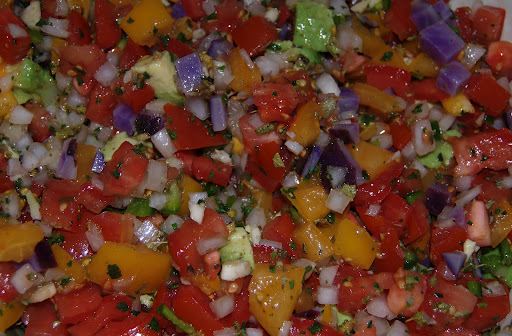
I had to make some more of our award winning Citrus Marmalade and, knowing how long it can take to make it, I wanted something to “snack on”. And knowing that Pico de Gallo can actually be several things – an Appetizer, Side Dish or an adjunct to a Main Dish – I made a large bowl of it. We make our own recipe. Here it is:

——————————
Pico de Gallo

Comments: Pico de Gallo can be used as an Appetizer, Side Dish or Main Dish additive. It is a versatile component. A condiment.
Degree of Difficulty: Easy
Servings: 12

Ingredients:
6 lg Roma Tomatoes, cut into chunks
1 bunch Cilantro, chopped
1 lg White Onion, diced
1 lg Avocado, diced
6 cloves Garlic, minced
2 Jalapeno peppers, seeds removed and diced
1 T Mexican Oregano, dried
2 t Cinnamon
3 Limes juiced

Directions:

1). Dice the tomatoes and place in a large bowl. Dice the onion and add to bowl. Chop the cilantro, dice the jalapeno and mince the garlic and add to the bowl. Add the diced avocado. Mix to combine.
2). Add the spices and salt. Squeeze the limes and add the juice to the bowl. Mix until combines. Taste and adjust as necessary.
3). Place the mixture into the refrigerator for at least one hour before serving to marry the flavors. Serve cold with blue corn chips.

Cooking Times:
Preparation Time: 30 minutes
Inactive Time: 1 hour
Total Time: 1 hour and 30 minutes

—————————–

So there you have it, and a repeat for our Citrus Marmalade recipe. Enjoy! Cheers!

What’s Behind the Menu?


In the blog blip on 4 November 2009 titled, Sweetwater’s Tropic Zone, there was a comment left by Michael Boss of Behind The Menu. He stated that he has done an interview with Sue Zimmerman, Owner, along with her husband Joe and Exec Chef of Sweetwater’s Tropic Zone. According to the introduction on his web site, Mr Boss states that,

Pull up a chair, and let’s talk about food. More specifically, let’s talk about the culinary scene of the Treasure Valley. And while we’re at it, let’s hear from the people who create that scene. We believe that locally owned culinary businesses are an essential part of the soul of a place. They offer more than food — they serve up big heaping helpings of regional identity. This site is dedicated to telling their stories. Through blogs, podcasts and social media, you’ll learn about the folks “behind the menu”. We hope you’ll enjoy hearing these stories…and that you’ll become a part of the conversation about our local culinary scene as well.

The interview with Chef Zimmerman is an excellent example of getting the “behind the menu” perspective and you should really listen to the interview and then go to the restaurant. For example, Chef Zimmerman was asked that if someone arrives at Sweetwater’s Tropic Zone for dinner, what would be her suggestion for dinner. Here are her suggestions:

Appetizer
Conch Fritters
Conch Salad

Main Course
(One of 3)
Curry Goat
Grilled Jerk Chicken
Curry Avocado Salad

Dessert
(One of 3)
Key Lime Pie
Chocolate Torte (Flourless)
Flan

Really, there are two things you as a reader of this blog should do: (1) Go to the Behind The Menu web site and explore it, and (2) Visit Sweetwater’s Tropic Zone more than once! Now, we will have to start to pair some wines with these dishes. And by the way, I spent a year in India when I was a teen and we had goat probably 4 or 5 times a week. Then I lived in Giles County Tennessee in the 1960’s where goat was a staple in a little place called Aspen Hill. I was not impressed at either location with the goat. Point is, at Sweetwater’s Tropic Zone, the goat is Kid, not mutton. In India and Tennessee, the goat was not kid. It was mutton. Think of it as a matter of time. Young goat – kid – may be similar to young lamb – lamb – and not mutton!!! Here is my promise: I will try the Curry Goat and I will try to eliminate the epicurean baggage I carry about goat! I promise. And I will place my experience here on this blog. Cheers! That’s my story and I’m stickin’ to it!

Jerri’s Old Fashioned Pie Shop and Bakery


I am a very firm believer in supporting local businesses – resorts, ranches, hotels, pizza stores, restaurants, bakers, etc. Here is another local business trying to make a “go of it”. Please support Jerri’s Old Fashioned Pie Shop and Bakery. Wouldn’t a fresh Pecan Pie or a fresh Pumpkin Pie go great at Thanksgiving?

Jerri’s Old Fashioned Pie Shop & Bakery
208-863-4768
jerri-nelson@hotmail.com

Custom order bake goods. Are you looking for that something special for your holiday gathering but don’t have the time to make it yourself? Give me a call and see if we can make that special event more memorable!

Sugar and spice and baked so nice…

PIES
$14.
Huckleberry-Apple
Cranberry-Apple
Huckleberry-Peach
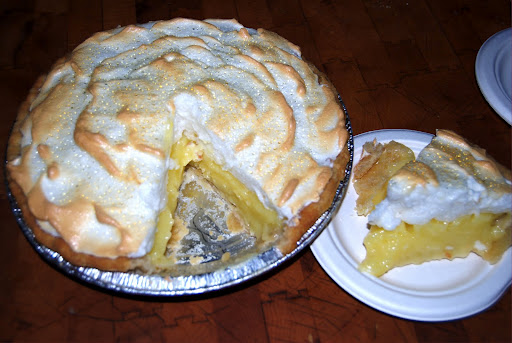
Lemon Meringue
Washington Walnut
Pecan
Jerri-Berry w/Strawberries, Blackberries, Raspberries & Blueberries

$12.
Apple or Dutch Apple

Boysenberry
Peach or Dutch Peach
Cherry
Pumpkin
Black Bottom Banana Split
(dark chocolate ganache, banana cream, topped with a Jerri-berry glaze)

$9
German Chocolate

Coconut
Chocolate
Banana Cream

Do you have a favorite pie that is not listed above? Please ask if I can make it.

Rolls
White or Wheat Rolls $5 per dozen

——————————

So there you have it. We have had these goodies before and they are awesome!! Try several – You won’t go wrong! Cheers!

Sweetwater’s Tropic Zone


I would not think that this is the best economic time to be starting a new restaurant. But here in Boise, the Sweetwater’s Tropic Zone may be the exception. At any rate, we certainly hope so! This is one awesome culturally diverse restaurant that opened about 3 months ago. And the best part? They are local!!! and they use local, Idaho products – beef and alligator for some. Here is Our Review.

Sweetwater’s Tropic Zone

Ambiance

An open, “happy” restaurant that is full of color and natural light, but is not overbearing. Soft, island music in the background. There probably could be more steel drum, Bob Marley music.

Presentation

Food presentation is good and pleasant. The Curried Avocado Salad is presented quite well and in an Island style. Whereas the Pulled Pork Sandwich has a pretty standard presentation. Food quality is excellent and prepared fresh. There is a very wide variety available – Indonesian Krupuk (Shrimp Chips), Collard Greens and Black-Eyed Peas, Grilled Jamaican Jerk Chicken, Pulled Pork, Cuban Style Steak and Trinidadian Curry Goat.

Service

Service is good. Again, as with some other restaurants, it is good to see the owner talking to the clients and making sure that everything is good.

Cost

The cost ranges from $11.00 – $15.95 for dinners, $7.75 – $11.00 for an awesome sandwiches,$2.25 – $5.75 for side dishes. They also serve Alligator and Conch, which, if you have never done so, you really should try. The beef and alligator are Idaho raised and they do try very hard to use local products. Try their Homemade Ginger Beer, it is awesome. They also have a variety of Caribbean drinks, including beer.

Quality

The quality and the variety of the foods served, requires a 4-Star rating. Take your friends here for a delightful Island inspired meal. We will definitely return to Sweetwater’s Tropical Zone. See you there! Let the owners know that you saw this review on the Boise Foodie Guild blog. Cheers!

It is also good to see that they are local owners and this is not a chain. We do hope that you stop in to see them and to try a meal, lunch or dinner. Cheers!

Chicken Romertopf


No, no sour cream in this one! The Romertopf is a clay cooking pot that does chicken like nothing else! In it’s own steam and juices. Not particularly slow, at 375 degrees F for 2 1/2 hours will do it. Here we see the 7 pound chicken resting on a bead of onion, potato, garlic and white wine.

After cooking for 2 1/2 hours at 375 degrees F, this is what the chicken will look like. Well done and falling apart. Lightly browned on top. And the aroma of the garlic, rosemary and sage. It is awesome!

And here the dinner is plated. Notice that the plate is Fresh Beet Greens, Romertopf Vegetable Blend and the Romertopf Chicken. Think of this with a nice 2005 Eagle Knoll Winery Chardonnay. OK, so here is the recipe:

——————————

Romertopf Chicken

1 – 7 lbs Whole Chicken
2 lg Carrots, cut into 1″ rounds
1 lg White Onion, cut in half and then each half cut into thirds
1 lg Potato, cut into 1 ” rounds and each round cut into thirds
5 lg Button Mushrooms cut into quarters
2 Sticks of Rosemary, fresh and chopped
8 fresh Sage leaves, chopped
8 lg Cloves of Garlic, diced
1 c White Wine
Salt and Pepper to taste

Pre-Heat oven to 375 degrees F. Clean the chicken.
Place the cut vegetables in the bottom of the Romertopf, one layer thick. Place the chicken on the vegetables and fill around the chicken with the rest of the vegetables.
Fill the cavity with the diced garlic and the herbs. Save some of the herbs and garlic and sprinkle lightly over the bird. Salt and pepper the bird.
Place lid on the Romertopf and cook in the oven for 2 1/2 hours. Remove the lid and cook for an additional 1/2 hour.

——————————

So there you have it. Not exactly an Old Persons’ Sunday Chicken Dinner, but just as good! And while I was at the local grocery store, my favorite checker was there and she asked if my list was dinner for tonight. So Mary, the recipe is for you. And yes, it really was good, with some left over. That makes a an inexpensive dinner. Cheers!

Worcestershire Sauce


Looks like it might have been a slow day in Boise. Not really! They were having a big debate on the Food Network today on the origin and uses of Worcestershire Sauce. Here, from Wikipedia, is some information. Some of this is not cited and may need citation.

Worcestershire Sauce

From Wikipedia,
Worcestershire sauce (pronounced WOOS-tər-sheer saws), is a fermented liquid condiment used for flavouring many cooked and uncooked dishes, especially with grilled or barbecued meats. It is also used as an ingredient in the preparation of cocktails and drinks.

First made at 68 Broad Street, Worcester, England, by two dispensing chemists, John Wheeley Lea and William Henry Perrins, the Lea & Perrins brand was commercialised in 1837 and has been produced in the current Midlands Road factory in Worcester since 16 October 1897. In 1930 the business was sold to HP Foods and was subsequently acquired by the Groupe Danone. It was purchased by H.J. Heinz Company in 2005 who continue to manufacture and market “The Original Lea & Perrins Worcestershire Sauce”, under the name Lea & Perrins, Inc. Other companies manufacture similar products, often also called Worcester Sauce, and marketed under different brands.

Origins
A fermented fish sauce called garum was a staple of Greco-Roman cuisine and of the Mediterranean economy of the Roman Empire, and the use of some similar fermented anchovy sauces in Europe can be traced back to the 17th century. The Worcestershire variety became popular in the 1840s and is one of the many legacies of the British rule of the Indian sub continent. Several disputed theories exist concerning its exact discovery or invention by John Lea and William Perrins.

History
A widely reported legend has it that “Lord Marcus Sandys, ex-Governor of Bengal” (a figure unknown to history outside this tale) encountered it while in India under the Honourable East India Company in the 1830s, missed it on his return and commissioned the local apothecaries to recreate it. However, author Brian Keogh concluded in his privately published history of the Lea & Perrins firm on the 100th anniversary of the Midland Road plant, that “No Lord Sandys was ever governor of Bengal, or as far as any records show, ever in India.”

The Lord in question, whose identity was being discreetly veiled by Messrs Lea and Perrins (who used to aver on the bottle’s paper wrapping that the sauce came “from the recipe of a nobleman in the county”) was Arthur Moyses William Sandys, 2nd Baron Sandys (1792–1860) of Ombersley Court, Worcestershire, Lieutenant-General and politician, a member of the House of Commons at the time of the legend, whose given name is being confused in the tale with that of his brother and heir, Arthur Marcus Cecil Sandys, 3rd Baron Sandys (1798–1863), who did not succeed to the title, however, until 1860, when the sauce was already established on the British market. The barony in the Sandys family (pronounced “sands”) had been revived in 1802 for the second baron’s mother, Mary Sandys Hill, so at the date of the legend, in the 1830s, “Lord” Sandys was actually a Lady. No identifiable reference to her could possibly appear on a commercially bottled sauce without a serious breach of decorum. It is likely her heir agreed to sell the recipe.

A more accurate version that was published by Thomas Smith: We quote the following history of the well-known Worcester Sauce, as given in the World. The label shows it is prepared “from the recipe of a nobleman in the county.” The nobleman may be Lord Sandys. Many years ago, Mrs. Grey, author of The Gambler’s Wife and other novels, was on a visit at Ombersley Court, when Lady Sandys chanced to remark that she wished she could get some very good curry powder, which elicited from Mrs. Grey that she had in her desk an excellent recipe, which her uncle, Sir Charles, Chief Justice of India, had brought thence, and given her. Lady Sandys said that there were some clever chemists in Worcester, who perhaps might be able to make up the powder. Messrs. Lea and Perrins looked at the recipe, doubted if they could procure all the ingredients, but said they would do their best, and in due time forwarded a packet of the powder. Subsequently the happy thought struck someone in the business that the powder might, in solution, make a good sauce. The profits now amount to thousands of pounds a year.

Upon completing the necessary steps, however, the resulting product was found to be so strong that it was considered inedible, and a barrel of the sauce was exiled to the basement of Lea & Perrins’ premises. Looking to make space in the storage area a few years later, the chemists decided to try it once again, only to discover that the sauce had fermented and mellowed and was now quite palatable. In 1838 the first bottles of “Lea & Perrins Worcestershire Sauce” were released to the general public.

An alternative story was published by historian and Herald for Wales, Major Francis Jones, 1908-1993, who attributed the introduction of the recipe to Captain Henry Lewis Edwardes 1788-1866. Edwardes, originally of Rhyd-y-gors, Carmarthenshire, was a veteran of the Napoleonic wars and held the position of Deputy-Lieutenant of Carmarthenshire. He is believed to have brought the recipe home after travels in India. The article does not say how the recipe found its way to Messrs Lea and Perrins. Messrs Lea and Perrins, being John Wheeley Lea (research and product development) and William Perrins (finance), from their building in Broad Street, Worcester, ran by far the most important and successful chemist and druggist business in the county. They made their fortunes from manufacturing and selling the sauce. They built a new factory with railway access in Midland Road, Worcester and made various charitable donations to the city such as Perrins Hall in a Worcester School.

Lea & Perrins Original Recipe
The ingredients of a traditional bottle of Worcestershire sauce sold in the United Kingdom under the name “The Original & Genuine Lea & Perrins Worcestershire Sauce” are listed as malt vinegar (from barley), spirit vinegar, molasses, sugar, salt, anchovies, tamarind extract, onions, garlic, spice, and flavouring. Apart from distribution for its home market, Lea & Perrins also supplies this recipe in concentrate form to be bottled abroad.

Japanese Worcestershire sauce, often simply known as sōsu (“sauce”), or Usutā sōsu (“Worcester sauce”) is made from purees of fruits and vegetables such as apples and tomatoes, matured with sugar, salt, spices, starch and caramel. Despite this appellation, it bears only moderate resemblance to Western Worcestershire sauce. Sōsu comes in a variety of thickness, with the thicker sauces looking and tasting like a cross between the original Worcestershire sauce and HP sauce. There are many variations according to flavour and thickness, and are often named after the foods they are designed to go with, such as okonomiyaki sauce and tonkatsu sauce. These sauces, however, and others that are Worcestershire relatives are much closer in taste to American barbecue sauce. These variants have become a staple table sauce in Japan, particularly in homes and canteens, since the 1950s. It is used for dishes such as tonkatsu (breaded pork cutlets), okonomiyaki (savoury pancakes), takoyaki, yakisoba, yaki udon, sōsu katsudon and korokke.

Holbrooks worcestershire sauce from 1902
In Sheffield, England, Henderson’s Relish, very similar to Worcester sauce, is made and sold locally. This sauce is sold in the same size and shape of bottle as Lea and Perrins Worcester sauce and also has an orange label, which calls it ‘The Spicy Yorkshire Sauce’; it does not contain anchovies.

Lionel Brand (Australia) worcestershire sauce
In Australia the best-selling brand of Worcestershire sauce is Holbrooks , holding over half the market share in black sauce. Historically there were several different manufacturers of Worcestershire sauce in Australia, e.g. Lionel Brand from Taringa in Brisbane.

Lea & Perrins Worcestershire Sauce in the USA differs slightly from the original British recipe. Its ingredients are listed as: vinegar, molasses, high fructose corn syrup, anchovies, water, onions, salt, garlic, tamarind concentrate, cloves, natural flavorings and chili pepper extract. The original British recipe uses malt vinegar while the American version uses distilled white vinegar, giving the British version a slightly deeper flavour. Also, the American version uses high fructose corn syrup while the original British recipe still uses sugar, giving the American version a somewhat sweeter and less spicy taste.

Vegetarian and gluten free alternatives are available and some Worcestershire sauce powders are marketed as suitable for vegetarians. The vegetarian variety omits the anchovies (notably Henderson’s Relish, which is similar, although not considered a variety of Worcestershire Sauce). ‘Life’ Worcester sauce, produced by MH Foods (Morehands Ltd), is also vegetarian. Both this and Lea & Perrins’ sauce are suitable for coeliacs. The actual ingredients may vary between countries, for example the Canadian version of Lea & Perrins’ sauce contains gluten in the form of malt vinegar from barley. Angostura also offers a fish-free sauce, but does not advertise it as “vegetarian”. The deluxe Worcestershire Sauce Powder produced by Nikken Foods contains no anchovies. Orthodox Jews refrain from eating fish and meat in the same dish, causing Worcestershire to be problematic, as many people are unaware that it contains anchovies. Certain brands that are certified to contain less than 1/60th of the fish product can be used with meat.

Dishes using Worcestershire sauce
Worcestershire sauce is often an ingredient of Caesar Salad and can be used as steak sauce.
Welsh rarebit is a combination of Caerphilly cheese, English mustard, Worcestershire sauce, and other ingredients, frequently eaten with bread, toast or crackers. A simpler version uses Worcestershire sauce with cheese on toast, with the sauce added to the plain version during the grilling process. Worcestershire sauce also plays a key role in the flavour of original recipe Chex Mix. In the U.K., advertising by Lea & Perrins has made Worcestershire Sauce popular for use on spaghetti bolognese, beans on toast, cheese on toast, chips (French fries), gravy and sausages. It is also frequently used in chili con carne, Bloody Mary cocktails, and in a cocktail known mostly to Canadians called a Caesar.

Worcestershire sauce, known as salsa inglesa (English sauce) in Spanish, is an essential ingredient of the popular Mexican beer cocktail, the Michelada. It is also used to flavour cheeseburgers and in Mexico, it is often used on pizza. The sauce it is nearly universally available as a condiment in steakhouses throughout North America, and is also sometimes used as a condiment for bacon and eggs, hamburgers, pork chops, chicken, and certain other meats and fish. Certain brands of crisps (potato chips), such as Walker’s (U.K.) sell Worcestershire sauce flavoured crisps.

Worcestershire sauce plays a significant part in the cuisine of Asian regions which have seen significant exposure to Western cuisine. In Cantonese cuisine, Worcestershire sauce was introduced in the 19th century via Hong Kong and is today used in dim sum items such as steamed beef meatballs and spring rolls. The Cantonese name for this sauce is “gip-jap” (Chinese; pinyin: jiézhī; Cantonese Yale: gip jāp). It is also used in a variety of Hong Kong-style Chinese and “Western” dishes.

In Shanghainese cuisine, the use of Worcestershire sauce spread from European-style restaurants in the 19th and 20th century to its use as an ingredient in ubiquitous, Eastern European-inspired dishes such as Shanghai-style borscht, and as a dipping sauce in Western fusion foods such as Shanghai-style breaded pork cutlets. It is also commonly used for Chinese foods such as the shengjian mantou, which are small, pan-fried pork buns. In Shanghai, Worcestershire sauce is called “la jiangyou” (Chinese: pinyin: làjiàngyóu; literally “spicy soy sauce”). After imported Worcestershire sauce became scarce in Shanghai after 1949, a variety of local brands appeared. These are now in turn exported around the world for use in Shanghai-style dishes. Lea & Perrins has in recent years established a plant in Guangdong, China, thus increasing availability of the original variety in China. However, it does not have a dominant market share compared to the native-grown varieties. In Thailand, the Lea & Perrins Original Worcestershire sauce on sale is, according to its label, imported directly from England.

Well there is some information that you were really waiting for! Cheers!

Annatto – What Is It?


Good question. Basically, it’s a spice used mainly in South America, but also in Mexico, the Caribbean and in cheese. Hmmmmm!

Annatto

Annatto, sometimes called Roucou, is a derivative of the achiote trees of tropical regions of the Americas, used to produce a red food coloring and also as a flavoring. Its scent is described as “slightly peppery with a hint of nutmeg” and flavor as “slightly sweet and peppery”.


Annatto is produced from the reddish pulp which surrounds the seed of the achiote (Bixa orellana L.). It is used in many cheeses (e.g., Cheddar, Red Leicester, and Brie), margarine, butter, rice, smoked fish, and custard powder.

Annatto is commonly found in Latin America and Caribbean cuisines as both a coloring agent and for flavoring. Central and South American natives use the seeds to make a body paint, and lipstick. For this reason, the achiote is sometimes called the lipstick-tree. Achiote originated in South America and has spread in popularity to many parts of Asia. The heart shaped fruits are brown or reddish brown at maturity, and are covered with short, stiff hairs. When fully mature, the fruits split open exposing the numerous dark red seeds. While the fruit itself is not edible, the orange-red pulp that covers the seed is used as a commercial food coloring and dye (similar to turmeric). The achiote dye is prepared by stirring the seeds in water.

History

Annatto has long been used by indigenous Caribbean and South American cultures. It is believed to originate in Brazil. It was probably not initially used as a food additive but for other reasons, such as body painting, to ward off evil, and as an insect repellent. The ancient Aztecs called it achiotl, and it was used for Mexican manuscript painting in the sixteenth century.

Uses

In Jamaica, annatto has had many uses over the centuries, including as a food dye, body paint, treatment for heartburn and stomach distress, sunscreen and insect repellent. In Venezuela, annatto (called locally onoto) is used in the preparation of hallacas, perico, and other traditional dishes. In Brazil, both annatto (the product) and the tree (Bixa orellana L.) are called urucum and the product itself may also be called colorau. In the Caribbean islands, both fruit and tree are popularly called achiote or bija (pronounced “bee-ha”) instead of Bixa. In the Philippines, it is called atsuete and is used as food coloring in traditional dishes. It is a major ingredient in the popular spice blend “Sazón” made by Goya Foods.

Cheddar cheese is often colored and even as early as 1860 the real reason for this was unclear: English cheesemaker Joseph Harding stated “to the cheese consumers of London who prefer an adulterated food to that which is pure I have to announce an improvement in the annatto with which they compel the cheesemakers to colour the cheese”.
One theory is that cheeses that were excessively fatty or rich turned a somewhat yellow color, and annatto was added to make cheaper cheeses appear to have more fat content, which would bring a higher price.

South India Lamb Curry


At least, that’s what it started as. This recipe is adapted from the Food Network’s Tyler Florence. Southern India can have some really spicy, hot foods, more so than the New Delhi area. I changed that spicy hot to more or a medium to low intensity. Look at the recipe and where it calls for Red Pepper Flakes, change that to 1 Fresh Red Chili. Also, when steaming the basmati rice to serve with it, place 2 – 1″ rounds of fresh ginger in with water before adding the rice. The spices used are very traditional. Grinding them fresh adds another dimension to the curry that you will not get with commercially produced curry spice combinations. And finally, if you don’t want to use lamb, I have also had this with goat. Using beef would be truly a non-traditional curry, but it can be used. The recipe only looks involved – actually it is pretty easy to do. Cheers!

Indian Lamb Curry

Serves: 6

Ingredients:
¼ c Extra-Virgin Olive Oil
1½ T Cloves
1½ T Cumin seed
1½ T Fennel seed
1½ T Coriander seed
1½ T Turmeric
1 Cinnamon stick
2 fresh Bay Leaves
10 fresh Curry Leaves
3 lbs Lamb, boned shoulder cut into 1” cubes
¼ t Red Pepper Flakes
2 med Onions, roughly chopped
5 cloves Garlic, peeled
2 T Ginger, fresh and minced
Kosher salt and freshly ground black pepper
5 lg fresh Tomatoes
½ c plain Yogurt, unsweetened natural
½ bunch fresh Cilantro, roughly chopped
1 Scallion, cut into strips
6 c steamed Basmati rice, steamed with 2 rounds of fresh ginger

Directions:
1). Begin by setting a large, heavy-based pot over medium heat. Grind the cloves, fennel, cumin, coriander, and turmeric in a spice grinder. Add oil to the hot pot and pour in the spices. Throw in cinnamon sticks, bay leaves, curry leaves, and chili. Toast for 2-3 minutes until golden and aromatic. While they are toasting, add onion, garlic and ginger to the food processor and pulse until finely chopped.

2). Season cubed lamb with salt and pepper then add to the pot of oil and spices. Brown all over, about 5-7 minutes. Add onion puree and sweat a little to remove some of the moisture – about 8 minutes. Stir with a wooden spoon as you go.

3). Add fresh tomatoes and cover slightly with lid. Reduce heat and simmer for 40 minutes until the lamb is tender. Remove the lid and skim fat off the surface. Fold in the yogurt and simmer for a further 5 minutes.

4). Garnish with chopped fresh cilantro and scallions serve with steamed Basmati rice.

Cooking Times:
Prep – 20 min
Cook – 52 min
Total – 1hr 12 min

Halloween Eve!


I can almost see Miss Itchy Witchy flying on her whisk broom. You know, for short hops! But really, its time for dinner. Try this salmon. It’s great!

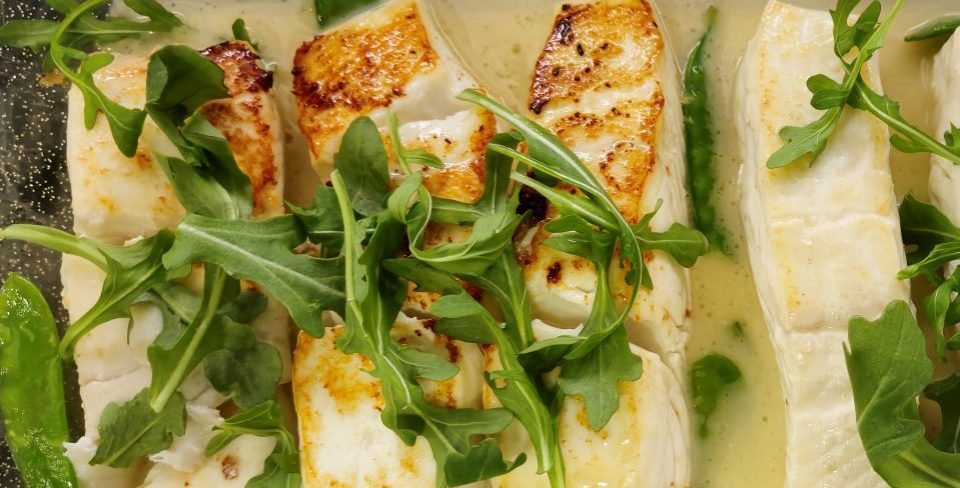
Salmon in Beurre Rouge Sauce

Fresh Asparagus

Twice Baked Idaho Potato

Homemade Biscuits

2007 Cinder Cabernet Sauvignon Merlot Blend

And it was very good! Had to have this tonight because tomorrow Boise State University has a football game and that might insist that there be “football junk food”! Pizza, Nachos, Brats, Hot Dogs, Beer. Who knows! Hope you enjoy the photos. Guess we need “Smell-A-Vision” or something. Cheers! Go Broncos!!!