• About and Contact
  • Air Fryer Cooking Charts and Conversions
  • Air Fryer Recipes – Update: August 2020 – Chicken Olivia
  • Barcode Country List
  • Boise Foodie Blog Recipes – Updates: Nov 2024 Basic Hollandaise Sauce and Cream of Mushroom Soup
  • Boise Restaurant Guide – 52 Restaurant Choices! Updated: July 2018
  • Companion Garden Planting
  • Instant Pot Recipes – Update August 2020 – IP Chicken with Ketchup, Honey and Soy
  • Recipes from the Captain’s Shack: Dec 2020 – CS Prime Rib

Boise Foodie Guild

~ – Enjoy a meal or a recipe with us! Be sure to check the Sidebar and Menu above. Interesting resources are listed there. Most are hot links. Air Fryer (AF), Instant Pot (IP) and Captain's Shack (CS) recipes now have their own page. Subscribe to the blog. It's still FREE!

Boise Foodie Guild

Category Archives: Anthropology of Food

Pasta alla Puttanescsa

11 Thursday Nov 2010

Posted by Bob and Robin in Anthropology of Food, Party Time, Recipe: Bob and Robin Young, What's For Dinner?

≈ Leave a comment


The other day while we were in the Boise Coop Wine Shop for a Port tasting, there was this gentleman there tasting the port and saying he was making a Puttanescsa tonight. We said we were making a Pasta With Portanesca Sauce. Then someone from Italy on Facebook asked if the Portanesca was the same as the Puttanescsa. Confused yet? Here is the recipe and the history behind it for Puttanescsa. Enjoy!!

Pasta alla Puttanesca

Note: A classic sauce made with tomatoes, capers, olives, and anchovies. The lore of Pasta alla Puttanesca, which translates as “Whore’s Pasta,” varies: some say it refers to the spicy, pungent aroma produced by its ingredients that enticed passing customers; others claim pragmatically that this out-of-the-larder dish was the easiest thing workers could prepare between customers, and cheap to boot. People cook it today because it has a remarkable flavor, is easy, and is made of ingredients easily kept on hand.

Ingredients:
1 lbs Spaghetti or Linguini
½ cup + 1 tbs Extra Virgin Olive Oil
6 Anchovy fillets, chopped
½ tsp Garlic, finely chopped
3 c canned Whole Peeled Tomatoes (keep the juice), coarsely chopped
salt
2 t fresh chopped Oregano, fresh chopped or ½ tsp dried oregano
2 T Capers
8-10 Black Olives, pitted and julienned

Directions:
Put all but 1 T of the olive oil and the anchovies in a large skillet over a low heat and cook, stirring until the anchovies dissolve. Add the garlic and cook for about 15 seconds, taking care not to brown it (garlic gets bitter if browned)

Raise the heat to a medium-high and add the tomatoes, and juice, with a pinch of salt. When the sauce comes to a boil, turn the heat down and simmer until the tomatoes have reduced and separated from the oil. This will probably take 20-40 minutes.

Remove from the heat and set aside. If you want, you can now refrigerate the sauce and save for the next day.

Bring 4 quarts of water to a boil in a large pot, add 1 t of salt, and drop in the pasta all at once, stirring until the strands are submerged. If you have a smaller pot, you can use less than 4 quarts of water, but you must constantly stir the spaghetti for one minute.

When the pasta is halfway done, return the skillet with the sauce to a medium heat, adding the oregano, capers, and olives. When the pasta is cooked al dente, drain and toss with the sauce in the skillet over a low heat, adding the remaining tablespoon of olive oil. Taste for salt and serve at once with fresh Parmesan cheese.

——————————

So there you have it. It really does look good and easy to prepare. Have fun and choose a good wine to go with it. Cheers!

Reblog:

  • Click to email a link to a friend (Opens in new window) Email
  • Click to share on Pinterest (Opens in new window) Pinterest
  • Click to share on Facebook (Opens in new window) Facebook
  • Click to print (Opens in new window) Print
  • More
  • Click to share on X (Opens in new window) X
  • Click to share on Instagram (Opens in new window) Instagram
Like Loading...

Bistro vs Tapas – What Is The Difference?

27 Sunday Jun 2010

Posted by Bob and Robin in Anthropology of Food, Thought For The Day

≈ Leave a comment


Now here is some interesting information that you may enjoy. Hope so, at least! Cheers.

Bistro

A bistro, sometimes spelled bistrot, is, in its original Parisian incarnation, a small restaurant serving moderately priced simple meals in a modest setting. Bistros are defined mostly by the foods they serve. Slow-cooked foods like braised meats are typical.

Bistros likely developed out of the basement kitchens of Parisian apartments where tenants paid for both room and board. Landlords could supplement their income by opening their kitchen to the paying public. Menus were built around foods that were simple, could be prepared in quantity and would keep over time. Wine and coffee were also served. The limited space for diners in these cramped corners prompted the tradition of adding table service to the footpath. As the idea caught hold, architecture and menus both became more specific.

The word bistro may derive from the Russian быстро (bystro) which means quickly. According to an urban legend, it entered the French language during the Russian occupation of Paris in 1815. Russian cossacks who wanted to be served quickly would shout “bystro.” However, this etymology is not accepted by several French linguists as there is, surprisingly, no occurrence of this word until the end of the 19th century.
Another version is that it is an abbreviation of bistrouille, a French term for brandy mixed with coffee.

Tapas

Tapas is a plural term, so your question should really be ‘what are tapas’. There are a number of myths about what tapas is all about. Here are just a few:

What Tapas is Not:
Tapas is not a particular type of food. Anything can be tapas – paella, croquettes, ham and cheese on toast, truly anything. As long as it is small and served with your drink (either free or at a surcharge), it is tapas. It doesn’t even have to be Spanish – in Granada there are a number of Morrocan bars that offer cous cous, falafel and kebabs as tapas.

Tapas is not a starter. If you start eating tapas, you finish eating tapas, and you don’t stop until you’re full.

Tapas is not a collection of small dishes brought out on a platter and eaten as a main course. The Spanish have a word for this – ‘tabla’.

The Meaning of the Word Tapas:
A ‘tapa’ is a ‘lid’ or ‘cover’. In the early days of tapas, a slice of cheese or ham was given with your drink and placed over your drink. There is some debate over why exactly this was done:
To keep out the flies.
To hide the smell of the bad wine.
To keep the wind from blowing your drink everywhere.
.
A piece of ham will only hide the smell of the wine until you take it off to take a drink, while if there was a strong wind, surely the first thing to go flying would be the tapas!
There is another explanation which differs from the above. It is said that there was once a sick king – which one exactly differs according to who is telling the story – who couldn’t drink alcohol without taking some food with it. He issued a royal decree that insisted that everyone should take food with their drinks. A slight variation of this one is that the benevolent king simply insisted that food should be taken with any drink out of concerns for the health issues associated with drinking on an empty stomach.

Tapas in Spain Today:
So, with all the myths about tapas out of the way, this is what tapas is today. A tapa is invariably a small dish of something edible. It may be a smaller version (normally a quarter version) of something else on the menu or it may be sold exclusively as tapas. The tapas may or may not be free. Unfortunately the days of free tapas are over in much of Spain. If you are invited to “go for tapas”, you’ll be visiting lots of bars and probably only taking a single tapas in each.

Source: About (dot) com

Reblog:

  • Click to email a link to a friend (Opens in new window) Email
  • Click to share on Pinterest (Opens in new window) Pinterest
  • Click to share on Facebook (Opens in new window) Facebook
  • Click to print (Opens in new window) Print
  • More
  • Click to share on X (Opens in new window) X
  • Click to share on Instagram (Opens in new window) Instagram
Like Loading...

A Wildly Varietal Day

26 Saturday Jun 2010

Posted by Bob and Robin in Anthropology of Food, Oriental Food, Photos, Photos By: Bob Young, Special Dinners, Things To Do, What's For Dinner?

≈ 2 Comments


We are very lucky in Boise to have so much cultural diversity. We have, and we usually attend, the Greek Food Festival, the Russian Food Festival, Basque Festivals, an awesome wine region, the Snake River AVA, and this weekend many of the wineries had an open house, and the Obon Festival – the Japanese festival on Ontario, OR. And I know I have missed some. But we started at the Williamson Orchards, Vineyard and Winery celebrating the family’s 100 years in Sunnyslope. Cherries are ready and super sweet.

Here is Robin tasting Petite Sirah and Port from the barrell and discussing the art of blending varietals in wines with Roger Williamson.

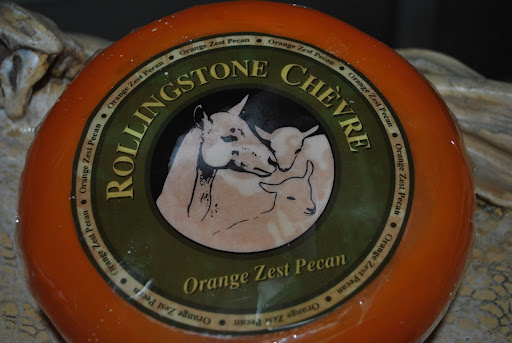
Can’t have wine without cheese, so we made a stop at Rollingstone Chèvre farm in Parma, ID. Below is a photo of one of the products.

We are going back next week with some friends.

Ah, yes, the Japanese Obon Festival in Ontario, OR.

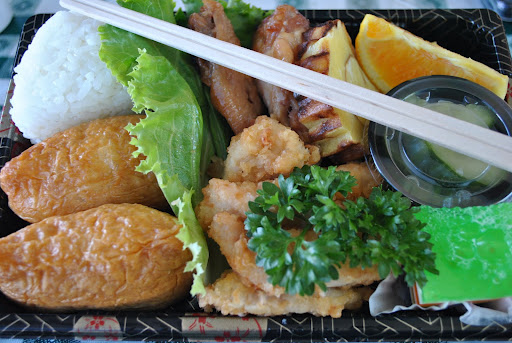
Here is a Bento Box that Robin and I had. Delicious!!

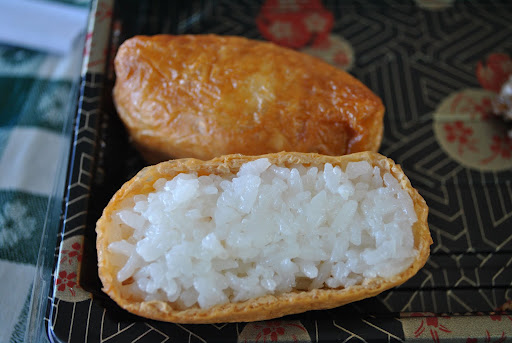
A very different rice dish.

The counter where one could purchase almost anything they wanted.

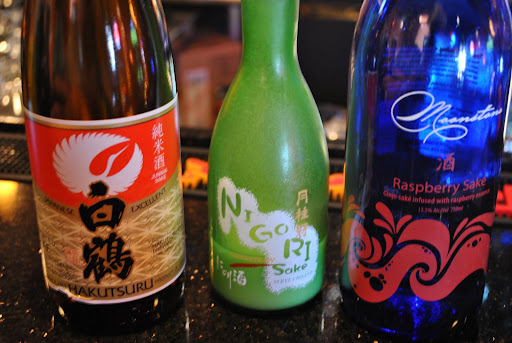
All of this delicious Japanese food and no sake!

But wait! We can see a place from our table where we are told they have some very good sake. They were right! We had a really interesting sake tasting.

So there you have our “day trip”. It was fun. It was interesting. It was exciting. Cheers!

Reblog:

  • Click to email a link to a friend (Opens in new window) Email
  • Click to share on Pinterest (Opens in new window) Pinterest
  • Click to share on Facebook (Opens in new window) Facebook
  • Click to print (Opens in new window) Print
  • More
  • Click to share on X (Opens in new window) X
  • Click to share on Instagram (Opens in new window) Instagram
Like Loading...

Rudy’s – Food Trivia

10 Monday May 2010

Posted by Bob and Robin in Anthropology of Food, Food, Rudy's Twin Falls, Thought For The Day, Trivia

≈ Leave a comment


I just love these little quips of trivia. Some of them are so unique. Enjoy!

This Week in the History of Food & Drink

May 10, 1850: Sir Thomas Johnston Lipton, grocer and tea merchant, was born.
May 11: National Mocha Torte Day
May 12, 1777: According to the International Dairy Foods Association, the first ice cream advertisement appeared in the New York Gazette on this date.
May 13, 1993: The Red Hot Chili Peppers play on the Simpsons TV show.
May 14, 1853: Gail Borden applied for a patent for condensed milk.
May 15, 1989: Hershey’s reduces the size of the Hershey bar to 1.55 ounces. The price remains 40 cents.
May 16: St. Honoratus’ Day. Patron saint of bakers, pastry chefs, confectioners, flour merchants.

Reblog:

  • Click to email a link to a friend (Opens in new window) Email
  • Click to share on Pinterest (Opens in new window) Pinterest
  • Click to share on Facebook (Opens in new window) Facebook
  • Click to print (Opens in new window) Print
  • More
  • Click to share on X (Opens in new window) X
  • Click to share on Instagram (Opens in new window) Instagram
Like Loading...

Alley Gardens – One Way To Beautify The Neighborhood

06 Thursday May 2010

Posted by Bob and Robin in Alley Gardens, Anthropology of Food, Photos By: Bob Young, Things To Do

≈ 1 Comment


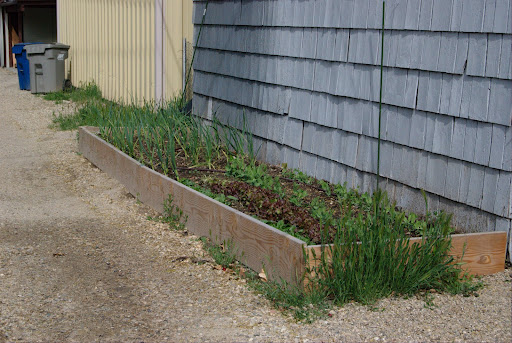
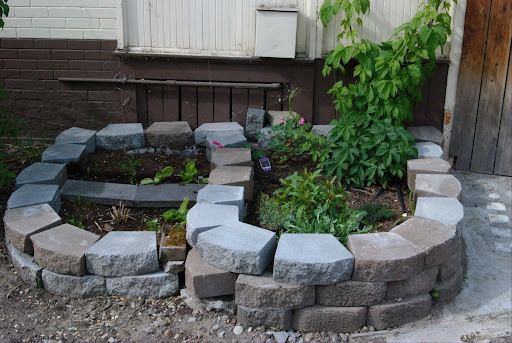
It’s always nice to see what imaginative and innovative ideas folks dream up to utilize some open space and not interfere with City of Boise functions or ordinances. The use of some small alley space to beautify the neighborhood and the alleys and to increase the functionality of the city scape, is just one way people are utilizing the space. Hopefully, more folks will become involved in this non-formal or really not organized project. Just be aware that the City of Boise has priority for the use of the alleys and they must all be clear and accessible by emergency vehicles.

The start of an alley garden. A modest design.

A garden in production. A more typical raised garden.

Still a more formal type of raised bed.

Here is an elaborate design and functionality. This one happens to be “curb side”.

So there are some designs one can use. From the very simple, yet functional design, to a complex design that adds beauty and tranquility to the neighborhood. It might be wise, though, to check with your neighborhood association and the City of Boise for any restrictions that they may have. Cheers and good luck!

Reblog:

  • Click to email a link to a friend (Opens in new window) Email
  • Click to share on Pinterest (Opens in new window) Pinterest
  • Click to share on Facebook (Opens in new window) Facebook
  • Click to print (Opens in new window) Print
  • More
  • Click to share on X (Opens in new window) X
  • Click to share on Instagram (Opens in new window) Instagram
Like Loading...

"Rudy’s – A Cooks Paradise" Food Trivia

06 Tuesday Apr 2010

Posted by Bob and Robin in Anthropology of Food, Food, Food Trivia, Rudy's Twin Falls, Thought For The Day, Trivia

≈ Leave a comment


By now, I suppose that you anxiously await each month the Food Trivia from Rudy’s – A Cooks Paradise in Twin Falls. This is an interesting month, because it includes an ancient delight – Twinkies!! Some of these trivia points of interest are amazing. I don’t know who keeps these “records”, but it would be interesting to see their library. Oh! There will be a surprise at the end of the trivia list. Cheers!

This Week in the History of Food & Drink

April 5, 1774: The Sugar Act passed in Britain, placing new restrictions on the import of molasses to America.

April 6, 1930: Twinkies go on sale for the first time. I wonder how they tasted back in 1930, before they had ingredients like this. The BBC article calls the ingredient list a “veritable who’s who of the chemical world”. Instead, why not try the Homemade Twinkie recipe below!

April 7, 1948: The World Health Organization was established.

April 8: St. Walter of Pontnoise’s Day, patron of vintners.

April 9, 1850: William Prout died. An English chemist, he was the first to classify food components into 3 main divisions – carbohydrates, fats and proteins.

April 10, 1633: Bananas were supposedly displayed in the shop window of merchant Thomas Johnson. This was the first time the banana had ever been seen in Great Britain. It would be more than 200 years before they were regularly imported.
In 1999 remains of a banana were found at a Tudor archaeological site on the banks of the Thames River. This would seem to date it 150 years earlier than Thomas Johnson’s banana. A classic food mystery!

——————————

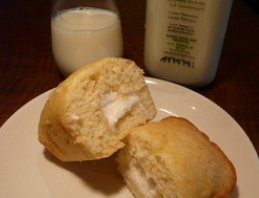
And as promised, a “treat surprise”! Thanks to Rudy’s for the recipe and the photo.

Homemade Twinkies

Ingredients:
1 Cup Cake Flour
¾ Cup Sugar
1 Tsp Baking Powder
3 Eggs
¼ Cup Milk

Directions:
Whisk together the dry ingredients. Add eggs and continue to whisk to combine (or use a hand or stand mixer). Add half the milk. If the batter is too thick, gradually add the rest of the milk until the batter is thick, but easily pourable. Divide batter into nine mini loaf pans.Bake in a preheated 350°F oven for 15-20 minutes, or until a toothpick comes out clean. Cool for about 10 minutes and invert onto wire cooling racks. Cool completely.

To add filling (recipe follows), fill half a pastry bag & tip with the filling. Poke each loaf three times, squeezing out icing while pulling up and out. Stop pressure prior to pulling the tip out completely. If the cream overflows a little, use a butter knife/spatula to carefully scrape off.

For the Filling

Ingredients:
½ Cup Unsalted Butter, Softened
1 Cup Confectioners Sugar
2 Cups Marshmallow Cream Such As Marshmallow Fluff
1 Teaspoon Vanilla
2-3 Tbsp. Milk

Directions:
Beat together all the ingredients in a bowl with electric mixer at medium speed until smooth, about 3 minutes.

Reblog:

  • Click to email a link to a friend (Opens in new window) Email
  • Click to share on Pinterest (Opens in new window) Pinterest
  • Click to share on Facebook (Opens in new window) Facebook
  • Click to print (Opens in new window) Print
  • More
  • Click to share on X (Opens in new window) X
  • Click to share on Instagram (Opens in new window) Instagram
Like Loading...

History of the Reuben Sandwich

20 Saturday Mar 2010

Posted by Bob and Robin in Anthropology of Food, The Perfect Reuben

≈ 2 Comments


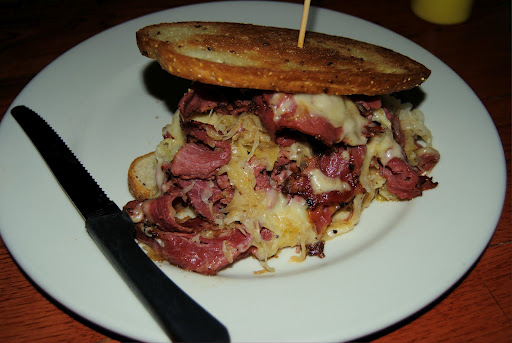
So where did this delightful sandwich come from? How is it prepared and what constitutes the Reuben Sandwich?

From the whatscookingamerican.net website we learn that,
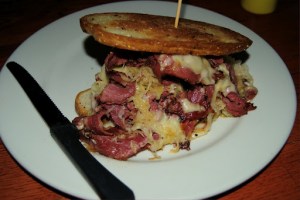
“A grilled sandwich made with corned beef, Swiss cheese, sauerkraut, and Russian dressing on rye bread. There are a couple of legends or stories involving the creation of the Reuben Sandwich. I can find no actual evidence to support either claim. You be the judge! Here is a link to one of many recipes for a Classic Reuben Sandwich

1914 – It is said that late one evening an actress came into the restaurant and said, Reuben took a loaf of rye bread created this Reuben sandwich. Arnold Reuben, Jr., the son of the restaurant’s founder, believes that the sandwich was first made in 1927 or 1928 by one of the chefs who though that he ate too many hamburgers, made him a “really good sandwich.”

Patricia B. Taylor, daughter of Arnold Reuben (1883-1970), the founder of Reuben’s Restaurant and Delicatessen, remembers that her father made the first Reuben Sandwich in 1914. She described the incident to Crag Claiborne of the New York Times in his book called Craig Claibornes – The New York Times Food Encyclopedia:

The year was 1914. Late one evening a leading lady of actor Charlie Chaplin came into the restaurant and said, ‘Reuben, make me a sandwich, make it a combination, I’m so hungry I could eat a brick.’ He took a loaf of rye bread, cut two slices on the bias and stacked one piece with sliced Virginia ham, roast turkey, and imported Swiss cheese, topped off with coleslaw and lots of Reuben’s special Russian dressing and the second slice of bread. He served it to the lady who said, ‘Gee, Reuben, this is the best sandwich I ever ate, you ought to call it an Annette Seelos Special.’ To which he replied, ‘Like hell I will, I’ll call it a Reuben’s Special.’

In 1938, Arnold Reuben gave an interview for the American Life Histories: Manuscripts from the Federal Writers’ Project, 1936-1940, Reuben and his Restaurant, December 18,1938. Excerpts from the interview are as follows:

I’ll tell you about how I got the sandwich idea. I owned a delicatessen on Broadway and one day a dame walks in, one of the theatrical dames, and she’s down and out I suppose, and she asks me for something to eat. Her name was Anna Selos. Well, I’m feeling sort of good, so I figure I’ll clown around for the dame. That’s how it all came about. I’m clowning for the dame. Well, what do I do? I take a holy bread that I used to keep and grab up the knife and, you know, clowning like, I cut it right through on the bias. Then I take some roast beef, I don’t remember exactly what. But, anyway, I figure I’ll put anything on. So I take some meat and cheese and I slap it on, and I put on some spice and stuff and I make her up a sandwich; it was a foot high. Well the dame just eats it, that’s all. She must have been plenty hungry. And when she gets through she says, “Mr. Reuben, that’s the best sandwich I ever tasted in my life.” Well, the idea comes to me in a flash. I’ll call it the Anna Selos sandwich, after the dame. Then, one night, she brings some friends up, you know, stage people and a newspaper man, and this guy he goes right behind the counter and makes himself up a sandwich, and then he tells me why I don’t call the sandwich after celebrities? Like what happened with Anna Selos. Why don’t I call it the Anna Selos sandwich? Well, boys, in a flash, I get the idea. Anna Selos! I’ll call it a Reuben Special.

1925 – Another version is Reuben Kulakofsky (1873-1960), a wholesale grocer in Omaha, Nebraska and co-owner of Central Market in Omaha from 1900 to 1943, created the Reuben Sandwich. Kulakofsky belonged to a weekly poker group whose members apparently enjoyed fixing their own sandwiches every bit as much as they enjoyed playing poker. One of the players, Charles Schimmel, owner of the Blackstone Hotel in Omaha, put the Reuben Sandwich on the hotel menu.

1950s – George Leonard Herter, is his book Bull Cook and Authentic Historical Recipes and Practices, Volume II, gives his account on who invented the Reuben Sandwich. Herter’s writings were known for their mixture of legend and history. NOTE: I have never been able to verify the below information in my research. You be the judge:

The Reuben Sandwich is unquestionably one of New York’s greatest contributions to the world of eating and is found in restaurants in all of the major cities of North America. The sandwich was invented by William Hamerly, a New York accountant and bachelor cook. He named it for Arnold Reuben, founder of Reuben’s New York Restaurant. Arnold Reuben has done a great deal of work for New York charities. He, in fact, received several awards for his charitable work. Hamberly named the sandwich for Reuben, not because he founded the famous Reuben Restaurant, but because he admired his charitable works. Like any really outstanding cooking recipe, the Reuben Sandwich spread over all of North America and even into Europe in a very short time.

1956 – Fern Snider, chef of the Rose Bowl Restaurant in Omaha, was named grand prize winner in the 1956 national sandwich idea contest sponsored by the National Restaurant Association. The Reuben Sandwich obtained almost immediate national fame. According to the September 1956, American Restaurant Magazine, in an article titled “National Sandwich Winners:”

THE RUEBEN, a hearty man-sized sandwich of corned beef, sauerkraut and Swiss cheese on Russian rye bread, is the nation’s top hotel and restaurant sandwich in the opinion of judges of the National Sandwich Idea Contest in which more than 600 different sandwich items are entered from all parts of the country and Hawaii. The Rueben was submitted by Fern Snider, chef at the Rose Bowl Restaurant in Omaha, Nebr.”

And from http://www.rowlandweb.com, we read that “…Arnold Reuben, a German immigrant, opened his first restaurant in New York at 802 Park Ave. ca. 1908 (sources differ on the exact year); he relocated to Broadway and 82nd St. several years later, to Broadway and 73rd St. (near the Ansonia Hotel) in 1916, and to 622 Madison Ave. in 1918. In 1935, the formal opening of Reuben’s Restaurant at 6 East 58th St. was attended by Mayor Fiorello LaGuardia. Reuben’s Restaurant remained at this location until 1965 or 1966. The “N.Y. Times” columnist Marian Burros recalled the decor in a Jan. 11, 1986, column: “Italian marble, gold-leaf ceiling, lots of walnut paneling and dark red leather seats–to a small-town girl it was the quintessential New York restaurant… from a letter from Patricia R. Taylor of Manhattan, the daughter of Arnold Reuben Sr. (and presumably brother of Arnold Jr.), part of which runs as follows:

I would like to share with you the story of the first Reuben’s Special and what went into it. The year was 1914. Late one evening a leading lady of Charlie Chaplin’s came into the restaurant and said, “Reuben, make me a sandwich, make it a combination. I’m so hungry I could eat a brick.” He took a loaf of rye bread, cut two slices on the bias and stacked one piece with sliced baked Virginia ham, sliced roast turkey, sliced imported Swiss cheese, topped it off with cole slaw and lots of Reuben’s special Russian dressing and the second slice of bread…. He served it to the lady who said, “Gee, Reuben, this is the best sandwich I ever ate. You ought to call it an Annette Seelos Special.” To which he replied, “Like hell I will. I’ll call it a Reuben’s Special.”

The most interesting thing about this story is that the “Reuben’s Special” is not a Reuben sandwich, though it has certain features thereof: it includes meat, some form of cabbage, and cheese. During the Reuben sandwich debate with McMorris, one of his researchers phoned Reuben’s Restaurant in Manhattan and was told that the restaurant carried both a “Reuben’s Special”–described exactly as Ms. Taylor described it–and a Reuben, described as “corned beef, sauerkraut, and melted cheese” (McMorris “World-Herald” column of July 27, 1989).

This would seem to settle the matter in favor of the Nebraskans–the sandwich created in New York is connected to the Nebraskan sandwich by onomastic coincidence–were it not for a story told late in his life by Arnold Reuben Jr., who himself claimed credit for the sandwich’s origin. As related to the “St Petersburg Times” (Dec. 1, 1993),

The sandwich, he [Arnold Jr.] says, goes back to the 1930’s. The restaurant, which his father founded in 1915 [sic!], was open 24 hours a day, and the younger Reuben worked from noon until 3 or 4 in the morning. He didn’t take time to sit down to eat. He had too many customers.

So every day, Reuben asked the chef to make him a hamburger. One day, chef Alfred Scheuing said he was sick of seeing Reuben eating the hamburger.
The chef said, “I’ve made some nice, fresh corned beef.” He layered slices onto Russian dark pumpernickel bread, which he had buttered and toasted. Then Scheuing said, “Let’s see what we can do now to make it tastier,” adding Swiss cheese.
The chef also had a huge pot of fresh sauerkraut, which he made the sandwich’s finishing touch.

I suppose that if Reuben had told this story about his father, it would be family folklore. The fact that he makes himself a participant means that it is either truth or (charitably) very faulty memory. The only thing that could possibly validate it would be evidence from old Reuben’s Restaurant menus attesting to the antiquity of the corned beef-Swiss cheese-sauerkraut Reuben (as opposed to the Reuben Special).
”

So there you have some of the history of the infamous and what I would consider the traditional Reuben sandwich. Cheers!
Reblog:

  • Click to email a link to a friend (Opens in new window) Email
  • Click to share on Pinterest (Opens in new window) Pinterest
  • Click to share on Facebook (Opens in new window) Facebook
  • Click to print (Opens in new window) Print
  • More
  • Click to share on X (Opens in new window) X
  • Click to share on Instagram (Opens in new window) Instagram
Like Loading...

Where Did "Corned Beef" Come From?

17 Wednesday Mar 2010

Posted by Bob and Robin in Anthropology of Food, Food, Food Trivia, Interesting Information, Trivia

≈ Leave a comment


History of Corned Beef & Cabbage
Origin of Traditional Irish American St Patrick’s Day Recipe

Mar 3, 2009 Stephanie Jolly , Source: Suite101.com

While many North Americans associate corned beef and cabbage with Ireland, this popular St Patrick’s Day meal has roots in America, and is not traditional Irish food.

Corned beef, a salt-cured brisket, was traditionally packed and stored in barrels with coarse grains, or “corns” of salt. One of the earliest references to corned beef appears in the 12th century Gaelic poem Aislinge Meic Conglinne, where it references a dainty, gluttonous indulgence. By the 17th century, salting beef had become a major industry for Irish port cities of Cork and Dublin, where Irish beef was cured and exported to France, England and later to America.

Traditional Irish Recipes Contain Salt Pork Instead of Corned Beef
With the majority of Irish beef being exported, beef was an expensive source of protein and unavailable to the majority of Irish citizens. Cows, if owned at all, were raised predominately for their dairy products, from which butter, cheese and cream could be obtained, and were only slaughtered when they were no longer good for milking. Sheep were raised as a source of wool and hogs and pigs were one of the only livestock species raised by the peasantry for consumption.
Salt pork and bacon, therefore, became the commonly consumed meat protein of Irish tables. In Feast and Famine, Leslie Clarkson writes that “fat from bacon supplemented the lack of fat in the farmhouse diet” and Sir Charles Cameron states that he does “not know of any country in the world where so much bacon and cabbage is eaten.” Even today corned beef and cabbage appears infrequently in Irish pubs and restaurants, except for those in heavily touristed areas, and is much more likely to be replaced its traditional counterpart – an Irish stew with cabbage, leeks, and a bacon joint.

Corned Beef & Cabbage Eaten by Irish Immigrants After Arriving in America
After the Irish potato blight, or Great Famine, of the mid-19th century brought hundreds of Irish emigrants to the shores of America, the newly immigrated Irish Americans found corned beef to be both more accessible and more affordable than it was in Ireland. Both corned beef and cabbage were ingredients of the lower working class, and their popularity among the Irish population likely had little to do with similarities to the food of Ireland and more to due with the relatively inexpensive nature of salt cured beef and green cabbage.
For several decades following the Irish immigration, St Patrick’s Day was celebrated with music, crafts and revelry but banquets, while lavish, contained a scarcity of traditional Irish cuisine. However by the 1920s, corned beef and cabbage came to have an association with Irish American cooking, according to Hasia Diner in Hungering for America: Italian, Irish and Jewish Foodways in the Age of Migration and joined Irish bacon and greens as a food reminiscent of Ireland.

Corned Beef’s Association with St Patrick’s Day Has Irish American Origins
While both salted beef and green cabbage have historic connections with Ireland, the ritual of serving corned beef and cabbage for St Patrick’s Day is exclusively an Irish American tradition. The scarcity and high price of beef in Ireland prevented it from being consumed by the majority of the Irish peasantry until arriving in America, where corned brisket and cabbage were cheap and readily available to the poor. As the stigma of eating working class food faded and the celebration of Irish ancestry grew in popularity, corned

And from Foodtimeline.com, we have:

“Corned beef
While the process of preserving meat with salt is ancient, food historians tell us corned beef (preserving beef with “corns” or large grains of salt) originated in Medieval Europe. The Oxford English Dictionary traces the first use of the word corn, meaning “small hard particle, a grain, as of sand or salt,” in print to 888. The term “corned beef” dates to 1621.
“Emphasizing its long history in the Irish diet, Regina Sexton…points out that a similar product is mentioned in the 11th-century Irish text Aislinge meic Con Glinne many wonderful provisions, pieces of every palatable food…full without fault, perpetual joints of corned beef’. She adds that corned beef has a particular regional association with Cork City. From the late 17th century until 1825, the beef-curing industry was the biggest and most important asset to the city. In this period Cork exported vast quantities of cured beef to Britain, Europe, America, Newfoundland, and the W. Indies. During the Napoleonic wars the British army was supplied principally with corned beef which was cured in and exported from the port of Cork.”
—Oxford Companion to Food by Alan Davidson, [Oxford University Press:Oxford] 1999 (page 218)

Corned beef was very popular in colonial America because it was an economical and effective way to preserve meat. The following corning directions are from The Virginia House-Wife by Mary Randolph, 1824, pages 22-23:
“To corn beef in hot weather
Take a piece of thin brisket or plate, cut out the ribs nicely, rub it on both sides well with two large spoonsful of pounded salt-petre; pour on it a gill of molasses and a quart of salt; rub them both in; put it in a vessel just large enough to hold it, but not tight, for the bloody brine must run off as it makes, or the meat will spoil. Let it be well covered top, bottom, and sides, with the molasses and salt. In four days you may boil it, tied up in a cloth, with the salt, &c. about it: when done, take the skin off nicely, and serve it up. If you have an ice-house or refrigerator, it will be best to keep it there.–A fillet or breast of veal, and a leg or rack of mutton, are excellent done in the same way.” “Some people wonder about the shared culinary/cultural heritage of the Irish and Jewish peoples when it comes to corned beef. The practice of curing meat for preservation purposes certainly dates back to ancient times. The use of salt was adopted/adapted by many peoples and cultures, and was widely used during the Middle Ages. Evidence suggests that both Irish and Jewish cooks were making corned (salt) beef independently, long before they met in New York.

“Corned beef comes in two versions: The Jewish special on rye, or the traditional Irish boiled dinner, aka New England boiled dinner. Tonight should be the big night for the Irish version.”
—Boiled dinner, The Boston Globe, March 15, 1990 (p.3)

Reblog:

  • Click to email a link to a friend (Opens in new window) Email
  • Click to share on Pinterest (Opens in new window) Pinterest
  • Click to share on Facebook (Opens in new window) Facebook
  • Click to print (Opens in new window) Print
  • More
  • Click to share on X (Opens in new window) X
  • Click to share on Instagram (Opens in new window) Instagram
Like Loading...
Newer posts →

  • Bob and Robin's avatar Bob and Robin
  • rockinrobin43's avatar rockinrobin43

Meta

  • Create account
  • Log in
  • Entries feed
  • Comments feed
  • WordPress.com

Copyright Notice

Creative Commons License
This blog and all work herein is licensed under a Creative Commons Attribution-Noncommercial-No Derivative Works 3.0 United States License.

The Current Weather at the Captain’s Shack

Click the image to see the very latest and current weather at the Captain's Shack in Boise, Idaho

Enter your email address to follow this blog and receive notifications of new posts by email.

Join 183 other subscribers

Thanks to all of these readers and subscribersz of this blog!

  • 321,038 and 598,479 Folks Reached

Monthly Archives of this Blog

Translate This Page

Assoc of Food Bloggers

Association of Food Bloggers

BFM Drive-Thru

Boise Farmers Market Drive-Thru

Air Fryer Cooking Time and Temperature Conversion Calculator

To convert to the AirFryer

AirFryer Recipes

https://www.airfryerrecipes.com/

Air Fryer Conversions

Rule of 25%. Reduce oven/frying temperature by 25% and time by 25%.

Fork To Spoon – Air Fryer and Instant Pot Recipes

Great resource for AF and IP information and recipes.

AirBnB Buhl, Idaho

Welcome to Mary Anne’s place, a historic cottage in the heart of Kelley’s Canyon Orchard. Just 20 minutes from Twin Falls, unwind in this quiet retreat by enjoying the pleasant sound of a nearby creek and views that look out into the orchard. 4 guests · 2 bedrooms · 3 beds · 1 bath, Wifi · Free parking · Kitchen, Entire House! 1903 River Rd, Filer, Idaho 83328

Bloglovin’

RSS Links

RSS Feed RSS - Posts

RSS Feed RSS - Comments

-----------------------
I Know. Not Idaho Products, But still Worth A Try!
----------------------

Rockin’ Rs

----------------------
Items of Blog Interest.
-----------------------

Member of The Internet Defense League

The History Kitchen

Interesting historical information about food - prep, origins and uses. Written by a kitchen anthropologist!

-----------------------
Of Concern To This Blog
----------------------

Recent Posts

  • Trike Restaurant Finds Worthy of Posting
  • Food Via ETrike
  • An Awesome Chicken Dish
  • Sushi Shack
  • Awesome Oven BBQ Pork Ribs

-----------------------
Think Local!! Buy Local!!

Let them know you saw their logo on this blog. Thanks!
----------------------

Buy Local!

If you are not from Idaho, think about Buying Local in Your area! As for us, we have lived in Idaho since 1982. We Buy Idaho wherever possible.

Chef Jake Sandberg, Crispeats

Food References and Recipes

Buy Local

And it does ... Just Make Sense! Regardless of where you are from.

------------------------
Think Local!! Idaho Products.

Let them know you saw their logo on this blog. Thanks!
-----------------------

The New Boise Farmers Market

Summer and Winter - 1500 Shoreline Dr, Boise (Americana and Shoreline)

Idaho Farmers Markets

A listing of statewide Farmer's Markets with contacts.

Find Your Local Farmers Market

Click on the graphic to find your local farmers market either by city or zip code.

Acme Baked Shop, Boise

Available at the Boise COOP. Some of the best bread in Boise and all local!! They make the bread for the 10 Barrel Brew Pub, Angell's Bar and Grill, Salt Tears, all here in Boise. Awesome rye bread that actually tastes like rye bread. And the baguettes .... Wonderful. (208) 284-5588 or runsvold2000@gmail.com

Brown’s Buffalo Ranch

Give them a call or EMail for awesome buffalo meat.

Desert Mountain Grass Fed Beef (formerly Homestead Natural Beef)

Desert Mountain Grass Fed Beef, with Bob and Jessica Howard of Howard Ranch in Hammett. The company will only sell whole animals to the Boise Co-op and Whole Foods stores in Boise and Utah. They will also be at the Boise Farmers Market.

Falls Brand Pork roducts

Click the image for pork recipes.

Kelley’s Canyon Orchard

1903 River Rd, Filer, ID 83328 Hours: 10am - 6pm, Phone: (208) 543-5330

Malheur River Meats

Matthews Idaho Honey

Matthews All-Natural Meats

Meadowlark Farms

All natural Eggs, Lamb and Chicken

Purple Sage Farms

True Roots Farm

Available at the Boise Farmers Market and online at https://www.trueroots.farm

True Roots is a local produce farm committed to sustainable and chemical-free farming practices. We raise pesticide-free and non-GMO produce fresh from the farm, offering a diverse variety of farm-fresh services to our local community. Since our founding in 2014, our mission has been to provide farm-direct access to clean, reliable, and affordable produce.

Reel Foods Fish Market

1118 Vista Avenue, Boise, ID 83705 (208) 713-8850 Monday-Friday: 10am-6pm, Saturday: 9am-5pm. Sunday: Gone Fishin’

Standard Restaurant Supply

Plenty of items for the home, too. Check them out. 6910 Fairview, Boise 83704 (208) 333-9577

-----------------------
Some Awesome Recipe and Spice Sources. Culturally diverse.

Let them know you saw their logo on this blog. Thanks!
------------------------

Crockpot Recipes

Many good recipes here.

A Taste of France

A collection of French recipes

Basque Recipes

Best Ever Recipes of Mexico

Malaysian Recipes

Awesome Malaysian recipes.

Memorie di Angelina Italian Recipes

My Best German Recipes Web Site

Regional and Oktober Fest Recipes

There are a lot of recipes here.

Sauer Kraut Recipes

Recipes By Robin and Bob

Recipes that we have collected and created throughout the years.

Recipes of Elizabeth W. Young, Bob’s Mother

These are the recipes that my Mother collected over 85 or so years. The photo of my Mother was one of the last I have of her. It was taken in July, 1987.

Recipes From The Mediterranean Area

Soup and Chowder Recipes

Recipes from "My Recipes"

Deep South Dish Recipes

The Recipes of Greece

Tasty Mexican Recipes

The Shiksa In The Kitchen

Great Jewish recipes!

-----------------------
Some Great Boise Restaurants.

Let them know you saw their logo on this blog. Thanks!
-----------------------

Asiago’s – Italian

Bella Aquila, Eagle, ID

775 S Rivershore Ln., Eagle, ID 83616 (208) 938-1900

Bar Gernika – Basque Pub and Eatery

202 S Capitol Blvd, Boise (208) 344-2175 (Checked)

Cottonwood Grille

913 W River St., Boise (208) 333.9800 cg@cottonwoodgrille.com

Enrique’s Mexican Restaurant

482 Main St., Kuna (208) 922-5169 New name. Was El Gallo Giro. Same owners and kitchen. The Best Mexican restaurant in the Boise/Kuna area, bar none!

Flying Pie Pizzaria

Goldy’s Breakfast Bistro

108 S Capitol Blvd., Boise (208) 345-4100

Goldy’s Corner Cafe

625 W Main St., Boise (208) 433-3934

Guanabanas – Island Restaurant and Bar

960 N Highway A1A, Jupiter, FL

Janjou Pâtisserie

Janjou Pâtisserie, 1754 W State St., Boise, Idaho 83702 (208) 297.5853

Mai Thai Asian Cuisine

750 West Idaho Street Boise, ID 83702 (208) 344-8424

Mazzah Grill – Mediterranean and Greek Cuisine

1772 W State St., Boise (208) 333-2566

Richards Inn by Chef Richard Langston

Formerly - Vincino's. New location at 500 S Capitol Blvd., Boise (208) 472-1463. Reservations are highly suggested.

The Orchard House

14949 Sunnyslope Rd., Caldwell (208) 459-8200

The Ravenous Pig

1234 N. Orange Ave. Winter Park, FL

-----------------------
Think Local!! Boise Breweries, Brew Pubs and Wine Bars.
Let them know you saw their logo on this blog. Thanks!
-----------------------

10 Barrel Brewery Boise

830 W Bannock St., Boise (208) 344-5870

Cloud 9 Brewery and Pub

Opening Fall 2013 in the Albertson's Shopping Center, 18th and State in the old Maxi Java

Edge Brewing Company

525 N Steelhead Way, Boise, ID 83704 (208) 323-1116

-----------------------
Miscellaneous Items
-----------------------

Blog Syndication

NetworkedBlogs
Blog:
Boise Foodie Guild
Topics:
Food, Recipes, Cooking
 
Follow my blog

Blog Badge

Local & Regional Food Blogs - BlogCatalog Blog Directory

  • Subscribe Subscribed
    • Boise Foodie Guild
    • Join 72 other subscribers
    • Already have a WordPress.com account? Log in now.
    • Boise Foodie Guild
    • Subscribe Subscribed
    • Sign up
    • Log in
    • Report this content
    • View site in Reader
    • Manage subscriptions
    • Collapse this bar
%d