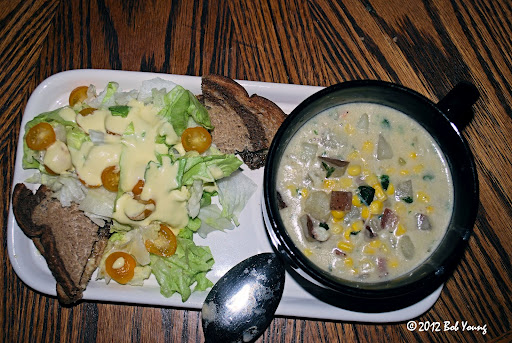
What a delightful way to used some of the leftover Dungeness Crab.
Crab and Corn Chowder
Green Salad and Tomato
with
House-made Aioli Mayonnaise
Marbled Rye Toast Wedges

07 Saturday Jul 2012
Posted in Photos, Photos By: Bob Young, Seafood, What's For Dinner?
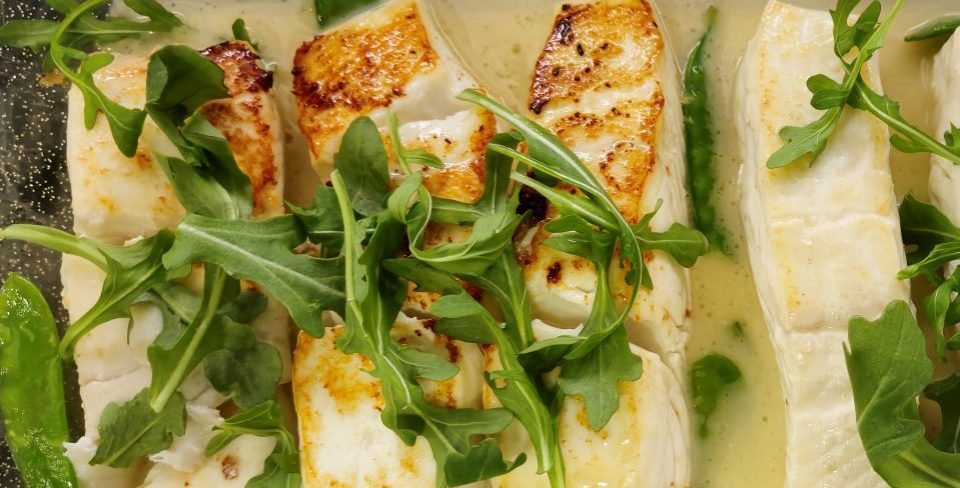
What a delightful way to used some of the leftover Dungeness Crab.
Green Salad and Tomato
with
House-made Aioli Mayonnaise
Marbled Rye Toast Wedges
06 Wednesday Jun 2012
Posted in Lamb, Local Harvests, Locavore, Main Dish, Photos, Photos By: Bob Young, What's For Dinner?
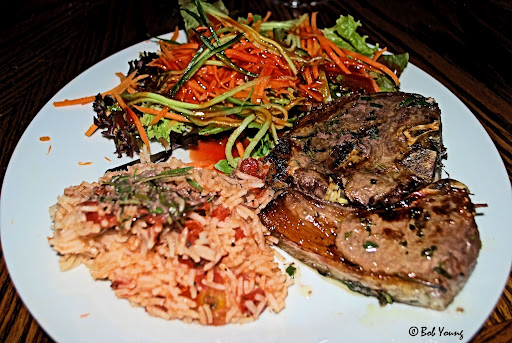 This was a great dinner! Especially if you like lamb, and our supply is running low. Check this out and enjoy. We did!.
Rice with Fire Roasted Tomatoes
Fresh Green Salad
with
Carrot and Cucumber Threads

31 Thursday May 2012
Posted in Photos, Photos By: Bob Young, Seafood, What's For Dinner?
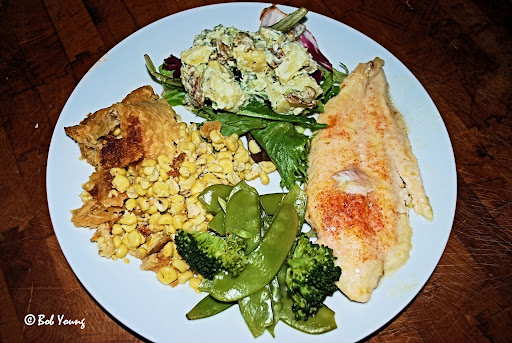
Such a different, but good dinner tonight!
Corn Pie
Potato Salad on Fresh Greens
Broiled Swain in Lemon Butter
That’s nice, you say. But just what is Swai? Various sources on the inter net gave us these answers.
Swai are farmed river catfish native to Southeast Asia. They are an excellent source of omega-3 fatty acids, and they are naturally low in saturated fat and cholesterol. Much like the American catfish, Swai are light, sweet and flaky. Often compared to the mild cod and sole, Swai can be used in pretty much any recipe calling for basic fish
Swai fish is a fish native to South East Asia and especially Vietnam but also Laos, Cambodia and Thailand. Given the excellent cuisines from these countries it certainly seems worthwhile investigating what Swai fish is. Another advantage of the Swai fish is its cost. As fish prices continue to rise, Swai is at a huge advantage as it is plentiful and retails somewhere in the region of under $5 a pound which is an excellent price. (http://www.ask.com/questions-about/Swai-Fillets)
So, what is Swai fish like to eat? Well, it is a delicately flavoured white flesh with a somewhat flaky texture that is perhaps best grilled or broiled. Whilst it can be cooked quite simply and has a delicate taste, it is also excellent with sauces. (http://charliegrumples.hubpages.com/hub/What-is-Swai-Fish)
Swai is a fish with white-beige flesh that you can find in fillet form. It is light and flaky, and has a mild sweet flavor. The fish is found in Southeast Asia mainly along the Mekong River in Cambodia and Vietnam. A 3.5 ounce fillet has 90 calories, 4 grams of fat (1.5 saturated), 45 milligrams of cholesterol, and 50 mg of sodium. Experts say you can bake, broil, coat with bread crumbs and fry, grill or sauté the fish. (http://www.kgbanswers.com/what-is-swai-fillet-its-a-fish-where-does-it-come-from/4726416)
We broiled our very simply. 1 T Butter, unsalted, Juice and zest of 1/2 lemon. Sprinkle of Paprika. Broiled for 8 minutes at 550 degrees F. That’s it. Pretty straight forward and easy. We got ours at WinCo, but I suppose you can purchase it almost any place. Enjoy!

30 Wednesday May 2012
Posted in Photos, Photos By: Bob Young, Pork, What's For Dinner?
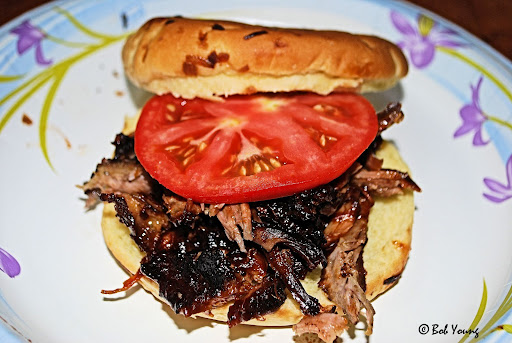
So what happens to the BBQ Pork Ribs that are left over? (We had 3 giant slabs!!!) You make
either Trader Joe’s Bold and Smoky Kansas City Style or KC Masterpiece Original – Robin likes the KC best on pork. You just can’t go wrong with this. Enjoy!!

25 Friday May 2012
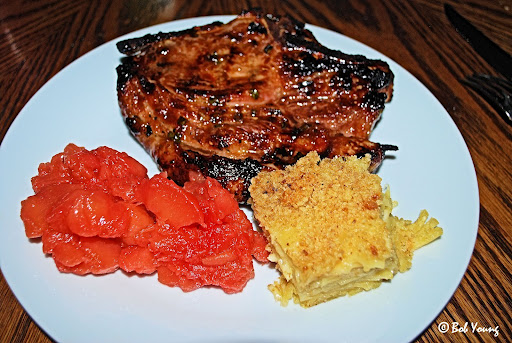
Robin found this bone-in pork chop recipe from the National Pork Board. I like pork. Anyway you prepare it. But this is by far some of the best I have ever eaten. It is delicious!! Here is the recipe for Bone In Pork Chops with Hawaiian Marinade. The recipe serves 4. She only likes the bone in pork. Bone in anything, makes for a more flavorful meal. Our meal is pictured here. This recipe is also in the Master Recipe List.
Scalloped Potatoes
Spiced Apples
And when you are grilling these, remember they are thick. Grill them over very medium heat, slowly. And be sure to let us know how you like these. Cheers!

22 Tuesday May 2012
Posted in Alley Gardens, Local Harvests, Photos, Photos By: Bob Young, Things To Do, Tomatoes

Well now, isn’t this a state of affairs. I just noticed a tomato blossom on our Pallet Garden. Look close at the plant on the top “shelf” and on the left. (Left-Click to enlarge if necessary.)
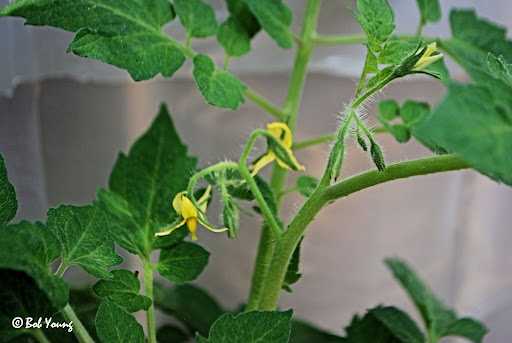
This is a close-up of that plant. I even see another blossom or two forming. I never expected to see the blossoms this early in May. This is a Roma tomato. The other large plant, with blossoms also, is a Moscow.

22 Tuesday May 2012
Posted in Alley Gardens, Photos, Photos By: Bob Young, Special Information, Vegetables
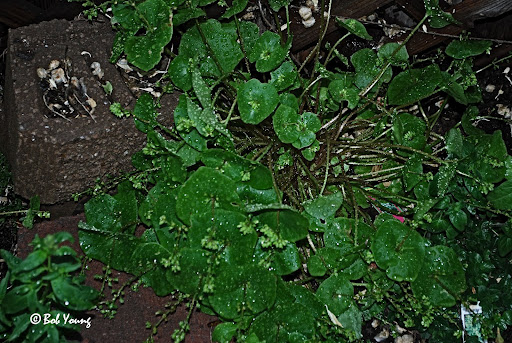
I posted a photo of our Miner’s Lettuce on FB and received some interesting comments. The main comment was – What is Miner’s Lettuce? The photo to the left is Miner’s Lettuce in our alley garden. I gathered the following information from Specialty Produce on the web. Here is what they say.
Seasons/Availability – Miner’s lettuce is usually found in spring time.
Current Facts – Miners lettuce, scientific name, Claytonia perfoliata, is a trailing annual vine that grows wild more than it is cultivated. It is a greater source of food for animals than it is for humans, providing a grazing source for gophers, flocking birds, quail, doves and cattle, while seed-eating birds eat the plant’s fruits allowing for the plant to continue to flourish in the wild for centuries. Miner’s lettuce is sometimes confused with purslane (Portulaca oleracea) which is also a cool season wild growing crop.
Description/Taste – Miners lettuce is petite and delicate in appearance and on the palate. Its composed of thin, succulent lemon lime stems that support kelly green colored basal leaves. The flavor is mild and sweet, with a subtle earthiness. At its height of maturity, miners lettuce produces numerous edible flowers from its stems.
Nutritional Value – Miners lettuce is high in vitamin C, beta carotene and protein.
Applications – Rinse freshly picked Miner’s lettuce in cold water. Drain and chill in the refrigerator a few hours to crisp. For a delicious salad, toss together leaves, flowers and stems. Combine three parts Miner’s lettuce with one part watercress and one part sheep sorrel and add a squeeze of fresh lemon juice and a sprinkle of sugar. For flavor variation, drizzle with vinaigrette or other favorite dressing. It may be boiled or steamed like spinach. To store, wrap in a perforated plastic bag; refrigerate in crisper drawer. Use within a few days as this plant tends to deteriorate quickly.
Ethnic/Cultural Info – Miners Lettuce gets its name from the California Gold Rush Years. Gold miners ate the plant in abundance and it is widely known that its nutritive properties prevented scurvy.
Geography/History – Miners Lettuce lettuce is native to the Western Coastal and Mountain regions of North America, where it now also grows wild in California from Sacramento to the San Joaquin Valley. It sprouts most commonly in the spring, preferring cool, damp conditions. It appears in sunlit areas after the first heavy rains of the season. The most prevalent abound in shaded forest areas among fir, pine and oak trees. Miners lettuce colonizes disturbed areas, especially those that experienced fires in previous seasons. It also can be found growing in virgin fields of wheatgrass and bluegrass. Much like most lettuce varieties, when summer heats up so does the lettuce, finding its leaves red and dried out in extreme heat conditions.
.
And from Matti Kaarts Blog Page, I got this recipe. Enjoy the recipe and this article!
Miners Lettuce Saladwithbaby beets, beet greens, rapini, spring garlic 1 bunch of miners lettuceIngredients:
1 bunch of baby beets, with greens still attached
1 bunch of rapini
1 bunch of spring garlic
10 sage leaves, really thinly sliced across the leaf (chiffonade)
2 pinches of sugar
olive oil
butter
lemon juiceDirections:
Cut the beets from the beet greens. Put the beets in a deep sided saute pan, and fill with enough water to just cover the beets. Add the pinches of sugar to the water, along with a small knob of butter. Put a lid on the pan, and get it boiling. Remove the lid slightly, so that some steam can release, and the water can reduce. Cooking time depends upon the size of the beets – with small ones like this it will be about 15 minutes – possibly 20. They are cooked when you can just push a knife through one pretty easily. The idea here is that they are just cooked through when you have almost no liquid in the pan – just enough for a glaze. If they are cooked before a lot of water is reduced, remove the beets from the liquid, reduce it to a glaze, then put them back in. If you need to add more water, do so. Snip the miners lettuce stalks about 1/2″ from the leaves. Discard the stalks.When the beets are cooked, allow them to cool and rub with a paper towel to peel. Toss them back into the glaze.
Cut the beet greens across the leaf into thin strips (1/2″ wide). Do the same for the rapini leaf. Trim off any excess stem. Slice the spring garlic diagonally across the stalk, discarding the dark green section.
In a large pan, add 1 tablespoon of olive oil and 1 tablespoon of butter. When pretty hot toss in half of the garlic and half of the sage leaves. Cook for 30 seconds, then toss in the beet greens. Gently toss these in the butter/oil, and allow to wilt. This will only take a couple of minutes. When they are just wilted, remove them from the pan. Wipe the pan out.
Add another tablespoon of oil and butter to the pan. When hot, toss in the rest of the sage and garlic. Again, cook this for 30 seconds. Toss in the rapini leaves. Cook this till it is just wilted. This will cook through much faster – maybe 30 seconds.
To compose the dish put a small pile of the beet greens in the center of a plate. Top this with the rapini greens. On top of this put a pretty little pile of the miners lettuce. Scatter the beets throughout the dish. Squeeze a little lemon juice over the salad. This will help brighten and lift the flavors.

21 Monday May 2012
Posted in Breakfast, Eggs, Photos, Photos By: Bob Young, Trout, What's For Dinner?
Here are two different comfort breakfasts. One in the traditional biscuits and gravy. The other, a real Idaho and Big Sky treat, is trout and eggs. Just look at these entrees. Enjoy!
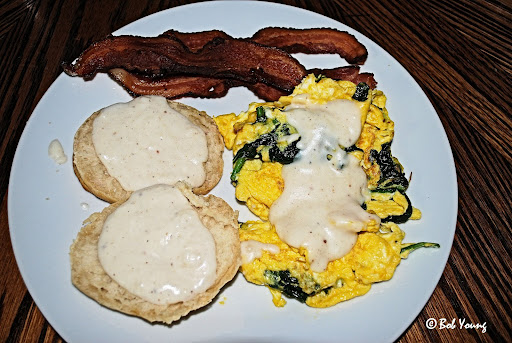
Biscuits and Gravy
Eggs Florentine
Bacon
From our kitchen to yours …..
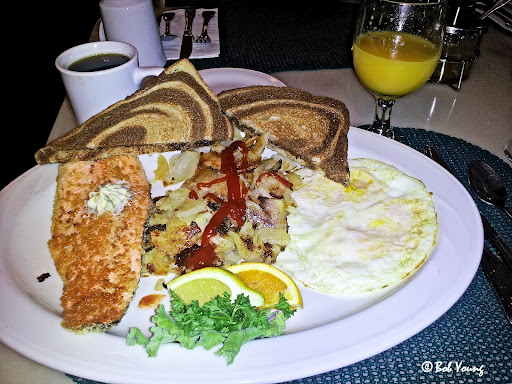
Trout
Hashbrowns
Eggs
Rye Toast
The Plaza Grill, Boise

20 Sunday May 2012
Posted in Oysters, Party Time, Photos, Photos By: Bob Young, Seafood, Shell Fish, What's For Dinner?
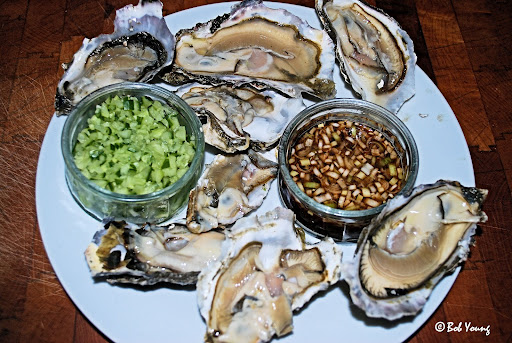
Seeing as how the Preakness Stakes are in Baltimore, it is only fitting to have seafood for the party. (Thank-You Margaret for joining us!) I bought 8 nice and fresh medium oysters from Reel Foods here in town. After shucking them without leaving my DNA all over the place, we had them with a wonderful Champagne vinegar, cracked Tellicherry Pepper and Green Onion. Wonderful! Then we also had some fine diced cucumber, too. These turned out really great.

The crab cakes, on the other hand, tasted great, but they fell apart. The mayo, chili sauce, green tomato relish and Cholula pepper sauce was good and made the crab cakes awesome. The party went fine and we all enjoyed ourselves. We even opened some of our 1995, well aged, dark beer that we made. Now for the Belmont. Can we get Coneys? and grill them? with sauerkraut and mustard? Hmmmm.

19 Saturday May 2012
Posted in Alley Gardens, Boise Adventures, Photos, Photos By: Bob Young
Here are two photos of the pallet garden. The first is right after I built it and planted it on April 28. The second photo was taken today, May 19, and shows the growth. Left-Click to see full screen.
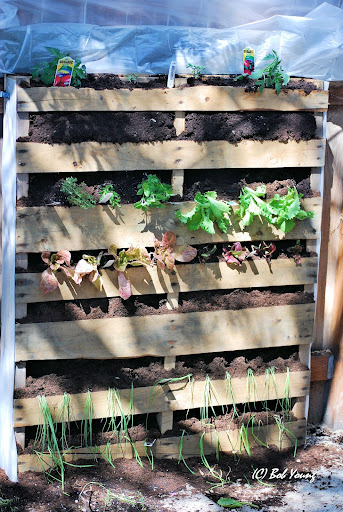
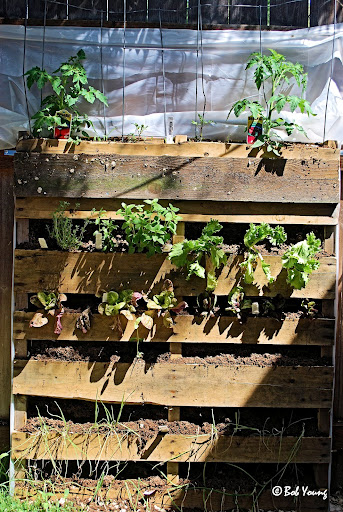
This is really an interesting process and experiment. It looks like it is working. What will I do with the tomatoes on the top? Keep them trimmed to the make-shift cages. Should be interesting.

 Boise Foodie Guild