• About and Contact
  • Air Fryer Cooking Charts and Conversions
  • Air Fryer Recipes – Update: August 2020 – Chicken Olivia
  • Barcode Country List
  • Boise Foodie Blog Recipes – Updates: Nov 2024 Basic Hollandaise Sauce and Cream of Mushroom Soup
  • Boise Restaurant Guide – 52 Restaurant Choices! Updated: July 2018
  • Companion Garden Planting
  • Instant Pot Recipes – Update August 2020 – IP Chicken with Ketchup, Honey and Soy
  • Recipes from the Captain’s Shack: Dec 2020 – CS Prime Rib

Boise Foodie Guild

~ – Enjoy a meal or a recipe with us! Be sure to check the Sidebar and Menu above. Interesting resources are listed there. Most are hot links. Air Fryer (AF), Instant Pot (IP) and Captain's Shack (CS) recipes now have their own page. Subscribe to the blog. It's still FREE!

Boise Foodie Guild

Category Archives: Interesting Information

History of Digestion Research

01 Saturday May 2010

Posted by Bob and Robin in Interesting Information

≈ Leave a comment


From The People’s Chronology by James Trager.

“In 1752 French Naturalist Rene de Reaumur proves that digestion is at least partially a chemical process. He places food inside tiny perforated metal cylinders and feeds these to hawks; when he recovers the cylinders and finds that the food inside is partially digested he destroys the prevailing belief that the stomach digests food simply by grinding it physically.”

Reblog:

  • Click to email a link to a friend (Opens in new window) Email
  • Click to share on Pinterest (Opens in new window) Pinterest
  • Click to share on Facebook (Opens in new window) Facebook
  • Click to print (Opens in new window) Print
  • More
  • Click to share on X (Opens in new window) X
  • Click to share on Instagram (Opens in new window) Instagram
Like Loading...

A Brief History of Grilling

29 Thursday Apr 2010

Posted by Bob and Robin in Interesting Information, Smoking and Grilling, Thought For The Day

≈ Leave a comment


Really ….. Summer and the ritual of firing up the backyard grill is almost here ….. Almost! Here is an interesting article on the history of grilling, according to the Foodnetwork. At the end of the article are some recipes for some BBQ sauce.

The history of grilling begins shortly after the domestication of fire, some 500,000 years ago. The backyard ritual of grilling as we know it, though, is much more recent. Until well into the 1940s, grilling mostly happened at campsites and picnics. After World War II, as the middle class began to move to the suburbs, backyard grilling caught on, becoming all the rage by the 1950s.

In suburban Chicago, George Stephen, a metalworker by trade and a tinkerer by habit, had grown frustrated with the flat, open brazier-style grills common at the time. Once he inherited controlling interest in the Weber Bros. Metal Spinning Co, a company best-known as a maker of harbor buoys, he decided the buoy needed some modification. He cut it along its equator, added a grate, used the top as a lid and cut vents for controlling temperature. The Weber grill was born and backyard cooking has never been the same.

If man has been grilling since the Stone Age, he had to wait a good long time before he got his first taste of ‘barbecue.’ Just how long is a matter of debate, but the word’s etymology has been traced via the Spanish (‘barbacoa’) to a similar word used by the Arawak people of the Caribbean to denote a wooden structure on which they roasted meat. (The Arawak’s other contribution to the English language is the word ‘cannibal’.) Only the sense of a wooden framework survived the word’s transition to English; the context was lost. So, in the 17th century, you might use a ‘barbecue’ as shelving, or you might sleep on a ‘barbecue’ — but you definitely weren’t cooking with one.

Like so many of the most recognizably “American” of foods and foodways — hot dogs, Thanksgiving dinners, even milk on breakfast cereals — barbecue goes back to 18th-century colonial America, specifically the settlements along the Southeastern seaboard. The direct descendant of that original American barbecue is Eastern Carolina-style pit barbecue, which traditionally starts with the whole hog and, after as many as fourteen hours over coals, culminates in a glorious mess of pulled pork doused with vinegar sauce and eaten on a hamburger bun, with coleslaw on the side.

As the settlers spread westward, regional variations developed, leaving us today with four distinct styles of barbecue.

Carolina-style has split into Eastern, Western and South Carolina-style, with variations largely in the sauce: South Carolina uses a mustard sauce; Western Carolina uses a sweeter vinegar-and-tomato sauce.

Memphis barbecue is probably what most of us think of when we think of BBQ — pork ribs with a sticky sweet-and-sour tomato-based mopping sauce.

Texas, being cattle country, has always opted for beef, usually brisket, dry-rubbed and smoked over mesquite with a tomato-based sauce served on the side, almost as an afterthought.

Kansas City lies at the crossroads of BBQ nation. Fittingly you’ll find a little bit of everything there — beef and pork, ribs and shoulder, etc. What brings it all together is the sauce: sweet-hot, tomato-based KC barbecue sauce is a classic in its own right, and the model for most supermarket BBQ sauces.

——————————

And to go with that grilled beef or pork or chicken, you will need a BBQ sauce. I am partial to Kansas City Style sauces. Here are some suggestions. Cheers!

Kansas City Barbecue Sauce II
________________________________________
• 1 c Ketchup
• 1 T Worcestershire sauce
• 1 c Molasses
• ¼ c Onion, chopped
• 2 T Brown sugar
• 1 T Garlic powder
• 1 t Black pepper, fresh ground
• ¼ t Cayenne pepper, or to taste
• 2 T Lemon juice
• 1 (8.0 ounce) can Tomato sauce
• ¼ c Jack Daniels
• 2 t Salt
Blend all ingredients in a saucepan, bring to simmer for about an hour, stir occasionally.
________________________________________

Remus’ Kansas City Classic Sauce
________________________________________
Recipe Adapted From : Remus Powers, Originator of the Diddy-Wa-Diddy Sauce contest
• 1 c Ketchup
• ⅓ c Dark molasses
• ¼ c White Wine Vinegar
• ½ t Hot pepper sauce
• ¼ t Allspice
• ¼ t Cinnamon
• ¼ t Mace
• ½ t Curry powder, oriental
• ½ t Chili powder
• ½ t Paprika
Place all of the dry ingredients into a bowl. Add vinegar and stir. Add remaining ingredients and stir until mixture is thoroughly blended. This sauce may be served room temperature or heated.

Reblog:

  • Click to email a link to a friend (Opens in new window) Email
  • Click to share on Pinterest (Opens in new window) Pinterest
  • Click to share on Facebook (Opens in new window) Facebook
  • Click to print (Opens in new window) Print
  • More
  • Click to share on X (Opens in new window) X
  • Click to share on Instagram (Opens in new window) Instagram
Like Loading...

Maharajah’s Mince Lamb Curry (Bhēra karī), Part II

09 Friday Apr 2010

Posted by Bob and Robin in Indian Cooking, Interesting Information, Lamb, Things To Do

≈ Leave a comment


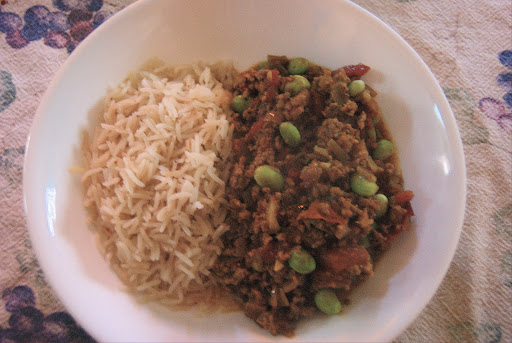
Here are our completed dishes for Maharajah’s Mince Lamb Curry (Bhēra karī). If you look for the post, by the same name, earlier today, you will find the recipe.
I was amazed at how delicious this is! The spices were balenced just right. I did adjust them somewhat, and I did add the Red Pepper Flakes.

I also used fresh garlic and ginger and raised that amount a little. The Curry powder and the Garam Masala were also increased. I think this is an awesome dish and I will make it again.

The top photo is the meal cooking. The bottom photo is the meal plated. I used a good Basmati rice. Cheers and if you make this, please let us know how it came out for you and how you liked it.

Reblog:

  • Click to email a link to a friend (Opens in new window) Email
  • Click to share on Pinterest (Opens in new window) Pinterest
  • Click to share on Facebook (Opens in new window) Facebook
  • Click to print (Opens in new window) Print
  • More
  • Click to share on X (Opens in new window) X
  • Click to share on Instagram (Opens in new window) Instagram
Like Loading...

Salt – How Much Is Too Much?

31 Wednesday Mar 2010

Posted by Bob and Robin in Cooking Styles, Food, Food Prep, Interesting Information, Salt, Spice Blends, Thought For The Day

≈ Leave a comment


So after I posted the article the other day, Robin asked if I was going to post an article on the side effects of salt. So after looking around, here is an excerpted article from the Mayo Clinic on salt. You can read the entire article by Clicking Here

Sodium: Are you getting too much?

Find out how much sodium you really need, what high-sodium foods to avoid, and ways to prepare and serve foods without adding salt or sodium.
By Mayo Clinic staff

Sodium: Essential in small amounts
Your body needs some sodium to function properly.

Sodium:
■Helps maintain the right balance of fluids in your body
■Helps transmit nerve impulses
■Influences the contraction and relaxation of muscles
Your kidneys regulate the amount of sodium kept in your body. When sodium levels are low, your kidneys conserve sodium. When levels are high, they excrete the excess amount in urine.

How much sodium do you need?
Various organizations, including the National Academy of Sciences’ Institute of Medicine, have published recommendations on daily sodium limits. Most recommend not exceeding the range of 1,500 and 2,400 milligrams (mg) a day for healthy adults. Keep in mind that the lower your sodium, the more beneficial effect on blood pressure.

If you are older than 50, are black or have a health condition such as high blood pressure, chronic kidney disease or diabetes, you may be more sensitive to the blood pressure raising effects of sodium. As a result, aim for a sodium limit at the low end of the range recommended for healthy adults. Talk to your doctor about the sodium limit that’s best for you.

Three main sources of sodium
The average U.S. diet has three main sources of sodium:

■Processed and prepared foods. Most sodium in a person’s diet comes from eating processed and prepared foods, such as canned vegetables, soups, luncheon meats and frozen foods. Food manufacturers use salt or other sodium-containing compounds to preserve food and to improve the taste and texture of food.

■Sodium-containing condiments. One teaspoon (5 milliliters) of table salt has 2,325 mg of sodium, and 1 tablespoon (15 milliliters) of soy sauce has about 900 to 1,000 mg of sodium. Adding these or other sodium-laden condiments to your meals — either while cooking or at the table — raises the sodium count of food.

■Natural sources of sodium. Sodium naturally occurs in some foods, such as meat, poultry, dairy products and vegetables. For example, 1 cup (237 milliliters) of low-fat milk has about 107 mg of sodium.

Be a savvy shopper: Find the sodium
Taste alone may not tell you which foods are high in sodium. For example, you may not think a bagel tastes salty, but a 4-inch (10-centimeter) oat-bran bagel has 451 mg of sodium.

So how do you identify foods high in sodium? The best way to determine sodium content is to read food labels. The Nutrition Facts label tells you how much sodium is in each serving. It also lists whether salt or sodium-containing compounds are ingredients. Examples of these compounds include:

■Monosodium glutamate (MSG)
■Baking soda
■Baking powder
■Disodium phosphate
■Sodium alginate
■Sodium nitrate or nitrite

How to cut sodium
You may or may not be particularly sensitive to the effects of sodium. And because there’s no way to know who might develop high blood pressure as a result of a high-sodium diet, choose and prepare foods with less sodium.

You can cut sodium several ways:

■Eat more fresh foods and fewer processed foods. Most fresh fruits and vegetables are naturally low in sodium. Also, fresh meat is lower in sodium than luncheon meat, bacon, hot dogs, sausage and ham are. Buy fresh and frozen poultry or meat that hasn’t been injected with a sodium-containing solution. Look on the label or ask your butcher.

■Opt for low-sodium products. If you do buy processed foods, select those that have reduced sodium.

■Remove salt from recipes whenever possible. You can leave out the salt in many recipes, including casseroles, stews and other main dishes. Baked goods are an exception. Leaving out the salt could affect the quality as well as the taste of the food.

■Limit your use of sodium-laden condiments. Salad dressings, sauces, dips, ketchup, mustard and relish all contain sodium.

■Use herbs, spices and other flavorings to enhance foods. Learn how to use fresh or dried herbs, spices, zest from citrus fruit, and fruit juices to jazz up your meals.

■Use salt substitutes wisely. Some salt substitutes or light salts contain a mixture of table salt (sodium chloride) and other compounds. To achieve that familiar salty taste, you may use too much of the substitute and actually not use less sodium. In addition, many salt substitutes contain potassium chloride. Though dietary potassium can lessen some of the harm of excess sodium, too much supplemental potassium can be harmful if you have kidney problems or if you’re taking medications for congestive heart failure or high blood pressure that cause potassium retention.

Your taste for salt is acquired, so it’s reversible. To unlearn this salty savoring, decrease your use of salt gradually and your taste buds will adjust. Most people find that after a few weeks of cutting salt, they no longer miss it. Start by using no more than 1/4 teaspoon (1 milliliter) of added salt daily, and then gradually reduce to no salt add-ons. As you use less salt, your preference for it lessens, allowing you to enjoy the taste of food itself.

So there you have some information on the consumption of salt. Don’t get me wrong, I am not advocating eliminating salt in your cooking – just be aware of the consequences of salt and try to keep your intake to 1500mg a day. As the article suggests, use more herbs and spices and stay away from processed foods. Make your own. That’s why they made kitchens!! Cheers.

Reblog:

  • Click to email a link to a friend (Opens in new window) Email
  • Click to share on Pinterest (Opens in new window) Pinterest
  • Click to share on Facebook (Opens in new window) Facebook
  • Click to print (Opens in new window) Print
  • More
  • Click to share on X (Opens in new window) X
  • Click to share on Instagram (Opens in new window) Instagram
Like Loading...

Sous Vide – What is it?

30 Tuesday Mar 2010

Posted by Bob and Robin in Cooking Styles, Food, Interesting Information, Things To Do

≈ Leave a comment


This is actually nothing new. My mother used to freeze corn, for instance, and then cook it in the pouch. This is very similar, but Sous Vide uses vacuum pouches. From the Sous Vide website, I found this information.

First used in kitchens in France in the 1970s, sous vide cooking is the process of cooking vacuum sealed food in a low temperature water bath to achieve texture and doneness not found in other cooking techniques. This technique has slowly been spreading around the world in professional kitchens everywhere and is finally making the jump to home kitchens.

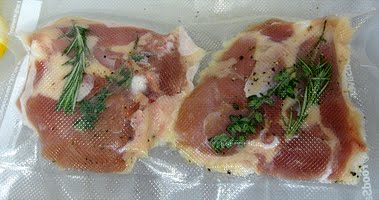
The basic concept of sous vide cooking is that food should be cooked at the temperature it will be served at. For instance, if you are cooking a steak , or Rosemary Chicken (pictured) to medium rare, you want to serve it at 125 degrees Fahrenheit, the chicken would be to 160 degrees F. Most times you would cook it on a hot grill or oven at around 400-500 degrees and pull it off at the right moment when the middle has reached 125 degrees. This results in a bulls eye effect of burnt meat on the outside turning to medium rare in the middle.

This steak cooked sous vide would be cooked at 125 degrees for several hours. This will result in the entire piece of meat being a perfectly cooked medium rare.

Why Cook with Sous Vide?
Just like any method of applying heat to food there are many reasons to use sous vide cooking, depending on what you are trying to accomplish.

Because food cooked in the sous vide style is vacuum sealed, when it is cooked it doesn’t lose any of the food’s moisture or flavor. This is especially exciting when compared to braising, where most of the flavor is transferred to the sauce because of the lose of juices.

Sous vide cooking also allows you to cook tough cuts of meat at an incredibly low temperature, not only tenderizing them but keeping them perfectly cooked at medium-rare. This is very effective for shanks, roasts and other pieces of meat that are typically braised or roaster.

Cooking food in the sous vide method also results in new textures. This is because the vacuum sealing process can make food denser (like watermelons, for example), and because the lack of the typical high high can result in silky and smooth textured food that is impossible to replicate in the oven or pan.

A great example of the power of sous vide cooking is short ribs. Normally short ribs are braised for hours or cooked in the oven at low heat, resulting in very tender meat that has lost most of its flavor to the sauce. Using sous vide you can cook those ribs perfectly medium-rare, retain all their moisture and juice, and tenderize them all at the same time, resulting in the best short ribs you’ve ever had.

Sous Vide Freezer Steaks

Time: 2 hours
Temperature: 131F / 55C
Serves: 4, with sides

Ingredients:
2 pounds of steak, cut 1/2 – 2 inches thick, seasoned, vacuum sealed and frozen
1/2 teaspoon garlic powder
1/8 teaspoon thyme powder
or seasonings of your choice

Instructions:
Pre-Bath
Pre-heat your sous vide water bath to 131F.

You can either prepared the steaks by seasoning and vacuum sealing them, then freezing them. You can do this step several months in advance. The other option is to take previously frozen steaks and put them into a vacuum pouch while still frozen with the seasonings and seal them.

Once the sous vide water is pre-heated put the steaks into the water.

Finishing the Sous Vide Freezer Steaks
Take the steaks out of the pouches and pat dry. Sear the sous vide steaks on a grill, a hot pan, or with a torch and serve.

Have fun with this and see what you can come up with. Vacuum sealers are easily available at most kitchen stores and discount stores. Cheers!

Reblog:

  • Click to email a link to a friend (Opens in new window) Email
  • Click to share on Pinterest (Opens in new window) Pinterest
  • Click to share on Facebook (Opens in new window) Facebook
  • Click to print (Opens in new window) Print
  • More
  • Click to share on X (Opens in new window) X
  • Click to share on Instagram (Opens in new window) Instagram
Like Loading...

Colbert Sauce

26 Friday Mar 2010

Posted by Bob and Robin in Classic Sauces, Classics, Interesting Information, Recipe: Bob and Robin Young

≈ Leave a comment


Question of the day through my email: What is a Colbert Sauce? It is one of the classic sauces. To be more specific, “…Colbert sauce was probably named after Jean-Baptiste Colbert (1619 – 1683). French statesman and economic advisor to Louis XIV. It is typically served with grilled or roasted meat…A meat, poultry, or fish glaze (depending on its use), moistened with appropriate stock (2 parts glaze to 1 part stock and 1 part Madeira wine), mounted with unsalted butter, seasoned with lemon juice, a pinch of cayenne and nutmeg, minced parsley, and sometime a little Madeira.” (pg 73. The Sauce Bible: Guide to the Saucier’s Craft. David Paul Larousse) Ours last night at Le Cafe de Paris had a little tarragon in it.

And there is a Colbert Butter also, Beurre Colbert.
1/2 lbs Unsalted butter, soft
1 Tablespoon Meat glaze
2 Tablespoons Tarragon leaves, minced.

Whip all the ingredients together until thoroughly blended. Wrap and store refrigerated.

So there you go. Enjoy!

Reblog:

  • Click to email a link to a friend (Opens in new window) Email
  • Click to share on Pinterest (Opens in new window) Pinterest
  • Click to share on Facebook (Opens in new window) Facebook
  • Click to print (Opens in new window) Print
  • More
  • Click to share on X (Opens in new window) X
  • Click to share on Instagram (Opens in new window) Instagram
Like Loading...

Kitchen Supplies in Boise

25 Thursday Mar 2010

Posted by Bob and Robin in Food Prep, Interesting Information, Kitchen Collection, Things To Do

≈ 1 Comment


I had heard that Kitchen Collection here in Boise was closed and that the closest one was in Coeur d’Alene. Wrong! Rudy’s – Cooks Paradise in Twin Falls is great to visit. Good items and prices. Only problem is, Rudy’s is 2 hours from here. William Sonoma is close, in the Boise Towne Square Mall, but it tends to be a little spendy and I don’t normally go to malls that size. And the Kitchen Supply on Fairview is good, but it tends to be more commercial products. Need a heavy duty mixer? Then Kitchen Supply is the place to go.

It is rainning today so we headed out to the Outlet Stores to see if Kitchen Collection was actually closed, and to get a new oven mit. It is open and doing a good business. It is located in the Boise Factory Outlets, 6868 South Eisenman Rd., Boise. (208) 345-9774 or see the online links as listed above. And yes, we got an oven mit and some small spatulas. Look at their web page and see what you think. You can even order online. Cheers!

Reblog:

  • Click to email a link to a friend (Opens in new window) Email
  • Click to share on Pinterest (Opens in new window) Pinterest
  • Click to share on Facebook (Opens in new window) Facebook
  • Click to print (Opens in new window) Print
  • More
  • Click to share on X (Opens in new window) X
  • Click to share on Instagram (Opens in new window) Instagram
Like Loading...

Where Did "Corned Beef" Come From?

17 Wednesday Mar 2010

Posted by Bob and Robin in Anthropology of Food, Food, Food Trivia, Interesting Information, Trivia

≈ Leave a comment


History of Corned Beef & Cabbage
Origin of Traditional Irish American St Patrick’s Day Recipe

Mar 3, 2009 Stephanie Jolly , Source: Suite101.com

While many North Americans associate corned beef and cabbage with Ireland, this popular St Patrick’s Day meal has roots in America, and is not traditional Irish food.

Corned beef, a salt-cured brisket, was traditionally packed and stored in barrels with coarse grains, or “corns” of salt. One of the earliest references to corned beef appears in the 12th century Gaelic poem Aislinge Meic Conglinne, where it references a dainty, gluttonous indulgence. By the 17th century, salting beef had become a major industry for Irish port cities of Cork and Dublin, where Irish beef was cured and exported to France, England and later to America.

Traditional Irish Recipes Contain Salt Pork Instead of Corned Beef
With the majority of Irish beef being exported, beef was an expensive source of protein and unavailable to the majority of Irish citizens. Cows, if owned at all, were raised predominately for their dairy products, from which butter, cheese and cream could be obtained, and were only slaughtered when they were no longer good for milking. Sheep were raised as a source of wool and hogs and pigs were one of the only livestock species raised by the peasantry for consumption.
Salt pork and bacon, therefore, became the commonly consumed meat protein of Irish tables. In Feast and Famine, Leslie Clarkson writes that “fat from bacon supplemented the lack of fat in the farmhouse diet” and Sir Charles Cameron states that he does “not know of any country in the world where so much bacon and cabbage is eaten.” Even today corned beef and cabbage appears infrequently in Irish pubs and restaurants, except for those in heavily touristed areas, and is much more likely to be replaced its traditional counterpart – an Irish stew with cabbage, leeks, and a bacon joint.

Corned Beef & Cabbage Eaten by Irish Immigrants After Arriving in America
After the Irish potato blight, or Great Famine, of the mid-19th century brought hundreds of Irish emigrants to the shores of America, the newly immigrated Irish Americans found corned beef to be both more accessible and more affordable than it was in Ireland. Both corned beef and cabbage were ingredients of the lower working class, and their popularity among the Irish population likely had little to do with similarities to the food of Ireland and more to due with the relatively inexpensive nature of salt cured beef and green cabbage.
For several decades following the Irish immigration, St Patrick’s Day was celebrated with music, crafts and revelry but banquets, while lavish, contained a scarcity of traditional Irish cuisine. However by the 1920s, corned beef and cabbage came to have an association with Irish American cooking, according to Hasia Diner in Hungering for America: Italian, Irish and Jewish Foodways in the Age of Migration and joined Irish bacon and greens as a food reminiscent of Ireland.

Corned Beef’s Association with St Patrick’s Day Has Irish American Origins
While both salted beef and green cabbage have historic connections with Ireland, the ritual of serving corned beef and cabbage for St Patrick’s Day is exclusively an Irish American tradition. The scarcity and high price of beef in Ireland prevented it from being consumed by the majority of the Irish peasantry until arriving in America, where corned brisket and cabbage were cheap and readily available to the poor. As the stigma of eating working class food faded and the celebration of Irish ancestry grew in popularity, corned

And from Foodtimeline.com, we have:

“Corned beef
While the process of preserving meat with salt is ancient, food historians tell us corned beef (preserving beef with “corns” or large grains of salt) originated in Medieval Europe. The Oxford English Dictionary traces the first use of the word corn, meaning “small hard particle, a grain, as of sand or salt,” in print to 888. The term “corned beef” dates to 1621.
“Emphasizing its long history in the Irish diet, Regina Sexton…points out that a similar product is mentioned in the 11th-century Irish text Aislinge meic Con Glinne many wonderful provisions, pieces of every palatable food…full without fault, perpetual joints of corned beef’. She adds that corned beef has a particular regional association with Cork City. From the late 17th century until 1825, the beef-curing industry was the biggest and most important asset to the city. In this period Cork exported vast quantities of cured beef to Britain, Europe, America, Newfoundland, and the W. Indies. During the Napoleonic wars the British army was supplied principally with corned beef which was cured in and exported from the port of Cork.”
—Oxford Companion to Food by Alan Davidson, [Oxford University Press:Oxford] 1999 (page 218)

Corned beef was very popular in colonial America because it was an economical and effective way to preserve meat. The following corning directions are from The Virginia House-Wife by Mary Randolph, 1824, pages 22-23:
“To corn beef in hot weather
Take a piece of thin brisket or plate, cut out the ribs nicely, rub it on both sides well with two large spoonsful of pounded salt-petre; pour on it a gill of molasses and a quart of salt; rub them both in; put it in a vessel just large enough to hold it, but not tight, for the bloody brine must run off as it makes, or the meat will spoil. Let it be well covered top, bottom, and sides, with the molasses and salt. In four days you may boil it, tied up in a cloth, with the salt, &c. about it: when done, take the skin off nicely, and serve it up. If you have an ice-house or refrigerator, it will be best to keep it there.–A fillet or breast of veal, and a leg or rack of mutton, are excellent done in the same way.” “Some people wonder about the shared culinary/cultural heritage of the Irish and Jewish peoples when it comes to corned beef. The practice of curing meat for preservation purposes certainly dates back to ancient times. The use of salt was adopted/adapted by many peoples and cultures, and was widely used during the Middle Ages. Evidence suggests that both Irish and Jewish cooks were making corned (salt) beef independently, long before they met in New York.

“Corned beef comes in two versions: The Jewish special on rye, or the traditional Irish boiled dinner, aka New England boiled dinner. Tonight should be the big night for the Irish version.”
—Boiled dinner, The Boston Globe, March 15, 1990 (p.3)
Reblog:

  • Click to email a link to a friend (Opens in new window) Email
  • Click to share on Pinterest (Opens in new window) Pinterest
  • Click to share on Facebook (Opens in new window) Facebook
  • Click to print (Opens in new window) Print
  • More
  • Click to share on X (Opens in new window) X
  • Click to share on Instagram (Opens in new window) Instagram
Like Loading...

Gardens

10 Wednesday Mar 2010

Posted by Bob and Robin in Interesting Information, Local Farmers Markets, Local Markets, Spring Plants

≈ Leave a comment


No, it’s not too early to be thinking about your garden for this year. You should have some starts going right now. But I thought that some of you might be interested in this following article and resource. They do an awesome job with refugees coming to Boiseboth in growing their own garden products and selling their products at the Boise Saturday Market.

I like your “foodie” blog. I don’t know who your audience is, but maybe you want to help us advertise our CSA? We could still use some members. You can see the details at Community Supported Agriculture Or, let me know how you want to help. I’m happy to add you to our volunteers email list and put you to work in the garden if that’s what you want.

Katie Painter
Refugee Agriculture Coordinator
Idaho Office for Refugees
1607 W Jefferson St
Boise, ID 83702
208-336-4222

OK, so there you have some information. Do you have some spare time? Energies? Resources? Let them know. Cheers!

Reblog:

  • Click to email a link to a friend (Opens in new window) Email
  • Click to share on Pinterest (Opens in new window) Pinterest
  • Click to share on Facebook (Opens in new window) Facebook
  • Click to print (Opens in new window) Print
  • More
  • Click to share on X (Opens in new window) X
  • Click to share on Instagram (Opens in new window) Instagram
Like Loading...

"The Seasons" February Schedule

03 Wednesday Feb 2010

Posted by Bob and Robin in Food, Interesting Information, Restaurants, Seasons Bistro, Things To Do, Wine and Food

≈ Leave a comment


Do you want a great bowl of Gumbo? Maybe a bowl of Louisiana Oyster Stew. Or a fantastic Corn Salad Dip. Or a dessert choice of Heart of Creme Brulee or Chocolate Amaretto Mousse Tart, now that sounds sinful!! Then look no further.

February 2010
Seasons Bistro

1117 E Winding Creek Dr.
Eagle, Idaho 83616

Friday, February 5th
Live Concert with Pat Folkner
6:00PM-9:00PM
Live Music & Dinner Specials /First Friday in Eagle
Scallops Buerre Blanc
Beef & Barley Soup
Raspberry Brownies with Chocolate Ganache

Saturday, February 6th-6:00PM-9:00PM
Daily Erotica Book Release
Are you searching for your lost libido?
Then just read one poem from the book Daily Erotica-366 poems of passion! Four fabulous authors, one incredible night at Seasons Bistro. Food & Drink will be served with oyster shooters available at the bar! Special Romance baskets will also be available to share with your special someone for Valentine’s Day.
Seasons Bistro, Winebar & Catering
1117 E. Winding Creek Ste. 150

Monday, February 8th-6:00PM-8:00PM
“Women and Wine”
Every Monday at Seasons we will be featuring Women and Wine. Come alone or bring a friend and learn about different featured wine and cheese pairings. Cost-$15.00 per person

Wednesday, February 10th
Seasons Winter White Wine Sale
All white wine will be available at 30% off regular price!

Friday, February 12th-6:00PM-9:00PM
Live Music & Dinner Specials

Saturday, February 13th
6:00PM-9:00PM
Valentine’s Day Dinner

Butternut Squash Soup, Romance Salad, Grilled Filet with Garlic Rosemary piped Potatoes & Scallop Buerre Blanc
Dessert choice-Heart of Creme Brulee or Chocolate Amaretto Mousse Tart

Live Music with Michael Laky
Reservations recommended
939-6680

Sunday, February 14th
6:00PM-9:00PM

Valentine’s Day Dinner

Butternut Squash Soup, Romance Salad, Grilled Filet with Garlic Rosemary piped Potatoes & Scallop Buerre Blanc
Dessert choice-Heart of Creme Brulee or Chocolate Amaretto Mousse Tart

Live Music with Michael Laky
Reservations recommended
939-6680

Monday, February 15th-6:00PM-8:00PM
“Women and Wine”
Every Monday at Seasons we will be featuring Women and Wine. Come alone or bring a friend and learn about different featured wine and cheese pairings. Cost-$15.00 per person

Friday, February 19th-6:00PM-9:00PM
Live Music & Dinner Specials

Saturday, February 20th
6:00PM-9:00PM
Seasons Masquerade Party-Celebrating our two year anniversary!

Come in costume…prizes will be given for best mask. Live music
Great Cajun Cuisine-Laissez les bon temps rouler? Let the good times roll!

Monday, February 22nd-6:00PM-8:00PM
“Women and Wine”
Every Monday at Seasons we will be featuring Women and Wine. Come alone or bring a friend and learn about different featured wine and cheese pairings. Cost-$15.00 per person
Seasons Bistro, Winebar & Catering
1117 E. Winding Creek Ste. 150

Tuesday, February 23rd-all day
Happy Mardi Gras from Seasons Bistro-Specials all day
Jambalaya, Shrimp Creole, Crawfish Etouffee, Gumbo & Bread Pudding for dessert & “Throw me something mister!”

Friday, February 26th-6:00PM-9:00PM
Live Music & Dinner Specials

Saturday, February 27th-6:00PM-9:00PM
Live Music & Dinner Specials

Seasons will be sending out a survey after this newsletter for your input. Please take a moment to let us know how we may better serve you. Thanks to all of you for your continued support in 2010!

Seasons Bistro, Winebar & Catering
1117 E. Winding Creek Ste. 150. Reservations recommended (208) 939-6680

——————————

For an fantastic dinner and bistro experience, don’t miss these events. Maybe we’ll see you there. And yes, Seasons Bistro, Winebar and Catering has plenty and a large variety of wine to go with your dinner. Cheers! Thanks Rachel, for submitting this. Hope this helps.

Reblog:

  • Click to email a link to a friend (Opens in new window) Email
  • Click to share on Pinterest (Opens in new window) Pinterest
  • Click to share on Facebook (Opens in new window) Facebook
  • Click to print (Opens in new window) Print
  • More
  • Click to share on X (Opens in new window) X
  • Click to share on Instagram (Opens in new window) Instagram
Like Loading...
← Older posts
Newer posts →

  • Bob and Robin's avatar Bob and Robin
  • rockinrobin43's avatar rockinrobin43

Meta

  • Create account
  • Log in
  • Entries feed
  • Comments feed
  • WordPress.com

Copyright Notice

Creative Commons License
This blog and all work herein is licensed under a Creative Commons Attribution-Noncommercial-No Derivative Works 3.0 United States License.

The Current Weather at the Captain’s Shack

Click the image to see the very latest and current weather at the Captain's Shack in Boise, Idaho

Enter your email address to follow this blog and receive notifications of new posts by email.

Join 183 other subscribers

Thanks to all of these readers and subscribersz of this blog!

  • 321,580 and 598,479 Folks Reached

Monthly Archives of this Blog

Translate This Page

Assoc of Food Bloggers

Association of Food Bloggers

BFM Drive-Thru

Boise Farmers Market Drive-Thru

Air Fryer Cooking Time and Temperature Conversion Calculator

To convert to the AirFryer

AirFryer Recipes

https://www.airfryerrecipes.com/

Air Fryer Conversions

Rule of 25%. Reduce oven/frying temperature by 25% and time by 25%.

Fork To Spoon – Air Fryer and Instant Pot Recipes

Great resource for AF and IP information and recipes.

AirBnB Buhl, Idaho

Welcome to Mary Anne’s place, a historic cottage in the heart of Kelley’s Canyon Orchard. Just 20 minutes from Twin Falls, unwind in this quiet retreat by enjoying the pleasant sound of a nearby creek and views that look out into the orchard. 4 guests · 2 bedrooms · 3 beds · 1 bath, Wifi · Free parking · Kitchen, Entire House! 1903 River Rd, Filer, Idaho 83328

Bloglovin’

RSS Links

RSS Feed RSS - Posts

RSS Feed RSS - Comments

-----------------------
I Know. Not Idaho Products, But still Worth A Try!
----------------------

Rockin’ Rs

----------------------
Items of Blog Interest.
-----------------------

Member of The Internet Defense League

The History Kitchen

Interesting historical information about food - prep, origins and uses. Written by a kitchen anthropologist!

-----------------------
Of Concern To This Blog
----------------------

Recent Posts

  • Trike Restaurant Finds Worthy of Posting
  • Food Via ETrike
  • An Awesome Chicken Dish
  • Sushi Shack
  • Awesome Oven BBQ Pork Ribs

-----------------------
Think Local!! Buy Local!!

Let them know you saw their logo on this blog. Thanks!
----------------------

Buy Local!

If you are not from Idaho, think about Buying Local in Your area! As for us, we have lived in Idaho since 1982. We Buy Idaho wherever possible.

Chef Jake Sandberg, Crispeats

Food References and Recipes

Buy Local

And it does ... Just Make Sense! Regardless of where you are from.

------------------------
Think Local!! Idaho Products.

Let them know you saw their logo on this blog. Thanks!
-----------------------

The New Boise Farmers Market

Summer and Winter - 1500 Shoreline Dr, Boise (Americana and Shoreline)

Idaho Farmers Markets

A listing of statewide Farmer's Markets with contacts.

Find Your Local Farmers Market

Click on the graphic to find your local farmers market either by city or zip code.

Acme Baked Shop, Boise

Available at the Boise COOP. Some of the best bread in Boise and all local!! They make the bread for the 10 Barrel Brew Pub, Angell's Bar and Grill, Salt Tears, all here in Boise. Awesome rye bread that actually tastes like rye bread. And the baguettes .... Wonderful. (208) 284-5588 or runsvold2000@gmail.com

Brown’s Buffalo Ranch

Give them a call or EMail for awesome buffalo meat.

Desert Mountain Grass Fed Beef (formerly Homestead Natural Beef)

Desert Mountain Grass Fed Beef, with Bob and Jessica Howard of Howard Ranch in Hammett. The company will only sell whole animals to the Boise Co-op and Whole Foods stores in Boise and Utah. They will also be at the Boise Farmers Market.

Falls Brand Pork roducts

Click the image for pork recipes.

Kelley’s Canyon Orchard

1903 River Rd, Filer, ID 83328 Hours: 10am - 6pm, Phone: (208) 543-5330

Malheur River Meats

Matthews Idaho Honey

Matthews All-Natural Meats

Meadowlark Farms

All natural Eggs, Lamb and Chicken

Purple Sage Farms

True Roots Farm

Available at the Boise Farmers Market and online at https://www.trueroots.farm

True Roots is a local produce farm committed to sustainable and chemical-free farming practices. We raise pesticide-free and non-GMO produce fresh from the farm, offering a diverse variety of farm-fresh services to our local community. Since our founding in 2014, our mission has been to provide farm-direct access to clean, reliable, and affordable produce.

Reel Foods Fish Market

1118 Vista Avenue, Boise, ID 83705 (208) 713-8850 Monday-Friday: 10am-6pm, Saturday: 9am-5pm. Sunday: Gone Fishin’

Standard Restaurant Supply

Plenty of items for the home, too. Check them out. 6910 Fairview, Boise 83704 (208) 333-9577

-----------------------
Some Awesome Recipe and Spice Sources. Culturally diverse.

Let them know you saw their logo on this blog. Thanks!
------------------------

Crockpot Recipes

Many good recipes here.

A Taste of France

A collection of French recipes

Basque Recipes

Best Ever Recipes of Mexico

Malaysian Recipes

Awesome Malaysian recipes.

Memorie di Angelina Italian Recipes

My Best German Recipes Web Site

Regional and Oktober Fest Recipes

There are a lot of recipes here.

Sauer Kraut Recipes

Recipes By Robin and Bob

Recipes that we have collected and created throughout the years.

Recipes of Elizabeth W. Young, Bob’s Mother

These are the recipes that my Mother collected over 85 or so years. The photo of my Mother was one of the last I have of her. It was taken in July, 1987.

Recipes From The Mediterranean Area

Soup and Chowder Recipes

Recipes from "My Recipes"

Deep South Dish Recipes

The Recipes of Greece

Tasty Mexican Recipes

The Shiksa In The Kitchen

Great Jewish recipes!

-----------------------
Some Great Boise Restaurants.

Let them know you saw their logo on this blog. Thanks!
-----------------------

Asiago’s – Italian

Bella Aquila, Eagle, ID

775 S Rivershore Ln., Eagle, ID 83616 (208) 938-1900

Bar Gernika – Basque Pub and Eatery

202 S Capitol Blvd, Boise (208) 344-2175 (Checked)

Cottonwood Grille

913 W River St., Boise (208) 333.9800 cg@cottonwoodgrille.com

Enrique’s Mexican Restaurant

482 Main St., Kuna (208) 922-5169 New name. Was El Gallo Giro. Same owners and kitchen. The Best Mexican restaurant in the Boise/Kuna area, bar none!

Flying Pie Pizzaria

Goldy’s Breakfast Bistro

108 S Capitol Blvd., Boise (208) 345-4100

Goldy’s Corner Cafe

625 W Main St., Boise (208) 433-3934

Guanabanas – Island Restaurant and Bar

960 N Highway A1A, Jupiter, FL

Janjou Pâtisserie

Janjou Pâtisserie, 1754 W State St., Boise, Idaho 83702 (208) 297.5853

Mai Thai Asian Cuisine

750 West Idaho Street Boise, ID 83702 (208) 344-8424

Mazzah Grill – Mediterranean and Greek Cuisine

1772 W State St., Boise (208) 333-2566

Richards Inn by Chef Richard Langston

Formerly - Vincino's. New location at 500 S Capitol Blvd., Boise (208) 472-1463. Reservations are highly suggested.

The Orchard House

14949 Sunnyslope Rd., Caldwell (208) 459-8200

The Ravenous Pig

1234 N. Orange Ave. Winter Park, FL

-----------------------
Think Local!! Boise Breweries, Brew Pubs and Wine Bars.
Let them know you saw their logo on this blog. Thanks!
-----------------------

10 Barrel Brewery Boise

830 W Bannock St., Boise (208) 344-5870

Cloud 9 Brewery and Pub

Opening Fall 2013 in the Albertson's Shopping Center, 18th and State in the old Maxi Java

Edge Brewing Company

525 N Steelhead Way, Boise, ID 83704 (208) 323-1116

-----------------------
Miscellaneous Items
-----------------------

Blog Syndication

NetworkedBlogs
Blog:
Boise Foodie Guild
Topics:
Food, Recipes, Cooking
 
Follow my blog

Blog Badge

Local & Regional Food Blogs - BlogCatalog Blog Directory

  • Subscribe Subscribed
    • Boise Foodie Guild
    • Join 72 other subscribers
    • Already have a WordPress.com account? Log in now.
    • Boise Foodie Guild
    • Subscribe Subscribed
    • Sign up
    • Log in
    • Report this content
    • View site in Reader
    • Manage subscriptions
    • Collapse this bar
%d