Global Gardens, CSA


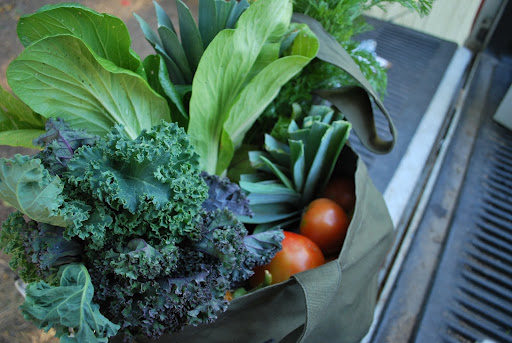
Well, I certainly don’t have enough room for a garden here. And the Saturday Market really is a good place to purchase some fresh vegetables in season, but here is another place. It also helps refugees to our state to get started producing a product. The Global Gardens CSA is an awesome way for each and everyone of us to get fresh produce. From their web page,

What is a CSA?

CSA stands for Community Supported Agriculture. It’s like a subscription program to our farm. You pay one price for the whole season, and each week from June through September you get a delicious bag of whatever produce is available from the farm.

We have our CSA pickup on Tuesday nights starting at 5:30 pm, at Edwards Greenhouse, off of Hill Road in Boise. They have a small farmers market there with live music every week. It’s a great place to pick up your veggies and get to know your farmers.

Also, by joining Global Gardens CSA, you are directly supporting a refugee family, and/or a refugee community organization that supports refugees by providing various services including educational and cultural opportunities. You are enabling refugees to develop entrepreneurial skills that are transferable to many jobs, to improve their English, and to spend quality time with their families and communities while growing and eating nutritious local produce. What a good choice! Cheers!
Please do check out their web page for a listing of the vegies you will receive and the costs involved – payable over time, if you wish. We do. We share our weekly supply with our daughter and her family. But for $20 a week for the local vegies, I think it is worth thinking about. Contact Katie Painter either by email or by phone, (208) 336-4222 or stop by their office at 1607 W Jefferson Street, Boise.

Torteau de Chèvre


Tourteau de Chèvre

by Kate Hill
Preheat oven to 380ºC or 530ºF. Yes. HOT! Very HOT!

For the pastry I used a simple butter short crust.

100 gr (3½ oz) butter- unsalted
200 gr (7 oz) flour- all purpose unbleached
Salt- pinch
1 egg
Water- as needed

Cut butter into flour and salt with fingertips. Add egg and water. Gather pastry crust into ball. Divide into three. Roll out each third, place into deep rounded molds. Trim. Prick.

Batter:
250 gr (9 oz) fresh goats cheese (after draining)
175 gr (6¼ oz) white sugar (125gr for yolks- 50gr for whites)
50 ml milk (about a tablespoon)
6 eggs, separated
60 gr (2⅛ oz) flour
Splash of vanilla/rum/Armagnac

Directions:
Pass goat cheese through a food mill or ricer.

Beat in 125 gr (4.4 oz) sugar, milk and flour. (I used a whisk.)

Whisk egg whites with 50 gr (1¾ oz) sugar until stiff peaks. (we use a copper bowl and hand whisk in the Gascon Kitchen.)

Fold in a large spoonful of whites into the cheese/yolk mixture. Stir well.

Fold remaining whites into cheese/yolk batter. Pour into unbaked pastry shells.
Place into HOT oven (280ºC/530ºF) for 10 minutes. The tops will puff up round and start to brown and blacken immediately. Don’t panic!

Then turn oven down to 220ºC or 425ºF for 40 minutes. remove from oven and let cool.
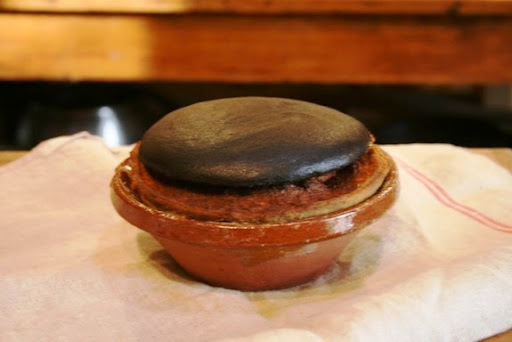
I used 3 small cassoulet bowls holding about 300ml/12oz each. this is what they look like baking. The forward one we slid in 4 minutes after the first two, and it was indeed underdone. but delicious.

——————————

Tourteau Fromagé.

The Tourteau Fromagé is a specialty cake of Poitou-Charente region of Southwest France. Found usually in cheese shops, I developed a weakness for the finely textured, barely sweet cake. Like an Angel Food Cake married to a N.Y. Cheesecake. After just one bite Sabina also fell for the sweet trap and we decided to test the recipe with some of the fresh goat cheese from Phillipe.

Local is as local does. And here in Gascony, you can tell that even our flour, that I buy in one kilo sacks at Pierre’s Boulangerie is a local product. Wearing the Musketeers habit, this is the classic ‘type 55′ all purpose flour used for most baking.

EXTREME WARNING: The extraordinary eggs from my hens account for the extreme yellow color of the interior of the cake just as the extra-high temperature of the oven produces the traditional blackened crust. The contrast of soft tender cake and charcoaled top crust is part of the tourteaux charm. We produced three cakes from the following recipe that we made in small very deep mini-cassoles each holding about 12fl oz or 300ml. So inspired by the courage of the Cadets of Gascony- all for one and one tourteau for all!

——————————

Here is a link to the original Recipe and Article. Do enjoy it.

Boise City Market Opens


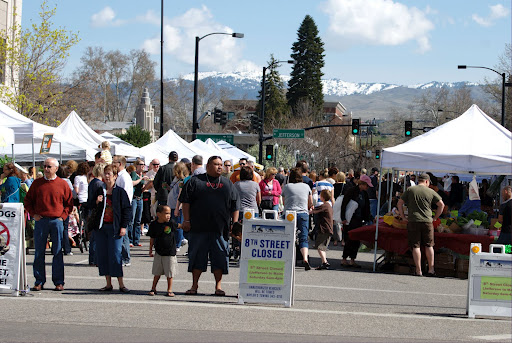
Just love this time of year! Everything starts to bloom. The grass. The trees. The flowers. Garden lettuce and spinach. The Boise Saturday Market. 17 April was the first day and a great crowd was on hand to celebrate! And I noticed at least 3 wineries were represented: 3-Horse Ranch, Holesinsky and Wood River Cellars were what I saw. But there probably were others at the south end. I did not make it that far today. Next week?

At 1018 MDT we are being watched! The Boise Peregrine Falcon Mom!

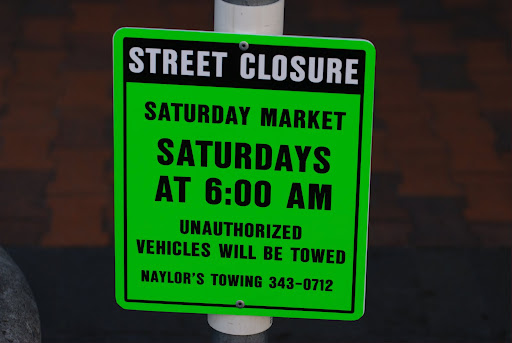
The sign says it all!

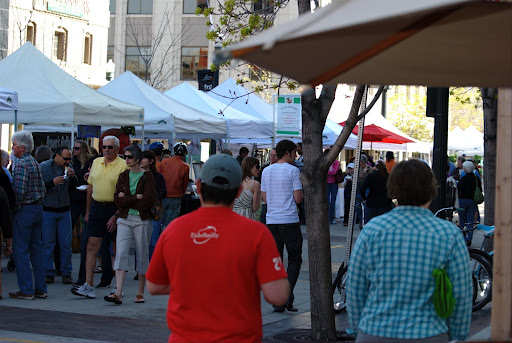
An overview!

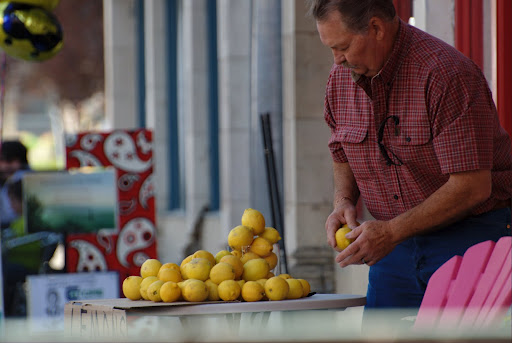
Lemons? Told you we are in the Banana Belt!

Splash of Color

Part of the expanded Market!

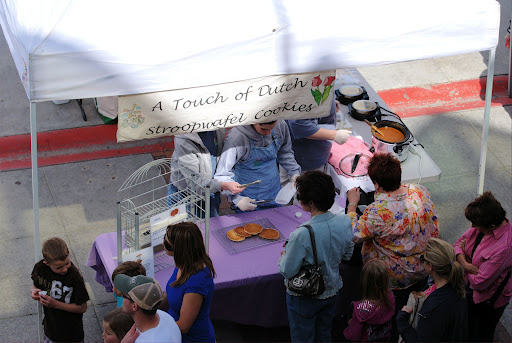
And there is always “The Food”!

So there you have Opening Day 2010! Cheers!
Le Café de Paris "Bon Anniversaire"


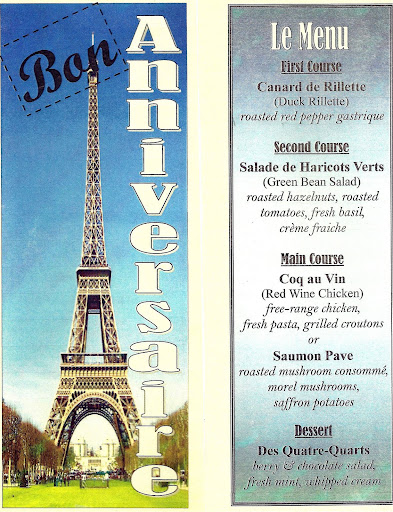
Such an adventure! Another great epicurian adventure! On 15 April, Robin and I went to the Le Café de Paris Anniversary dinner! Look at the menu (Left Click the graphic to view full screen) If you missed this one, come join us on 22 April at 6:30pm for another awesome Wine Dinner. You will have to make reservations. Look at the dinner photos.

The music was really good as usual.

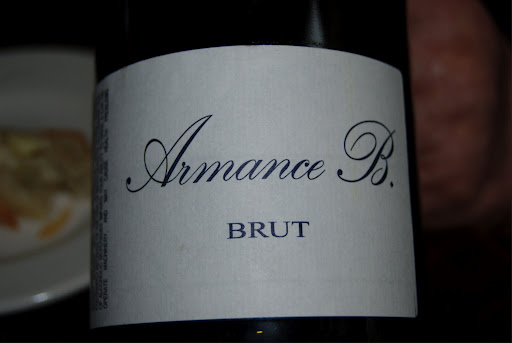
The Poiters sparkling wine was a great opener. Made from Folle Blanche and Sauvignon Blanc. Refreshing.

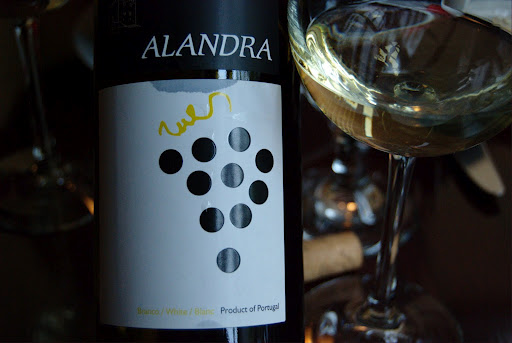
The 2008 Poligny Montrachet was superb with the dinner – all phases of the dinner!

To open the dinner, a wonderful Canard de Rillette (Duck Rillette) with a Red Pepper Gastrique. Made from 100% shredded duck meat and cooked in duck fat and wrapped in puff pastry. This was delicious!

The Salade de Haricots Verts (Green Bean Salad) with Roasted Hazelnuts, Roasted Tomatoes, Fresh Basil and Crème Fraîche. Now this was delicious!! (Sorry the photo is not as good!) The beans were so crisp, yet tender. And the Crème Fraîche just hit the spot with the basil.

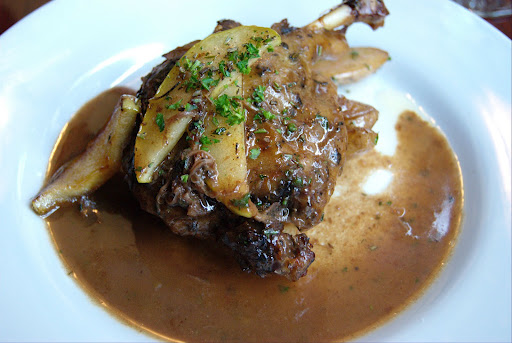
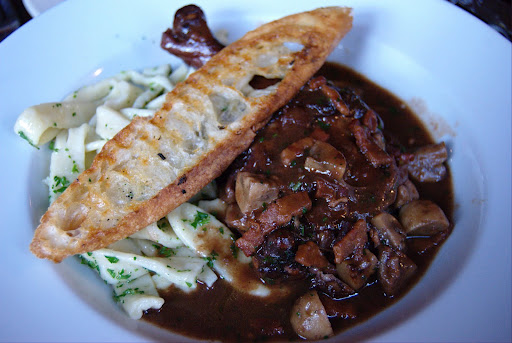
Coq au Vin (Red Wine Chicken), Free Range Chicken with Fresh Pasta and Grilled Croutons. I don’t know that I have ever had a “bad” Coq au Vin. This was no exception. It was delicious and if I were to have a special catered meal, this would probably be on the menu. It’s just that good!!

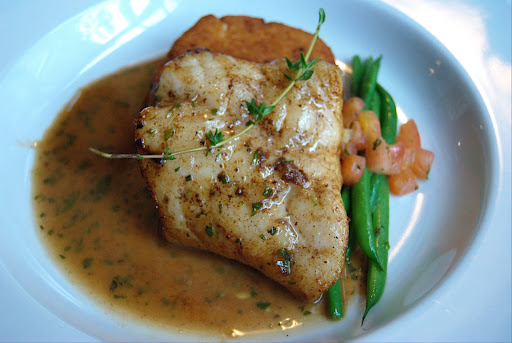
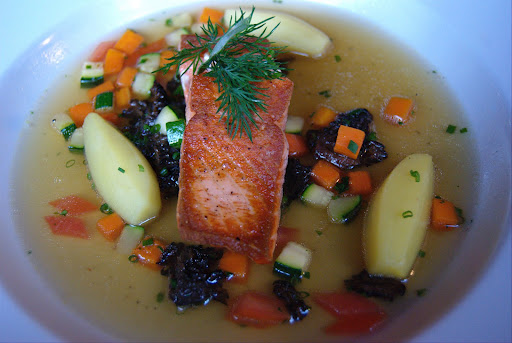
You just think I’m done! Look at the Saumon Pave with Roasted Mushroom Consommé, Moral Mushrooms and Saffron Potatoes. Everything in this dish was a dream. I can’t say anything else.

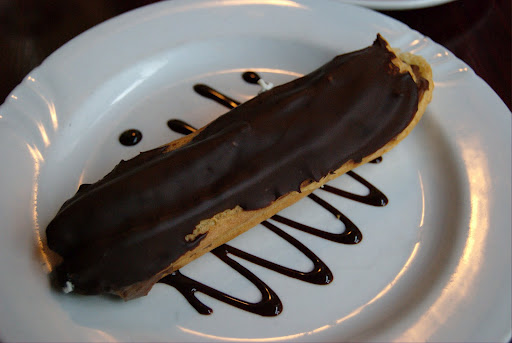
One of the great things about Le Café de Paris are the pastries and the breads. This Des Quatre-Quarts – Berry and Chocolate Salad, Fresh Mint and Whipped Cream dessert was the ultimate. The warm sponge cake with the mint, blueberries and chocolate was an epicurian delight!

I wish I could cook like this. (The tears are rolling down my chubby, little cheeks.) Cheers! Don’t miss the next one.

Cedar Plank Salmon


I belong to several recipe and cooking newsletters. “Sizzle on the Grill” comes from Char-Broil, the manufacturer of my grill. I do get some really awesome recipes and information from them. Here is one such recipe for salmon. I can taste the Beurre Blanc now. But I think I would still add a little tarragon to the Orange Muscat – just a little. I can smell it and taste it now. I have edited the recipe: The original recipe called for 16oz servings. 8oz servings are plenty. This would be great with a good Pinot Griego. Enjoy! Click Here for the original recipe.

Cedar Plank Grilled Salmon with Orange Muscat Beurre Blanc

Yield: 4
Prep Time: 1 Hour
Cook Time: 20 Minutes

Ingredients:
4 Salmon Fillets each about 8 oz. (with skin is fine, without is fine also)
2 lg (or 4 small) Cedar Planks for grilling
2 t Fennel Seeds, lightly crushed
Olive Oil, Sea Salt and freshly ground Black Pepper
1 Shallot, finely diced
2 T Orange-Muscat Vinegar (Available at Trader Joe’s or make your own.)
¼ unsalted Butter, cut into teaspoon sized pieces
finely ground Sea Salt and freshly ground White Pepper, to taste

Directions:
Soak the cedar planks, completely submerged, in cold water for at least 1 hour. Preheat your grill to medium-high heat before grilling.

For the beurre blanc, heat a small saucepan over medium heat. Add the diced shallot and about 1 tsp. of olive oil and cook until the shallot smells great, about 3 minutes. If it looks like the shallot is starting to brown, reduce the heat. Add the white wine vinegar (in this case, orange muscat vinegar) and stir to deglaze the pan. Continue to cook until the vinegar has reduced by half, about 5 minutes.

Remove the pan from the heat and 2 teaspoons of butter. Continually whisk the butter until it is completely melted. If the butter starts to foam, place the bottom of the pan on a cold surface (like a stone countertop) to cool it. Add the remaining butter, 2 teaspoons at a time, whisking continually. If the butter refuses to melt, hold the pan over very low heat for a few seconds and then remove.

Once all the butter is incorporated, taste the sauce and adjust with a fine-grain salt and freshly ground white pepper. You can use black pepper if you want, but white pepper will make the sauce look prettier.

Prepare the salmon fillets by patting them dry and coating with salt, pepper and fennel seeds on the flesh side. Rub the fillets on all sides with olive oil. Make sure your grill has been preheated to medium-high heat. Arrange the cedar planks on your grill and place the fillets, skin side down (if they have skin) on the cedar planks. Close the lid and grill for 15-20 minutes, or until the fish is fully cooked. The planks will give off a lot of smoke which adds to the excellent flavor. However, if your planks should catch fire, simply spray them with a small amount of water (I recommend San Pellegrino 🙂 ) until the flames dissipate.

When the salmon is cooked to your preferred doneness (let’s face it, either it’s undercooked, done, or overcooked), use a long spatula or a chef’s knife to remove them from the planks. Top with a spoonfull of the beurre blanc and serve!

This recipe is presented as a courtesy of Seattle Food Geek

Boise Sourdough – Act III, "The Final Curtain"


So here we go … the Final Act! After the bread rises I always like to do the final rise in the pan that I am baking the bread in. That way I don’t disturb the rise and deflate the bread as much. Slash the top – the cut could be deeper – so the bread has a place to expand, especially when it hits a 450 degree oven.

After it rises to about 1/4 inch above the top of the pan, it is ready to bake. 450 degrees F for about 25-35 minutes. I always use an instant read thermometer. 190 degrees F is the internal temperature I am looking for.

And then … the Bread! The aroma in the house, and in the alley along the house, is amazing and reminds me of Freihoffer’s Bakery in Wilmington, DE. when I was “tiny”.

I took some of this bread with us last night to the TVWS Pinot Noir tasting and shared it with some “testing tasters”. “Good sour taste”, was the comment from Chef James. Other comments were “Good texture”, “Good taste”, “Great with the wine and the dinner”. If you want the recipe, and it is involved, just Click Here and enjoy the process!
Have fun and I do hope you have enjoyed the postings on this bread. Cheers!

Varietals of the World


April 13, 2010. Another great evening at The Buzz in Boise tasting and eating; eating and tasting. Varietals of the World: Nebbiolo and other Piedmont Favorites and Muscato. Debbie did another great job and the wines matched and pared extremely well with what Debbie chose. But lets look at the wines and the meal! Cheers.

(Sorry for the lousy photo!) We started with a 2004 Villa Felici Classico Orvieto, 12% (17). This was a grassy, vanilla and sea shore nose. This would age another 4 years or so. Then we had a 2006 Masked Rider Syrah, 13.5% (16). A very light red that is easy to drink. Both of these wines were the preliminary wines. Then with the Wine and Cheese Strata, we had a wonderful NV Risata Moscato D’Asti, 5.5% (19). Very drinkable and clean. A wonderful wedding wine. Robin and I both enjoyed this blue bottle, wine.

And with the Stuffed Zucchini, we had a good 2005 Mezzacorona Moscato, 11.5% (17). A dry and still wine that really goes well with the light spicyness and herby stuffing of the zucchini. Yet, the zucchini, usually a very mild squash, was not overpowered by the Moscato.


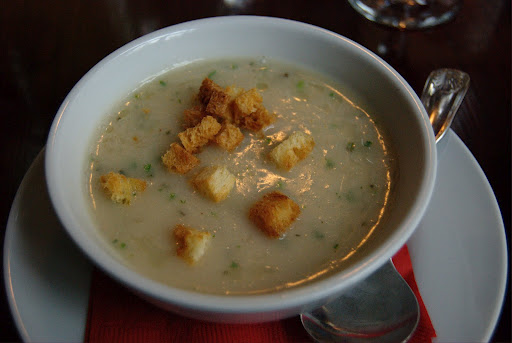
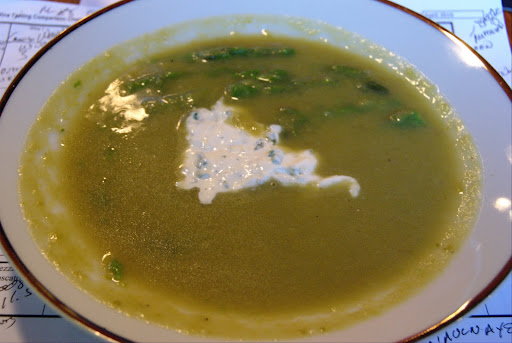
The Asparagus Soup with Lemon Crème Fraîche. What can I say. It was delicious! Cristi did a wonderful thing: she served a 2008 Muscadet, 12% (19) as a comparison. Nice touch! And the 2006 Prunotto Barbera D’Asti, 13% (18) went quite well with the asparagus. But, so did the 2008 Muscadet. We saved a little to try with the asparagus. And, in my opinion, the Muscadet went best with the soup.

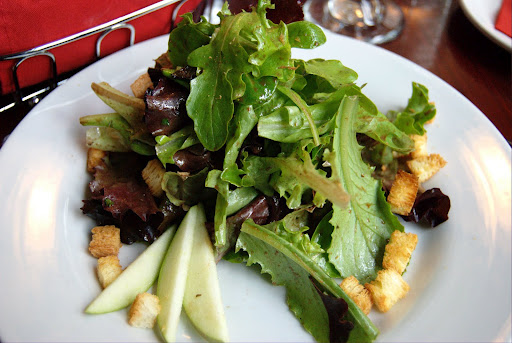
This White Bean Salad was different. Lots of green pepper. But surprising, the 2007 Marchesi Di Barbera Monferrato Maraia, 13.5% (18) went very well with the salad. The green pepper did not interfere with the wine. But just to let you know, this is not one of our more favorite varietals.

With the Nick and Toni’s Pasta ala Vecchia Bettola, we had a good, but not exceptional, 2003 Travaglini Gattinara, 12% (16). This wine would go well with a spicy Veal Parmigiana or Lasagna. It did go very well with this pasta.


And to top the dinner off, a wonderfully, refreshing Tripple Orange Soup. The wine that was chosen was a NV Zonin Moscato D’Asti,(18). Such a good meal with a wonderful selection of wines to go with it. If you missed this one, don’t fret!! You can redeem yourself on Tuesday May 12, or May 16 for the Quarterly Dinner, on July 25 for a BBQ or on Mother’s Day! Your choice. Hope to see you at the next event. Contact the Buzz for more specific information and to make reservations. Cheers!

Sauerkraut


This is far too much fun!! Developing these recipes, the Sourdough Bread and this Sauerkraut. The results of the first batch of sauerkraut is almost complete. If you had some to sample, now is the time. Just let me know what you thought. Thanks Gail for your input!! Here is the Kraut Recipe that I am working on. There was a song – last century – that had the line in it, “… second verse, same as the first…”. Well, this second batch is better than the first, as sauerkraut goes! I just sampled some. It’ll be ready, I think about, 01 May. Basically, here is what is in my sauerkraut.

Ingredients:
14 lbs Cabbage, fresh
3½ T Kosher salt, no iodine
1¾ T Cinnamon
3¾ T Caraway seeds
4½ T Mustard seeds
2¾ c Four Monks White Wine Vinegar

Look at the recipe for the procedure. My crock is one that Robin bought me for Christmas and is awesome. Holds about 20 pounds of shredded cabbage. Also, I added 1/2 head of red cabbage to this batch, as I did the original batch. Gives it some color. I said above that I sampled some: There is a bite, but not offensive. And I detected some sweetness, but there is no sugar in the recipe. The caraway is good and the cinnamon is there, but in the background. Mustard seed gives a unique flavor. So for now, there is the report. We’re talking about 2 weeks before I bottle the kraut. Cheers!!

Boise Sourdough Starter, Part III


Let’s see. Almost 6 days to get to this point. But, the starter is made and can now be saved and used again. So, unless I mess up the starter I have, I should not have to make any more for, say, 100 years!! Now we start the bread making process. This will take 2 1/2 days, or there abouts.

Sourdough Bread

Ingredients:
For the starter: (04/13/10) See Note #4 below
• 1 piece of starter the size of a tangerine (kept out at room temperature for 6 to 8 hours or in the refrigerator for a few days)
• 2 cups warm water
• 2 cups organic, unbleached white or all-purpose flour

Directions:
1. (04/13/10) Break up the starter, dilute it in the water, and mix in the flour. Cover this mixture loosely and set it aside in a warm spot for 18–24 hours or until it is quite bubbly.

After mixing the 2 cups of water and the 2 cups of flour. Let this sit and rise. Remember: There is only wild yeast in this bread. No cultured yeast. So be patient!!

For the dough: (Not quite yet, but soon!)
• 2 1/2 cups organic, unbleached white or all-purpose flour
• 1 1/2 teaspoons salt
• 3/4 cup starter from the previous step
• 3/4 cup cool water
• Cooking oil (to grease the bowl)

2. Mix the flour and salt together in a food processor fitted with the plastic dough blade. Pour the starter in and pulse the machine several times to mix the ingredients. Then, with the machine running, slowly add the water and continue mixing for a few minutes (If you don’t have a food processor, simply mix the dough in a bowl for about 5 minutes, until it forms a ball.)
3. Remove the mixture from the bowl and place it on a well-floured work table and round it into a ball.
4. Let the dough rise in a well-oiled bowl, covered, in the refrigerator for 12–15 hours. Remove from the refrigerator and allow it to warm up at room temperature for 2 hours.
5. Divide the dough into 2 pieces, and stretch them into tight baguette shapes. Place each one on a baguette tray or a parchment-lined baking tray.
6. Cover the baguettes and let them rise for 6–7 hours, until they have doubled in size.
7. Preheat the oven to 450° F.
8. Using a sharp razor blade, slash the tops of the loaves diagonally 3 or 4 times (this will allow them to expand more easily while baking) and spray them with a fine mist of water from a spray bottle.
9. Place the loaves in the oven and immediately spray them, along with the walls and floor of the oven, with water. Repeat this step after about 5 minutes of baking.
10. Bake the loaves 25–30 minutes, until they are entirely golden and the crust is crisp and blistered. Cool on a rack for 15 minutes before slicing.

Notes:
1. The (Dates) represent the days that I performed the stated tasks.
2. Step #4 (04/09/10). I added 1 c King Arthur flour and 10 T of water. I placed the starter in a bowl and covered it with a warm, damp towel.
3. This starter is the same starter that Boudain Bakery in San Francisco uses. They have had theirs since 1849.
4. (04/13/10) It looks like this amount of starter is enough for about 8 loaves.

—————————–

I know it looks like a bread making. But, I won’t normally change any new recipe until I have tried it. Then I can see how the recipe works and can change it at that point. Cheers!

Boise Sourdough Starter, Part II


All three of these photos are from Step #7.

Boise Sourdough Starter
or
Celebration Sourdough Starter

Directions:
1. (04/06/10) In a mound of flour, make a small well and add the water.
2. Slowly mix the flour and the water, bringing more flour into the center of the well. The mixture will gradually transform from a paste into a small piece of dough.
3. Knead this small piece of dough with your fingers for about 5–8 minutes, until it becomes springy.
4. (04/09/10) Place the dough in a small bowl, cover it with a damp towel, and let it sit in a warm spot for 2 or 3 days.
5. When it’s ready, the dough will be moist, wrinkled, and crusty. If you pull off a piece of the crust, you’ll find tiny bubbles and smell a sweet aroma.
6. Throw away any hardened crust. “Refresh” the remaining piece by mixing it with twice the original amount of flour and enough water to make a firm dough. Set aside as before.

7. (04/12/10) After 1 or 2 days the starter will have a new, fresh look. Remove any dried dough and mix with about 1 cup of flour.
8. (04/12/10) Once again, cover the bowl with a damp cloth and leave it in a warm place for another 8–12 hours.
9. When the starter is ready, it will appear fully risen, and a small indentation made with a finger won’t spring back.

I will make some bread from this tomorrow, Tuesday 13 April. I will save you some. Yea ….. Right! Cheers.