Salt Revisited


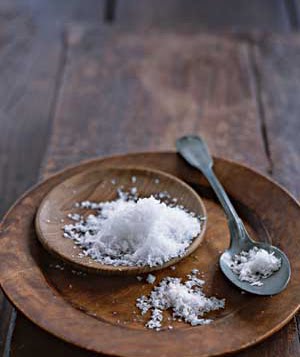
I was asked this week if I had any resources on the different kinds/types of salt. On this blog and on March 30, 2010, I did and article named Salt. If you click on the link, It will take you to the article. If you would like a resource book, look at Salt: A World History by Mark Kurlansky, 2002. ISBN: 0-8027-1373-4 (hc) or 0 14 20.0161 9 (pbk). Penguin Books. Here is some additional information on the different kinds of salt:
From Ask (dot) com :

Gray sea salt is the culinary salt which is harvested from evaporated sea water taken from the Atlantic Ocean along northern France’s Brittany Coast. Himalayan pink salt is the culinary salt which is mined from underground deposits of rock salt in Pakistan’s Himalayan mountains. Although interest in gray sea salt and Himalayan pink salt is relatively recent in American cuisine, both types of salt have long histories. Gray sea salt has been harvested in the Guérande region of France’s Brittany Coast since the ninth century. Himalayan pink salt has been mined from Pakistan’s Khewra salt mines in the Himalayan mountains since as early as the 13th century.
Identification
Gray sea salt is also known as “Celtic sea salt,” “Brittany sea salt” and “sel gris,” the French phrase for “gray salt.” Gray sea salt gets its distinctive color–ranging from light gray to slightly purplish gray–from the clay salt flats in the Guérande region of Brittany from which it is harvested. Himalayan pink salt is also known as “Pakistani pink salt,” or simply “Himalayan salt.” Himalayan pink salt gets its distinctive color–ranging from pale pink to deep red–from varying amounts of iron oxide in the rock salt deposits.
Function
Both gray sea salt and Himalayan pink salt are culinary salts used as flavor enhancers. Because it is mined from rock salt, Himalayan pink salt can also be cut into flat slabs and used as cookware, serving platters or simply decoration.
Features
Both gray sea salt and Himalayan pink salt are available in a variety of grinds, ranging from extra coarse to fine. Himalayan pink salt is also available in slabs and blocks. Gray sea salt has a loose, clumpy texture due to a relatively high moisture content. Both types of salt are sold in their natural, unrefined states and retain trace amounts of other minerals that not only contribute to their signature colors but also impart subtle flavors to food.

And then from EZine Articles we find this information:

Beyond Table Salt — A Guide To Different Types Of Salt

By Anne Clarke
It seems that there are so many different types of salts these days to choose from. You might have thought that salt is just salt, but nothing could be further from the truth! Here is a basic guide to the different types of salt.


Table Salt and Iodized Table Salt
This is the type of salt that most of us use at home and the type that we find on most restaurant tables. Our basic table salt is made by sending water into salt deposits then evaporating it – only the salt crystals will remain. The salt goes through a refining process that removes the other minerals from it. Table salt has a fine grain texture which makes it ideal for baking – it can accurately be measured. Iodine is not naturally in table salt – Morton Salt Company started adding it back in 1924 to decrease the chance of goiters. The majority of table salt is iodized in the United States these days, and, indeed, the occurrence of goiters has gone down greatly!
Kosher Salt
Kosher salt is made in a similar fashion to table salt – the difference is that kosher salt is raked during the evaporation process. This type of coarse salt is generally evaporated from brine. This creates grains with a block-structure, this structure better allows the salt crystals to absorb blood (Jewish law states that you must extract blood from meat before you consume it). Kosher salt is less salty than table salt.
Sea Salt
Sea salt is harvested by evaporation, also. Sea salt is not quite as salty as table salt is. You can find both fine grain and coarse grain sea salt. Many sea salts include trace minerals like potassium, magnesium, and iodine – these minerals are naturally present, not added.

Fleur De Sel
This is a type of sea salt – to harvest fleur de sel, you must take the early crystals that start to form across the surface of salt evaporation ponds – this is generally done during the summer months, the time when the sun is strongest. Fleur de sels have a higher mineral content than basic table salt. Fleur de sels can smell like the ocean, and it tends to be grayish in color. Other types of sea salts include sel gris, esprit du sel, and pink, black, and brown sea salts from India.
Rock Salt
As its name implies, rock salt is not fine-grained. In fact, rock salt is unrefined and therefore has a grayish hue. It is sold in large crystals. This is what people use to make ice cream in traditional hand-cranked ice cream makers.
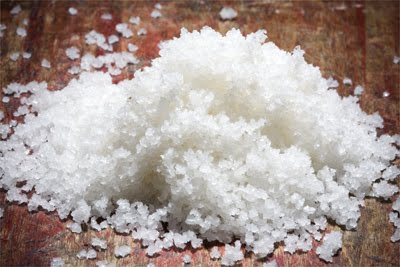
From E-How we find:

Sea Salt. Another type of salt that is popular is sea salt. Sea salt is sea water that has been evaporated, resulting in pure salt from the saltwater. Sea salt can be found in both fine and course types. Since it comes from different waters and contains different minerals, the colors will be different from one sea salt to another.
Hawaiian Sea Salt and French Gray Sea Salts are both colored slightly. These salts are great for garnishing as well as flavoring a dish. The coloring comes from what is in the sea water as it evaporates or what is added. The Hawaiian sea salt has its color from the Hawaiian red clays from the island and the French grey salt’s color comes from the minerals inside the salt.

And finally from Real Simple:

6 Types of Salt and How to Use Them

Kosher Salt
Use it for: All cooking. Kosher salt dissolves fast, and its flavor disperses quickly, so chefs recommend tossing it on everything from pork roast to popcorn.
Crystalline Sea Salt
Use it for: Adding a pungent burst of flavor to just-cooked foods. These crystals will complement anything from a fresh salad to a salmon fillet.
Flaked Sea Salt
Use it for: Bringing a complex flavor to steamed vegetables or shellfish. Take a pinch, crush the crystals between your fingertips, and let them fall on freshly cooked food. This salt will add a hint of briny flavor.
Fleur de Sel
Use it for: A special-occasion table salt. Spoon it into a salt cellar to be pinched, then sprinkled over food just before eating. Delicately flavored, it adds a perfect hint of saltiness to freshly sliced tomato or melon.
Rock Salt
Use it for: Making ice cream and deicing. Rock salt is paired with ice in old-fashioned hand-cranked ice cream makers to regulate the temperature. You can also use it to deice your sidewalks and driveway in the winter months.
Pickling Salt
Use it for: Brining pickles and sauerkraut. It will also brine a turkey, but beware: Pickling salt is far more concentrated than the more commonly used kosher salt, so you’ll need to use less.

I hope this helps. But remember that there are many different kinds of salt, even a pink salt from Pakistan. They all have a slightly different taste due to the minerals that are attached to the salt crystals. But remember: Watch your salt intake. We tend to eat far more salt than is needed and thus high blood pressure and other potentially life threatening ailments. Taste your food first, THEN add salt if necessary. The salt intake of most people is 3000mg per day. It is recommended that your daily intake of salt should not exceed 1500mg per day. Keep this in mind. Cheers!


St Patrick’s Day – The Rest of the Story


Leanne and Tom Felzien – Thank-You so very much for including us in your St Patrick’s Day Dinner. It was fun and delicious.
And as a note: If any one in the Boise area who reads this blog wants a spring lamb or side of beef for their freezer, just let me know and I will put you in contact with Tom and Leanne. For the past 6 years or so, we have been getting some awesome lamb from them. The lamb and beef are all 4-H raised.
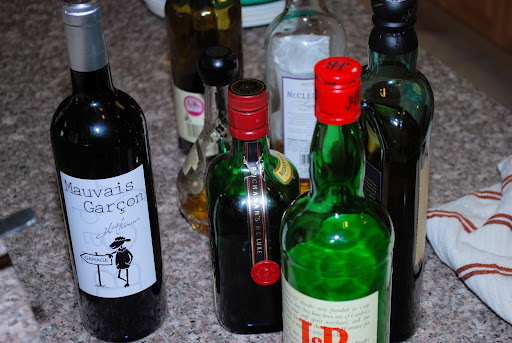
Back to the celebration: The party was festive. Some great Whisky was tried, much like a wine tasting, but much smaller samples. There is a photo of some of the whiskys. (No! I didn’t misspell whisky.) Gail made the Corned Beef again this year and in my NSHO, it was better this year. She does a great job with the beef. Enjoy the photos of the party. Cheers!

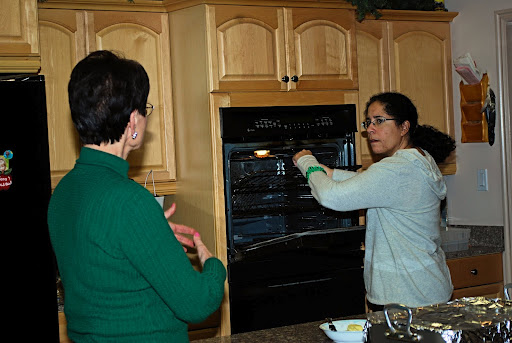
Gail and Leanne discuss the kitchen proceedure.

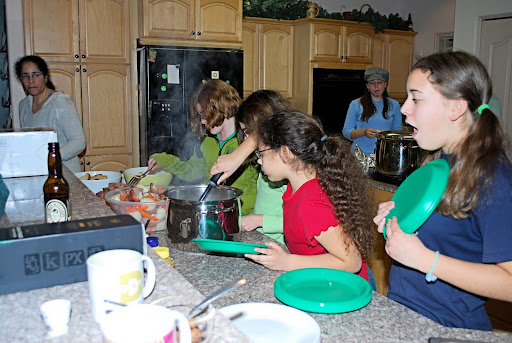
Heather and some of the children at the party. It was great to see you again, Heather.

Ah! The Lagavulin Double Matured Whisky. This is awesome and thank-you Gail for sharing it. Look at that golden color and smell the peat smoke.

The party stash!

The food line. Hurry. We’re hungry!

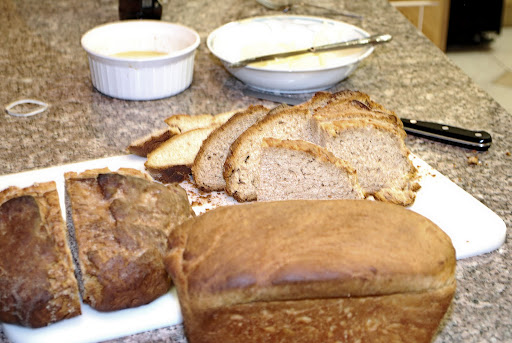
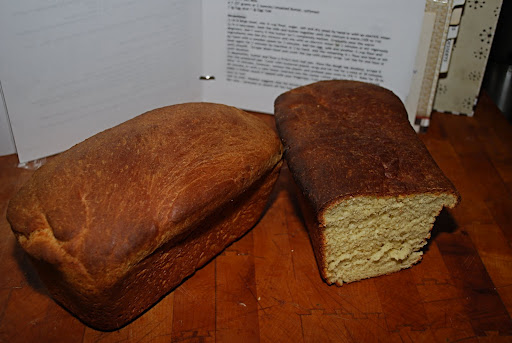
The Irish Soda Bread is sliced and the Sally Lunn Bread is waiting to be sliced. Next year, if we are invited again, I will have to make two loaves of each.

The plated Corned Beef Dinner! It was great!

Wishfull thinking? It’s cabbage, too.


So there you have, “… The rest of the story.” It was a great evening that went on until almost 10:00pm. The meal was fantastic, as usual. Thank-You Gail. And again, a huge Thank-You to Leanne and Tom for opening their home to all of us. It was great to see the bubbly children, too. Cheers!
Here is some interesting facts about the Corned Beef, like, “Where did the name come from?”:

From About (dot) com –
Corned Beef Basics
The first corned beef was packed in salt, and sometimes spices, in order to cure it. It got its name from the corn kernel-sized grains of salt it was packed in. Today, corned beef is usually made by soaking a brisket roast in a brine of water, salt, and spices. While it’s not traditional in Ireland, corned beef is what most Americans prepare for St. Patrick’s Day feasts.

About the Beef
For centuries, corned beef was a food reserved for special occasions. Beef was considered to be a decadent indulgence up until the 20th century. It was only available to very wealthy people, because most cows were kept for their milk or for breeding.

About the Brisket
Brisket comes from the heavily exercised front limbs of the animal, and is consequently a tough cut of meat. When cooked properly–braised–this cut is tender, juicy and succulent. Corned beef and other forms of brisket need to be cooked for a long time with low heat and plenty of moisture in order to realize their full potential as the star of your dinner table.

And from Food History, we learn –

Why do they Call it “Corned” Beef?
The term “Corned” comes from putting meat in a large crock and covering
it with large rock-salt kernels of salt that were refered to as “corns of salt”
This preserved the meat. The term Corned has been in the Oxford English Dictionary as early as 888 AD.

Irish Were the First Exporters of Corned Beef
Irish were the biggest exporters of Corned Beef till 1825.
The English were serving corned beef but also the Irish. In this day and age
corned beef and cabbage is not very Irish, but corned beef is. The area of Cork, Ireland was a great producer of Corned Beef in the 1600’s until 1825. It was their chief export and sent all over the world, mostly in cans. The British army sustained on cans of Cork’s corned beef during the Napoleonic wars …

Origin of the Word “Corn”
The term Corn is modified from an Old Germanic (P.Gmc) Word
Kurnam which meant small seed of anything. Since a kernel of rock
salt look like a wheat or oat kernel size it became known as a corn of salt. Even the word Kernel comes from this word Kurnam. or Kurnilo which meant the root of the seed.

Corned Beef and Cabbage is basically an American tradition on St. Patrick’s

Day started by irish-Americans in the mid 1800’s. Some Irish people feel that corned beef and cabbage is about as Irish as spaghetti and meatballs. Since cows were used for milk rather than meat in poor times in Ireland, beef was a delicacy that was fed to kings. It was more common to celebrate a holiday meal with what they call a ham (Gammon) or bacon joint. ( a cured but unsmoked piece of pork) with their cabbage and potatoes. When many Irish Immigrants came over in the mid 1800’s they couldn’t find a bacon joint like they had in Ireland, so they found that Jewish corned beef was very similar in texture, and they used that for their holiday celebrations.

Just a short history lesson. See you next year!

Great photos, Gail. Thanks!

St Patrick’s Day Dinner and Party


Last year, we were invited by friends Gail and Bob Parker to join them and their family at a St Patrick’s Day Dinner. All the trimmings – Corned Beef, Cabbage, Potatoes and a host of other things to eat and drink. We were asked to bring Irish Soda Bread. Evidently, it was OK, because this year, we have been invited to join them again. So here, again, is our offering.

Irish Soda Bread getting very happy in the oven. (It is 2:48pm MDT and this just came out of the oven. YUM-O!)

And this year, we are also bringing a wonderful slightly sweet Sally Lunn Bread from the Smitten Kitchen site – there is a hot link in the side bar to the site. And to quote the Smitten Kitchen, “… It tastes like a light brioche but involves less butter, fewer eggs and significantly less of a time commitment.
Like any food story worth tucking into, the story of Sally Lunn Bread comes with drama over its origins — Was it originally made by Protestant refugees, who called them “soleil et lune” or sun and moon cakes? Was it named for Solange Luyon, a pastry cook in Bath, England who for decades sold these buns on the street? Was knowing how to bake it truly essential to being a successful housekeeper, as this 1884 book, suggests?”

——————————

So there you have the starter of what will be a great evening with friends. We will tip one for you also! See you later with “… The rest of the story!” Cheers!

"Salt Tears" Re-Visited


Back on January 17, 2011, we visited Salt Tears on their opening day. As I stated in that Blog Post, we would return to do a re-take on our experience. At that time, we rated Salt Tears a 4-Star restaurant.

Robin and I did return on March 11 and the earlier rating, in our opinion, was correct and we will keep it a 4-Star restaurant.
I had their House Roasted Turkey Salad Sandwich with Cilantro, Pumpkin Seeds and a Honey and Lime Vinaigrette. It was wonderful! I also had their Potato Salad. Differently good. Robin had Sweet Onion and Bacon Pierogis with Sour Cream. This too was good. We each had a cup of their Carrot and Roasted Cumin Soup. It was very tasty. We urge you to look at Their Website – their card in the sidebar is also hot linked – to look at their menus  and to try their fare. They also have a wonderful breakfast. They are working on a liquor license, so that will come in time. There is a wide selection of other beverages available now.
And it this time, I will say that it was good to see the restaurant full! We were there at 1:30pm and there were just a few seats available. We asked about this crowd and they told us that the noontime hours are usually full. The breakfast hours are the next most attended and the evening mealtime the least attended. They have Wifi, so you can take your laptop. Go to Salt Tears and enjoy yourselves and have some light refreshment or a full meal. Support our local businesses. We will definitely return. Cheers!


Food and Shrove Tuesday


I think it’s called Tired of Winter or Cabin Fever. So what does one do while watching it snow one week before the Ides of March – the Roman New Year? I’m glad you asked. Try making a breakfast of

Scrambled Eggs, Fried Potato Pancakes and Fasnachts Berliner . (This recipe is far better than the other one I had. Something went terribly wrong!) This recipe is from My Best German Recipes Blog. You can find a link in the sidebar or click the stated link. Actually, if some of the breakfast had corn or maybe bacon, it just might give this one a run for the money. Corn Fritters, just browned and made thin, not like IHOP pancakes, but thin and fried slowly and over medium heat in bacon fat. I do remember those from my childhood, which was a year or so ago. My Pennsylvania Dutch Grandmother could make those fritters like no one else. I have yet to find the recipe. If you try this recipe, let us know what you think. And if you are looking for some awesome German recipes, check out the blog, My Best German Recipes. There are some really interesting recipes there. Cheers!

It’s Time For Fasnachts!


So the day is quickly coming! Shrove Tuesday! 8 March! Fasnacht Day! So what is a fasnacht? Here is a recipe for Fasnachts Berliner. (03/07/11 – Sorry! I had to change the recipe.) Treat yourself and your family and your friends to a delightful, Off The Diet, delicious Pennsylvania Dutch (German) doughnut. The photo on the left is the way I remember them – covered in powdered sugar. And here is some information on fasnachts, gleened from http://unasked.com/question/view/id/15912:

“Fasnachts, Fastnachts or Faschnachts are a fatty doughnut treat served traditionally on Fastnacht Day, the day before Lent starts. Fasnachts were produced as a way to empty the pantry of lard, sugar, fat and butter, which were forbidden during Lent. Some English-speaking Protestants tend to refer to the day as Shrove Tuesday, and many consume pancakes as an alternative.

The German word Fasnacht literally translates as “chamfering night”. Authentic fasnachts are typically cut into squares or rectangles, producing a chamfered edge, as opposed to doughnuts which are round with holes in the center.

Basel, Switzerland conducts a fasnacht festival annually. The Pennsylvania Dutch territory surrounding Lancaster, Pennsylvania celebrates the custom, although it is largely unheard-of in Philadelphia, which is commuting distance away. Most chain supermarkets offer fasnachts, although WalMart offers Pączki instead. The pączki is traditionally eaten in Poland on the Thursday prior to Fasnacht Day, although in Polish communities of the US, the celebration is more commonly on Fasnacht Day. Commonly pączki are round, rather than having straight sides, and they are filled with jelly, or sometimes creme filling.

The term now is synonymous with the Carnival season in southern Germany, Switzerland, Alsass and Austria. Although usually written “Fastnacht”, there are many local spoken varieties: Fasnacht, Fassenacht, Fasnet etc.

Many churches in Pennsylvania feature Fastnacht sales as a fundraiser. The Holy Trinity Catholic Church in Columbia made 84,000 fasnacht in 2008 at $4.50/dozen, and was turning away potential customers; St. Cecilia Church in Lebanon earned $24,000 in 2006 by turning 3 tons of sugar, 720 pounds of margarine, 1,000 gallons of milk and more than 1,000 eggs into fasnachts.”

If you are really interested, you can find more information on the The Best American Poetry Blog, of all things. So there you go! Try these as they are a real treat. Labor intensive, but worth all of the time.

Piña Colada Cake


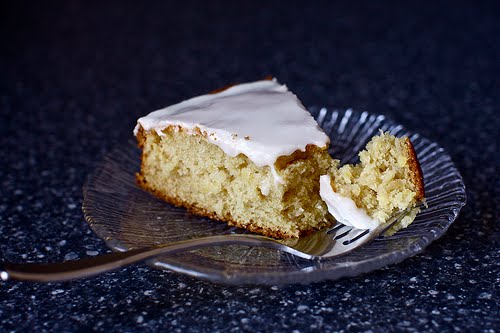
So you say that you want a piece of cake that is sweet, fruity and somewhat rummy? Oh, my! Then give this one a try. Robin found it on the Smitten Kitchen website and it is awesome. One ingredient may take some time to find: Coconut Cream. I found it in our local Albertson’s Market (actually the original Albertson’s!) at the end of the wine isle. The cake is a Piña Colada Cake and it is delightfully sinful! Enjoy this. We did.

St David’s Day


I really do receive many cooking/food blog articles. Here is one from About.com: British and Irish Food.

From Elaine Lemm, your Guide to British and Irish Food
Wishing everyone a very happy St David’s Day today. It is the celebration of all things welsh on this their patron saints day.

St David’s is just the start of a season of celebrations coming up, next week is not only Pancake Day it is also National Pie Week followed a week later with one of the busiest saint’s day, St Patrick’s. Loads of great food and recipes coming up then, what fun.

Shrove Tuesday, also known as Pancake Day in Britain , is the day before Ash Wednesday and the start of Lent. Apart from eating pancakes, throughout England there are Pancake Day Races which are always great fun to to watch. The typical English pancake is thin and light and not dissimilar to a French crepe and usually eaten with sugar and lemon, or Golden Syrup.

And let’s not forget Shrove Tuesday when we make Fasnachts. Most IHOP’s here in Boise are offering a free short stack of pancakes today! I think we’ll go again this year. It helps to support the St Luke’s Hospital Children’s Fund.

Welsh Breakfast Treats – Crempog
A stack of delicious Crempog, Welsh Pancakes, are better started the night before making them quick to finish before breakfast. Crempog is not dissimilar to American Pancakes and can be served the same way with some crispy bacon and a drizzle of maple syrup or simply with butter and maybe a drzzle of Golden Syrup. Yum.

Welsh pancakes – Crempog – are different to the traditional British ‘crepe’ normally eaten on Pancake Day. The pancakes are thicker and slightly risen and cooked on a griddle.
They are quick and easy to make and make a delicious tea time treat or eaten for breakfast.

Welsh Pancakes, Crempog – Welsh Pancake Recipe

By Elaine Lemm, About.com Guide
Prep Time: 15 minutes
Cook Time: 5 minutes
Total Time: 20 minutes
Ingredients:
•2 oz/ 55g butter
•15 fl oz/ 450 ml warm buttermilk
•10 oz/ 275g all purpose/plain flour
•3 oz/ 75g sugar
•1 tsp bicarbonate of soda
•½ tsp salt
•1 tbsp vinegar
•2 eggs, well beaten


Preparation:
•Stir the butter into the warmed buttermilk until melted. Gradually pour the milk and butter into the the flour and beat well. Leave the mixture to stand (for a few hours if possible)for at least 30 minutes.
•Stir the sugar, bicarbonate of soda, salt and vinegar into the beaten eggs. Pour this mixture into the flour and milk mixture and beat well to form a smooth batter.
•Heavily grease a griddle or hot-stone and heat. Drop the batter, a tablespoon at a time onto the heated griddle and bake over a moderate heat until golden brown on both sides, then keep warm. Continue until all the batter is used up.
Spread butter on each pancake and eat while warm.


Based on a recipe by Gilli Davies from her book Celtic Cuisine.

A Kiss and a Coddle – Dublin Coddle Recipe
On a day when the British government is telling us to eat less meat I am skipping over the water to Ireland and to a meaty dish of Coddle. Dublin Coddle as it is more commonly called is a traditional Irish dish usually associated with Dublin. It is comfort food of the highest degree; a hearty nutritious stew-like dish made from either thick slices or chunks of salty bacon, pork sausages and potatoes … Coddle is a traditional Irish dish usually associated with Dublin and known also as Dublin Coddle. It is comfort food of the highest degree; a hearty nutritious stew-like dish made from salty bacon, pork sausages and potatoes.
The name comes from the long, slow simmering or ‘coddling’ of the dish. It has been suggested the popularity of coddle arose because it can be left simmering on the stove till the man comes in from the pub long after the wife had gone to bed
There are as many recipes for Dublin Coddle as there are bars in the city, and everyone’s mother has their own version which of course, is always the best.

A Kiss and a Coddle – Dublin Coddle Recipe

By Elaine Lemm, About.com Guide
Prep Time: 10 minutes
Cook Time: 1 hour, 30 minutes
Total Time: 1 hour, 40 minutes
Yield: Serves 4 as a starter, 2 mains.

Ingredients:
•2 tbsp vegetable oil
•2 medium onions, thinly sliced
•4 oz/115g piece salty back bacon, weight after the rind removed
•6 fat, traditional pork sausages
•2 carrots, peeled and finely sliced
•8 oz/250g white potatoes, finely sliced
•Salt and pepper
•2 cups/500 ml rich beef st

Preparation:
Heat the oven to 425°F/220 °C/ gas 7
•In a large frying pan or skillet, heat the oil, add the onions and cook on a medium heat for abut 4 minutes. Cut the bacon piece into ½”/1 cm cubes. Add the bacon to the onions and stir well. Cut the sausages in half and add these to the onion and bacon.
•Raise the heat and stirring constantly, cook until the sausages start to brown taking care not to burn the onions.
•In a heat proof casserole, place a layer of the onion, bacon and sausage mixture followed by the layer of sliced carrots and the a layer of potato. Season with salt and pepper. Repeat the layering until used up, finishing with a layer of potato.
•Carefully pour over the stock. Cover with a lid or a double layer of aluminum foil. Place in the centre of the oven and cook for 45 minutes. Take a peek to make sure the coddle isn’t drying out (if necessary top up with a little boiling water but don’t flood the stew). Lower the heat to 350°F/175°C/gas 4 and cook for a further 30 minutes until bubbling and the potatoes are cooked through.
•Remove from the oven and rest for 10 minutes before serving. Serve with Irish Soda Bread to soak up all the lovely juices.

——————————

I hope you have enjoyed this article and the recipes. Cheers!

A Vignette of a Wine Dinner of the Rhone Valley


Another wonderful vignette dinner of wines and food parings from the Rhone Valley. And Le Café de Paris did another awesome job. Thank-You Matheiu and your excellent staff!

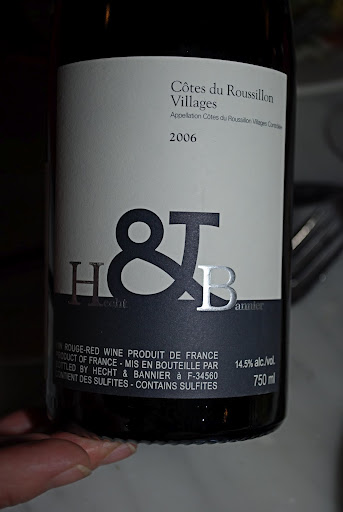
The photo to the left is one of the wines we had. A 2006 Hect and Bannier Cotes du Roussillon Villages that was rich and smooth. A blend of Grenache, Syrah and Carignon. Full of fruit and well balenced. It was superb with our meal. From the Costco Wine Blog, “… They really did an excellent job balancing the varieties – Grenache, Syrah and Carignan – to create an expressive, rich and velvety wine. It has a beautiful nose that’s smells of (French) quality, with great fruit flavors, and a mild spice on the finish.” Natalie MacLean agrees with this evaluation when she says, “… Terrific notes of cedar, black raspberry, cherry pit and smoke. Full-bodied with supple layers of lasting flavour.”
We also had a 2009 Château Miraval “Clara Lua” that went extremely well with the salad. From K&L Wine Merchant, “Château Miraval’s “Clara Lua” is composed of 95% rolle and 5% grenache blanc. Rolle, which is also know as vermentino in Italy, imparts vibrant citric and slightly leesy nuances, while a touch of grenache blanc provides hints white peach and fresh herb notes. Pairing: Fennel stuffed grilled Bronzino, brandade on crostini, rosemary roasted chicken. Produced from organically grown grapes.” This was a delight with our salad. Here was our great dinner last night. Cheers!

First Course
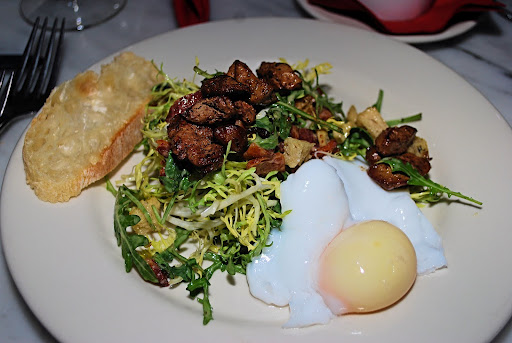
Salade Lyonnaise
field greens, chicken livers, poached duck egg, bacon, mustard vinaigrette

Second Course
Soupe a l’Oignon
classic French onion soup, calvados, gruyere

Main Course
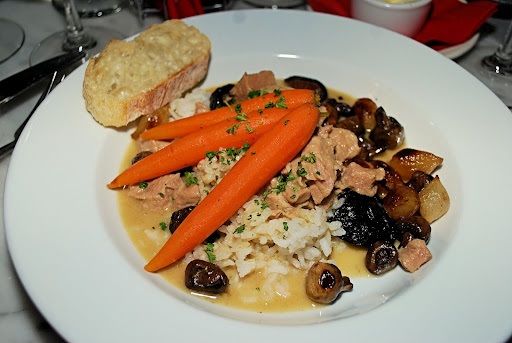
Blanquette de Veau
(French Veal Ragout)
tender veal, root vegetables, cream sauce, wild rice

Dessert
Bugnes
Rhone Valley Style Beignets

Breakfast – The Next Day
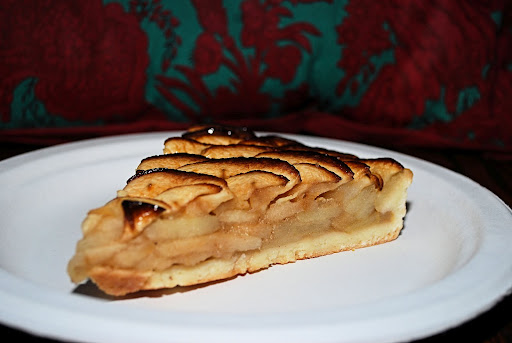
Apple Tart

So there you have it. These Wine Dinners are a wonderful experience in eating here in Boise. You will learn a lot from the food selections – the menu – and the parings of wines that they select. Get on their mailing list by following the link in the sidebar.

Good Trout Meal


After a great day today in the field searching and finding Merlins and Sharp-Shinned Hawks – more on that tomorrow on the Flight of the Peregrine Blog – it was good to have a meatless Monday.

Trout Almondine

Spring Mixed Greens
with
Broccoli and Asparagus

Baked Sweet Potato

What a wonderful way to end a great day. Enjoy the recipe. Cheers and Keep Looking Up!