Seghesio Wine Dinner at The Buzz


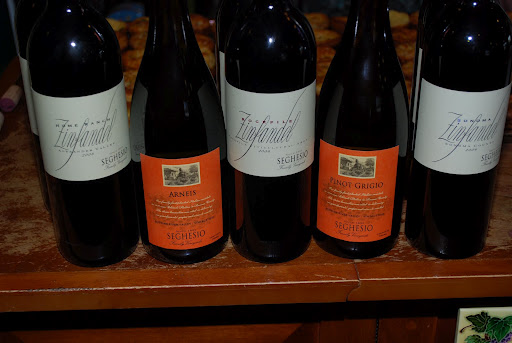
On April 12, 2011, The Buzz held another of their Wine Dinners. This year, they are featuring Family Wineries. The winery this month was the Seghesio Family Winery, located near Healdsburg, California in Sonoma. These wines were awesome and I think Robin and I found another benchmark Pinot Grigio. I will state my opinion of the wines and rate them, [20] being the highest score.

A beautiful smile.

Edd Lopez, District Sales Manager for the Seghesio Family Winery and Bob.

Here are the wines we had with our dinner.

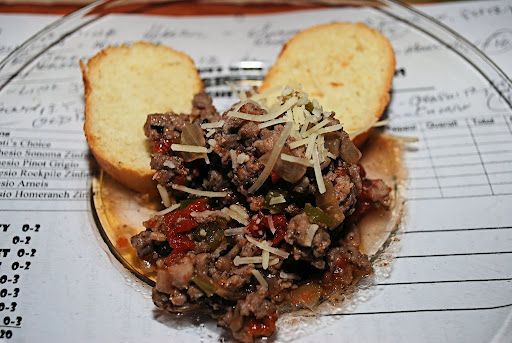
Buzz’s Seghesio Sausage Bruschetta
2009 Seghesio Sonoma Zinfandel
15% alc, [19], $23.00 Would be great with any pasta dish. If you are in a quandry of what wine to have with dinner, try this one. I don’t think you’ll go wrong. Purchased 4 bottles.

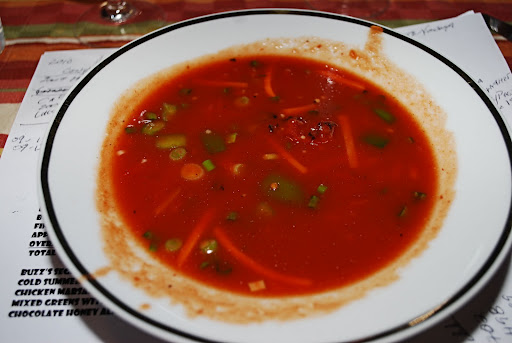
Cold Summer Soup
2009 Seghesio Pinot Grigio
13% alc, [19] $20.00 This is a New Benchmark for us. Full of ripe fruit and pear. Lingering pear Would be great with an Avacado and Spinach Salad. The wine went extremely well with this soup. Purchased 4 bottles.

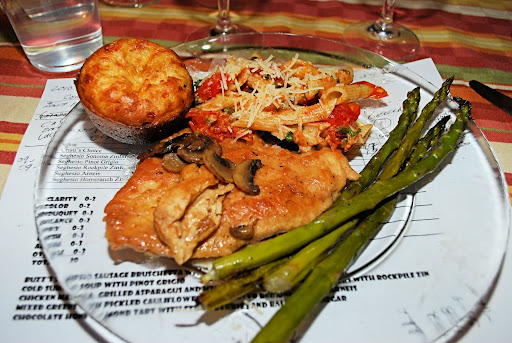
Chicken Marsala
Grilled Asparagus and Melon
Pasta Ponza
Popovers
2008 Seghesio Rockpile Zinfandel
15.6% alc, [19] $35.00 This wine went quite well with the chicken and all. Purchased 2 bottles.

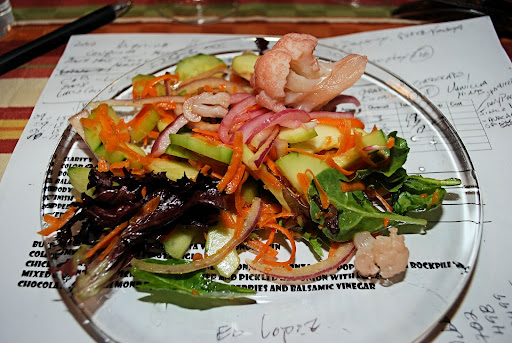
Mixed Greens with Pickled Cauliflower and Pickled Red Onions
2010 Seghesio Arneis
13.3% alc, [15], $20.00. Sorry. I was not inpressed in comparison to the other wines we had tonight.

Chocolate Honey Almond Tart with Strawberry and Balsamic Vinegar
2008 Seghesio Homeranch Zinfandel
15.5% alc, [16], $35.00. One-half ton of juice per acre. Intense falvor. Hot wine. Even though it was a fairly low score, we did purchase 2 bottles.

The comment was made that, “… In California, you would pay $100.00 per plate for an event like this!” Believe me, we didn’t. $15.00 per plate! See what you missed? See you at the next Wine Dinner. Cheers!

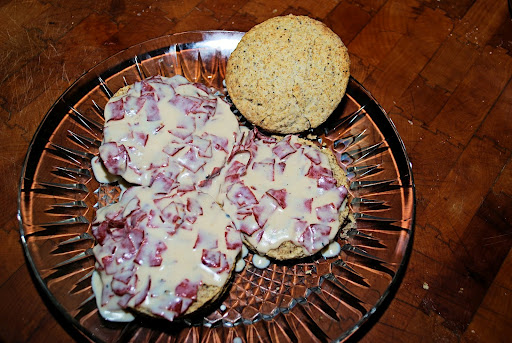
Robin’s Biscuits and Dried Beef


Last nights dinner and dessert, see Robin’s Apple Tarte Tartin, was really good. But breakfast this morning, topped it off. She made a variation on Martha Stewart’s Biscuits by adding flax seed and whole wheat flour. Then we added Creamed Chipped Beef to the biscuits. A good breakfast! Now to go and work it off by riding on the Greenbelt! Wish me luck and cheers!

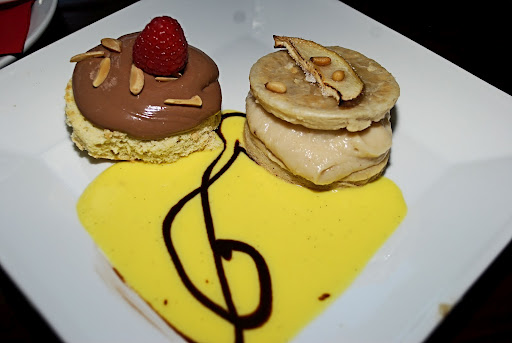
Robin’s Apple Tarte Tatin


After I made a somewhat so-so goulash – hamburger, buckwheat ziti, green onion, caramelized sweet onion, garlic and tomatoes – Robin made this very awesome Apple Tarte Tatin that she got from the Smitten Kitchen. There is also a link in the sidebar to the site. I suppose that you could go to that site and search for the dessert. I’d say come by here for some, but there is not enough left. We should have done away with the goulash and just had the dessert! The pansy’s are from our flower garden out front and I think add something to the photo. Left Click the photo for a larger image. But the main emphasis is on the Apple Tarte Tatin and not the flowers. Cheers!

Meatless Monday Idea


I can’t say that four or six weeks ago when Robin said that we were going Meatless Monday, that I was all that excited. First, let’s decide on the definition of “Meatless”. so we decided that red meat – beef – would be eliminated for one day a week. Salads, stir fried vegetables, seafood and chicken would be on the menu

for Mondays. It has almost been six weeks since we have had beef. Not because we don’t like it, but just because we have found other things. Lots of seafood – salmon, halibut, shrimp, cod, talapia to name a few – have entered our menu. And always chicken and lamb. Wednesday we will have Pork Chops done some way.
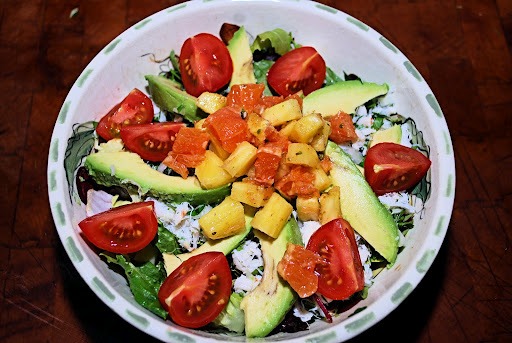
So look at what we had tonight. A Crab Salad! Three different types of lettuce, Orange and Pineapple Salsa, Avocado Slices, Tomato and fresh squeezed Lime Juice. And this was really a good and refreshing salad. The Orange and Pineapple Salsa – we made it from scratch – was great. I can dream of it with Grilled Pork Steaks. And yes, I did eat my half of the avocado, not one of my more favorite vegetables.
So there is what we had tonight. And it was good. There is no real recipe. All from scratch and whatever was available. The crab was Crown Prince Lump Wild Caught White Crab Meat. The one thing that I don’t particularly like is the monosodium glutamate (MSG) that they have put in the can. But a lot of Asian foods have MSG and this product comes from Thailand. Give a salad of this type a try. Cheers!

Gremlins? – Gremolata!


Bob and I were discussing some of our favorite healthy embellishments.
The gremlins?

Gremolata

Note: A condiment made from finely minced parsley, garlic and lemon zest. Traditionally served with lamb and veal, it is also an excellent accompaniment for fish and seafood dishes.
Prep Time: 10 minutes
Total Time: 10 minutes
Ingredients:•1 bunch Italian (flat-leaf) parsley
•1 clove garlic, peeled
•1 lemon
•Kosher salt and freshly ground black pepper, to taste

Preparation:
1.Wash and thoroughly dry the parsley.
2.Remove the leaves and finely mince until you have about 2 tablespoons worth.
3.Finely mince the garlic.
4.Use a lemon zester to remove about 1 teaspoon of lemon zest.
5.Combine all the ingredients in a bowl and season to taste with Kosher salt and black pepper. You can pound the ingredients together with a mortal and pestle or just use the back of a spoon or the bottom of a glass.

Makes about 3 tablespoons, or enough to garnish 6 servings of shellfish, fish, lamb or veal.
This perks up many other dishes as well – pastas, rice, salads – you may end up feeling as Springy as a Leprauchan, energetic as Gollum or as adventuresome as a Hobbit! This condiment won’t weigh you down.

Awesome Birthday Dinner at Le Café de Paris


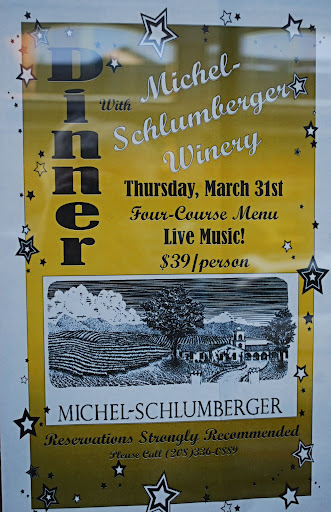
Every year at our Birthday, we have the choice of where we want to eat; what restaurant. Mickey D’s doesn’t count! This year, I chose Le Café de Paris because they were having a special wine dinner with Michel-Schlumberger Winery from the Dry Creek area of California. As usual, it was a good choice. What a great dinner and some super wines.

Here Robin and I are with Jacques Schlumberger. Such an interesting person and great to talk to. He brought some awesome wines that went quite well with dinner. Oh yes, the dinner! See the photos below …. That’s all there is left!

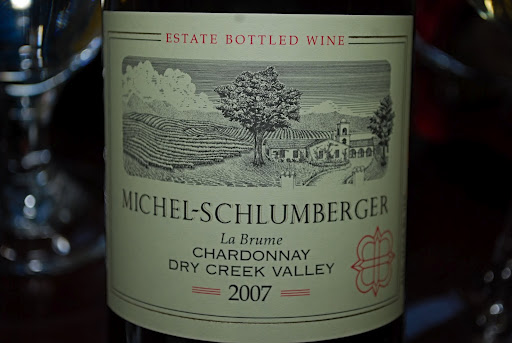
2007 Schlumberger Chardonnay
(Front label)
This was a great chardonnay and went extremely well with all courses of our dinner. Long finish. Jasmine flowers. “Notes of dried flower, tarragon, quince and dried apricot. Expresses minerality and crisp freshness. Light on oak or buttery flavors.”

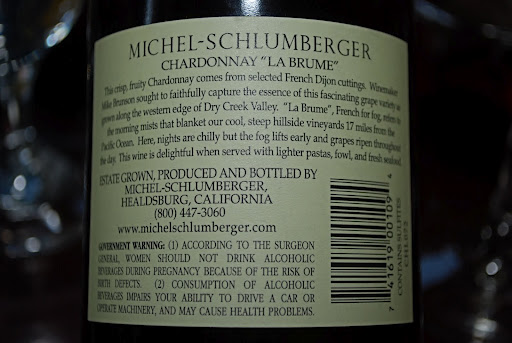
Back label explaining about the wine.

First Course
Plateau Apéritif
Crab
Cheese and Chicken Croquets
Potato and Fish Salad on Croustine, Crudite

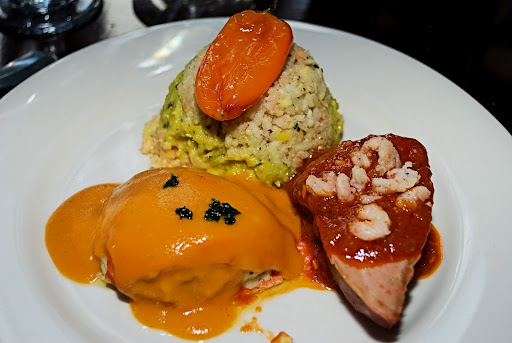
Second Course
Brandade Stuffed Salmon
and
Roasted Tuna Filet
marinara sauce
Rice Timbale
small shrimp rice, leek, potato
(This was an awesome rice dish)

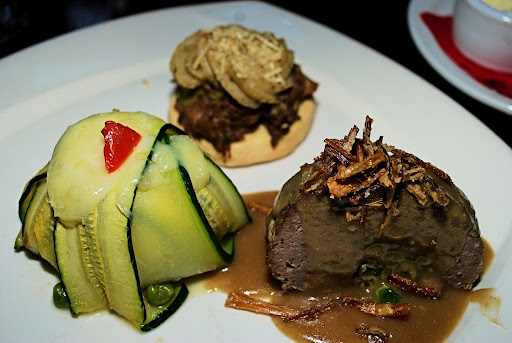
Main Course
Roulade de Bœuf
spinach-crème filling
xeres-bay leaf sauce
and
Gâteau de Canard
potato purée, zucchini flan, duck egg
(Such an amazing Main Course)

Dessert
Delice au Chocolat
chilled Spanish chocolate dessert
similar to a mousse

Daffodil
So what does this have to do with dinner? Probably nothing. But when we left for dinner, this was not in bloom. However, when we got home, it was as you see it here. One of the first signs of Spring. What a delightful way to end a perfect dinner. Thank-You to Robin and to all the folks at Le Café de Paris for this wonderful Birthday Dinner! (Anyone have a magnum of TBA? It’s my 70th next year.) Cheers!

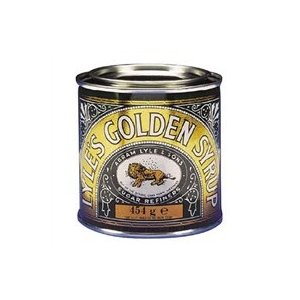
Lyle’s Golden Syrup


I had a question posed to me by one of the readers of this blog. “I’ve just discovered your blog. Obviously, I don’t get much time to cook, let alone read about it. Anyway, I found you as I was trying to find a place in Boise where I can buy Golden Syrup. I found a recipe for butterscotch pie that I would like to try. The recipe says the “key” is the golden syrup. So I hope someone knows where I can get it in the valley. I’m looking forward to reading more in your blog. McCall”


Here is what I have found from O Chef.

Golden syrup, long popular in Britain, is becoming more broadly available in this country. Lyle’s Golden Syrup is the most common brand, and we have seen it in supermarkets in some pretty out-of-the-way places. It is also available in specialty stores and online.

Golden syrup, like molasses, is a product of the process of refining sugar. It is simply sugar cane juice that has been boiled down. It has the consistency of corn syrup, but a golden color and a taste different from either light or dark corn syrup, and also substantially different from its cousin, molasses. … if you must, you can try substituting it with 2 parts light corn syrup and 1 part molasses or equal parts of honey and light corn syrup.

And from Wikipedia,

Golden syrup was invented in 1883 by Scottish businessman Abram Lyle, when he discovered that a byproduct of the sugar cane refined at his factory in Plaistow, east London, could be made into a delicious spread and sweetener for cooking. First sold to Lyle’s employees and local customers in wooden casks, the iconic green and gold tins that Lyle’s golden syrup is sold in today were introduced in 1885. The tin bears a picture of the rotting carcass of a lion with a swarm of bees, and the slogan “Out of the strong came forth sweetness”. This is a reference to the Biblical story in chapter 14 of the Book of Judges in which Samson was travelling to the land of the Philistines in search of a wife. During the journey he killed a lion, and when he passed the same spot on his return he noticed that a swarm of bees had formed a comb of honey in the carcass. Samson later turned this into a riddle at a wedding: “Out of the eater came forth meat and out of the strong came forth sweetness”. While it is not known exactly why this image and slogan were chosen, Abram Lyle was a deeply religious man, and it has been suggested that they refer either to the strength of the Lyle company or the tins in which golden syrup is sold. In 1904 they were registered together as a trademark, and in 2006 Guinness World Records declared the mark to be Britain’s oldest brand. Lyle’s golden syrup was awarded a Royal Warrant in 1911.


In 1921 Lyle’s business merged with Tate, a sugar-refining firm founded by Sir Henry Tate in 1859, to become Tate and Lyle. Tate and Lyle is the only cane sugar refiner in the UK and is the largest in Europe. It currently sells a million tins of golden syrup each month. To celebrate the 125th anniversary of golden syrup in 2008, Tate and Lyle sold the product in limited-edition gold tins.


And if you still need some background, you can look at the source of the product, Tate and Lyle. But most of the information that I have found says that you can probably find it at some larger grocery chains, Albertson’s I would suggest or the Boise Coop. Let us know what you have found. If local sources don’t pan out (no pun intended) you can buy online. I have seen prices range for a 1 pound tin (454 grams) $8.00 to $12.50. Good luck and cheers!

Chicken in Basil Cream


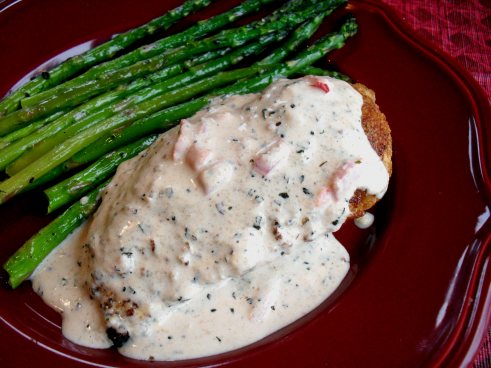
This recipe and the photo to the left is from
Recipe Rapsody, another one of my many recipe/cooking blogs that I subscribe to. The Lamb Shanks alla romano, previous post, may not appeal to some of you. But chicken? That appeals to almost everyone. And with a basil cream sauce and asparagus, Yum-O! The original recipe can be found at the link above. This just looked good and different. Let us know if you try it and what you thought of it. Cheers!

Chicken in Basil Cream

Recipe source: adapted from Fast and Easy by Suzanne Somers and Suzie S.
Makes 8 servings. Per serving: 544 calories; 41 g fat; 2.5 g carbohydrates; 0 g fiber; 36 g protein
Bake and Fry Mix
1 cup minced onion
1 teaspoons salt
¼ t Black pepper
¼ t ground Sage
½ t dried Rosemary
½ t dried Coriander
½ t dried Thyme
¼ t dried Oregano
¼ t Paprika
¼ t Red Pepper Flakes
1 Bay Leaf, crushed
½ c grated Parmesan cheese
Chicken and Sauce
8 (4 oz) boneless, skinless Chicken Breasts
1 stick (1/2 cup) unsalted Butter
1 c Chicken Broth
2 c Heavy Whipping Cream
1 (4 oz) jar sliced Pimentos, drained
1 c grated Parmesan cheese
2 T dried Basil
¼ t Pepper
Directions:
Place minced onion in food processor fitted with blade attachment. Process one minute. Add remaining mix ingredients, except the cheese, and process another minute. Add cheese and pulse until combined. Place in a gallon-sized Ziploc bag. Add chicken to the bag and shake until every piece is coated.

On medium-high heat, cook chicken in butter on both sides until juices run clear, about 10 minutes. Remove and keep warm. Add broth to the skillet. Bring to a boil over medium heat; stir to loosen browned bits. Stir in the cream, pimientos and basil; boil and stir for 1 minute. Reduce heat. Add the Parmesan cheese and pepper; cook and stir until heated through. Pour over the chicken and serve.

Lamb Shanks alla romana


I have told you this before, but it bears to mention again. I subscribe to an Italian (among several ethnic food blogs) food blog called Memorie de Angelina. The photo on the left is from that blog, as is the recipe. I get some really great recipes from this site. Here is another one using lamb shanks and this sounds delicious! One might be able to replace the lamb with pork shanks, but I don’t know how that would be with the way these are prepared. If you have not looked at this blog, do so. It is a fantastic blog with many ideas , recipes and history. Try this recipe and let us know how you liked it or not. Cheers!

Lamb Shanks alla romana

Baby milk-fed lamb or abbacchio is one of the wonders of Roman cooking, in particular in the spring. Lamb that young is not often found in markets in our neck of the woods, but the same techniques work well with mature lamb as well. So the other day I took some lamb shanks I had in the freezer, braised them slowly until the meat was falling-off-the-bone tender, and finished them with flavorings typical of abbachio alla romana, Roman-Style Baby Lamb. The result was certainly different, but delicious all the same. I served the shanks with polenta, a combination perhaps more typical of America than Rome, but all the same it makes a fine combination for a piatto unico.
Source: Lamb Shanks alla romano

Ingredients (for 4 servings):
4 lamb shanks
olive oil (or lard)
Salt and pepper
White wine
For the finish:
1-2 cloves of garlic
2-3 anchovy fillets
A spoonful or two white wine vinegar, enough to form a paste

Directions:
Sauté the garlic and rosemary in olive oil (or lard) in a heavy casserole until the garlic has been ever so lightly browned and fragrant. Remove both the garlic and the rosemary from the pot.

Add the lamb shanks to the seasoned fat and brown them well on all sides. Season them generously with salt and pepper, turning all the while. Add a splash of white wine to the pot, turning the lamb shanks around once again to coat them well. Then cover the pot tightly and lower the heat. Let the lamb shanks simmer, covered, until very tender, about 2-1/2 hours or so. Moisten from time time, as needed, with a bit more wine or water.

About 20 minutes before the lamb is done, mash together the garlic and anchovy finely, then add a bit of the vinegar, enough to form a loose paste. Add this mixture to the lamb and mix well. Then finish simmering the lamb. Serve hot as a secondo. For a one-dish meal (but not in the usual Roman style but very nice all the same) accompany with some hot polenta.

Blog Author’s Notes: They say that meat is sweetest close to the bone, and lamb shanks are certainly evidence for that assertion. I don’t recall shanks being served on their own in Rome, even if lamb was perhaps the favorite local meat. Rib chops, as is the iconic scottaditto (Grilled chops eaten with your fingers) were, of course, very popular, but otherwise the whole baby lamb would be cut up into pieces and prepared just like this. Although shanks are particularly delicious prepared this way, the same method can be used with lamb stew meat or cut up lamb shoulder meat, or even with shoulder chops, adjusting times according. One hour should do fine for any of these other options.

In some recipes, chopped rosemary is added to the finishing paste, but personally I find that this gives it too strong a flavor. Many recipes call for sage as well as rosemary. Ada Boni, in her classic Talismano della Felicità (Italian Cookbook) tells you to add the garlic, rosemary and sage, all chopped up, to the pot after you have browned the lamb pieces (in lard). If you want a stronger flavor, by the way, add the finishing paste only a few minutes before the end or even at the very last minute. By the way, don’t worry about the anchovies if you don’t care for them—they melt into the sauce as the lamb simmers and lend a savory, but not at all fishy, note to the dish. By the way, in Rome itself abbacchio alla romana is often called abbacchio alla cacciatora.
Short Grain vs Medium Grain vs Long Grain Rice


I had the car radio on while driving through Boise and the station was our local NPR station – the car radio only gets one station! They were having a discussion on the different types, not particularly the different kinds, of rice. No, rice is not just rice. With over 40,000 different kinds of rice, the varieties are almost endless. If you wanted to try a different kind of rice each day until you got through those 40,000 varieties, it would take you 105.9 years! It’s probably too late for me to start that experiment now. So, I thought it might be interesting to explore this idea and get to know rice. Here goes -In looking at many, many pages on rice types and kinds, I did find this one from Hubpages about the 3 classifications (types) for rice. Here is part of that article.

3 Classifications for Rice Length: Long, Medium and Short

By Kathryn Vercillo

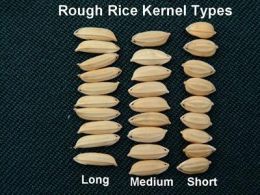
There are literally tens of thousands of different varieties of rice in the world. However, rice can actually be broken down into just three different types if you want to keep things simple. There is long-grain, medium-grain and short-grain rice. As the classifications suggest, the three different types of rice grains are categorized based upon their length as compared to their width. A skinny, long type of rice grain would be a long-grain whereas a round-ish grain that’s about as wide as it is long would be a short-grain.
Long vs. Medium vs. Short Grain Rice

Long-Grain Rice Long-grain rice is easy to identify because it is the narrowest or skinniest of the different types of rice that you might come across. If a piece of rice is at least four times in length what it is in width then it is considered to be a long grain. Long-grain rice is usually the fluffiest type of rice. For that reason it is considered the best type of rice to serve with sauces; it holds the sauce well but it also tastes good plain. A popular example of long-grain rice is Basmati. It is long grain rice with a beautiful fragrance. Traditionally it was grown in India, but now famous around the world. On the other hand, Jasmine is an excellent long-grain fragrant white rice. It has a slight jasmine aroma after cooking and are slightly stickier than Basmati. It is grown in Thailand and used throughout Southeast Asia.

Short-Grain Rice. Whereas long-grain rice is skinny and tall, short-grain rice is short and fat. It often looks round in shape because the width is so close in size to the length with this grain. Short-grain rice generally has a higher level of starch content than the other grains do making it a type of rice that tends to be sticky. For that reason it’s especially popular for rice pudding although it can be eaten alone or in other rice dishes as well. A popular example of short-grain rice is Arborio. Arborio is a short-grain rice that takes its name from the town of Arborio in the Po Valley of Northern Italy where it was originally grown. It is high in starch content and thus has a starchy taste of its own.

Medium-Grain Rice. Once you get a good idea of what constitutes long-grain rice and what would be considered short-grain rice, you’ll also be able to identify medium-grain rice. It’s the type of rice that falls somewhere in between the two other grains. For example, a rice grain that is about three times as long as it is wide would be a medium-grain rice. Medium-grain rice is terrific in rice-based dishes such as paella and risotto.

OK. So now you’re going to ask, “But what about brown rice?” Hmmmm.

Brown Rice. Brown Rice is not a separate variety of rice, but any rice, short-grain or long-grain, which is not polished or part is called brown rice. They are more nutritious than the white rice and are of two kinds:
Fully Unpolished – When the entire layer of bran is not removed.
Partially Unpolished – When bran is only partially removed.
Although it takes longer to cook, the more nutritious rice is brown or hulled rice. The rice is milled to remove the hull, but keep the rice bran layer and the germ. It has more of a nutty flavor is chewy. It is more nutritious and has a lower glycemic index than white rice. The bran contains most of the minerals and vitamins. It is the bran that also gives it the darker color. Any type of rice can be milled as brown rice. It is more expensive because less people like to eat it, and it has a much shorter shelf life. (Kinds of Rice)


So with all of this information, sum it up in one or two sentences. “The Long and Short Of It. Although there’s an exact science to the measurement of rice grains, as a [home] cook you really only need to know the basics. A long skinny type of rice grain will be less sticky and a bit firmer than a short, fat rice grain.” Now, go and try each of the types of rice. The web is full of information and recipes for using rice. There’s more to it than steaming, add butter, eat. Enjoy!